Comment of the Day: “The Washington Post Drops Its Resident Op-Ed Socialist. Good.”

Post paper

The honor of the first Comment of the Day in 2016 goes to pennagain, previously penn, who assesses the forces turning our journalistic establishment to ethics mush. It is not a pretty scenario, but well worth thinking about. He was inspired by my article about the Washington Post dropping socialist pundit Harold Meyerson in part because he wasn’t getting enough clicks. Where it stops, nobody knows.

Here’s pennagain:

Twelve [delivered Washington Post daily print editions in another commenter’s apartment building] down to two is about what the trend is for paper subscriptions running out, and free internet use taking over. In the short run, probably, the metro papers will all go behind the paywall while smaller ones hold out for local advertisers, but for now there is a steady drop in print and a rise in online subscriptions, with a (temporary) small increase in access to both. All news media — newspapers, television and radio — are losing ground to the fragmentation of the internet universe as it “narrowcasts” to further and further special interests. The long run is not a pleasant prospect.

In the meantime, the born-to-the-web generation has been raised on free news, as have a majority of the current readers who lost their home-delivered (now less than 400) newspapers.

My concern is that perception of news is probably down about the same (12:2) — the smaller the screen, the poorer the perception. Internet pages are awash with advertisements up and down the sides and through the middles, flashing and flickering, sounding out automatically (this is fairly recent distraction and, I think, a true impingement on privacy), not to mention the seductive invitations between paragraphs to links that frequently cut into the text itself.

In a medium where the whole story could be presented as such on one “page,” it is cut into pieces and continued-on other screens, each of which takes more and more time to load its own load of ads. More incentive for those not desperately hooked to the story to check out one of the links or the next site down the line instead of getting all the information saved for more advertising. Click.
Continue reading

The Tamir Rice Fiasco And “Ethics Zugzwang”

Gun comparison

There are circumstances in which all ethical options have been eliminated by poor choices and bad luck. Henceforth Ethics Alarms will refer to this dilemma as ethics zugzwang, zugzwang being a chess term for the situation where a player must make a move, and any move will worsen his position.

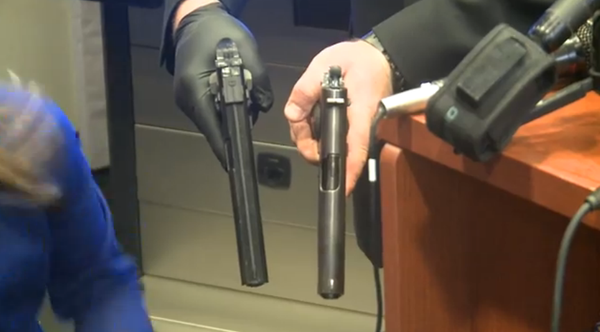
By the time the killing of Tamir Rice got to the grand jury, it was ethics zugzwang. The grand jury’s decision not to charge the two officers involved is troubling, and a decision to charge would have also been troubling. To get anything out of this utter and fatal fiasco, a lot has to change, and we have to recognize what in order to make those changes occur. It won’t be easy. I think it may be impossible.

There is no way that the justice system can do its job objectively and well when every police shooting involving a black victim is instantly labelled racist and murder by vocal activists, pundits and and social media, with the implied threat of civil unrest. If an indictment is handed down as in theFreddie Gray matter in Baltimore, it appears as if mob passions are manipulating the system, and, in the Gray case, it was. Such a result, in turn, makes it more difficult for the next accused cop to get justice. It estranges the police force from the government entity it serves, and makes police wary and less likely to assume the risks associated with their vital and inherently dangerous  job.

These considerations create their own impetus making a failure to indict more likely. A city cannot afford to be seen as not supporting the police, even when they make a deadly mistake in judgment. District attorneys are on the same team as police, and automatically share their perspective; it is important that the police recognize that. The police receive the benefit of every doubt, and the deserve that. Yet a failure to indict, especially now that police shootings have become high profile matters that every blogger and pundit prejudges according to their own biases and agendas, will inevitably be used to indict the system instead. Continue reading

Ethics Observations On The Washington Post’s Fatal Police Shootings Study

policeshootings

The Washington Post just released its own study of 2015 police shootings, including statistics that that the FBI, which admitted to the Post that it has not done a thorough job of tracking the data, has missed. Writes the Post:

The Washington Post is compiling a database of every fatal shooting in the United States by a police officer in the line of duty in 2015. The Post is tracking more than a dozen details about each killing — including the race of the deceased, the circumstances of the shooting, and whether the person was armed — by culling local news reports and monitoring independent databases such as Killed by Police and Fatal Encounters. In some cases, The Post conducted additional reporting. The Post is documenting only shootings in which a police officer, while on duty, shot and killed a civilian — circumstances that most closely parallel the 2014 killing of Michael Brown in Ferguson, Mo. The Post is not tracking deaths of people in custody, fatal shootings by off-duty officers or deaths in which police gunfire did not kill the individual.

The FBI and the Centers for Disease Control and Prevention log fatal shootings by police, but officials acknowledge that their data is incomplete.The Post’s database will be updated regularly as new fatal shootings are reported and as new facts emerge about individual cases. The Post is seeking assistance in making the database as comprehensive as possible. To provide information about fatal police shootings in 2015, send us an e-mail at policeshootingsfeedback@washpost.com. The Post is also interested in obtaining photos of the deceased and original videos of fatal encounters with police.

Elsewhere, the Post makes it clear that “incomplete” hardly begins to describe the FBI’s negligence:

The landscape of police shootings is surprisingly thinly explored. The FBI is charged with keeping statistics on such shootings, but a Post analysis of FBI data showed that fewer than half of the nation’s 18,000 police departments report their incidents to the agency.The Post documented well more than twice as many fatal shootings this year as the average annual tally reported by the FBI over the past decade. The FBI and the federal Bureau of Justice Statistics now acknowledge that their data collection has been deeply flawed. FBI Director James B. Comey called his agency’s database “unacceptable.” Both agencies have launched efforts to create new systems for documenting fatalities.

Observations: Continue reading

A Smoking Gun For So Many Things…

Beschloss

Beschloss

By 2008, I had given up on Don Imus, whose occasional moments of conventional wisdom shattering clarity and truth-telling were overwhelmed by the egotism, self-promotion, and the sexism and vulgarity of his toadying side-kicks. Thus I missed this exchange with historian Michael Beschlost, which in retrospect explains so much that has taken place since:

Historian Michael Beschloss: Yeah. Even aside from the fact of electing the first African American President and whatever one’s partisan views this is a guy whose IQ is off the charts — I mean you cannot say that he is anything but a very serious and capable leader and — you know — you and I have talked about this for years…

Imus: Well. What is his IQ?

Historian Michael Beschloss: …our system doesn’t allow those people to become President, those people meaning people THAT smart and THAT capable

Imus: What is his IQ?

Historian Michael Beschloss: Pardon?

Imus: What is his IQ?

Historian Michael Beschloss: Uh. I would say it’s probably — he’s probably the smartest guy ever to become President.

Imus: That’s not what I asked you. I asked you what his IQ was.

Historian Michael Beschloss: You know that I don’t know and I’d have to find someone with more expertise…

Imus: You don’t know.

Continue reading

More “Blue Bloods” Ethics

Blue Bloods 2

Tom Selleck’s “Blue Bloods,” or “The Conflict of Interest Family” as we call it around our house, continues to explore difficult unethical dilemmas for an all-law enforcement family. Its latest episode’s message, however, was troubling.

Forget the secondary plot of Police Chief Frank Reagan’s staff squabbles. The meat of this installment was police detective Danny Reagan’s discovery that the well-oiled bank robbery he was on the scene to witness (it’s amazing how often the main characters in procedurals  just happen to be in banks when they are robbed) has been carried out by a group of three military combat veterans—just like Danny!. They have banded together to raise $100,000 so the female member of the trio can pay for expensive medical treatment for her wounded veteran husband. He lost his legs and sustained brain damage in Iraq.

Danny is seething at the injustice of the wounded hero being in an endless line writing for help from the Veterans Administration, and perplexed that the three perps who he has personally identified from his observations of them during the robbery—the loving spouse’s voice, one of the men’s scarred wrists, a neck tattoo on the other—are acting out love and loyalty, not greed. Continue reading

One Ethics Observation On The Fox Business-WSJ Republican Candidates’ Debate.

debate GOP

That was  professional,  unbiased, fair debate moderation.

Maria Bartiromo, Gerard Baker and Neil Cavuto made it look easy.

This should be a template for all future debates in either party, and between the eventual nominees.

And bravo to Neil Cavuto for his mild, pointed and well-deserved shot at his predecessors at CNBC in closing For once, a debate was about the candidates and not the moderators.

May it always be thus.

Comment of the Day: “Unethical Quote Of The Week: My Progressive, Rational, Educated and Gay Facebook Friend”

stereotypes

Unlike most Comments of the Day, this one by Penn/Same Penn, who has two aliases here due to WordPress’s inexplicable habit of eating his posts, requires some back-reading to fully appreciate…but it is worth the effort.

The original post is about a Facebook friend’s mass condemnation of the Lone star State as a frightening, bigoted and  violent place where he would never set foot, in part because of his anger over Houston’s rejection last week of a bill that would expand LGBT civil rights in the city. My post noted that painting Texas with such a broad and harsh brush is itself bigotry—a position that cannot be rebutted, I believe—and reader Neil protested that the anti-Texas and Texans sentiment was just.

This inspired P/SP to one of the most eloquent and thoughtful posts Ethics Alarms has ever received, on any topic, and his is complex here, far ranging from its inspiration.

Here is Penn’s Comment of the Day on the post, Unethical Quote Of The Week: My Progressive, Rational, Educated and Gay Facebook Friend: Continue reading

Unethical Quote Of The Week: My Progressive, Rational, Educated and Gay Facebook Friend

texas-alamo-H

“I never want to step foot in Texas. I don’t even want to change planes in an airport there. In fairness to Texas, there are several states in this country that I refuse to visit, not in a political boycott way but in a I’d-rather-not-get-harassed-by-white-trash-or-shot-by-a-gun-nut kind of way. Basically, you won’t be seeing any pics of our family in the Deep South…ever!”

——-Posted to Facebook by a Facebook friend.

It constantly astonishes me that otherwise kind and intelligent people who regard themselves as tolerant, accepting and enemies of prejudice and bigotry can be so devoid of self-awareness that they openly display not only their own irrational bias and ignorance as if it is a badge of honor, but also think that avoiding new data and experiences that challenge their facile assumptions makes them look wise and virtuous.

Bulletin to my friend: This makes you look like a hateful fool, and I know you are not.

I’m waiting to see how many “likes” his post gets; I assume a lot. I don’t know who it was who first observed that as we age we tend to become the kind of human being we hate the most, but it struck me as a perceptive observation the first time I heard it, and I have never read a more perfect example of the phenomenon.


Ethical Quote Of The Week: CNN’s Mike Rowe

In this case, it’s unfair to Mike Rowe’s brilliant and measured rebuttal to MSNBC’s race-baiting talking head Melissa Harris-Perry’s latest ethics pollution to just quote a brief paragraph or two, so I’m going to quote virtually  his entire Facebook post.

Rowe, the man’s man star of the Discovery Channel’s “Dirty Jobs” show and now CNN’s “Somebody’s Gotta Do It” was responding to Melissa Harris-Perry’s dressing down of a guest who referred to new House Speaker Paul Ryan as “hard-working.” This woman’s mission in life seems to be to make it impossible for white people to speak, since she is meticulously eliminating all words and phrases as either racist, homophobic, misogynist or insensitive. (Donald Trump should send her a bonus, for this kind of thing is what is driving his support) In her latest assault, she said this:

“I want us to be super careful when we use the language “hard worker.” I actually keep an image of folks working in cotton fields on my office wall, because it is a reminder about what hard work really looks like. But in the context of relative privilege, when you talk about work-life balance, the moms who don’t have health care aren’t called hard workers. We call them failures. We call them people who are sucking off the system.”

Rowe’s diagnosis of Harris-Perry’s world-view was this: Continue reading

As Ethics Corrupters Run Amuck, Ethics Alarms Presents “Ethics Corrupter Weekend”! Part I: “Truth” Is False

Truth

“Truth” is in theaters now, and reportedly bombing. As soon as I learned about the source of the film (disgraced ex-CBC producer Mary Mapes’ memoir, “Truth and Duty: The Press, the President, and the Privilege of Power”) and its plot, I resolved not to watch it, as I would just end up walking out of it. Nonetheless, the fact that Robert Redford is connected with the project is profoundly disappointing. Redford is the ultimate Hollywood liberal, but his films have often been about ethics, and I regard him, or perhaps past tense is more appropriate, as having principles and integrity. True: actors need not agree with or endorse their roles or the projects of others, but Redford is unusual: he lends credibility to any project he allows to carry his name.

Connecting his name to “Truth” is a betrayal. The film makes martyrs of Mapes and Dan Rather, who attempted to tilt the 2004 election by smearing George Bush, without evidence, on “60 Minutes.” Not only was this a political hit job by biased journalists, it was one tainted by intentionally manufactured evidence. Mapes and Rather presented a forged document alleging that Bush went AWOL during his Texas Air National Guard service in the early 1970s. It was all the pair had that went beyond hearsay to make the allegation, and after the document was decisively shown to be a forgery (its font wasn’t available on the typewriter that had to have been used to make the original document.) Once the forgery was discovered by an enterprising blogger and confirmed by multiple document specialists. Rather and Mapes embarked on a rationalization orgy. Rather, to his undying shame, repeated his defenders’ argument that the forgery as “fake but accurate,” and does to this day, in essence rejecting journalism ethics wholesale. So determined was he to prove what he believed to be true but couldn’t prove fairly or ethically that he cheated, playing dishonest political operative to achieve worthy partisan goals “by any means necessary.”

Bias makes us stupid, and in this case, bias made Dan Rather corrupt.

AND stupid. Continue reading