Supreme Court Ethics 1: Birthright Citizenship Is Here To Stay

I didn’t venture an opinion on whether President Trump’s executive order banning birthright citizenship would fly with the Supreme Court (I did post about Justice Jackson making a fool of herself during oral argument), but I would have been surprise if today’s decision had turned out differently than it did.

The Supreme Court ruled today that President Donald Trump’s executive order was unconstitutional. The ruling was announced just as I was preparing commentary on earlier decisions this week: that post will arrive later today.

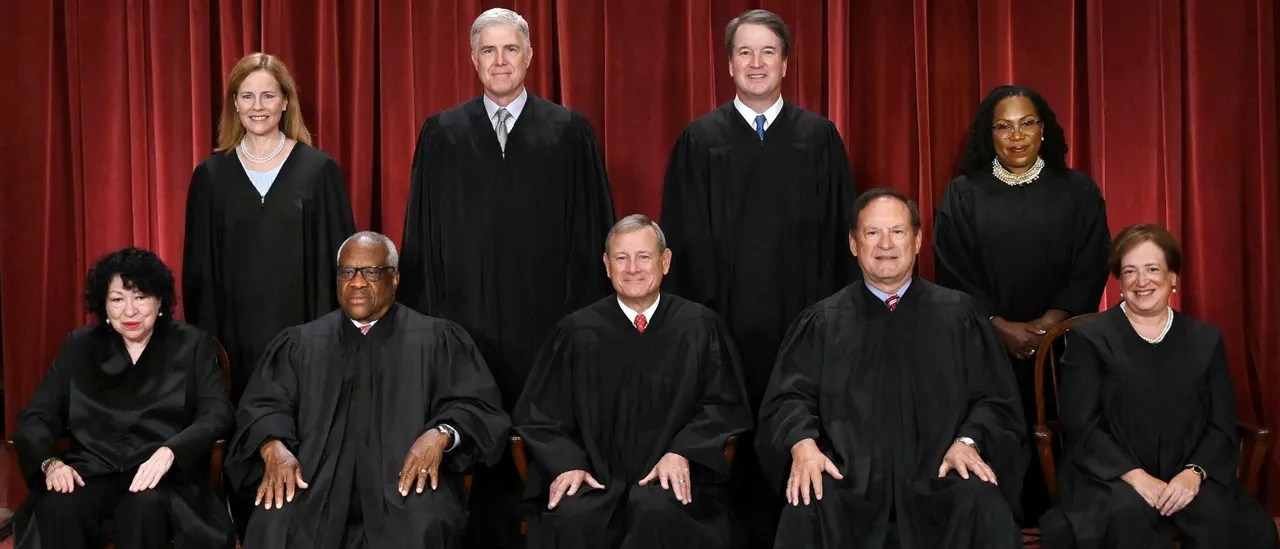
Chief Justice Roberts wrote the majority opinion in the 6-3 ruling. “If Congress intended to limit American citizenship to the children of those domiciled in the United States, nothing in the succinct language of the Citizenship Clause conveyed that design,” Roberts wrote. Justice Brett Kavanaugh concurred in the result but dissented on the reasoning. Such concurring opinions are for professors and geeks, to be cited in law review articles and wild-hair judicial opinion dicta.

Justice Samuel Alito made some interesting points in his dissent about how birthright citizenship has very different, and potentially perilous implications today that never occurred to the Founders, writing,
A Perfect Example of a “Trump Lie”

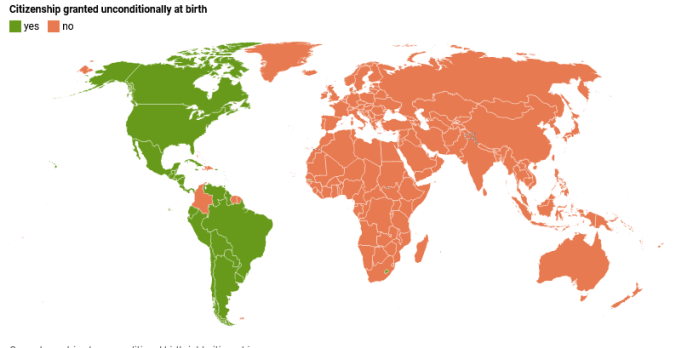
On both MSNBC and CNN today, a big deal was made over the fact that President Trump said that “no other country” confers automatic citizenship on those born within its borders. They were both sneering so hard that I bet they needed a lip massage afterwards, “Of course, 33 nations have birthright citizenship,” said one, with the other making a similar statement.

No question about it, they are right and Trump was wrong. What he meant, however, was “No nations anywhere but the Americas have birthright citizenship, and we are the only major power in the world that does.” Or, “Almost no nations that know what the fuck they are doing have birthright citizenship.” Presidents shouldn’t be that careless, but Trump is, he refuses to change, he’s not going to, and nobody should pretend that they are shocked when he does.

Here’s the list, as represented in the chart above: Antigua and Barbuda, Argentina, Barbados, Belize, Bolivia, Brazil, Canada, Chile, Costa Rica, Cuba, Dominica, Ecuador, El Salvador, Gambia, Grenada, Guatemala, Guyana, Honduras, Jamaica, Lesotho, Mexico, Nicaragua, Panama, Paraguay, Peru, Saint Kitts and Nevis, Saint Lucia, Saint Vincent and the Grenadines, Trinidad and Tobago, Tuvalu, United States, Uruguay, and Venezuela.

Continue reading

Two Executive Orders, One Extra-Constitutional, the Other Unconstitutional (and Unethical Too)

Let’s talk about the “un”-EO first. Federal District Court judge, John C. Coughenour, temporarily blocked President Trump’s executive order to end automatic citizenship for babies born on American soil, the so called “anchor baby” phenomenon. Three days after Trump issued his executive order, the judge sided with the first four states that sued, saying, “This is a blatantly unconstitutional order.” 22 states, along with activist groups and expectant mothers, have now filed lawsuits to halt order on the grounds that it violates the 14th Amendment. Courts have always interpreted the amendment’s section stating that “all persons born or naturalized in the United States, and subject to the jurisdiction thereof, are citizens of the United States” as applying to (almost) every baby born in the United States.

“Frankly,” Judge Coughenour added, “I have difficulty understanding how a member of the bar would state unequivocally that this is a constitutional order. It just boggles my mind.” Well, lawyers don’t usually state propositions, even Hail Mary theories like this one equivocally. I think Trump’s lawyers told him that the order would almost certainly be found unconstitutional, and maybe they told him that it is unconstitutional. I am pretty certain it is, and that nothing short of a Constitutional amendment can change the law.

Continue reading