Ethics Addendum: Bill Robinson, Fred Astaire, And The Good “Blackface,” The John Bubbles Connection

The post about Fred Astaire’s dark-make-up-assisted homage to tap-dancing legend Bill Robinson in “Swing Time” was incomplete, both historically and ethically. This post should remedy that.

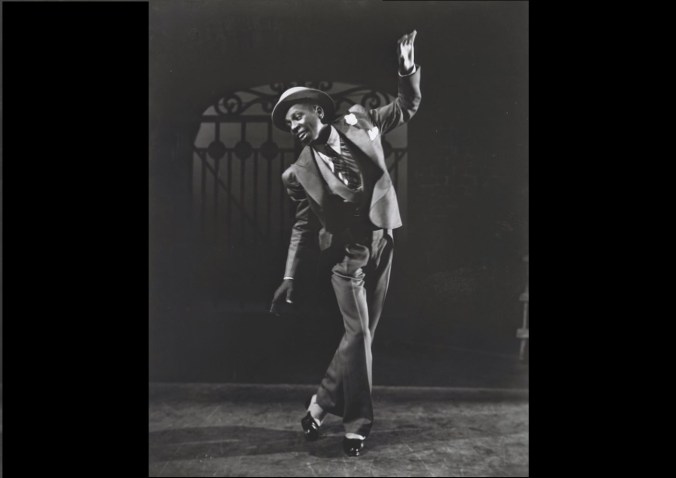
The dance number in question, “Bojangles of Harlem,” was, as I wrote in the introduction, Fred’s homage to two great black tap dancers who were teachers and inspirations for him, Bill “Bojangles” Robinson and John Bubbles.  The post explained why the salute to Robinson was important, but did not elaborate more on Bubbles. He was not as big a star as Robinson nor as well known, either at the time of the film or ever, and is less remembered today. Nevertheless he was an important cultural figure, and it can be argued that Astaire’s number was really more of a tribute to Bubbles than Robinson, not that many noticed.

First, you need to know about Bubbles. Born John Sublett (1902-1986), he teamed at the age of ten  with the six-year-old Ford Lee “Buck” Washington in a decades-lasting act, “Buck and Bubbles.” in which Buck stood and played piano and Bubbles sang and danced.  As adults, “Buck and Bubbles” ultimately  played at New York’s Palace Theatre, the London Palladium, the Ziegfeld Follies, the Cotton Club, the Apollo, and became the first blacks to perform at Radio City Music Hall. Their popularity allowed them to break the color barriers in theaters across the country. Continue reading

Bill Robinson, Fred Astaire, And The Good “Blackface”

We recently came through the usual Halloween bag of “blackface” controversies, and Ethics Alarms, as it has before, tried to guide the discussion to the material distinctions that social justice warriors, who strategically deal in absolutes when seeking power through real and contrived offense, refuse to acknowledge or are intellectually incapable of doing so. The short version of the Ethics Alarms message: make-up for legitimate theatrical purposes isn’t “blackface,” isn’t “racist,” and shouldn’t be object of knee jerk condemnation based on emotion or ignorance.

Today Turner Movie Classics showed “Swing Time,” the 1936 musical that is probably the high water mark in the Ginger Rogers-Fred Astaire canon. It has the best song (“The Way You Look Tonight”), the best novelty scene (Astaire pretending to be a klutz in a dance lesson with Ginger, then shocking her and her boss—and saving her job— by showing “what a great teacher she is” by dancing, well, like Fred Astaire) and arguably two of the best dances by the two, “Never Gonna Dance” and “Waltz in Swing Time.” The film also contains a controversial “blackface” number, “Bojangles of Harlem,” in which Fred pays homage to two great black tap dancers who were teachers and inspirations for him, Bill “Bojangles” Robinson and John Bubbles. Local TV stations have long been reluctant to show “Swingtime” because of guaranteed complaints that the number is racist, or, if they cut the number (which is unconscionable), complaints pour in from film and Astaire fans that they have defaced a classic out of misplaced political correctness.

If one argues that the number is “racist” because of Fred’s make-up, then one is necessarily arguing that no white performer can ever offer an admiring  salute to an African-American great by emulating him. Astaire’s choreography (by Hermes Pan) contained specific references to trademark steps and gestures by both Bubbles and Robinson, though more of the former than the latter. (Some would say, maybe even Fred, that this was because he didn’t dare set himself up to be compared to Robinson, whom many regard as the greatest tap-dancer of them all.) Blackface, as typified by minstrel shows, was a burlesque of negative black stereotypes. There isn’t a hint of this in Astaire’s number: he wears dark make-up because he is honoring two contemporary black dance stars who he knew, learned from, and respected. The make-up is the epitome of a legitimate theatrical device, and racially demeaning neither in intent nor effect. Those who see it as such are either deliberately misconstruing the number, or don’t know what they are talking about. (There is an unfortunate racially demeaning set piece that appears for a couple of seconds at the start, a large caricature of exaggerated black features. You can take the film out of 1936, but you can’t take 1936 out of the film.)

The ironic part of the effort to quarantine “Bojangles of Harlem” is that the number is one of the few reminders in our culture of who Bill Robinson was, and—here’s Jack on his “duty to remember” and cultural literacy soapbox again–he was an important figure in American theatrical, cultural and civil rights history that should be remembered.  Instead, Robinson is almost completely forgotten: I bet most of the NAACP members who get up in arms when TMC shows “Swing Time” have no idea how significant Robinson was, and the contributions he made to art and society. Continue reading

Mid-World Series Hangover Ethics Warm-Up, 10/27/2018: Mike Tyson, Intimacy Coordinators, And The Blackface Teacher Principle

This is how my morning began…

1. To get this out of the way..I watched every  second of every inning on last night’s longest post-season baseball game in history, as any loyal, ethical baseball fan is obligated to do. It was worth it, too, even though my team lost. The game was the sports equivalent of The Odyssey, “War and Peace,” “King Lear,” “The Ring Cycle,” “The Ring Trilogy,” “Nicholas Nickleby” or “The Seven Samurai,” a complex morality and adventure tale that had suspense, disappointment, wonder, exhilaration , humor and tragedy, heroes and villains. Such games reward all of the time and suffering a fan puts into following baseball seriously. It is worth the investment.

Ironically, this epic occurred shorty after the Wall Street Journal published a truly ignorant and idiotic opinion piece called , “Our Insane Ideas to Save Baseball/Baseball has problems. There aren’t enough hits. There are too many pitchers. The games take too long. So we bullpenned our solutions. Are you ready for Strike Four?”

It is a wonderful example of the incompetent variety of criticism I call “Wanting to change what you haven’t taken the time to understand.” I get it: the authors don’t like baseball, and barely pay attention to it., or, in the alternative, they are just seeking clicks. In any event, you can’t argue with people who say that the problem with opera is that it’s too often in a foreign language, or that the problem with hip hop is that it isn’t music, and shouldn’t, or that the problem with our democracy is that people can say things that upset other people. And you shouldn’t argue with them. They don’t respect the topic enough to be educated about it.

2. Of course, baseball games ARE too long, and the overwhelming reason is TV ads, which add about a half hour to every game, and more to post-season games. The disgusting response of Fox is to stick 10 second commercials into a split screen during the game, like between batters. Here’s a slugger walking to the plate in a tense situation, and half the screen is devoted to a quickie plug for “Ralph Breaks The Internet.” I hope fans are burning up social media attacking this greedy new form of broadcast pollution.

3. How is this possible? In a #MeToo Mad era when simply being accused of sexual assault without proof is deemed by even lawyers who should know better as sufficient justification to inflict serious and permanent consequences on the accused, Mike Tyson is the star of an animated TV show, is cast in movies, and is now shopping a TV show, based on the ex-boxer’s life as a marijuana grower and marketer, starring him and called “Rolling With the Punches.” Continue reading

Ethics Observations On The Megyn Kelly “Blackface” Fiasco

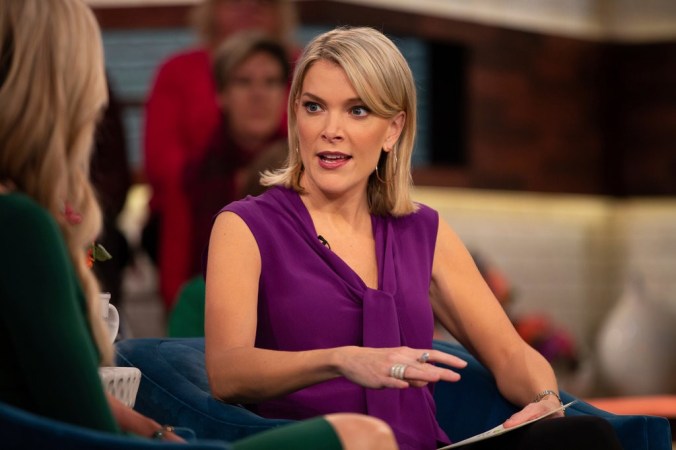
You know, one could make a strong argument that the misadventures of a richly compensated  morning TV host is not worth thinking about, arguing about, or even paying attention to. The problem is that in trivial events vital enlightenment often reside. We ignore the Megyn Kelly mess at great risk. There are many ethics lessons there.

The Megyn Kelly fiasco started long before her self-immolation over the now-radioactive topic of Halloween costumes, but let’s begin there. In case you missed it (that is, you have a life), Kelly was using her special segment of the “Today Show” to moderate a round-table discussion of how, as she put it,  “the costume police are cracking down” on Halloween costumes. The former Fox News host and Donald Trump irritant decided to emulate the President and blunder into a political correctness minefield.

“What is racist?” she mused. “You do get in trouble if you are a white person who puts on blackface on Halloween, or a black person who puts on whiteface for Halloween. Back when I was a kid, that was O.K., as long as you were dressing up as a character.” Then she talked about the travails of Luann de Lesseps, a member of the cast of the Bravo reality show “The Real Housewives of New York,” who was criticized for dressing up as Diana Ross, complete with skin-tone.  Megyn found the criticism  passing strange.

By the end of the week, Kelly had issued a tearful on-air apology and others on social media. She had been condemned by “Today” colleagues and NBC News chairman Andrew Lack, went even further at a midday staff meeting, saying,“There is no other way to put this, but I condemn those remarks.There is no place on our air or in this workplace for them.”

Then NBC announced that “Megyn Kelly Today” was cancelled, and so was Kelly’s 19 million dollar a year employment, subject to the result of negotiations between her lawyers and NBC’s.

Observations: Continue reading

Ethics Quiz: The Black Panther

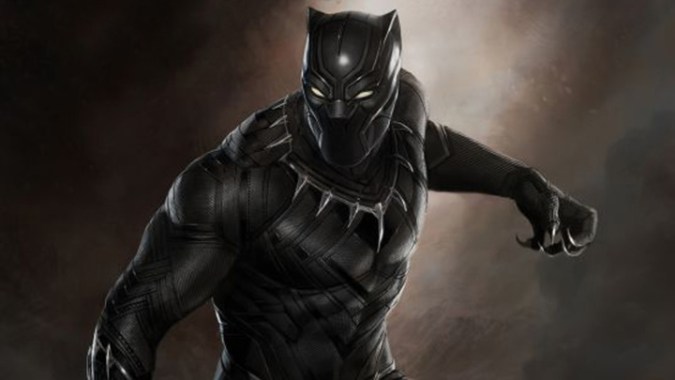
The Black Panther opens today, and all signs indicate that the latest Marvel superhero film—full disclosure: I am sick to death of them all—will be the blockbuster Hollywood so desperately needs. But because this is increasingly a race-obsessed, silly place, and the New York Times is its oracle, we were told a few days a go that the popularity of a black superhero will create an ethical dilemma: Can white kids ethically wear Black Panther masks, costumes, and accoutrements? Would that be cultural appropriation? A return to blackface?

Your somewhat differently conceived Ethics Alarms Ethics Quiz Of The Day query is this:

Is the Times seriously raising this issue as mind-meltingly stupid and obnoxious as I think is?

Continue reading

The Professor’s Blackface Salute: An Ethics Mess

oregon-blackface-mashup

Halloween costumes, political correctness, law, privacy, and the Niggardly Principles—this one has it all.

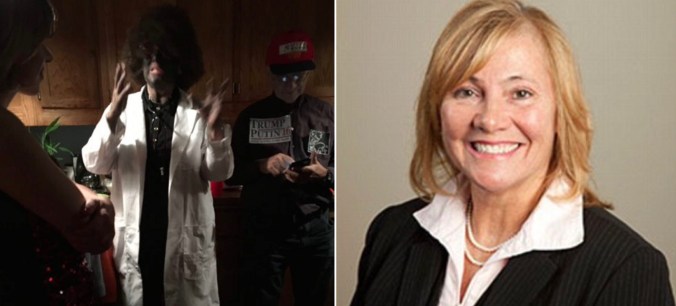
Last Halloween, University of Oregon law professor Nancy Shurtz dressed as Dr. Damon Tweedy, the author of Black Men In A White Coat , as an homage to the African American physician and author. She did this at a Halloween party in her own home. Nobody at the party appeared to misunderstand the gesture or the intent of the costume, in part because she could explain it on the spot, and because they knew that Shurtz was no racist. Shurtz had also told the students who were invited that she would be “going as a popular book title,” hence the blackface, Afro wig, white coat, and  stethoscope.The university report on the episode states that Shurtz “was inspired by this book and by the author, that she greatly admires [the author] and wanted to honor him, and that she dressed as the book because she finds it reprehensible that there is a shortage of racial diversity, and particularly of black men, in higher education.”

But as always happens now because there is no such thing as a reasonable expectation of privacy even in one’s own home, reports of Shurtz in costume and make-up got out into the campus at large, and inflamed the predictable outrage. The university launched an investigation that culminated in a critical report prepared by an attorney and the university’s Office of Affirmative Action and Equal Opportunity.  Shurtz issued an apology—for her private conduct within her own home that was pounced upon by Political Correctness Furies, since she appears to be one herself-–on November 1. Some of her colleagues on the faculty and many students demanded that she resign, and she may have to yet. Shurtz has been censored and suspended, and is now on paid leave. It being claimed that her wearing the costume–within her own home as a gesture that all agreed was intended as benign and that nobody at the party either objected to or failed to understand— created “a hostile environment” at the school. This is apparently because

“as part of the uproar, students said things of which the administration disapproved: The report specifically notes that students used “other offensive racially-based terminology during class times in the context of discussing this event and broader racial issues.” It related that “some of the witnesses reported that the students’ reactions to the event were racially insensitive or divisive.” And it apparently viewed such statements as relevant to whether Shurtz’s own speech was properly punished.”

The report, meanwhile, concludes that the costume constituted “harassment,” and that her intentions are irrelevant.

Writes First Amendment expert Prof. Eugene Volokh: Continue reading

Ethics Quiz: Disney’s Maui Costume

maui

It’s a bit early for Halloween costume controversies , but the outrage machine is ever vigilant, and has provided a provocative ethics quiz, though not a difficult one if one isn’t the Headless Horseman.

Disney released a Halloween costume for kids that will allow tykes to dress up as the Polynesian demi-god Maui, a character in its new animated movie “Moana.” This is classic Disney cross-marketing, what Wells Fargo would call “cross-selling,” and what Elizabeth Warren would call “evil,” because it makes money for a big corporation. The difference is that Disney allows customers to actually purchase such products intentionally, while Wells Fargo charges customers for products without their knowing it.

Wait, how did I get off on Wells Fargo and Warren? Right: the next post. Sorry.

Back to Maui: The costume features a body-suit with thin brown material covered by traditional Polynesian tattoos, as well as a grass skirt and a plastic bone necklace. As soon as it was released on the web, the costume was attacked as racist (it’s the equivalent of blackface, critics say) and an example of cultural appropriation. Marama Fox, co-leader of New Zealand’s Maori Party, said that selling the costume is “no different to putting the image of one of our ancestors on a shower curtain or a beer bottle” while Pasifika news site Samoa Planet described the release as “cultural appropriation at its most offensive worst”.  The New Zealand Human Rights Commission issued a statement calling on Disney to “listen to the views of the communities and people whose cultures their movie is based upon.“ Translation: “Bend to our will, or else.”

Activist Chelsie Haunani Fairchild argued on Facebook that Disney was encouraging a children to wear “the skin of another race.”

“Polyface is Disney’s new version of blackface. Let’s call it like it is, people,” Fairchild argued in a video.

Oh, let’s!

Your Ethics Alarms (Ridiculously Early Halloween) Ethics Quiz of the Day is this:

Is there anything genuinely unethical about making, advertising, selling or wearing the Maui costume?

Continue reading

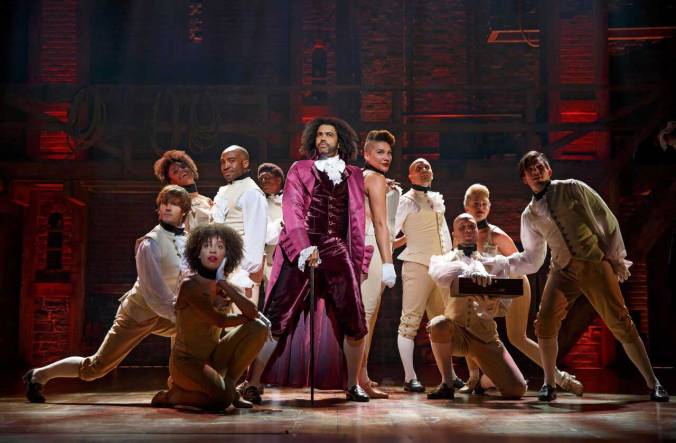
Yet More Casting Ethics: “Hamilton’s” ‘No Whites Need Apply’ Open Casting Call

_hamilton

[ I am back from a speaking engagement that required over eight hours of driving, being in a supposedly “luxury resort” hotel room that had no Wi-Fi for most of my stay and no functioning TV for any of it,  and various other distractions and misadventures that prevented me from posting so far today. I apologize, though it is really the famous Omni Homestead in Hot Springs, VA. that should apologize. The good news is that my seminar was well-received, and that the disappointing trip–this time I was paid only with the supposedly sumptuous two-day  Homestead experience for myself and my long-suffering spouse, including outdoor activities that were impossible due to constant rain and a room with more things in poor repair than a Motel 6—is over.]


Broadway’s biggest hit, the Tony-winning  “Hamilton,” is under attack for, of all things, racism.

An open casting announcement on the show’s website read…

“Hamilton” is “seeking NON-WHITE men and women, ages 20s to 30s, for Broadway and upcoming Tours.”

Whaaaat? This joyous musical celebration of America’s founding and its Founders’ inspiration…engaging in racial discrimination? How could this be? Sniffed Actors Equity spokeswoman Maria Somma “The language … is inconsistent with Equity’s policy.”

Yes, this would be because Actor’s Equity has a lot of dumb policies, and like all unions, doesn’t really care about keeping the industry its members work in healthy, productive and profitable, only  making sure as many members as possible have jobs or at least shots at them. There is nothing whatsoever racist or discriminatory about a show that relies on the concept of non-white actors playing the very white Founding Fathers announcing that only actors who can fulfill that conceptual requirement will be considered for roles.

Civil rights attorney Ron Kuby, in an interview with the NY Daily News,  agreed the advertisement might technically violate the city’s human rights law, but that this is because casting is an anomaly. “It’s almost always illegal to advertise on the basis of race, but when you’re casting … it can be a bona fide occupational requirement,” he said. Continue reading

More Casting Ethics: The Stunt Performer Dilemma

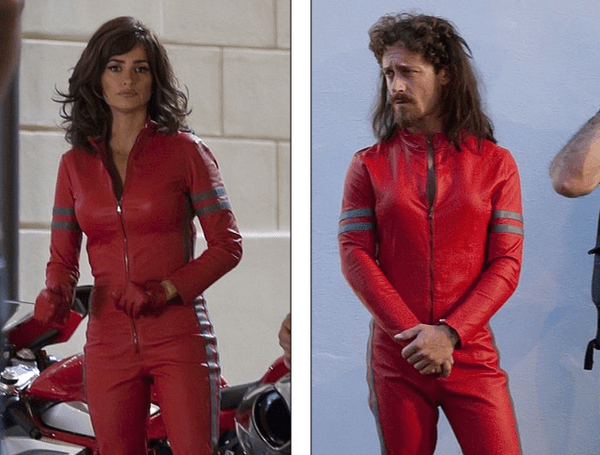
Penelope Cruz and her stunt double. Works for me!

Penelope Cruz and her stunt double. Works for me!

To recap: This month, we have already debated a wide range of casting ethics controversies…

The position of Ethics Alarms is identical in all three controversies. The only consideration in casting a role should be the director’s artistic assessment of who will do the best job meeting the artistic and commercial demands of that role, under the constraints of the project, which can include budget, locale and workplace conditions. Ethnicity, race and off-screen appearance should be secondary, and better still, irrelevant. Efforts to substitute political, diversity or affirmative action goals  for artistic ones undermine the integrity of the work, and are unfair to the audience as well as the work itself. Make-up is a tool of the performing arts, and is unrelated to blackface, which was a convention designed to denigrate African Americans. Confounding make-up used to allow a performer to play a character of a different ethnicity, race or skin shade with minstrelsy and blackface is intellectually dishonest or ignorant.

Now comes a new issue in this spectrum: the use of white, male stunt performers to substitute for black or female stars.

This article, in The Telegraph,  begins with the assumption that the practice is inherently unethical:

“For decades, white stunt performers would paint their faces and bodies black to double for black stars. Similarly, it was not uncommon for stuntmen to put on heels and wigs to double for women. This was not happening in a vacuum: all the while, black and female stunt performers were pressing for recognition and the right to work in the jobs for which they were best suited….There is an understanding within the studios that such incidents don’t look good and need to be kept hush-hush.”

If, as the article and the Hollywood activists it interviews assert, the practice of “blacking up” white stunt performers is designed to exclude qualified black stunt performers from working, then of course it is unethical. Given the close-knit stunt performer community, described as a white, male, “old boys network” in the essay, this is certainly possible, even likely. Nevertheless, the assertion that there is anything intrinsically unethical, unfair or wrong with using a disguised white stunt performer to substitute for a black star, a male stunt performer to substitute for a female star, or any other variation imaginable is, as with the Hispanic and Afghan complaints, based on non-existent ethical principles. Continue reading

The Zoe Saldana-Nina Simone Controversy

http://www.youtube.com/watch?v=ewNw78TpRPk

I have been following this story for some time with a mixture of amusement and horror; satisfaction too, I suppose, as it is nice to see that black grievance-mongers are equally irrational when the imagined offender is black rather than white. There is integrity in this, after the irrationality of it all.

Nina Simone’s tribute website calls her a “classically trained pianist who evolved into a chart-topping chanteuse and committed civil rights activist.” As a white kid growing up in the Sixties, I missed Simone almost entirely: she wasn’t a regular guest on TV variety shows.  In college, I encountered aficionados who referred to her as brilliant, and I tried to appreciate her song stylings. She was one of those singers that  I could understand why she was famous and exceptional without wanting to listen to her for pleasure. At the time I regarded Simone as a cult singer, but that was unfair; she was obviously more important than that. I was also unaware of her considerable significance in the civil rights

Three years ago, Zoe Saldana was cast as Nina Simone in “Nina”, a major Hollywood film about the singer’s life, replacing singer Mary J. Blige, who was originally cast but dropped out. Immediately, the choice of Saldana, a rising black actress of Dominican and Puerto Rican parents best known for her work as Uhura on the “Star Trek” reboots, “Avatar,” and “Guardians of the Galaxy”, was attacked. She wasn’t a singer, isn’t a “true” African-American and doesn’t resemble Simone sufficiently, the critics said.

All of these accusations are ridiculous on their face. Most biopics about famous singers, though not all, star actors rather than vocalists: all singing is dubbed in after the film anyway. When, in the history of drama, has there been a rule that the performer’s ethnicity had to match the role he or she was playing? I wrote about the foolishness of this issue most recently here. What matters isn’t that Yul Brenner wasn’t really a Thai, what matters is that he was fantastic at playing the King of Siam. Continue reading