More Casting Ethics: The Stunt Performer Dilemma

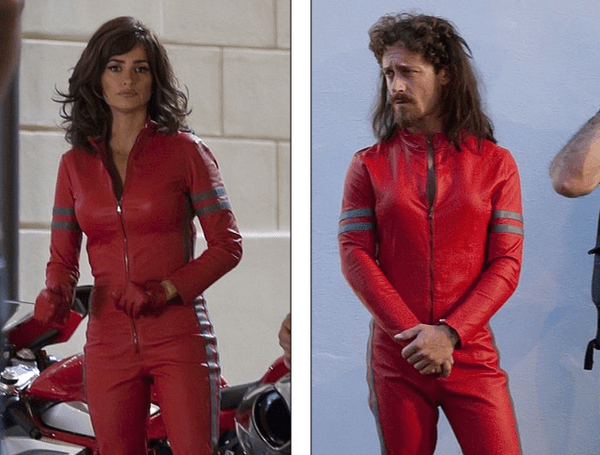
Penelope Cruz and her stunt double. Works for me!

Penelope Cruz and her stunt double. Works for me!

To recap: This month, we have already debated a wide range of casting ethics controversies…

The position of Ethics Alarms is identical in all three controversies. The only consideration in casting a role should be the director’s artistic assessment of who will do the best job meeting the artistic and commercial demands of that role, under the constraints of the project, which can include budget, locale and workplace conditions. Ethnicity, race and off-screen appearance should be secondary, and better still, irrelevant. Efforts to substitute political, diversity or affirmative action goals  for artistic ones undermine the integrity of the work, and are unfair to the audience as well as the work itself. Make-up is a tool of the performing arts, and is unrelated to blackface, which was a convention designed to denigrate African Americans. Confounding make-up used to allow a performer to play a character of a different ethnicity, race or skin shade with minstrelsy and blackface is intellectually dishonest or ignorant.

Now comes a new issue in this spectrum: the use of white, male stunt performers to substitute for black or female stars.

This article, in The Telegraph,  begins with the assumption that the practice is inherently unethical:

“For decades, white stunt performers would paint their faces and bodies black to double for black stars. Similarly, it was not uncommon for stuntmen to put on heels and wigs to double for women. This was not happening in a vacuum: all the while, black and female stunt performers were pressing for recognition and the right to work in the jobs for which they were best suited….There is an understanding within the studios that such incidents don’t look good and need to be kept hush-hush.”

If, as the article and the Hollywood activists it interviews assert, the practice of “blacking up” white stunt performers is designed to exclude qualified black stunt performers from working, then of course it is unethical. Given the close-knit stunt performer community, described as a white, male, “old boys network” in the essay, this is certainly possible, even likely. Nevertheless, the assertion that there is anything intrinsically unethical, unfair or wrong with using a disguised white stunt performer to substitute for a black star, a male stunt performer to substitute for a female star, or any other variation imaginable is, as with the Hispanic and Afghan complaints, based on non-existent ethical principles. Continue reading


The Zoe Saldana-Nina Simone Controversy

I have been following this story for some time with a mixture of amusement and horror; satisfaction too, I suppose, as it is nice to see that black grievance-mongers are equally irrational when the imagined offender is black rather than white. There is integrity in this, after the irrationality of it all.

Nina Simone’s tribute website calls her a “classically trained pianist who evolved into a chart-topping chanteuse and committed civil rights activist.” As a white kid growing up in the Sixties, I missed Simone almost entirely: she wasn’t a regular guest on TV variety shows.  In college, I encountered aficionados who referred to her as brilliant, and I tried to appreciate her song stylings. She was one of those singers that  I could understand why she was famous and exceptional without wanting to listen to her for pleasure. At the time I regarded Simone as a cult singer, but that was unfair; she was obviously more important than that. I was also unaware of her considerable significance in the civil rights

Three years ago, Zoe Saldana was cast as Nina Simone in “Nina”, a major Hollywood film about the singer’s life, replacing singer Mary J. Blige, who was originally cast but dropped out. Immediately, the choice of Saldana, a rising black actress of Dominican and Puerto Rican parents best known for her work as Uhura on the “Star Trek” reboots, “Avatar,” and “Guardians of the Galaxy”, was attacked. She wasn’t a singer, isn’t a “true” African-American and doesn’t resemble Simone sufficiently, the critics said.

All of these accusations are ridiculous on their face. Most biopics about famous singers, though not all, star actors rather than vocalists: all singing is dubbed in after the film anyway. When, in the history of drama, has there been a rule that the performer’s ethnicity had to match the role he or she was playing? I wrote about the foolishness of this issue most recently here. What matters isn’t that Yul Brenner wasn’t really a Thai, what matters is that he was fantastic at playing the King of Siam. Continue reading

A Law Student Creates A Dishonest List Called “100 Times A White Actor Played Someone Who Wasn’t White” And Begins Another List Called “Times The Washington Post Published A Race-Baiting Piece Of Lazy Research And Sloppy Reasoning By Someone Who Looks Like She Will Be A Terrible Lawyer”

I didn’t set out to make the news media’s tolerating unethical race arguments the theme today, I really didn’t. While I was researching ESPN’s decision not to hire whites on its new website, to which the Wall Street Journal shrugged and said, by not saying, “Wait….WHAT?” in effect, “Sure, go ahead, discriminate!”, I came upon this piece of journalistic offal called “100 Times A White Actor Played Someone Who Wasn’t White” on the Washington Post website. It was authored by Meredith Simons, a law student and freelance writer. Well, Meredith, free-lance writers get away with these miserably researched and unfairly gathered articles a lot, but if you try to sneak this kind of crap past a judge or a senior partner, you’re going to have a rude awakening.

The fact that her article is incompetent and unfair in myriad ways doesn’t mean that Hollywood has been an equal opportunity employer throughout decades past. It hasn’t, but it has reflected the society and tastes in which it operates, and often has been a leader in race attitudes, as in the film “Imitation of Life.” There is work to be done, but careless articles like Simons’ just causes ignorance and confusion.

The immediate impetus for her hit piece on Hollywood casting was apparently the controversy over the casting of white actor Joseph Fiennes as Michael Jackson in a planned biopic. Simons calls him “African American icon Michael Jackson,” which is the lawyer’s trick of framing an issue to rig the debate—good one, Meredith—but skin-bleaching, child-molesting, whitebread pop star Jackson is hardly an “African American” icon: he’s a national pop icon who went out of his way to reject race and racial labels. That is what the song “Black and White” was about, right? Sure, the casting was a gimmick, but it’s a clever and legitimate gimmick that I would guess Jackson would have approved of enthusiastically. When they make “The Rachel Dolezal Story,” will Simons complain if a black actress gets the part?

So based on a phony race controversy—two, in fact, with the Oscar nomination spat included—Simons comes up with an even more phony list. “Despite decades of protests over racially inappropriate casting and the recent protests over the lack of diversity among Oscar nominees, filmmakers continue to cast white actors as minority characters on a depressingly regular basis,” she writes.

(A tip  for Social Justice Warriors: don’t write about the performing arts and casting if you don’t know a damn thing about either. The purpose of the performing arts is 1) to make a good product and 2) to make money. Anything that in any way interferes with either is irrelevant. There is no such thing as “racially inappropriate casting” if it furthers either of these objectives, or ideally both. It is not Hollywood’s job to eradicate racial inequality in the U.S. If it helps, that’s responsible and ethical of the movie-makers. This is, however, neither its art nor its business.)

Simons’ list is the epitome of the Texas Sharpshooter fallacy done badly. The fallacy consists of cherry-picking facts that support a predetermined argument and “drawing a circle around them” as if they are the sole relevant facts, while intentionally or mistakenly omitting equally relevant facts that would tend to disprove it. Bad lawyer that she is, she draws a metaphorical circle around “facts” that don’t even support her argument. I’m not going to go through the entire hundred  (say “thank-you, Jack!”) but I’ll point out some of her most egregious botches.

To begin with, either she didn’t see the movies on the list, or intentionally misrepresents them. My favorite, and typical of her terrible research: Continue reading

Ethics Quiz: The Anti-Washington Redskins Activist’s Bob Marley Costume

The Native American in the middle is dressed as a famous Jamaican. Would it have been offensive if he dressed as Sitting Bull?

The Native American in the middle is dressed as a famous Jamaican. Would it have been offensive if he dressed as Sitting Bull?

Terry Rambler, chief of the San Carlos Apache Tribe in Arizona, has  been at the forefront of the effort to force The Washington Redskins, a privately owned NFL sports franchise, to change its name and logo of long-standing because both are allegedly racist. [ As I have made clear many times, the team’s name is not racist, as neither its origins nor current use suggest or imply racist intent, purpose or impact, and the team’s owner has a First Amendment right to call his team whatever he wants. The decades long political correctness stunt has gained more traction under the Obama administration, because the Obama Administration and Senate Democrats do not respect the Constitution or follow it when it gets in the way of its agenda. (See: drones, Obamacare, immigration, NSA domestic spying, harassment of reporters, IRS partisan activities, recess appointments, Libya bombing, selective prosecution,  putting government pressure on the Redskins to change its name, etc )

But I digress.

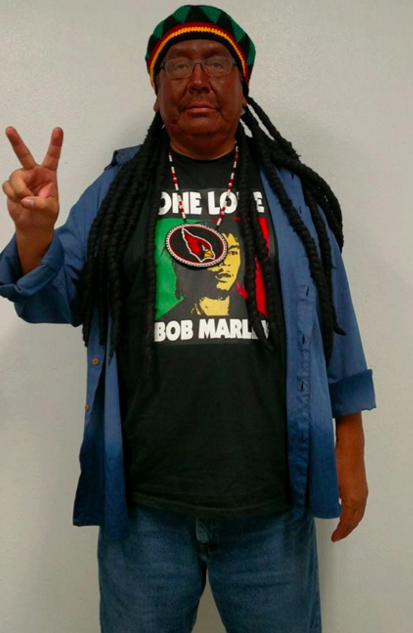
This year, Rambler’s Halloween costume was Jamaican musician Bob Marley, complete with dreadlocks, wig, and rasta beanie. He also wore appropriate make-up to look like Marley.

Here is what the chief looks like most days:

Terry

Here he is on Halloween as the Reggae icon…

Halloween Marley

The costume is making  Rambler the target of criticism from both sides of the controversy: Redskins defenders who view his make-up as “blackface” and thus hypocritical, and his own Team Political Correctness, which sees Rambler as engaging in the same kind of insensitive conduct they claim the Washington Redskins embody.

To make things worse for Rambler, there was another recent Bob Marley controversy in  Gaston County, (North Carolina), where a sheriff’s captain  apologized  for wearing dark make-up as part of her own Marley Halloween costume after her in-costume photo appeared online.

And thus your Ethics Alarms Ethics Quiz of the Day is…

Was the Native American activist’s Bob Marley make-up unethical or hypocritical?

Continue reading

Of Kanye And Caitlin: What Are Rational Ethics Standards For Halloween Costumes?

boston-marathon-victim

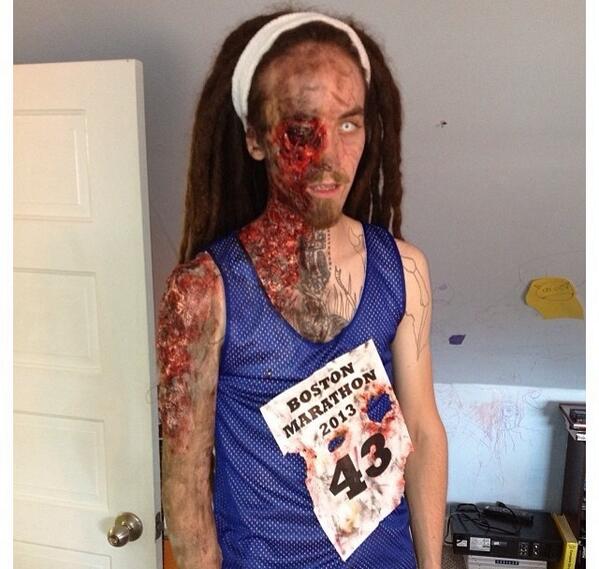
The standards of acceptable Halloween costuming, as you might have predicted given the catalyst President Obama has given to extreme restrictive political correctness, keeps evolving to the hypersensitive and the restrictive. The issue is easier with children’s costumes: children’s masquerades should be age-appropriate; they should not be manikins for their parent’s senses of humor or political views, and as long as they are in the spirit of horror movies, the criticism of those who don’t understand horror movies should be jeered at or ignored. The major controversies arise now over adult costumes. Ethics Alarms has been covering the phenomenon for  awhile: let’s review the topic as previously explored here before I delve into its 2015 edition: Continue reading

Comment of the Day #1: Ethics Quiz: The Looney Tunes Cartoon Disclaimer

coonsongs

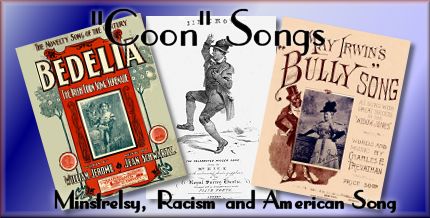
The Looney Tunes post was the latest in along line of those that I never anticipated provoking the rich discussions that they have, and this fascinating post by SamePenn really took off into an unexpected direction—ragtime and racist songs—that is  still relevant to the post. Just read, enjoy, ponder and learn; I did.

Here is SamePenn’s Comment of the Day, and there’s a second COTD coming,  on the post, Ethics Quiz: The Looney Tunes Cartoon Disclaimer: Continue reading

Othello Ethics: When Political Correctness Is Unethical

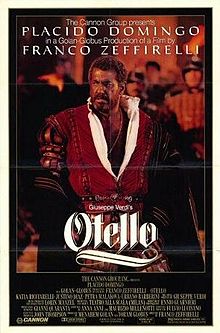
OtelloposterI don’t know how I missed the fact that opera producers and directors had stopped playing Shakespeare’s Othello in Verdi’s “Otello” as a black man, but I’m glad I did for this long—it allowed me a few more fleeting days of ignorant happiness without dreading the collapse of civilization as we know it. Apparently, however, that is the trend, and now the Metropolitan Opera is caving to the nonsense as well.

It makes perfect sense that most theater companies stopped using dark makeup on light actors for their “Othellos”, because there is seldom a valid reason to cast a white actor in the role: there are plenty of African Americans up to the task. Now, if a great white actor should want to play the role as a black man—like Laurence Olivier did in the 1960s—why not? Judith Anderson played Hamlet (“Hamlet lost” announced one critic); this is why it’s called “acting.” Still, I appreciate the position that the one black tragic hero in Shakespeare’s canon should not be casually distributed to an actor who can easily be cast in any of the other great roles, while black actors have far too few opportunities to star in the classics.

Opera, however, poses a different problem: Otello is a prime tenor role and there are not great black tenors in abundance. Moreover, it is one of the great tenor role: if you are a great tenor, it doesn’t matter if you are green—people want to hear you sing the role. Thus the Met’s new production of Verdi’s “Otello” that will open its season next month will star a white tenor, but not in black makeup. Continue reading

A Jumbo For Sulu

SuluGeorge Takei, the Japanese-America actor permanently enshrined in pop culture history for his role of Sulu in the original “Star Trek” TV series. He has essentially lived off that one felicitous part for forty years, recently acquiring less moldy,  non-sci-fi following by being a gay rights advocate.

Takei recently skimmed, or just didn’t comprehend, Clarence Thomas’s  audacious dissent to the Supreme Court’s Obergefell ruling and Justice Kennedy’s majority opinion declaring same-sex marriage to be a fundamental right protected by the Constitution. Apparently he also does not comprehend that Supreme Court dissents are both stimulating and useful to legal scholars as well as those, unlike Mr. Sulu, possessing an open and curious mind.

Thomas made the unusual but provocative argument that human dignity is innate:

Human dignity has long been understood in this country to be innate. When the Framers proclaimed in the Declaration of Independence that “all men are created equal” and “endowed by their Creator with certain unalienable Rights,” they referred to a vision of mankind in which all humans are created in the image of God and therefore of inherent worth. That vision is the foundation upon which
this Nation was built.

The corollary of that principle is that human dignity cannot be taken away by the government. Slaves did not lose their dignity (any more than they lost their humanity) because the government allowed them to be enslaved. Those held in internment camps did not lose their dignity because the government confined them. And those denied governmental benefits certainly do not lose their dignity because the government denies them those benefits. The government cannot bestow dignity, and it cannot take it away.

Thomas was expressing  his disagreement with the majority that the government withholding the right to marry from gays robbed them of human dignity. I think it is a rather pedantic argument that has more validity in the abstract than in reality, but the position that rights come from creation rather than the government is a core concept in the Declaration of Independence, and one that statists, as in “modern Democrats,” like to ignore. If individuals are born with rights, they cannot be truly taken away. If citizens must look to the government to have their rights granted to them, then government is granted too much power in exchange. Thomas’s philosophical argument is classic conservatism. Naturally, that means, in Takei’s intolerant and partyist world view, that he deserves abuse. Continue reading

Comment of the Day: Prosecutor Ethics, “What The Hell Were You Thinking?” Dept: Dog-Whistling “Dixie” To The Jury

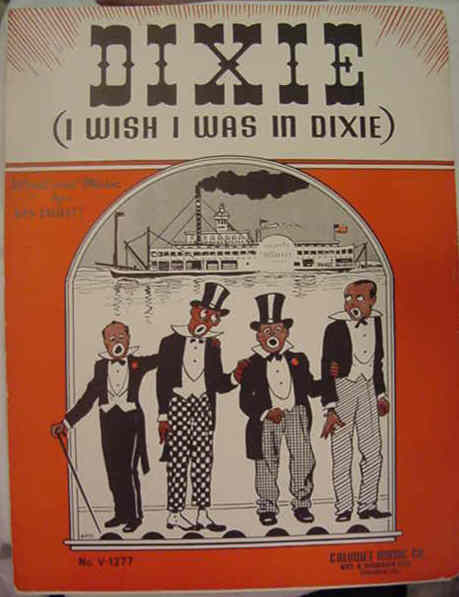
Dixie

I will introduce this fascinating Comment of the Day by one of the blog’s masters of the long form comment, Chris Marschner,  by saying that I think it is only tangentially related to the post, though he would disagree. Chris is writing about the history of “Dixie” and why it should not be associated with racism. Whether I agree with that analysis or not, the fact is that the public does overwhelmingly associate the song with a longing for the simplicities of the Old South, when the darkies were singing in the cotton fields and those Northern folks weren’t sticking in their noses where they don’t belong. This is the basis of an Idaho court’s decision to overturn the conviction of a black defendant after the prosecutor gratuitously and needlessly quoted the lyrics of the song in her closing argument.  That decision was correct, because the issue is whether the comment could reasonably have been an appeal, or seemed like an appeal, or have had the effect of an appeal, to racial bias. I don’t think that conclusion is arguable.

Here is Chris’s Comment of the Day on the post, Prosecutor Ethics, “What The Hell Were You Thinking?” Dept: Dog-Whistling “Dixie” To The Jury:

The prosecutor failed her client – the people- not because she used the words of an 19th century song but because she failed to come to understand that history and culture of the US has been so bastardized that even an appellate court has no understanding and context of the origins of the song and the history and culture of the south. And, because of its misunderstanding believes the lyrics to be racially prejudicial.

“Maybe Erica is so young, color blind and historically ignorant that she had no idea that “Dixie” has been played at Klan rallies and used as the campaign theme for states rights, segregationist, white supremacy candidates since the Civil War. Maybe she didn’t recognize the cotton reference as racial.”

This song was written by a northerner named Daniel Decatur Emmett and performed in New York in an 1859 minstrel show by Emmitt in blackface. The reference to cotton is geographic in nature because cotton represented the primary agricultural commodity and wealth creator of the southern states – nothing more unless one is predisposed to finding anything related to the antebellum south as racist

Many songs have been coopted by various groups but to suggest that lyrics of Dixie are inherently racial because they are used by White supremacists is faulty logic. If a white supremacist adopted the image of Leonardo D’Vinci’s David or Venus d’ Milo or other classical work of art on their flag that would not mean that any such depiction suggests racial superiority. Continue reading

Ethics Quiz: What Was Unethical About ESPN’s Illustration To “What if Michael Vick Were White”?

What if Michael Vick were a hippopotamus?

For your first Ethics Alarms Ethics Quiz this September, we revisit ESPN’s controversial article by journalist Touré, who was assigned the task of engaging in the thought experiment,“What would have been different if Michael Vick were white?”

Vick, for all you football-challenged readers, is the current star quarterback of the Philadelphia Eagles who just signed a $100 million contract with the team and another rich deal with Nike. A few short years ago, Vick was in prison, his NFL and endorsement contracts cancelled, his career seemingly over, because of his conviction on multiple counts of animal abuse charges and running a dog-fighting ring. Since his release, Vick has done all the right things in the public rehabilitation of his image, and his remarkable football talents did not erode in jail. When Vick was being prosecuted, a number of journalists and commentators who should have their brains put out to pasture asked if Vick, who was shown to have personally electrocuted and beaten to death some of his dogs, would have been treated less harshly by the law had he been white. The answer was and is no (or perhaps “no, you idiots”), just as it was for O.J. Simpson. Continue reading