Super Bowl Sunday Ethics Quote Of The Day: Professor David DeSteno

pro-brady

“It’s not about the true facts, or about how honest you believe a group is, or what the group’s past behavior is. It doesn’t matter what sport it is, or what team it is, or even if it’s sports at all. Just being a part of a group, any group, is enough to excuse moral transgressions because in some way, you’re benefiting from it. Your moral compass shifts.”

—-David DeSteno, Northeastern University Professor of psychology, explaining why Boston fans believe the New England Patriots, their coach, Bill Belichik, and their star quarterback, Tom Brady, are as pure as the driven snow, while the rest of the country sees them as detestable

The professor’s point will be familiar to any Ethics Alarms readers who have perused the various pots here regarding cognitive dissonance, or even those familiar with the mantra, “Bias makes you stupid.”  However, he has done some interesting research on the phenomenon described in the Times Sports article this morning.

In a psychological experiment, researchers separated people into two groups and offered some of them an option: Complete a fun, 10-minute task, or take on a difficult, 45-minute one. Placed in a room alone, they were told to choose which task they would have to do, or let a coin flip decide. Either way, the person entering the room next would be left with the other task.

Afterward, those people were asked to rate how fairly they had acted, and 90 percent said they had been fair. Except that they were lying. In fact, they had picked the easy task for themselves, without even flipping the coin, wrongly believing that no one was watching…

DeSteno and his former student Piercarlo Valdesolo conducted studies that showed that even strangers placed into groups quickly start favoring the people in their group, as they would favor themselves, even if that group was created randomly, and only minutes earlier. Morality, as it turns out, can change by the second, and for no good reason.

Professor DeSteno told the Times that this isn’t a conscious decision, but an innate survival reaction…. Continue reading

Unethical Quote Of The Week: Boston Mayor Martin J. Walsh

sanctuary-cities

“To anyone who feels threatened today, or vulnerable, you are safe in Boston. We will do everything lawful in our powerful to protect you. If necessary, we will use City Hall itself to shelter and protect anyone who’s targeted unjustly.”

—–Boston’s mayor, Martin J. Walsh, announcing defiance to the President Trump’s Executive Order cutting off federal funding to municipalities that did not cooperate with federal immigration officials.

Is Mayor Walsh under the impression that America’s laws protecting its borders and extending its sovereignty over the crucial area of immigration control are the equivalent of the Fugitive Slave Act? It would seem so.

The grandstanding statement by Walsh is the most extreme yet from the 100% wrong and unethical mayors of so-called sanctuary cities, which include major metropolises like Boston, Los Angeles, New York, Los Angeles, Chicago, and smaller cities, many of them college towns, like New Haven; Syracuse; and Austin. There are over 300 in all.

The legal issue is interesting and not at all settled. A 2012 Supreme Court decision held that Congress is not permitted to set conditions on spending to coerce states or localities to participate in federal programs against their will, but other decisions are no so clear. Moreover, when a city actively interferes with the enforcement of the law—not merely not participating in the program, but actively interfering with it the in way the Walsh describes—the federal government should have some effective way of responding. I see another SCOTUS case coming, don’t you? What if Boston decided that it would provide sanctuary for drug dealers, kidnappers, spies and terrorists? Could it do that, too?

Some of the other mayors have been only slightly more moderate. San Francisco’s mayor, Ed Lee, issued a joint statement with the mayor of Oakland, Libby Schaaf, and Mayor Sam Liccardo of San Jose:

“We will not give in to threats, or political grandstanding. Together, the Bay Area will stay true to our values of inclusiveness, compassion and equality, and united against any and all efforts to divide our residents, our cities, and our country.”

Look! Political grandstanding about political grandstanding! Imagine: the President of the United States wants to enforce immigration laws! How dare he? In Chicago, Mayor Rahm Emanuel proclaimed, while ducking bullets presumably,

 “I want to be clear: We’re going to stay a sanctuary city. There is no stranger among us. Whether you’re from Poland or Pakistan, whether you’re from Ireland or India or Israel and whether you’re from Mexico or Moldova, where my grandfather came from, you are welcome in Chicago as you pursue the American dream.”

Having illegal aliens who have committed crimes flee to Chicago might work out, since the murder rate there should thin their ranks considerably. Continue reading

‘It Profits A Law Firm Nothing To Give Its Soul For The Whole World … But For Hillary, Thornton?’

Once again, a memorable line from the best ethics film of them all, “A Man For All Seasons,” came rushing back to me as I observed another example of professionals abandoning their ethical principles to assist the most demonstrably corrupt Presidential candidate in U.S. history, Hillary Clinton.

Not just her, however, to be fair. The Thornton Law Firm in Boston has used an illegal and unethical maneuver to circumvent election laws and give millions of dollars to the Democratic Party and Sen. Elizabeth Warren, Sen. Harry Reid, President Obama and, of course, Hillary, among others.  The scheme was revealed by the Center for Responsive Politics and the Spotlight investigative team at the Boston Globe.

The firm has just ten partners, but is one of the nation’s biggest political donors. A whistle-blower sent firm documents showing that firm members have been making large donations to Democrats, only to be reimbursed by the firm days or even hours later with bonuses matching the amounts donated exactly.

Federal law limits partnerships–law firms are almost all partnerships—to maximum donations of $2,700 per candidate. This was what is called a “straw donor” plot. “Straw donor reimbursement systems are something both the FEC and the Department of Justice take very seriously, and people have gone to jail for this,” Center for Responsive Politics editorial director Viveca Novak told CBS. Continue reading

Ethics Quiz: Boston’s A-Rod Dilemma

newsday-AROD

This is a really, really hard one.

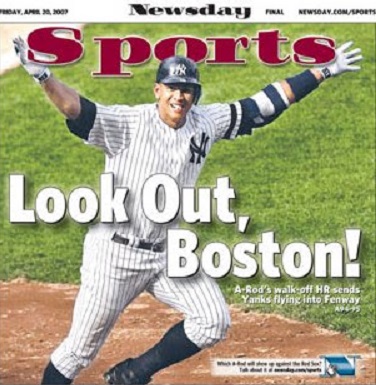
Over the weekend, as reported here, Yankee superstar/pariah/cheating jerk for the ages Alex Rodriguez announced that he would “retire” after next Friday night’s game. He’s not really retiring, of course. Like almost everything involving A-Rod, lies and cover-ups reign. Since the Yankees were going to have to pay the rest of his contract to the tune of 27 million bucks either way, they told Alex that they could release him, thus ending his career on a sour note, or allow him to pretend to make the decision to leave the game himself, which would be better PR for all concerned.

However, the announcement presents a problem for the Boston Red Sox. A-Rod’s next-to-last game is Thursday night in Fenway Park, and a player with Rodriguez’s astounding career on-field achievements would typically warrant an on-field salute, like the Sox gave Yankee icon Derek Jeter when he retired. The problem is that Red Sox fans don’t like or respect A-Rod, and they shouldn’t. No baseball fan should. He disgraced the game with his drug use and lies; was an unsportsmanlike presence for most of his career, and will not reach the Hall of Fame despite one of the best careers ever unless the Hall junks all of its character requirements.

Yet reciprocity raises its ethical head. David Ortiz, the beloved Red Sox slugger, is also retiring after this season, and the Yankees have planned to give him a big send-off when Big Papi plays his last game in Yankee stadium. How can the Red Sox snub A-Rod, and expect the Yankees to honor their hero? If the Red Sox do hold a ceremony for Rodriquez, will Sox fans use it as an opportunity to heap well-deserved abuse on Alex one last time? If Sox fans fill Fenway with boos, will Yankee fans reciprocate by ruining Ortiz’s moment in New York? (I would give my guess on this, but it might expose a long-held bias against Yankee fans.)

Your Ethics Alarms Ethics Quiz of the Day:

What is the most ethical way to handle this awful situation?

Continue reading

Ethics Film of the Year: “Spotlight”

No spoiler alerts necessary; I’m not going to say much about the film’s plot. Just go see it.

Sure, I was predisposed to like “Spotlight.” It’s about Boston, my home town; Fenway Park even appears in it, Red Sox and all.  I had also followed the unfolding Catholic Church sexual molestation scandal there that the Boston Globe broke in 2002. This was the Globe’s momentous investigative journalism series which showed the extent to which high-ranking Church officials allowed child predator priests to continue harming trusting kids, as the Church paid for confidential settlements to victims and transferred the criminal priests to other parishes, where they could, and did, strike again. “Spotlight” tells the story of how a group of Globe editors and reporters finally exposed a local conspiracy of corruption that spread across institutions and professions, and that pointed to a world-wide scandal that still haunts the Catholic Church today.

It’s a better ethics movie than “All The President’s Men,” to which it will inevitably be compared. Whether it’s a better movie or not is a matter of taste. (I liked it better.) Where the movie really shines, however, is how it raises so many of the ethics issues we routinely cover here, such as…

  • Legal ethics: the duty of lawyers to represent clients, confidentiality, and when, if ever, human ethics require the breaching of professional ethics.
  • Ethics corruptors, and what happens when admired, trusted and powerful people and institutions require their followers to show their loyalty by ignoring, rationalizing or covering up wrongful acts.
  • Journalism ethics: the business of journalism’s conflict with the duty of journalists to find and publicize the truth; how ambition, personal biases and non-professional concerns can warp perspective and performance
  • Ethics and religion, hypocrisy, and the institutional utilitarian choice to protect the whole when it means sacrificing individuals
  • Rationalizations, including the Saint’s Excuse and the King’s Pass, in which prominence and “good deeds” seem to justify double standards.
  • Hindsight bias, Moral luck, and more.

Continue reading

The Ridiculous, Sad, But Somehow Not Very Surprising Tale Of The Plagiarizing College Vice-President In Charge Of Plagiarism

WheelockThis may be why cheating among  high school and college students is out of control.

Shirley Malone-Fenner, Wheelock College’s vice-president in charge of academic affairs for the Boston based college, resigned today.  The reason: though her responsibilities included oversight of the investigation and discipline of students accused of  academic plagiarism, Malone-Fenner’s welcome-back letter to the faculty last month…was plagiarized.

The inspiring four-page letter from Malone-Fenner contained at least six passages from the letter Harvard’s president Drew Faust wrote to her returning faculty in 2007. Experienced plagiarists, however—and who has more experience with plagiarism than a college’s academic affairs authority?— knows that it is better to mix sources, so the  letter also contained verbatim and barely altered phrases, sentences, and passages from  a 2004 welcome letter from the president of Rutgers University, as well as sections of  a 2010 letter from the president of the University of the Pacific in California.

A suspicious Wheelock professor ran Malone-Fenner’s letter through software the school uses to detect student plagiarism, discovering the damning parallels. The faculty subsequently called for her metaphorical head.

That head didn’t help matters by dreaming up pathetic explanations like this one, which she gave to the Boston Globe:

“In preparing my message, I reviewed many letters from other institutions and used words from others’ welcoming messages without attribution. What I intended to share is quite simple — I am excited about working with each member of the faculty to make this a most successful year.”

Translation: “Crap, you got me.”

What does what she was “trying to do” and how “excited” she was about it have to do with the fact that she obviously and unethically tried to pass off the words of others as her own? I bet many of the students she has nailed for plagiarism have come up with better excuses than that. Continue reading

Beware of Heroes: Why Tom Brady Is An Ethics Corrupter

fallen heroAs a born Bostonian, proud of the Hub’s tradition of elevating the nation’s ethical sensitivities, the spectacle of the old city’s football fans embarrassing themselves out of loyalty to a home town quarterback who doesn’t deserve it is nauseating. As a recent New York Times feature gruesomely illustrates, Tom Brady’s complicity in a successful cheat to get the New England Patriots into the Super Bowl has corrupted the usually reliable ethical values of this iconic city.

The information coming out of the NFL is that Brady’s cheating, lying about it, refusing to cooperate with the league’s investigation and—I hope this is taken into consideration—his smirking attitude about the incident since the results of the investigation were announced will get him suspended for 6-8 games. Think of it: Boston has been so corrupted by its sports star that it is now less ethically sensitive than Roger Goodell.

Now that’s corruption. Continue reading

Ethics Alarms Encore: “Tom Yawkey’s Red Sox Racism, and How Not to Prove It”

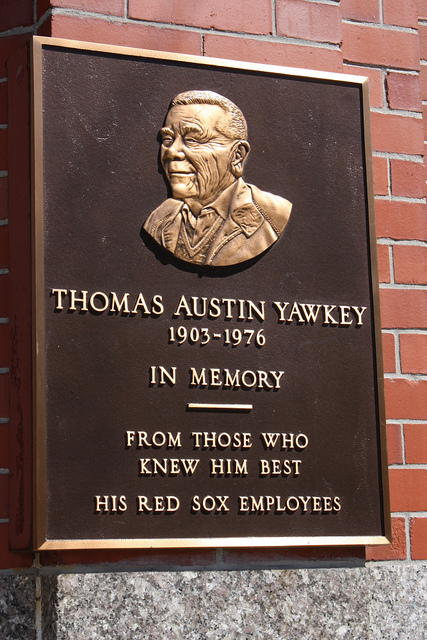
Yawkey TributeEvery now and then a comment out of the blue reminds me of a post that I had forgotten. That was the case here. Reading it again for the first time in five years, I was struck by how the crux of the post is still relevant today (that crux has nothing to do with baseball), and indeed how the intervening five years have made what I thought was a bad trend a genuine political and cultural malady.

And the World Series is going on, and I feel badly about the Red Sox having such a miserable season. This post, which few read when it was first published as the blog was attracting (let’s see…) less than 200 views a day as opposed to nearly 4000 a day now, is a good one, and I enjoyed it.  That “self-professed ethicist” has his moments…. Continue reading

Jerry and Jared Remy, Parental Accountability, Hindsight Bias, and The Bad Seed

This is a tragic local story with vast ethics significance.

Father and son.

Father and son.

Long-time Boston Red Sox broadcaster Jerry Remy, a native Bostonian and former player who has been a vivid part of the Boston sports scene since 1977, was stunned by tragedy last summer when his oldest son, Jared, 35, allegedly murdered his girlfriend by stabbing her to death as their  ive-year-old daughter looked on. Prior to the incident, most New Englanders were unaware of Jared Remy’s problems, but his ugly past soon found its way into the newspapers.

A recent Boston Globe investigative report appeared to be the saga of a “bad seed” right out of a horror movie, for Jared Remy, son the popular, affable Jerry, had been arrested, and released, 19 times, for an assortment of alleged crimes, many of them violent. They included battering and threatening a high school girlfriend; pushing a pregnant girlfriend out of a moving car; texting death threats to her, and attempting to beat her up; threatening to kill yet another girlfriend;  terrorizing a fourth sufficiently that police were called to their apartment eight times; and involvement in steroid peddling and abuse. The Globe also obtained the testimony of a woman who alleges that Jared joined her in brutally beating a high school boy, causing him permanent brain injuries.

The Globe story (and others) raised the question of how and why the Massachusetts justice system kept releasing Jared. It is a valid question, not peculiar to his case, unfortunately. Many have speculated that Jared’s  status as the son of popular Boston sports figure played a part in getting him extraordinary leniency, but as Remy’s lawyer pointed out, several of the incidents also involved complainants and alleged victims who refused to testify or withdrew their complaints. In the realm of domestic abuse, evidently Jared Remy’s specialty, this is too common. The Globe writer, Eric Moskowitz, also insinuated that the Remys went too far in supporting their disturbed, violent and troubled son, who had learning disabilities and other clinical behavioral problems. They apparently paid for psychiatric treatment, counseling and legal fees, and helped with his rent and other expenses, though the extent of this has not been confirmed by the Remys, the only ones who could be authoritative on the topic. The rest is hearsay.

Jerry Remy, who has battled depression his whole adult life, withdrew from his role as color commentator after his son’s arrest, missing the Red Sox championship run. Outside of a brief statement condemning his son’s actions and expressing condolences to the parents of the victim, Jennifer Martel, Remy was silent until announcing this Spring that he would try returning to the broadcast booth for the upcoming season. Then, as Spring Training for the Red Sox ran down and Remy seemed, outwardly at least, capable as ever of being an affable presence with whom to watch the home team’s exploits,  the Globe story appeared. The revelations about Jared unleashed an unexpected (by me, at least) backlash against his father, and Bostonians in droves bombarded the sports radio talk shows, blogs and news media websites with the opinion that Remy should step down as Red Sox color man for cable broadcasts. How they reached this ethically indefensible position is instructive regarding how inept and unskilled most people are in day-to-day ethical analysis, how emotion becomes a substitute for objectivity and logic,  how hindsight bias makes experts and judges out of individuals with the credentials of neither, and also how ignorant most of the public is about the ethical obligations and duties of the legal profession.

Here are the reasons being cited for why Jerry Remy should give up his career:

Continue reading

Now THIS Is An Unethical Public Employee

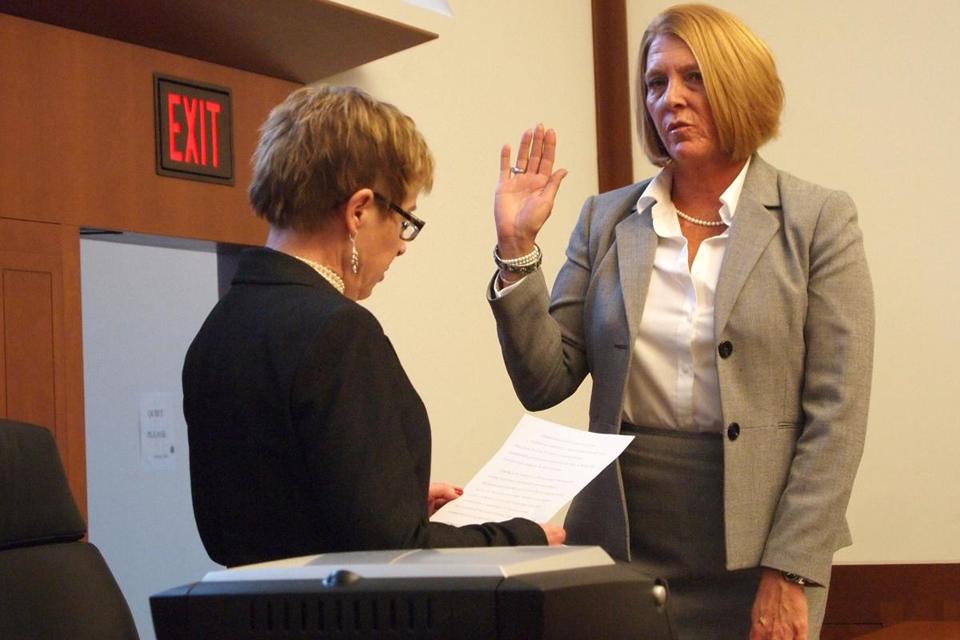
That's Campatelli on the right,

That’s Campatelli on the right,

This is the beginning of the Boston Globe’s front page story about an investigator’s report on the conduct of Patricia Campatelli, the Suffolk County (in Boston, Mass.) Register of Probate, an elected position:

“Patricia Campatelli often worked only 15 hours a week at her $122,500-a-year job as Suffolk County register of probate, and she spent much of that time taking “numerous smoking breaks, scratching lottery tickets, looking at East Boston real estate on the Internet, and filling out puzzles,” according to employees quoted in a confidential report obtained by the Globe.

Even before the embattled Campatelli was accused of punching an employee in the face…”

The rest of the story didn’t make coffee come out my nose like the last part, but it was pretty jaw-dropping nonetheless. Campatelli, who is clearly a piece of work, is currently on administrative leave and denies everything in the report, despite the statements of virtually everyone who works with her that were provided to the court-appointed investigator Ronald P. Corbett, Jr. Corbett’s report has been forwarded to a committee of the Supreme Judicial Court for possible disciplinary action. Continue reading