As regular readers here know, I strongly favor capital punishment, but only when there is no doubt whatsoever about the facts and the guilt of the convicted defendant, when the crime is so cruel, horrific and premeditated that normal murders seem tame in comparison, and when the procedural due process is followed to the letter.
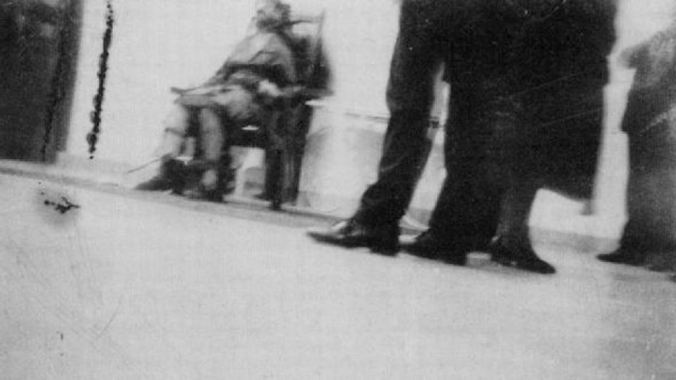
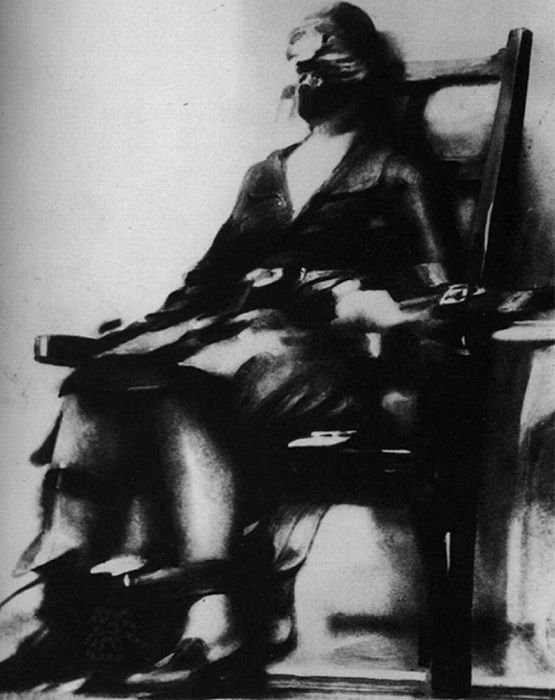
Certain themes and issues are certain to recur on an ethics blog and never be resolved. Among them are abortion, “hate speech,” illegal immigration, reparations for slavery, drug legalization, gun control, war (HUH! What is is good for?], climate change and capital punishment. From the captain’s chair at Ethics Alarms, some of these seem more difficult than others. Capital punishment is not among them. [Above is the sensational and illegal photo in 1925 of the first woman ever sent to the electric chair as the switch was pulled. Ruth Snyder, a housewife from Queens, New York, took a lover and recruited him in a plot that ended with her husband’s brutal death; a reporter had a secret camera device strapped to his leg. Her story was the basis of many fictionalized versions, including the classic film noirs “Double Indemnity” and “The Postman Always Rings Twice” and the brilliant expressionist stage drama “Machinal” by Sophy Treadwell.]
I’ll play: I believe non-lethal crimes that ruin lives to the magnitude that Bernie Madoff did with his Ponzi scheme ethically support a death sentence. Last week the late investing whiz’s sister and her husband were found dead in an apparent murder-suicide that was probably another consequence of his crime.
I read the Bucklew case, where the SCOTUS decided, quite sensibly, that there is no right to a painless execution. What stuck out to me is the penultimate paragraph in Breyer’s dissent, in which he states that as we move forward there may be no constitutional way to implement the death penalty. That, I submit, is one more reason we needed to either get that sixth conservative justice on the Court or get Breyer out of there. Continue reading →
Good, and also legal, ethical, just, fair and necessary.
Justice Thomas wrote the majority opinion in United States v. Tsarnaev. It is, like most Thomas opinions, long, careful, thorough, and persuasive. The dissent by Justice Breyer, in contrast, is uncharacteristically weak, and the other two “liberal” justices did themselves no favors by joining it. Essentially, it is an example of exactly the judicial legislating that conservatives rightly complain about. Breyer grasps at a dubious legal straw to do indirectly what he cannot do directly: ban capital punishment, which is both legal and constitutional. His whole argument in his own nutshell:
During the sentencing phase of his murder trial, Boston Marathon bomber Dzhokhar Tsarnaev argued that he should not receive the death penalty primarily on the ground that his older brother Tamerlan took the leading role and induced Dzhokhar’s participation in the bombings. Dzhokhar argued that Tamerlan was a highly violent man, that Tamerlan radicalized him, and that Dzhokhar participated in the bombings because of Tamerlan’s violent influ-ence and leadership. In support of this argument, Dzho-khar sought to introduce evidence that Tamerlan previously committed three brutal, ideologically inspired murders in Waltham, Massachusetts. The District Court prohibited Dzhokhar from introducing this evidence. The Court of Appeals held that the District Court abused its discretion by doing so…. This Court now reverses the Court of Appeals. In my view, the Court of Appeals acted lawfully in holding that the District Court should have allowed Dzhokhar to introduce this evidence.
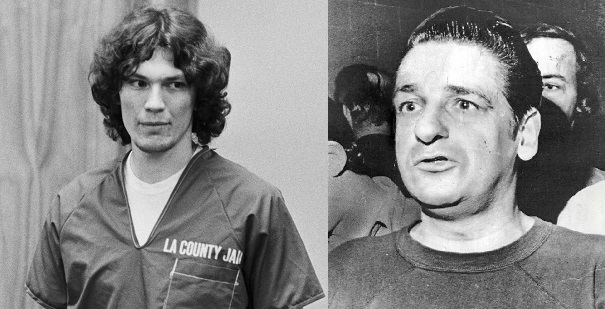
Yesterday was the anniversary of one of The Boston Strangler’s more audacious murders: Albert DeSalvo (right, above) raped and strangled Mary Sullivan in her Boston apartment, then left a card reading “Happy New Year” leaning against her foot. She was the 13th and last victim of the maniac who terrified the Boston area between 1962 and 1964. I had a near meeting with DeSalvo: in 1964, he knocked on the door of my family’s neighbors, the Morelands, one afternoon. I saw him; of course, I didn’t know who he was or why he was there. It turned out that he had the wrong address, and went to the street parallel to ours in Arlington, Mass. and murdered the woman who lived at the same house number.
DeSalvo was a serial maniac. In the late 1950s, he knocked on the doors of young women’s apartments, claiming to represent a modeling agency and telling them he needed to take their measurements. Then he fondled the women as he used his tape measure. Police called him “Measuring Man.” Next he broke into hundreds of apartments in New England, tying up the women and sexually assaulting them. He always wore green handyman clothes and became known as the “Green Man.” But “The Boston Strangler” was the name that stuck. DeSalvo avoided execution or even the full life sentence F. Lee Bailey negotiated for him. He was stabbed to death by an inmate at Walpole State Prison after less than a decade behind bars.
Richard Ramirez, aka.”The Night Stalker,” was, amazingly, worse than DeSalvo; last night I watched a documentary about his reign of terror in the ’80s. A Satanist, Ramirez murdered at least 15 people, committed burglaries and rapes, and sexually molested children. He remained defiant throughout his trial, and though he was sentenced to death, California’s endless appeals system kept him alive, at great taxpayer expense, long enough to perish of cancer after less than twenty years in prison.
Both DeSalvo and Ramirez are excellent examples of the kind of anti-social predators who warrant society having and using a death penalty to establish the ultimate punishment for those who have unequivocally forfeited their right to exist in civilized society. For people like them, capitol punishment is ethical. Allowing them to live on society’s dime is unethical, as well as unjust.
1. To lighten the mood, consider this public service spot by Hawaii’s Department of Health. “Keiki” is Hawaiian for “child.”
Yes, this is the level of awareness so many of our state bureaucracies exhibit. The thing was actually greenlighted. After it had been viewed many times, the video was pulled. “As soon as I saw it this morning, I thought, ‘Hey guys, let’s pull this,’ ” Brooks Baehr of Hawaii’s DOH told reporters. “The intentions were noble, but it was clearly not our best work.”
Boy, I hope it wasn’t their best work. With thinking like this going on in our health departments, no wonder the pandemic is still with us. Continue reading →
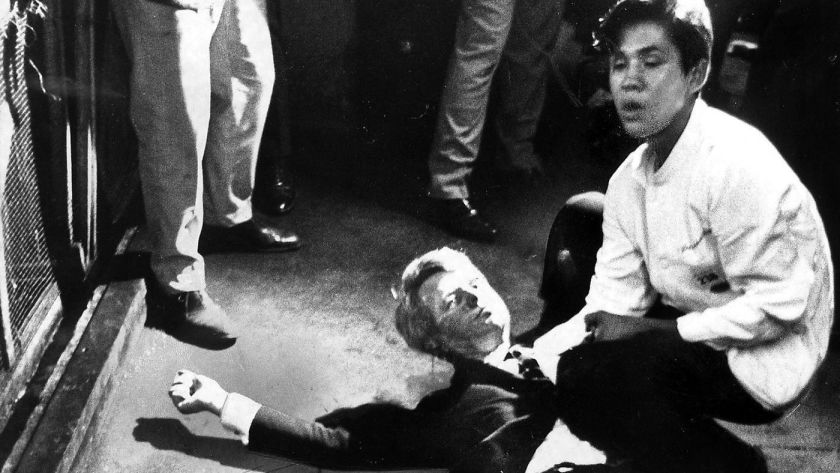
Newly elected Los Angeles County District Attorney George Gascón issued a directive that his office’s “default policy” would be not to attend parole hearings and to submit letters supporting the release of some inmates who had served their mandatory minimums. Now Sirhan B. Sirhan, the convicted assassin of Sen. Robert F. Kennedy, will be a beneficiary of the policy as he faces a California parole board for the 16th time tomorrow. in a prison outside San Diego. Unlike the first 15 times, no prosecutor will oppose his release.
Sirhan is now 77. He escaped execution when California, being California, abolished the death penalty and his sentence was reduced to life with the possibility of parole. Instead of death, then, his punishment for murdering a possibly transformational U.S. political leader might be only 53 years behind bars. It could have been fewer: under the California law in effect when the assassin struck in 1968, a life sentence with parole would have made Sirhan eligible for release after only seven years. Now the parole board will evaluate him as an inmate who has had no disciplinary violations since 1972, and has expressed remorse, sort of: at one, “I have feelings of shame and inward guilt … I honestly feel the pain that [the Kennedys] may have gone through.” On the other hand, he has never expressly admitted his guilt and now claims not to remember shooting Bobby.
Funny, you’d think he would recall something like that.
Usually ethics quizzes on Ethics Alarms involve borderline ethics conflicts or dilemmas that I can’t make up my own mind about. Not this one: on this one: my mind is virtually made up. The arguments that the Arizona plan to use cyanide gas in future executions is an ethics outrage because of previous uses of cyanide gas seem contrived, emotional, and, frankly, weird, with no ethical validity whatsoever. But the intensity of these arguments make me wonder if I’m missing something, and Voilà! An Ethics Quiz!
The state of Arizona allows condemned inmates to choose the gas chamber, rather than lethal injection, if they committed a capital offense before November 23, 1992. Arizona’s attorney general, Mark Brnovich, is seeking to complete the execution of two men who committed murders before that date, and Arizona officials are reconditioning the state’s mothballed gas chamber in case they pick gas over a shot. Arizona authorities plan to use, if it comes to that, hydrogen cyanide to concoct the fatal agent of death. Cyanide gas is a particular gruesome way to die. It takes almost 20 minutes, in some cases, and this is a problem for some people.
Not for me: I find the obsession with making sure executions of the upper tier monsters who earn capitol punishment as pleasant as a spring day to be incomprehensible, and always have. We’re killing someone. It might hurt a little, and it won’t be pretty. An 18 minute judicially sanctioned death isn’t “cruel and unusual,” especially if the subject chose it. What I find cruel and unusual is the way our endless system of appeals dangles executions over the heads of Death Row inmates like a Sword of Damocles from Hell.
Absolutism is a bitch, as people used to say about Emanuel Kant behind his back. Absolute means absolute, and by taking an absolute position, you have waived the right to retreat, as rational ethical beings must sometimes, to the shelter of the Ethics Incompleteness Principle. Thus I confess to being thrilled at the dilemma President Biden has found himself in as the Supreme Court considers whether Dzhokhar Tsarnaev, the surviving partner of the Chechnyan terrorist bother act that bombed the Boston Marathon in 2013, deserves the death penalty.
Oh, gee, let me thin–YES! Of course he should die. The position here on capitol punishment is that having the ultimate punishment as the penalty for ultimate evil is crucial in order to maintain society’s reverence for human life and the rule of law. I don’t care if we only haul out “Old Sparky” for true monsters, like the Cheshire home invaders, Jeffrey Dauhmer, and James Earl Ray. Heck, I don’t care if you decide to only execute Tsarnaev and monsters like him, meaning those who, like him and his big bro, plant deadly shrapnel bombs where they know a happy crowd and families will be gathering for an annual event, where they killed three people, injured 260, many of them badly, including seventeen people who lost limbs. The brothers also killed a law enforcement officer as they attempted to escape.
Opponents of the death penalty are a funny bunch, and by funny I mean “they love grandstanding until they learn the details.” In the aftermath of the D.C. Snipers case, pollsters found that a significant percentage of those who said that they were unalterably opposed to capital punishment also said “buuuut I wouldn’t fight making an exception with those snipers.”
Then you are not opposed to capital punishment. It’s that simple.
In March, SCOTUS heard arguments in an appeal of the ruling last year by a three-judge panel of the U.S. Court of Appeals for the First Circuit, That court upheld Tsarnaev’s convictions on 27 counts agaianst him, including First Degree Murder, but ruled that his death sentence should be overturned because the trial judge had not questioned jurors closely enough about their exposure to pretrial publicity and had excluded evidence concerning Tamerlan Tsarnaev, his older brother and accomplice.
That’s Lawrence Paul Anderson above. He has been charged with three counts of first-degree murder after he had been sentenced to 20 years in prison in 2017—just a few years ago— for a probation violation in a drug case. He was granted clemency last year by the Oklahoma Pardon and Parole Board as part of a mass commutation program. Then, about three weeks after his release, Anderson forced his way into the Chickasha, Oklahoma home of Andrea Lynn Blankenship, 41. He killed her, then he cut out her heart. .He then took her heart across the street to the house of his aunt and uncle , cooked it with potatoes (personally, I prefer my human hearts with rice, but different strokes…) and tried to feed it to them “to release the demons,” he said later. Then Anderson attacked the couple and their 4-year-old granddaughter, killing his uncle and the little girl by stabbing them. Anderson’s aunt survived the attack but suffered stab wounds to both of her eyes.
The district attorney in charge of the case, Jason Hicks, said during a news conference last week that he might seek the death penalty for Anderson. “When is enough enough?” Hicks asked. “We have put politics and releasing inmates in front of public safety.”
Democrats in Congress have introduced a bill to eliminate the federal death penalty. I had just finished reading a standard issue op-ed diatribe against the death penalty when I learned about Anderson’s rampage. A couple of weeks earlier, I had seen the documentary on the horrific Cheshire, Connecticut home invasion, which I described in this post:
Planning to rob the home of the Petit family, the two broke into their house and found William Petit sleeping on a couch on the porch. Komisarjevsky bludgeoned him with a baseball bat and tied him up, leaving him bleeding and semi-conscious in the basement. The two men locked his wife, Jennifer, and their daughters, Hayley, 17, and Micheala, 11, in their bedrooms, as the invaders gathered money and valuables. Then Hayes forced Jennifer, at gunpoint, to withdraw $15,000 from the family’s bank account. After they returned from the bank, Komisarjevsky raped Michaela, the 11-year-old, and Hayes raped her mother. William Petit managed to escape the basement while this was happening, and crawled to a neighbor’s house to get help. Hayes strangled Mrs. Petit, poured gasoline on her corpse, around the house, and over both daughters, who were tied to their beds. Then Hayes and Komisarjevsky set everything aflame. 17-year-old Hayley and 11-year-old Michaela died from smoke inhalation before they could burn to death.
Hayes and Komisarjevsky were convicted and sentenced to die; Hayes wanted his lawyers to cease appealing. But while their lawyers were fighting the verdict and after the public’s memories faded, the Democratic Connecticut legislature abolished the death penalty in the state.
I haven’t been moved to do the research, but I would not be surprised if Barack Obama is owed the prize for the worst nomination for the U.S. Supreme Court ever to be confirmed by the Senate. That would be Sonia Sotomayor, the self-described “wise Latina” who was picked using the same criteria that led to Joe Biden choosing Kamala Harris as his VP: checking the right boxes. Obama was seeking a Hispanic judge (another first!) and a woman, but managed to choose a judge with weak credentials whose selection insulted better judges, female judges and Hispanic judges who were more qualified than her, and there were a lot of them. Since her confirmation, Sotomayor has introduced touchy-feely “compassionate” arguments exactly where they should never show their mushy heads: in Supreme Court oral arguments and opinions. Some of her opinions read as if they were composed by anyone with a law degree, though her law clerks are expert at stuffing them with the requisite number of case cites for appearances sake.
The latest example of Soromayor’s sentimental hackery was her dissent in the case of U.S. v. Dustin John Higgs, in which the Court, by a 6-3 vote (guess the three!) turned down the writ of certiorari of a man convicted of kidnapping and murdering three women, and sentenced to death. Justice Sotomayor began,
After seventeen years without a single federal execution,the Government has executed twelve people since July. They are Daniel Lee, Wesley Purkey, Dustin Honken, Lezmond Mitchell, Keith Nelson, William LeCroy Jr., Christopher Vialva, Orlando Hall, Brandon Bernard, Alfred Bourgeois, Lisa Montgomery, and, just last night, Corey Johnson. Today, Dustin Higgs will become the thirteenth. To put that in historical context, the Federal Government will have executed more than three times as many people in the last six months than it had in the previous six decades.
Such an approach is a logical fallacy called “appeal to emotion.” That’s not law, that’s sentiment, assuming one is moved to tears by the idea of multiple convicted murderers finally being executed after years of expensive appeals and stalls. Sotomayor seems to think the fact that the “Federal Government will have executed more than three times as many people in the last six months than it had in the previous six decades” and that it was 17 years before the Trump administration did what should have been done all along has more than trivia value. So what? The U.S. has a death penalty, and finally has decided to follow through on it. Good.
One area in which the likely arrival of the Biden administration will surely signal furious back-tracking efforts will be the perpetual moral and ethical controversy over capital punishment. The execution of Orlando Hall was the eighth since the Trump administration revived capital punishment for federal crimes and the first of three scheduled during the presidential transition, if there is one.
The progressive way of the moment is to minimize or eliminate any punishment whatsoever for crimes. President-sort-of-elect Biden, in an exuberant moment, said during the campaign that there shouldn’t be prison time for any non-violent crimes. (Any non-violent crimes, Joe?) In the throes of the George Floyd Ethics Train Wreck, the bonkers concept has been promoted by the Black Lives Matter constituency that the justice system is so racist that punishing any black citizen for any crime is perpetuating “systemic racism.” Here’s Ellie Mystal, The Nation’s “justice correspondent,” writing way back in 2016:
“Black people lucky enough to get on a jury could use that power to acquit any person charged with a crime against white men and white male institutions. It’s not about the race of the defendant, but if the alleged victim is a white guy, or his bank, or his position, or his authority: we could acquit. Assault? Acquit. Burglary? Acquit. Insider trading? Acquit.Murder? … what the hell do you think is happening to black people out here? What the hell do you think we’re complaining about when your cops shoot us or choke us? Acquit. Don’t throw “murder” at me like it’s some kind of moral fault line where the risk of letting one go is too great. Black people ARE BEING MURDERED, and the system isn’t doing a damn thing to hold their killers accountable. Sorry I’m not sorry if this protest idea would put the shoe on the other foot for a change.”
Mystal isn’t alone, and since the death of Floyd with a white police officer’s knee on his neck, his logic, if you can call it that, has become infectious. Race is a factor that may signal bias by jurors: major political leaders, pundits are and academics are arguing directly that all whites are prejudiced against blacks, and Mystal’s ilk are calling on black jurors to acquit even guilty black defendants as cultural “tit for tat.” (Ellie’s a lawyer and still reached this conclusion, and still is employed as an authority. But don’t get me started on Ellie.)
It is time to reconsider and perhaps revise the absolute principle the Supreme Court articulated in Batson v. Kentucky, 476 U.S. 79 (1986), the landmark decision ruling that a prosecutor’s use of a peremptory challenge in a criminal case, dismissing a juror without stating reason for doing so, may not be used to exclude jurors based solely on their race. After all, if all whites are secretly or subconsciously hostile to blacks, they can’t be trusted to judge the guilt of a black defendant, and if blacks are being urged to fight systemic racism and “mass incarceration” by acquitting guilty black criminals, they can’t be trusted either.
Maybe what we need is all Asian-American juries.
But I digress…slightly. Here was the ABA Journal’s headline regarding the execution of black death row inmate Orlando Hall: “Federal inmate tried by all-white jury is executed after Supreme Court lifts execution stay.” Justices Breyer, Sotomayor and Kagan, the so-called liberal minority on the Court, dissented from the Supreme Court order allowing the execution to proceed without explaining their dissent. They don’t have to. Biden has said he will work to end the use of capital punishment by the federal government, reversing President Trump’s support for it: the Left considers the death penalty to be an 8th Amendment breach, “cruel and unusual” punishment.





 Ethics Alarms