Ethics Hero: “Ludo,” Under-Employed Law Grad Blogger

True Grit - Reminds me of me

As Rooster Cogburn (John Wayne) says of plucky Maddy Ross (Kim Darby) in the original, and best, film version of “True Grit,” Ludo “reminds me of me.”

Naturally, I admire him.

Ludo is, in his own words, ” a recent law school graduate and aspiring writer from Southern California. He is currently overeducated and underemployed, working two jobs and keeping sane only by writing down the stories of the crazy stuff happening to him.  He is currently working on his first book, a collection of stories from his days driving a taxi in Orange County….” He is beginning to get some publicity thanks to his blog, Law Grad Working Retail, which provides sometimes hilarious accounts of his current existence as an over-educated, presumed automatic admittee to America’s powerful and elite presumably thrust into life the way most of America lives it.

Do not lump Ludo with “Nando” and the other bitter, unemployed or under-employed recent law grads who have had their ire aroused by my observations about them on Ethics Alarms   (also here). He is doing exactly what he should be doing, using his unique talents to open up new opportunities while presenting himself to the world of law and elsewhere as a likely asset. As he writes in a recent post rebutting criticism of his blog… Continue reading

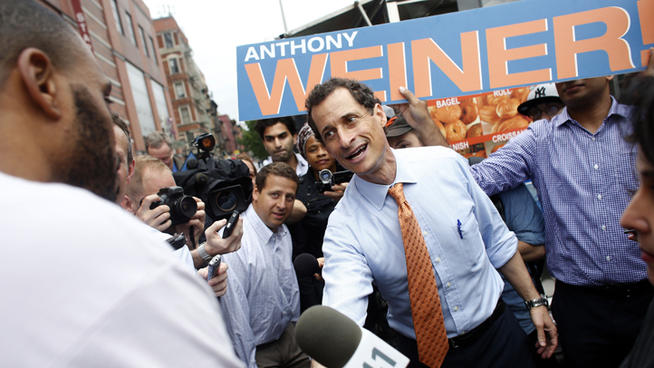
Ethics Dunce: Huma Abedin, a.k.a Mrs. Anthony Weiner

"Carlos Danger," running for an office that won't have anything to do with him if he wins it. Where is Monty Python when we need them?

“Carlos Danger,” running for an office that won’t have anything to do with him if he wins it, he tells us. Where is Monty Python when we need them?

There are periodic moments when I feel I am wasting my life. A recent one occurred when I heard Huma Abedin, the humiliated wife of New York mayoral candidate and serial penis-texter Anthony Weiner, or, as his friend call him when he’s showing his junk, “Carlos Danger,” say that his pathological and gross conduct, bolstered by public lies, deceit and posturing, isn’t a legitimate concern for voters, and that it is just “between us, and our marriage.”

As Stephen King would put it, a muffled scream builds to inevitability deep in my chest. Continue reading

And This, Craig, is Why Barry Bonds Should Only Get In The Hall Of Fame With A Ticket

Blame Barry, Chris.

Blame Barry, Chris.

In Baltimore, a young, slugging first baseman is leading the charge to get the Baltimore Orioles into the American League play-offs. He is on a home run pace that could net him 60  or more, and fans voted him the starting first baseman on his league’s All-Star team. Because his production this year far exceeds anything he had accomplished before, however, Chris Davis’s emergence isn’t being celebrated as much as it is being suspected. Another steroid scandal looms over major league baseball, one which threatens to engulf two former MVPs, as well as other players. Fans and sportswriters don’t trust players any more, or their power totals, not since Mark McGwire and especially Barry Bonds juiced and injected their way to shattering the game’s home run records.

This bothers lawyer/baseball blogger Craig Calcaterra, and it should., as someone concerned with justice. Of the smearing of Davis, he calls it…

“…utterly baseless speculation; Davis has always had tremendous power but is now, in the past year, matched it up with better plate discipline — is the product of a media landscape which has decided that every power hitter is a ‘roider. Jose Bautista got this treatment a couple of years ago. Davis is getting it now. Everyone who engages in this business does so because they’ve been convinced by the baseball media that such speculation is not just justified but necessary. It’s neither of those things. The drug testing system put in place had avoiding these parlor games as one of its primary justifications. But that’s not good enough for some, apparently.” Continue reading

July 3: A Day To Honor Custer’s FIRST Stand, At Gettysburg… And Reflect On How Our Greatest Strengths Can Be Our Fatal Flaws

custercharge

I wrote this post two years ago, concerning my favorite neglected episode of the Civil War, when young George Armstrong Custer shocked Confederate J.E.B. Stuart with his unexpected and furious resistance to Stuart’s attempt at disrupting the Union flank while Gen. Meade’s army defended itself against Pickett’s Charge. As with the First Minnesota’s suicidal stand on the second day of the Battle of Gettysburg, Custer’s crucial moment of truth has been largely neglected in the assembly of the battle’s heroes; I don’t think it has ever been depicted in a Civil War film, for example, though there is at least one book about it.

The incident is especially fascinating to me because of the its multiple ironies. Custer succeeded when his nation needed him most because of the exact same qualities that led him to doom at the Little Big Horn years later. Moreover, this man who for decades was wrongly celebrated in popular culture as an American hero for a shameful botched command that was the culmination of a series of genocidal atrocities actually was an American hero in an earlier, pivotal moment in our history, and almost nobody knows about it.

Thus it is that among the brave soldiers of the Blue and Gray who should be remembered on this 150th anniversary of the greatest battle ever fought on this continent is a figure whose reputation has sunk to the depths, a figure of derision and ridicule, a symbol of America’s mistreatment of its native population. Had George Armstrong Custer perished on July 3, 1863, he might well have become an iconic figure in Gettysburg history. The ethics verdict on a lifetime, however, is never settled until the final heartbeat. His story also commands us to realize this disturbing truth: whether we engage in admirable conduct or wrongful deeds is often less a consequence of our character than of the context in which that character is tested.

Here is the post, slightly lengthened:

July 3, 1863 was the date of Pickett’s Charge, when Confederate General Robert E. Lee ordered a desperate Napoleonic advance against the Union line at Gettysburg in what has come to be a cautionary tale in human bravery and military hubris. The same day marked the zenith of the career of George Armstrong Custer, the head-strong, dashing cavalry officer who would later achieve both martyrdom and infamy as the unwitting architect of the massacre known as Custer’s Last Stand. Continue reading

Of Course Barry Bonds Doesn’t Belong In The Hall Of Fame

Buy a ticket, Barry.

Buy a ticket, Barry.

A full complement of baseball’s steroid class is among the 37 players on the 2013 Hall of Fame ballot, so it was predictable that a new round of arguments would surface claiming that it is unfair, illogical, inconsistent or otherwise unseemly to exclude Barry Bonds and others from enshrinement. Predictable but frustrating: the arguments in favor of Bonds are arguments against maintaining ethical values, in baseball, sports, and American society.  It is also an annoying debate to engage in, and I have been engaging in it in various forms for many years, because Bonds’ defenders typically represent themselves as modern, reasonable, and realistic, while anyone making the quaint argument that cheating on a grand scale should earn shame rather than honors is mocked as judgmental, sanctimonious and naïve.  As ever, I am a glutton for punishment, and since otherwise wise and perceptive commentators like NBC Sports’ Craig Calcaterra choose to ally themselves with Bonds, I really am obligated to point out what a corrupt, illogical and unethical position it is.  If I and people like me don’t persist in this, we’ll have cheating approved as a cultural norm before we know what hit us.

Calcaterra has been supporting Bonds as a Hall of Fame candidate for a while now, but the title of his latest essay, “It’s Lunacy To Keep Barry Bonds and Roger Clemens Out of the Hall of Fame” is a gauntlet that begs to be picked up.  “Bonds and Clemens,” Craig writes, “ are two players who, in a just world, would be unanimous selections for induction…”  I find this an indefensible, even shocking, statement, both before and after the writer attempts to defend it. In a just world, a member of a profession who achieved his prominence in part by breaking the law and the rules, as well as lying about it, should be accorded the highest honor that profession has!  What an astounding point of view.

For simplicity’s sake, I’m going to leave Clemens out of this, in part because I can see a Hall of Fame voter credibly deciding that there isn’t enough evidence to conclude that The Rocket really did use performance enhancing drugs on the way to forging one of the top five pitching careers of all time, and in part because I suspect Craig of pairing Bonds and Clemens to make his various rationalizations more pallatable than they would be in defense of Bonds alone.  Belief in Roger’s steroid cheating rests entirely on the testimony of a proven liar and slime-ball, his former trainer. MLB’s Mitchell Report sided with the trainer, and I’m inclined to as well, but Clemens’ unfitness for the Hall of Fame, unlike Bonds (and Mark McGwire, Rafael Palmeiro, and some others), is not an open-and-shut case.

I give credit to Craig for not raising my least favorite of the Bonds defenses, that he has to be regarded as innocent because he has not been “proven guilty.” Calcaterra is a lawyer, and he understands the over-use and misuse of that cliché, as well as how it only applies when “guilty” means “you’re going to jail.” Indeed, he begins by conceding the obvious, that the evidence that Barry Bonds used steroids is overwhelming, which it is.

His first argument, however, is terrible. Under the ironic heading “Baseball Bonafides,” Calcaterra begins by reciting Bonds’ (and Clemens’) impressive list of achievements, which taken at face value show Barry Bonds to be one the best of the best, not just a qualified Hall of Fame baseball player, but an epitome of a Hall of Fame player along with such legends as Babe Ruth, Walter Johnson , Ted Williams and Willie Mays. “Put simply,” Craig says in conclusion, Bonds is an “immortal.” But he’s not-–not if he cheated, not if he achieved his historic status by corrupting his sport and lying to team mates and fans. And, as Calcaterra admits at the outset, this he did. As a result, the fact that Bonds won a record seven Most Valuable Player Awards is irrelevant. He cheated to win some of those awards. He gets no credit for them.  In Bonds’s case, “baseball bonafides” are not bona fide at all. Continue reading

Relax, Americans: The President Will Be A Good Man…Whoever He Is.

The good guys.

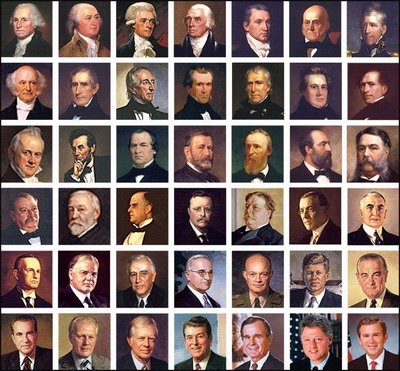
The degree of anxiety over today’s Presidential election—perhaps more accurate than anxiety is hysteria—is palpable. It is also unnecessary and foolish. I have read the fevered rantings of Andrew Sullivan, who fears Mitt Romney like the Germans feared the invading Russian army at the end of World War II, and the apocalyptic monologues of conservative radio talk show host Mark Levin, who is prone to statements like, “It’s over, that’s all! Do you understand? If Obama wins, this country is never coming back!” I have watched both parties exploit and encourage this kind of irrational fear, and its by-products, predictably, are hate, division and anger. There was a time in America when political adversaries referred to each other as “my honorable opponent.” The candidates were not more honorable then. We were more sensible.

The history of the United States has shown that very few truly bad men have the opportunity to run for President. It makes sense, if you give it a modicum of thought. A Presidential contender must negotiate the perils of life for at least four decades without accumulating damning evidence of disqualifying character traits and malign intent. The candidate must have shown sufficient ability and character to impress those he worked with and owed duties to. Most of all, a potential President must have been able to engender a sufficient amount of trust over more than half of his natural life.

We should not judge political leaders by the same standards as other professionals, because the nature of politics, by definition, is ethically ambiguous. Politics knows only one ethical system: utilitarianism. The practice of governing and making human progress advance in the civic arena rules out absolute principles, and requires delicate calculations of ends and means. This often appears, to non-practitioners, as corruption, and it certainly can become that. Effective, trustworthy leaders are able to avoid the occupational hazard of believing that the ends necessarily justify the means. If they cannot, they will not have the opportunity to be President. Continue reading

Unethical Website of the Month: Third Tier Reality

Mr. Furious, of the Mystery Men

Third Tier Reality is one of many blogs recently founded by disappointed law graduates who somehow labored under the misconception that a law school degree guaranteed that they would get 6 figure offers from big law firms and then live the life of Denny Crane until they could retire to a Caribbean island at the age of 55. A depressing number of these deluded souls managed to get themselves in hock up to their eyeballs, and when the recession hit and law firms cut back, felt first, like fools, second, angry and desperate, and third, that it was everyone else’s fault. Thus was born the “law school scam” conspiracy theory. Third Tier Reality, like the others of its breed, maintains that law schools intentionally misled scores of trusting students to pay their obscenely high tuitions,  knowing that they were pumping out more lawyers than the legal market would bear.

To the extent that the site tries to educate would-be law students that there is no guaranteed gravy-train at the end of three years of law school, the website is, at worst, harmless. “My goal is to inform potential law school students and applicants of the ugly realities of attending law school,” he writes. His message: Do not seek a law degree unless…

“(1) YOU GET INTO A TOP 8 LAW SCHOOL; (2) YOU GET A FULL-TUITION SCHOLARSHIP TO ATTEND; (3) YOU HAVE EMPLOYMENT AS AN ATTORNEY SECURED THROUGH A RELATIVE OR CLOSE FRIEND; OR (4) YOU ARE FULLY AWARE BEFOREHAND THAT YOUR HUGE INVESTMENT IN TIME, ENERGY, AND MONEY DOES NOT, IN ANY WAY, GUARANTEE A JOB AS AN ATTORNEY OR IN THE LEGAL INDUSTRY.”

That’s all good advice, though it presumes that more people get law degrees under the delusion alluded to in (4) than I believe is true. Nobody ever told me that a law degree guaranteed a high-paying job as an attorney, and if we understood that decades ago when law was booming, I don’t see where the confusion set in. I worked in the administration of Georgetown Law Center, and that school never made such a representation. In addition, Third Tier Reality goes further, as its brethren blogs do, to insist that a law degree from less than a “First Tier” school is actually an impediment in the job market. I hate to kick this particular hornets nest again, but this is a self-serving rationalization for failure. Continue reading

The Difference Between Unemployed Scientists and Unemployed Lawyers

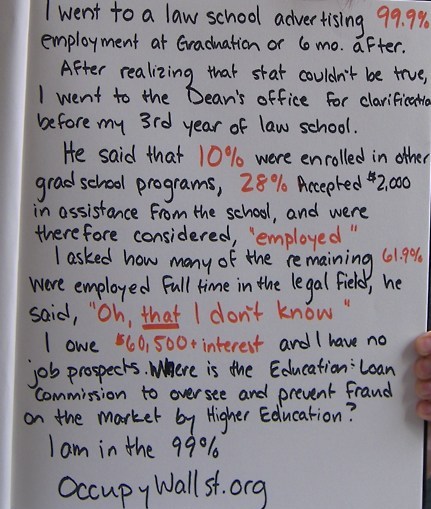
A front page story in today’s Washington Post casts interesting perspective on an Ethics Alarms rumble that broke out here a couple of weeks ago. One of the many websites where underemployed, over-indebted law grads hang out to commiserate—sites with pathetic names like “butidideverythingrightorsoithought”—discovered a post from the days when people were taking Occupy Wall Street seriously, in which I chided a protester whose sign blamed his law school  for his failure to  find a job, without giving due weight to the fact that sitting in a park whining about his plight wasn’t doing him any good either. Suddenly Ethics Alarms experienced an avalanche of indignant and often personally insulting comments introducing me to the strange world of the JD conspiracy theorists, who maintain that law schools engaged in an intentional conspiracy or “scam” to gull naive college grads into believing that a law degree was a sure-thing ticket to Easy Street and six-figure starting salaries.

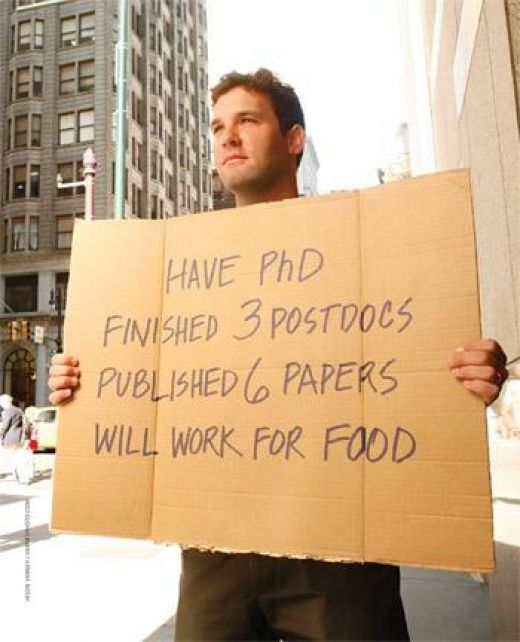
In the Post’s report, we learn that other advanced degree-holders, namely PhDs in scientific fields, are also unable to find work or toiling in fields unrelated to their degrees. The Post says:

“Traditional academic jobs are scarcer than ever. Once a primary career path, only 14 percent of those with a PhD in biology and the life sciences now land a coveted academic position within five years, according to a 2009 NSF survey. That figure has been steadily declining since the 1970s, said Paula Stephan, an economist at Georgia State University who studies the scientific workforce. The reason: The supply of scientists has grown far faster than the number of academic positions.”

Sounds a lot like the legal market to me! Continue reading

Comment of the Day: “Comment of the Day on ‘Young, Gullible, Lazy, Unimaginative and Unbelievable: I Wonder Why This Lawyer Has Trouble Finding A Job?'”

I couldn’t resist this one.

The thread on my post about an Occupy Wall Street protester who apparently was a law school grad and who held a hand-lettered sign blaming his failure to find work, not on the fact that he was standing around in a park holding a sign, but on his law school, has uncovered some unpleasant truths, such as…

  • Law schools are giving degrees to a lot of people who don’t know what to do with them
  • A lot of law school grads have not acquired some of the basic skills, like unbiased analysis, that their training was supposed to convey
  • A striking number of law school graduates identify with whiny unemployed 20-lear-olds holding signs
  • Too many people want to be lawyers for the money, rather than to serve a higher social function
  • Personal accountability is on the wane in America
  • People will believe the damnedest things if it will prevent them from accepting responsibility for their own plight, and
  • Confirmation bias is a frightening phenomenon.

Embodying many of these qualities was the recent post of someone with the apparently ethnic name of Iwantoremainanonymous-–Indian, perhaps?—who  had many observations typical of the thread that I unfortunately cannot permit to be posted, because he not only defied  the Ethics Alarms no anonymous comments rule, but, in his wealth of legal knowledge, disputes that I even have the right to make such rules.

Here is his jaw-dropping, incomplete Comment of the Day on “Comment of the Day on ‘Young, Gullible, Lazy, Unimaginative and Unbelievable: I Wonder Why This Lawyer Has Trouble Finding A Job?'”: Continue reading

Comment of the Day on “Young, Gullible, Lazy, Unimaginative and Unbelievable: I Wonder Why This Lawyer Has Trouble Finding A Job?”

Back in October of 2011, I wrote a post in reaction to the sign reproduced left, held by an Occupy Wall Street protester who either was an unemployed law graduate or who plays one on TV.   Many are the ethical matters and controversies that have spilled on these pages since, and copious is the water that has flowed under the bridge, but because not very many people, comparatively speaking, read ethics websites in general and this one in particular, it took the better part of a year for that post to reach the laptop of  disgruntled law grad with access to a website for disgruntled law grads. Thus suddenly my name has been taken in vain in several fora where underemployed, student loan-burdened JDs hang out. Some, gratefully, have been kind enough to alert me with comments to Ethics Alarms, expressing their unhappiness with my insensitivity. This, the Comment of the Day, is such a post, by lawyer (presumably) Bobby Wilberger.

I must say at the outset that Bobby is lucky to have this posted, and I must say that because I don’t want another lawyer citing it as precedent. Bobby, who by definition if his post is to be taken seriously, had legal training, apparently didn’t absorb the part about following rules, being honest and truthful and reading documents relating to your work carefully. The posting requirements for Comments, clearly indicated at the top of this page, require a valid e-mail address. Bobby did not supply me with such an address, instead giving me a fake address with the clever suffix of “fake.com”.  This would pretty much ding Bobby if I were hiring, and is consistent with my over-all thesis that if you are an un- or underemployed law grad the first thing you need to do to get to the bottom of your problems is to look in the mirror.

I’ll have more to say after Bobby’s post. Here it is, the Comment of the Day, on Young, Gullible, Lazy, Unimaginative and Unbelievable: I Wonder Why This Lawyer Has Trouble Finding A Job?: Continue reading