The Twins and the Amazing Hockey Shot: the Public Flunks Its Ethics Test…Badly

Lets's face it: twins are trouble.

I am depressed today, for it is increasingly likely that I am wasting my life.

I began writing about ethics on-line after being stunned by the letters to the editor and calls to C-Span, not to mention the articles in the press, regarding President Clinton’s conduct in the Monica Lewinsky affair. The commentary was virtually ethics-free, and I realized that the vast majority of the American public had no idea how to apply ethical analysis to an event or problem. Their judgment regarding who was right and who was wrong appeared to be based entirely on rationalizations, biases, and non-ethical considerations.If they liked Clinton, he did nothing wrong. If they opposed his policies, he was scum. Objectivity and fair analysis only occasionally surfaced in the discussion at all, and the media coverage, if anything, was worse.

Now I’ve been doing this for almost a decade, and the verdict is clear: nothing has changed. In fact, the situation may have worsened. The sad proof at hand is the public’s reaction to The Tale of the One-in-a –Million-Hockey-Shot Scam, a feel-good story from last month that just turned sour. Continue reading

Comment of the Day: “The Barefoot Contessa and the Compassion Bullies”

He's young, sick, and poor. His mother must be right, then.

Gary, an occasional commenter, grabs the Comment of the Day with a provocative one on a post from quite a while back. To refresh your memory, a sick child named Enzo Pereda asked the Make-A-Wish Foundation to get him a one-on-one cooking experience with “The Barefoot Contessa,” Ina Garten. Garten refused, and the boy’s mother led an online shaming exercise, condemning Garten, encouraging boycotts of her Food Channel show, and launching other bloggers and media on an anti-Ina rampage. Ethics Alarms’ verdict was that the boy’s mother was engaged in compassion bullying, demanding that this cable celebrity do her child’s bidding, alter her own schedule and priorities, and grant her son’s arbitrary “wish” because he happened to be ill. Garten had no obligation whatsoever to do what someone, or even everyone, might consider a kind act, and the one who was acting unethically was Enzo’s mother.

Gary’s comment goes to the heart of what Ethics Alarms is all about. Here is his Comment of the Day on “The Barefoot Contessa and the Compassion Bullies.”  I’ll have some additional comments at the end: Continue reading

No Excuses and No Mercy For Lance Armstrong

Sorry, Lance…good guys don’t cheat.

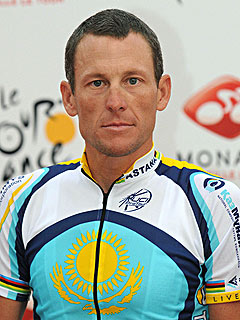
Back when Barry Bonds was still playing baseball, a sportswriter mused about why it was that everyone assumed  Bonds was a performance-enhancing drug cheater despite his protestations to the contrary, while most Americans and sports journalists brushed away similar allegations regarding Lance Armstrong. Both competed in sports with acknowledged steroid abuse problems; indeed, the problem in bicycle racing was presumed to be more pervasive than in baseball. (A few years later, with the banning of multiple Tour winners, the presumption became a certainty.) Both athletes had improbable late career improvements in their performance to reach previously unimaginable dominance in their respective sports. Both had to explain or deflect multiple credible accusations of cheating and circumstantial evidence that suggested that they were doping. Both claimed they had never failed drug tests, and there were good reasons to doubt the denials.

So why was Bonds a villain by consensus and Lance an untouchable hero? The sportswriter explored many theories (Apologies: I cannot locate the article. If someone can, please send it), among them the greater popularity of baseball over cycling, Bond’s startling physical transformation into a behemoth while Armstrong remained cyclist-sinewy,  Armstrong’s inspiring story as a cancer survivor, Armstrong’s philanthropic work,and the fact that Bonds, unlike Armstrong, was black. The biggest difference, however, and to the writer the key one, was that Armstrong acted the role of a hero, while Bonds refused to. Armstrong was friendly and accommodating, while Bonds was angry, intimidating and antagonistic. Armstrong seemed like someone who played by the rules, and who lived his ethical values. Bonds seemed like a rebel, one who wouldn’t hesitate to break the rules for his own benefit. In short, the public wanted Armstrong to be the hero he seemed to be, so they ignored the evidence linking him to performance-enhancing drugs.

After last Sunday, the disparate public perception of Bonds and Armstrong, always illogical, became unsustainable. Continue reading

Is Corporate Philanthropy Unethical? No, But It’s Important to Ask the Question

I gather not very many readers sample the links on Ethics Alarms, which is a shame. They contain a lot of different approaches to ethical issues, from many philosophical approaches. Well, heck…I use them , which is really what they are here for. One of the more original thinkers represented among the various sites is Jason Christopher Cockrell, author of The Worst-Case Scenario. It appears that he has abandoned blogging, which is a shame, but his last post, at the end of 2010, was full of surprises. In it, he offered an argument against corporate charity, something I have never heard anyone criticize on any level, except to say that there isn’t enough of it.

The theory behind corporate philanthropy is that it is a win-win for everyone involved. The corporation enhances its public reputation and visibility, improving employee moral and making investors proud to hold stock. Society benefits from substantial contributions that support everything from cancer research to Sesame Street to regional theater. It is hard to imagine what the charitable landscape would look like without corporate philanthropy, but the thought of eliminating it is sufficient to give any professional fundraiser hives. I know—both I and my wife were development officers for many years. Continue reading

Ethics Hero: Jerry Lewis

Great comedians are usually, as Sid Caesar once memorably told Larry King, “miserable sons of bitches,” and few fit that description better than Jerry Lewis. As a result, he also stands as a classic example of how not-so-nice people can still do wonderful, heroic deeds. In Lewis’s case, the deed is the  Jerry Lewis Muscular Dystrophy Association Telethon. Lewis has announced that because of his failing health and advanced age (he is 86), the 2011 version will be his final telethon, and the show itself is being drastically scaled back from over 20 hours in its heyday to about 6 hours. The decline of his Labor Day telethon tradition is as good a time as ever to give Lewis—arrogant, loutish, egomaniacal, tough old bastard that he is—his due. Jerry Lewis is an Ethics Hero. There’s just no way getting around it.

For decades I thought that Jerry Lewis’s involvement with MDA was a stunt cooked up by his publicist during his decline in popularity, to ensure that he would have public visibility after studios stopped offering him movie roles. That was wrong: Lewis started doing telethons for muscular dystrophy in 1952, when his stardom was just blooming and he was still teamed with Dean Martin. his fundraising for medical research began as a series of local broadcasts and went national in 1966. By then Lewis’s career was indeed on the wane (his last hit movie had been “The Nutty Professor” in 1963), but the telethon had already been a constant in his life for 14 years. Jerry wasn’t doing it for himself. He really was doing it for “the kids.” Continue reading

“Give Back” Ethics

Excellent! But is he giving, or "giving back"?

John Stossel, the ABC house conservative who yielded to the inevitable and finally migrated to Fox News, takes issue with what he sees as corporate America’s capitulating to the distorting rhetoric of capitalism-bashing. On his website, Stossel cites with approval this letter, sent by George Mason University  Economics Professor Don Boudreaux to the Ritz-Carlton hotel chain:

“Dear Ritz-Carlton:

“Thanks for your e-mail celebrating your and your employees’ participation in “Give Back Getaways” – activities in which you and your employees (along with some of your customers) “give back to the community.”

“Have you taken something that doesn’t belong to you?  If so, by all means give it back!…If, though, you’ve not taken anything that doesn’t belong to you, you possess nothing that you can give BACK. Continue reading

Uncaring, Unremorseful, and Rich…But Not Unethical

"You question my priorities?"

Columnist Carolyn Hax, who gives wise and witty relationship advice, has a sure instinct for ethics though the word doesn’t often appear in her column. It did today, though…and it didn’t belong there.

A woman wrote Hax to ask if it was “okay” to break off a long-time friendship “over ethics.”  Her college roommate made millions “off the recession” as an investment banker, and had retired wealthy at 35. A professedly non materialistic college professor, the writer was bothered that her ex-roomie had “no remorse or feeling for the people who are losing their homes or jobs.” She felt her retired and well-off friend should be “volunteering or doing something worthwhile” instead of travelling and “complaining about her portfolio.” Continue reading

What Your Boss Shouldn’t Ask You To Do

"And I won't dress like that, either!"

Reading all the comments from readers who think sick children and their mothers have the right to demand our time and attention, no matter what our own needs and responsibilities may be, made me think again about a persistent issue in the workplace. What constitutes a reasonable and fair request from an employer to his employees, other than to do their jobs diligently, honestly and well?

I have encountered this issue several times in my career, and it impeded that career, such as it is, more than once. For example, I do not believe that an employer can tell you, or even ask you, to participate in a charity of the employer’s choosing. He, she or it cannot demand that you spend your weekends painting the houses of the poor, either. Nor is it ethical for an employer to make you play softball or climb mountains under the bizarre conviction that these activities improve office performance. Continue reading

Comment of the Day: “The Barefoot Contessa and the Compassion Bullies…”

Today’s Comment of the Day needs some background. The first comment regarding yesterday’s controversial post “The Barefoot Contessa and the Compassion Bullies…”, asserting the right of a celebrity to decline a sick child’s request, was by reader Nancy Simpson, who wrote…

“Obviously we have different beliefs about what constitutes “ethics”. The first duty of all persons in a civilized society is to care for the children. My ethics say that for the optimum function of society, we care for children unless what they ask for will cause physical or emotional harm to them.

“Short of confinement in a leprosy ward, this woman has no excuse for her unkindness to a child. If the “too busy” excuse is true, then she is just greedy. No law against being greedy, is there? She has no duty to be concerned with anything other than her money.

“The other place we have ethical differences is that it against my ethics to criticize control and blame a sick child’s mother. Talk about hit below the belt. Shame on you.

“Celebrities are not mandated to give back–they may bite the hand that feeds them any time they like. And I decide who gets my hard earned money, and it will not be her or Food Network.

“I don’t pay people who hurt children.’

I was, I admit, rather severe with Nancy, writing in response…

“No, Nancy, you are completely wrong. Obviously we do have a different understanding or ethics, because you have very little and you also didn’t really read or think about the post. If a stranger walks in your home and demands that you care for her child, are you ethically required to do it? What gives “Make A Wish” or Enzo, his mother or anyone the right to finger this one woman because he happens to watch her show and put her in the position of either having to make a major effort to please him—not cure him, not actually make him well, but just give him a good time—at the threat of being condemned by self-righteous uninvolved bystanders like you? Ridiculous.

“Maybe she had a brother with the same disease and spent years in therapy trying to conquer the depression his death caused…and the prospect of getting close with Enzo risks her long term mental health. Does her refusal pass your approval process then, or is she obligated to harm herself because a stranger’s child has a “wish”? How can you judge her actions when you have no idea what motivates her? Granting these things is usually a PR bonanza….I doubt her motivations are crass at all.

“Maybe she is especially emotional around sick children. You have no basis to criticize her. She is not Enzo’s slave, she is not his doctor, she is not his plaything. She has a right to say “no.” There is a difference between exemplary ethics, and ethics. It would be great if she decided to grant his request, but it is not unethical not to. I know—you don’t understand. Well, you can revel in your ignorance without telling me that I don’t understand.

“I DO have basis to criticize Enzo’s mother, and I hereby throw your silly “shame!” through your window.

“She set out to harm a woman who owed her nothing. She sicced the internet on someone for pure revenge. I sympathize with her, but her actions were unarguably wrong. If you think certain classes of people like “mothers of sick children” get special passes to act badly and harm others, go start a Cindy Sheehan fan club—you don’t have a clue what ethics are.

‘You know what rationalizations and excuses are, however.”

Now, today, new reader Yao added a very provocative Comment of the Day: Continue reading

Comment of the Day: “The Barefoot Contessa and the Compassion Bullies…”

Commenter Marlene Cohn has some well-reasoned insight on the issue of a celebrity’s obligation to comply with a sick child’s wishes. Here is her comment on The Barefoot Contessa and the Compassion Bullies: an Ethics Drama:

“I enjoy a bit of celebrity gossip just as much as anyone, and always find internet reactions to perceived celebrity slights to be fascinating. Having been on the internet far longer than the hoards willing to throw around the dreaded “c” word, I’ve been able to see a true shift in what people generally expect of others. Continue reading