Ethics Hero: Minnesota Twins Pitcher Phil Hughes

Phil Hughes

This is the final day of the regular baseball season, and an appropriate time to salute a major league player who placed principle over cash….even if I disagree with him

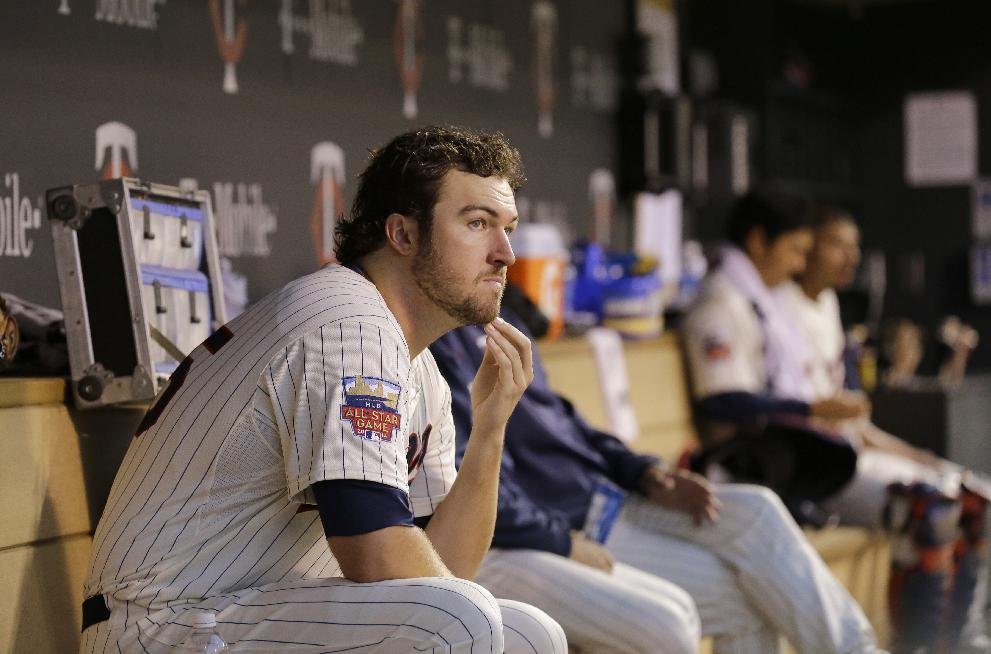
Phil Hughes was a bargain pick-up during the off-season for the Twins, a failed pitching phenom for the Yankees widely viewed to be on a fast slope to oblivion. He surprised everyone with a wonderful season for the otherwise woeful Minnesota team this season, potentially setting the all-time strikeout-to-walk ratio record, and began his final start of the campaign needing to throw eight and a third innings to reach 210 and trigger a $500,000 bonus in his contract.He would have made it, too, pitching eight dominant innings against the Diamondbacks and allowing just one run.  Then there was a downpour, with Hughes needing one more out to get the  extra $500,000.

After more than an hour’s rain delay, the game was resumed, but as is the practice in baseball, Hughes did not return to pitch: too long a delay, his arm too cold, too much risk of injury, especially after throwing so many pitches.  Hughes accepted the bad luck without complaint or rancor, saying that “some things aren’t meant to be.” Continue reading

I Don’t Believe It! Rep. Mark Sanford (R-SC) Betrayed Someone Who Trusted Him? NO!

SANFORDSignature significance. It is the one act that shows that “anyone can make a mistake” is the confounding rationalization that it is. For there are single instances of bad conduct that tell you everything you need to know about someone’s character. If, for example, a state Governor disappears, leaving his aides to lie that he’s “hiking,” when he really is AWOL and cheating on his wife with his “soul mate” in South America, this is signature significance. This man can’t be trusted, and its a good bet that he’s not playing with a full deck, either.

I am speaking, of course, about Rep. Mark Sanford, once the Governor of South Carolina. His tenure in that high office was a casualty of his being stricken with overwhelming amorous feelings for Argentine beauty Maria Belen Chapur, who, he said, was the love of his life. The previous love of his life, Sanford’s wife, was understandably bitter, but not the forgiving, absurdly gullible voters of South Carolina, who after waiting a couple of years, allowed Sanford back into a position of power over their lives, electing him to the House of Representatives.

The fools! Continue reading

Adam Wainwright’s Foul All-Star Ethics

"Boy, I'm  glad Wainwright threw me a pitch a Little Leaguer could hit, because I'm just about done. I sure hope he tells everyone about it,.."

“Boy, I’m glad Wainwright threw me a pitch a Little Leaguer could hit, because I’m just about done. I sure hope he tells everyone about it,..”

St. Louis Cardinals pitching ace Adam Wainwright lost MLB’s 2014 All-Star Game for the National League (though he was not the official losing pitcher). He gave up three quick runs in the first inning, and his squad never overcame the deficit, losing 5-3. As a result, his league’s champion at the end of the season, which could conceivably be his own team, will labor at a disadvantage: the league that wins the All-Star game get the home advantage, which recently, at least, has been decisive.

None of that reflects poorly on the pitcher. He got hit hard by a group of likely Hall of Famers (Derek Jeter, Mike Trout, Robinson Cano and Miguel Cabrera) in an exhibition game that doesn’t count in the standings. So what?

This, however, does reflect poorly on Wainwright:

The game began with a long ovation for AL lead-off batter Derek Jeter, the Yankee shortstop who is retiring after this season following a storied career. Wainwright, in what appeared to be a class move, placed his glove and the ball on the mound in Minnesota’s Target Field and  stepped off to applaud, becoming, for a moment, just another fan giving a well-earned tribute to an all-time great. Then, three pitches into Jeter’s at bat, the living legend lined a ringing double to right field as if scripted, giving the crowd another chance to cheer, and triggering the American League’s winning rally. Later, in the dugout being interviewed on live TV, Wainwright announced that he had given Jeter “a couple of pipe shots”—that is, grooved his pitches so Jeter could get a hit.

Horrible. This is wrong in every way, no matter how you turn it—poor sportsmanship, disrespectful to Jeter, damaging to the game, and dumb: Continue reading

The Blatant Plagiarism Conundrum: If You Make It Obvious That You Lifted Someone Else’s Work, Is That More Ethical Than Covering Your Tracks?

plagiarized essay

This episode reminds me of the Jerry Seinfeld riff–I’ve mentioned it before—on how hairpieces inherently insult the intelligence of the people the bald imposter is trying to fool, and thus the toup’-wearer should just leave the price tag on, danging in front of his face.

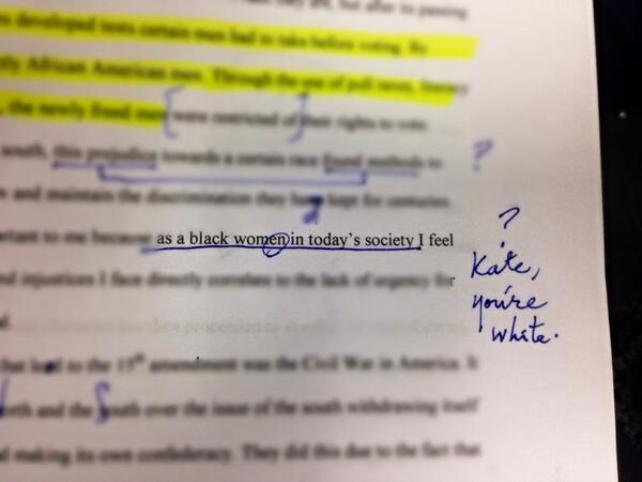
A student apparently submitted an essay regarding her experiences as a black woman, not bothering about the fact that she is white.

Here is the incriminating passage, unblurred:

law-essay2


I’m fascinated by the implications of this. Could the white student plausibly claim she was writing the essay in the voice of a black woman? Could she take the Jumbo route, and express shock that she is white, and argue that nobody ever told her that before? (Fans of “The Jerk,” raise your hands!) That might be a terrific Jumbo: “I’m white??? Oh, my God!!!” If it was plagiarism, does she deserve Seinfeld ethics points for not trying to hide it? Or perhaps she was attempting to prove that her teacher didn’t read essays, and setting a trap, risking her own academic reputation to expose a fraudulent teacher!

Then again, she might just be an idiot.

I’d bet on the latter.

________________________

Pointer: Above the Law

Facts: Legal Check

Graphics: Legal Check


Pineda-Pine Tar, Part II: Baseball Clarifies Its Bizarro Ethics Culture

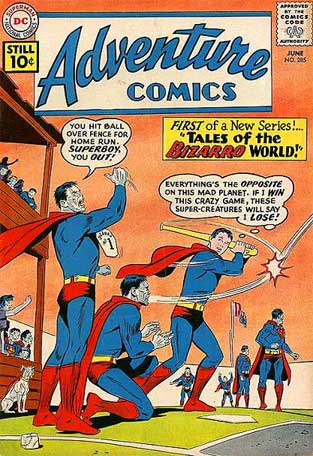
bizarro_world-baseballYou shouldn’t have to appreciate, care about or even understand baseball to find illumination in its latest ethics controversy, which shows how cultures can go horribly wrong, precluding exactly the values that any functioning entity must embrace to remain viable and healthy. For someone like me, to whom Baseball is Life, the whole thing just makes me want to jump out the window.

You will recall that a couple weeks ago, the sport embarrassed itself by making excuses and accepting lies regarding New York Yankees pitcher Michael Pineda being allowed to break the game’s rules against pitchers applying foreign substances (in this case, pine tar) on the baseball while pitching to the Boston Red Sox. I wrote about it here. I interpreted the post-incident consensus of the game and its pundits as “everybody does it, so let’s not make a big deal over a little infraction on a night when it was abnormally cold and hard to grip the ball.”  That’s unethical enough, but the truth, as revealed in Part II, is far worse.

Last night, fate had Pineda on the mound against the Red Sox again. Baseball’s ethics had already begun falling apart in chunks when Sox manager John Farrell, asked about whether he expected Pineda to cheat again (for that is what using pine tar on baseballs is—cheating. Official Rule 8.02 states: “The pitcher shall not apply a foreign substance of any kind to the ball.” ) answered that hopefully, if he did, he would be more discreet about it. Huh?

But Pineda was not discrete; in fact, he could not have been more obvious, or ridiculously so. After a rough first inning in which he gave up two runs, Pineda emerged from the dugout with a large, brown, greasy gob of pine tar on his neck. On TV. In nationally broadcast game. Against the same team that he was caught using pine tar against before. In that team’s home park.

In the Red Sox dugout, Manager Farrell and the team were laughing and rolling their eyes. Farrell finally shrugged, and walked out to complain to the home plate umpire, for it is an automatic ejection for a pitcher to be caught doctoring the ball. The umpire dutifully walked out to the mound—he had to have seen the offending gob before Farrell complained—and to add to the foolishness, checked Pineda’s glove, cap and jock strap before looking at the huge brown smear on his neck. Finally he did so, said, “That’s pine tar!” (in the previous game, Pineda told the press it was “dirt”) and threw him out of the game.

In subsequent interviews with Farrell and others, the explanation that emerged was this gibberish: “everybody” uses something to grip the ball better when it is cold (and often when it isn’t); hitters don’t mind because they don’t want to get hit. Pineda’s offense wasn’t that he used pine tar, but that, as Farrell suggested before the game, that he was “blatant” about it. That gave Farrell no choice, you see….even though his own pitchers also use foreign substances to grip the ball (in unequivocal violation of a baseball rule), and this sets his team up for “retaliation.”

I feel like I’m going crazy. Continue reading

The Abysmal Quality of Ethical Reasoning in Baseball: A Depressing Case Study

"Dirt."

“Dirt.”

The first bona fide ethics controversy of the 2014 baseball season has erupted, and it involves the team of my youth, the Boston Red Sox. It is not the controversy itself that is so noteworthy, for it is an old, old one: pitchers using foreign substances to doctor the balls so they dip, curve, and sing “Take Me Out To The Ball Game.” What is noteworthy is the reaction to the incident by players and the sports media, which has me feeling that as an ethicist, I need to think about following another sport. The ethics reasoning, or lack of it, is truly depressing.

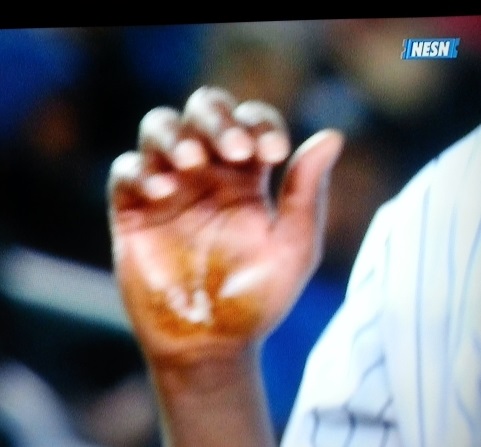
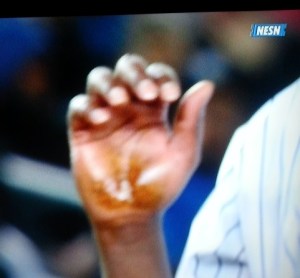
What happened was this: During last night’s Red Sox-Yankee game in Yankee Stadium, the Boston broadcasting team of Don Orsillo and Jerry Remy noticed a glossy brown substance on New York starting pitcher Michael Pineda’s pitching hand. It was very obvious, especially once the NESN cameras started zooming in on it.   “There’s that substance, that absolutely looks like pine tar,” play-by-play man Don Orsillo said. “Yeah, that’s not legal,” color commentator and former player Jerry Remy replied.

Indeed it isn’t.  According to rule 8.02(a)(2), (4) and (5), the pitcher shall not expectorate on the ball, either hand or his glove; apply a foreign substance of any kind to the ball; [or]  deface the ball in any manner.

The Red Sox, who probably knew about the gunk on Pineda’s hand, didn’t complain to the umpires, and just went about their merry way, losing the game. Asked about the stuff on his hand, Pineda demonstrated the full range of body language indicating that he was lying his head off. “It was dirt,’ he said. Later, when the ick appeared to be gone,  Pineda explained, he had just sweated his hand clean. Right. Whatever was on his hand—beef gravy, crankcase oil, chocolate syrup…the majority of pundits think pine tar—it wasn’t “dirt.” Pineda’s manager, Joe Girardi, was brazenly evasive.

The Yankee pitcher was cheating. This isn’t a major scandal, but cheating is cheating: sports shouldn’t allow cheating of any kind, because if a sport allows some cheating, however minor, it will encourage cynical, unscrupulous and unethical individuals on the field, in the stands, and behind keyboard to excuse all other forms of cheating, from corked bats to performance enhancing drugs. Cheating is wrong. Cheating unfairly warps the results of games, and rewards dishonesty rather than skill. Cheating undermines the enjoyment of any game among serious fans who devote energy and passion to it. Any cheating is a form of rigging, a variety of lying.

And yet, this clear instance of cheating, caught on video, primarily sparked the sports commentariat, including most fans, to cite one rationalization and logical fallacy after another to justify doing nothing, and not just doing nothing, but accepting the form of cheating as “part of the game.” I’ve been reading columns and listening to the MLB channel on Sirius-XM and watch the MLB channel on Direct TV since this episode occurred. Here are the reactions, my comments in bold:

  • This isn’t a new phenomenon. Show me the statute of limitations on ongoing misconduct, please. Also not new: torture, rape, adultery, incest, bribery and embezzlement. So what? That makes these things all right? Excuses society from trying to reduce their occurrence?

Continue reading

Legal, Unethical, and Despicable: The Seattle Mariners’ Contract Squeeze Play On Randy Wolf

"We made Mr. Wolf an offer he couldn't refuse. Oddly, he refused it."

“We made Mr. Wolf an offer he couldn’t refuse. Oddly, he refused it.”

What is it worth to a baseball team to save a million bucks? Apparently it’s worth being shunned by future players for being sleazy and dishonest.

Oh, it was all legal, don’t get me wrong. The Seattle Mariners, who, it should be noted, recently signed second-baseman Robinson Cano to a ten year contract averaging 24 million dollars a season, inked a deal with veteran pitcher Randy Wolf that guaranteed him a paltry million dollars if he made the team’s roster based on his performance in Spring Training. Sure enough,Wolf pitched well and not only made the team, but was told that he would be in the Mariners’ starting rotation.

There was a catch, however. Wolf was told that his being officially named to the team’s 2014 25 man roster to start the season—that’s next week, baseball fans—was contingent on him signing a legal document known as a 45-day advanced-consent release form. This would  allow the Mariners to release or demote Wolf after the first 45 days of the regular season and be obligated to only pay him a pro-rated portion of his million dollar salary, rather than the entire one million dollars his original deal guaranteed. In other words, “Gotcha!” The perfect Catch 22. “Yes, you are guaranteed a million dollars, Mister Wolf, if you make the team, and you made the team. We keep our promises. We want you on the team. But if you don’t waive that guarantee, we won’t let you make the team.

Continue reading

Ethics Quiz: “12 Years A Slave” Plays The Racial Guilt Card On Oscar Voters

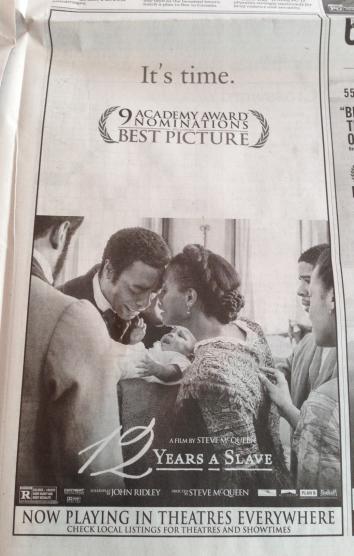
12_years_ad_2.jpeg

“It’s time.”

This is the  tag line in the post-Oscar nomination ads being prominently run in New York and California for  “12 Years A Slave,” a strong Academy Award contender (nine nominations, including best film).

Although there is room for disagreement, and the ad has the virtue of all clever advertising that it conveys different messages to different markets—Haven’t seen the film yet? “It’s time!”  Desperate to see the best movie you saw in 2013 finally get its due? “It’s time!”  When will the question of whether the most honored film of the last 12 months will win the biggest honor of them all be answered? “It’s time!”…or almost time, as the Oscar ceremonies are coming up on March 2—the consensus is that “It’s time” is mainly aimed at Oscar voters, and the message it conveys is, as Slate puts it, “it’s time for a movie about slavery, and with a significantly black cast and crew, to be recognized by the Academy of Motion Picture Arts and Sciences.” Film critic Phil Hammond puts it slightly differently:

“The ad not only can be interpreted as shining a light on a very dark period in American history, it also shines a light on the Academy’s fairly dismal record of awarding its top honor to any movie about the black experience. In fact there has been only one Best Picture winner in the 85 years the Academy of Motion Picture Arts and Sciences has been handing out Oscars that even remotely qualifies in this regard. In 1968, In The Heat Of The Night, a murder mystery set against the racial divide in a small Southern town, won Best Picture and four other Oscars just a few days after the assassination of Martin Luther King (the ceremony was even postponed two days out of respect). The votes were in before the King assassination, but it seemed then that “It’s Time” would have been an appropriate way to describe that victory. However, outside of lead actor Sidney Poitier — who also co-starred in another racially themed Best Pic nominee that year, Guess Who’s Coming To Dinner —  this movie  featured a largely white cast, white producer, screenwriter and director (Norman Jewison).”

If so many in the industry are interpreting the ad this way, it is fair to assume that this was at least one of the ad’s objectives, and on the assumption that it was an objective, your Ethics Alarms Ethics Quiz today is this:

“Is appealing to Oscar voters on this basis fair and ethical?”

I can see strong arguments for each position. Continue reading

The Alex Rodriguez Suspension, Barry Bonds, And The Slippery Slope

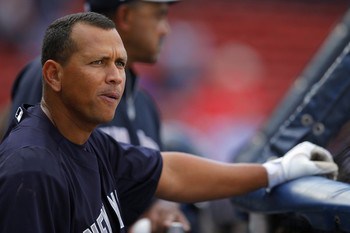
New York Yankees' Alex Rodriguez stretches before American League baseball game at Fenway Park in Boston

In a decision that further defines major league baseball’s cultural standards regarding performance enhancing drugs and the players who use them, New York Yankee Alex Rodriguez was suspended for the entire 2014 season and post-season by an arbitrator yesterday. Rodriguez, a long-time superstar who was once considered a lock to break baseball’s career home run record, and who is the highest paid player in the game, was suspended for illicit drug use without testing positive under the game’s union-negotiated testing system. He was, instead, suspended for a violation of the player’s Basic Agreement under baseball management’s right to police the game and do what is in its best interests.

The evidence that Rodriguez was a flagrant and long-time steroid abuser came from documents obtained from Biogenesis, a lab that developed drugs for athletes and others, as well as convincing testimony. Rodriguez had challenged the suspension in a grievance procedure after MLB handed down a 211 game suspension during the 2013 season. The arbitrator’s ruling, which is confidential, apparently concluded that the player not only cheated, but obstructed efforts to enforce baseball’s intensified anti-drug measures in the wake of the wide-spread use of PEDs in the 90’s and thereafter.

As expected, the result produced the usual complaints and rationalizations from the disturbingly large contingent of baseball fans and writers who remain obdurate regarding the offensiveness of steroid cheating, claiming that it was “a part of the game,” that the objections to it are inconsistent, and that baseball’s vilification of users is hypocritical. They had been practicing these and related arguments for months as they waited for the baseball Hall of Fame voting results announced last week, in which about 65% of the voters showed that they regarded steroid use as a disqualification for the honor, even when a player-user had excelled on the field. Rodriquez’s defeat deeply undermines the cause of the steroid defenders, and the likelihood that their argument will ever prevail. Continue reading

Here’s The Ethics Lesson From The Hall Of Fame Voting Results Tomorrow…

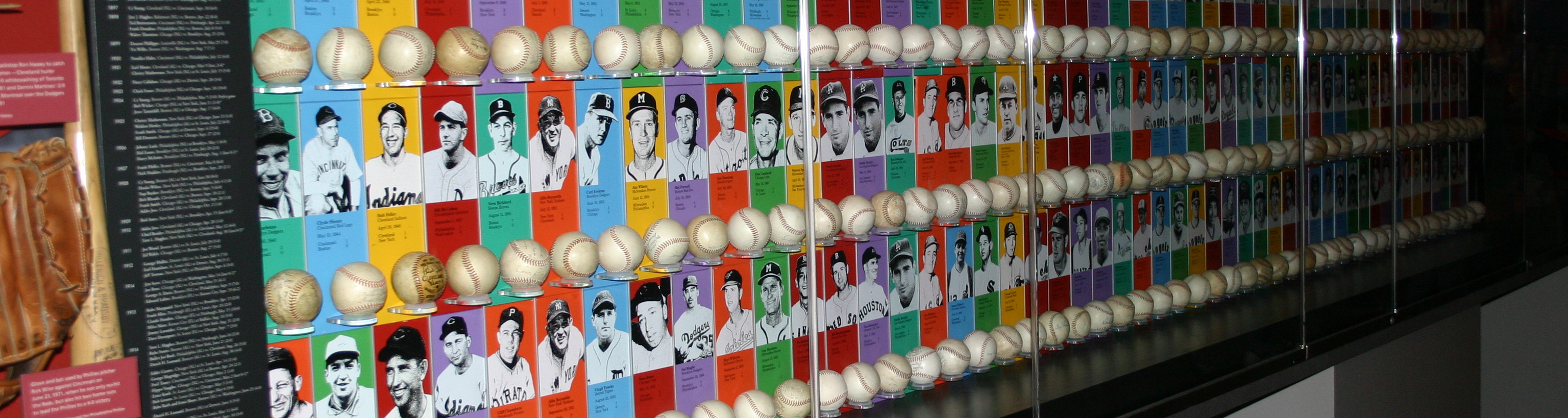
HOF

And that lesson is: sportswriters have no clue when it comes to ethical analysis, or any other kind of analysis, really.

Tomorrow the results of the Major League Baseball Hall of Fame voting will be announced, and those former stars receiving at least 75% of the vote will be officially enshrined as immortals. Every year before the steroid era, the voting was preceded by weird arguments that made no sense, like the one about whether a former player should be a “first time electee.” Some writers would concede that a given player was great enough for the Hall, but not vote for him because “he wasn’t good enough to get in on the first ballot.” This was, and is, ridiculous, and unfair. The question is, “Was this player great enough to deserve enshrinement, when the standards are unchanging?” It’s a yes or no question. “Maybe next year” is not a valid answer.

Thus I suppose that it should be no surprise that these same clods, faced with some really difficult ethical lines to draw in the wake of the so-called steroid era, show themselves to be not merely dunces, but ethics dunces as well. I just heard a sportswriter, Marty Noble, tell a baseball talk show that he won’t vote for any player about whom there is any question whatsoever regarding whether he cheated with steroids, including doubts based on rumors, whispering campaigns, looks, suspicions and drug tests. But he still voted for some players, he says. Well, that’s just wrong, by his own standards—he can’t be 100% sure about anyone. He also said that while he can vote for up to ten players, and agreed that there are more than ten players this year who have strong Hall credentials, he’s only voting for three. Why? Because, he says, the induction ceremony is too long.

Yes, he’s an idiot. Continue reading