 The extent and sheer audacity of the 2009 Atlanta schools testing scandal, now resulting in teachers and administrators facing prison time, shows (or perhaps I should say “should show”) the complete folly of calling for more funding as the solution to the rotting U.S. education system. Indeed, I would argue that budgets should not be increased one penny anywhere until the educational establishment demonstrates that it is capable of policing itself, holding members of its profession to higher standards, which is to say, standards, of ethical conduct and professionalism, and can prove that it is more interested in the goal of teaching students than it is in pensions, job security, and cash. Continue reading
cheating
Ethics Quiz: The Professor, the Plot, and the Prisoner’s Dilemma

The Prisoner’s Dilemma
Professor Peter Frölich teaches “Intermediate Programming,” “Computer Science Fundamentals,” and “Introduction to Programming for Scientists and Engineers” at Johns Hopkins University. He uses a grading system in which the top score in any exam defines an A, and all other scores are graded down from that point (I like that system, by the way).
His students in all three courses hatched an ambitious conspiracy to ensure A’s for everyone. They all agreed to refuse to enter the exam rooms, so the top score, and only score, anyone could get would be zero. Since the grading curve would have to start with that, they reasoned, everyone would have to get the top grade. The students stringently enforced their plot, apparently, and nobody broke ranks. Continue reading
If Only The Profession Was This Strict AFTER Admitting A Lawyer To The Bar…

No, surprisingly in light of last week’s revelations from Cambridge, the applicant who cheated on her bar exam did NOT go to Harvard. I’m as stunned as you are!
One of the legal profession’s ethics anomalies is that its character standards for entering legal practice are far more unforgiving than the standards for keeping one’s license to practice after being admitted. For while John Edwards continues to be a North Carolina lawyer in “good standing,” an Ohio bar applicant was held to lack the requisite good character to be a trustworthy lawyer (Ohio Supreme Court opinion here) because of the following set of facts.
When Jasmine Shawn Parker of Covington, Kentucky was taking the Ohio bar exam, a test monitor reported that she had continued to write for up to 30 seconds after “time” was called on a set of two exam questions, and then again for 45 to 60 seconds on two sets of two exam questions. The Board of Bar Examiners investigated, and asked Parker’s tablemates about their observations or her actions, if any, after time had been called. They reported that Parker had continued writing for maybe a second or two past the declared deadline on Day 1 of the exam, and on the second day, had continued to write past the stopping point “long enough to get at least two lines of writing on paper.” As a penalty after these findings, the Ohio Board of Bar Examiners gave Parker no credit on the exam question with the highest point value. Never mind: Parker’s score was high enough to pass the bar exam anyway. Her alleged cheating, however, led the Board of Commissioners on Character and Fitness to recommend her license be denied, with the opportunity to reapply. Continue reading
If Self-Plagiarism in Editorial Cartoons Is Bad, How About NY Times Editorials?
 A couple of weeks ago, Ethics Alarms gave political cartoonist Ted Rall an Ethics Hero designation for calling out his own profession for the practice of lifting the work of other cartoonists, as well recycling their previous cartoons as new. I hadn’t been aware of the problem, but apparently Rall wasn’t the first in his field to condemn it. Now James Taranto of the Wall Street Journal blog “Best of the Web” has found evidence of self-plagiarism in actual editorials…those of the New York Times! Taranto, who has been on a real roll lately, reveals of the Times editors…
“In a Jan. 8 editorial in praise of Hagel’s nomination, they wrote:
“On national security policy, there is much to like about Mr. Hagel, one of a fading breed of sensible moderate Republicans.”
“In a Feb. 1 editorial after the hearings, they had a slightly different take:
“There is much to like about the approach to national security policy taken by this decorated Vietnam veteran and former senator who is among a fading breed of sensible, moderate Republicans.”
“The Jan. 8 editorial also included this trenchant observation:
“The opponents are worried that Mr. Hagel will not be sufficiently in lock step with the current Israeli government and cannot be counted on to go to war against Iran over its nuclear program if it comes to that.”
“And here’s what they said after the hearing:
“Mr. Hagel’s opponents fret that he will not be sufficiently in lock step with the current Israeli government and cannot be counted on to go to war over Iran’s nuclear program if it comes to that.” Continue reading
Unethical Quote of the Week: Lance Armstrong
“I deserve to be punished. I’m not sure I deserve the “death penalty.”
—- Lance Armstrong in his confessional with Oprah Winfrey.
In a word: Astounding.

Sure, why should you be punished any more than any other cyclist..wait, did you really just say that?”
Most of the second segment of Oprah’s interview with Armstrong was an anti-climax to the first, with one shocking exception.
Armstrong noted that all of the former team-mates who testified against him made deals that netted them, at most, six month suspensions from competition. Now that he was coming clean to Oprah, Armstrong implied, he deserved a similar deal. “I’m not saying [ how Armstrong is being treated] is unfair…but it’s …different,” he said. Then he uttered the statement about the “death penalty”—his lifetime ban from any professional athletic competition, biking or otherwise.
Armstrong “isn’t sure” that cheating to win the most important competition in his sport seven times, corrupting other cyclists, lying—defiantly, pugnaciously, flamboyantly— for almost two decades…bullying anyone who tried to tell the truth about his deceptions…using his money, influence and power to intimidate and silence…accepting millions of dollars in sponsorships based on lies and fraud…embarrassing sponsors and supporters by linking them to a conspiracy of lies and drug peddling…and arguably worst of all, building a charitable foundation on those lies, while inducing children and cancer survivors to embrace him as a hero…deserves a lifetime forfeiture of trust, not just as an athletic competitor, but as a business partner, associate, and friend?
Despite all his assurances to Oprah that he is a changed man, and that he is truly sorry, and that he understands the enormity of his betrayals, Lance Armstrong hasn’t learned a thing.
Lance Armstrong and Oprah: First Impressions
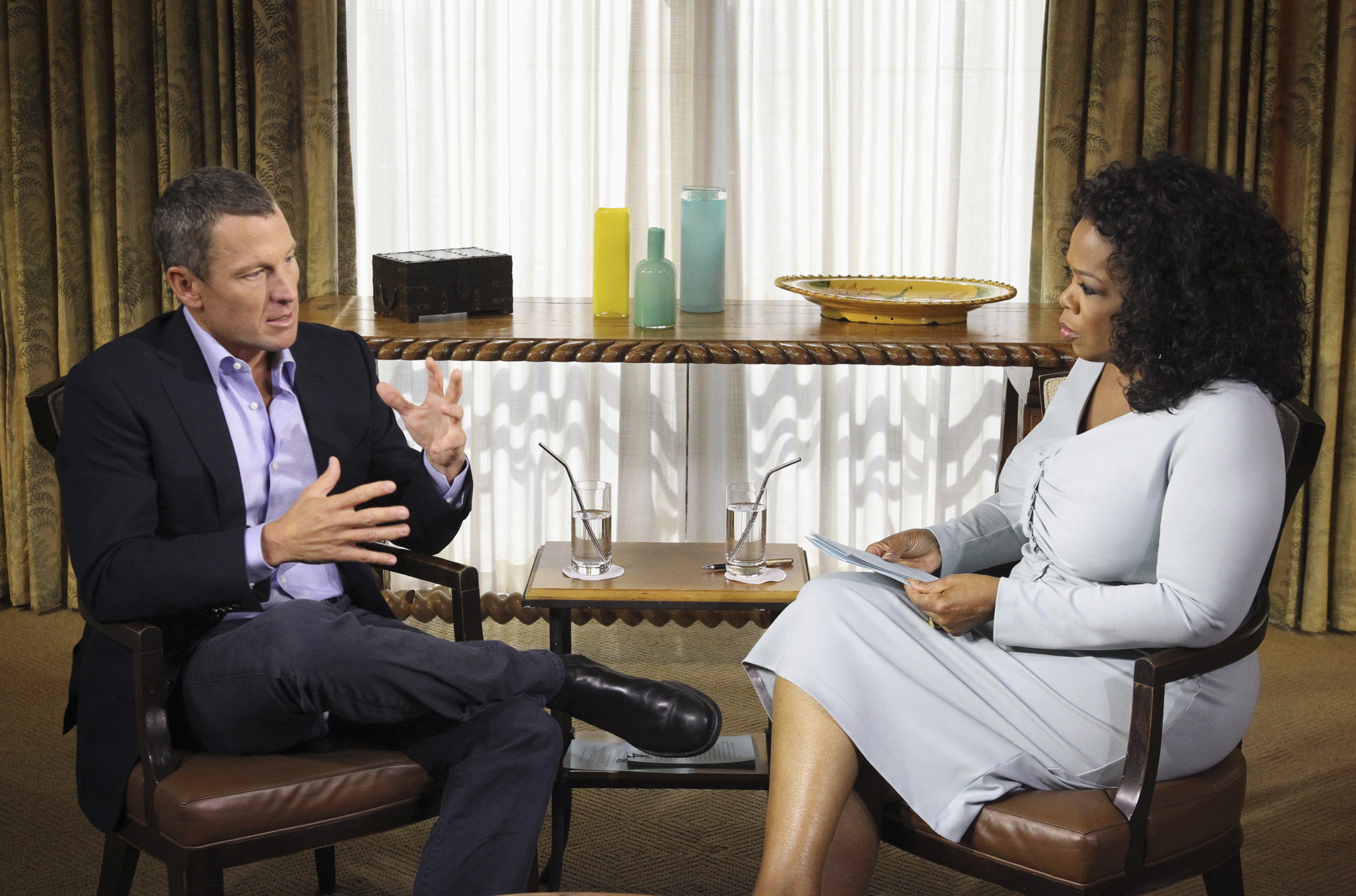
I just finished watching the first installment of the Lance Armstrong-Oprah interview–almost twice, in fact. I’ll be watching tomorrow’s installment too (I am scheduled to talk about Lance on NPR’s “Tell Me More” on Monday, to be broadcast Sunday) and maybe it will alter some of my initial impressions.
But I doubt it.
Impressions:
1. Armstrong is not apologetic in the least, in any way, despite the occasional nod to apology-like langauge. He is not somewhat like, but exactly like, a mob hit man testifying before a Senate committee on organized crime. He is doing what he has to do, and if there is any genuine regret or contrition, I couldn’t discern it. Frankly, I am stunned at how unapologetic he is.
2. Most damning moment: Right off the bat, Oprah asks Lance “Why now?” It’s a superfluous question; everyone knows the answer is “Because I’m trapped; because the lies don’t work any more; because this is my best chance of persuading some people, the gullible ones, but we know how many of them there are, to give me a second chance.” I didn’t expect Armstrong to be that candid, of course, but I did expect him to have an answer, probably a contrite, self-serving one, prepared. He didn’t. “That’s a great question,” he said, stalling. Incredibly, he said he didn’t really have a good answer. “I know it’s too late,” he offered. Yes, I’d say thirteen years, marked by lying, doping, posturing and attacking is too late. That’s the best Armstrong could muster. Heck, if he just kept up with current movies, he would have had some great answers, like Denzel Washington, in the climax of “Flight,” confessing a career of flying commercial airlines drunk by saying, (I’m paraphrasing) “I just couldn’t stand telling one more lie.” Or that old stand-by, “It was the right thing to do.”
The sign of a completely unethical person is that they can’t even imagine what thinking ethically is like. On the evidence of this interview, that’s Lance Armstrong.
3. Most telling quote: while explaining that his 2009-2010 comeback is what opened the floodgates of attention and investigation that led to the explosion of his long campaign of deception and lies, Armstrong said, “Without the comeback, I wouldn’t be here now.” Translation: “Without the comeback, I would have gotten away with it, and I sure as Hell wouldn’t be sitting here spilling the beans to you.” He then terms his comeback a “mistake.” Armstrong is sorry he let himself be caught, and he is sorry for the consequences of his lies being discovered.
Unethical Quote of the Week: MLB Players Union Chief Michael Weiner
“Today’s news that those members of the BBWAA afforded the privilege of casting ballots failed to elect even a single player to the Hall of Fame is unfortunate, if not sad….To ignore the historic accomplishments of Barry Bonds and Roger Clemens, for example, is hard to justify. Moreover, to penalize players exonerated in legal proceedings — and others never even implicated — is simply unfair.”
—-Major League Baseball players union executive Michael Weiner, in a formal statement released after the news that the Baseball Writers Association of American had denied Hall of Fame admission this year to all-time home run leader Barry Bonds, pitching ace Roger Clemens, and several other players who have either admitted to steroid use or are strongly suspected of being users. No player was on the requisite number of ballots this year.
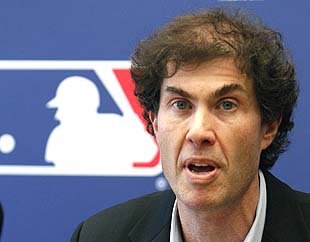
It takes a Harvard lawyer to be that unethical in so few words.
It’s not easy to pack so much bad ethics into one statement, but we should not be surprised that the baseball players’ union chief was up to the task. The union shares responsibility with baseball’s “see-n0-evil” management during the steroid era and the willful blindness of the sportswriting community for allowing steroids and other performance enhancing drugs to permanently scar the game’s integrity and distort its records beyond repair. Small wonder Weiner is eager to rationalize his organization’s complicity with an absurd, deceptive and corrupting assertion that none of it should make any difference:
- The writers did not “ignore” Bonds’ accomplishments. To the contrary, his “accomplishment” of blatantly abusing steroids, launching a late career surge of power and prowess that was alien to the career arc of every other player who ever set foot on a field as he morphed into baseball’s version of the Hulk, all while lying his head off and convincing other players that drug-assisted cheating was the accepted way to achieve fame and fortune, was exactly why he was on less than 40% of the ballots ( 75% is required for enshrinement.) Continue reading
Ethics Heroes: The Baseball Writers Association of America
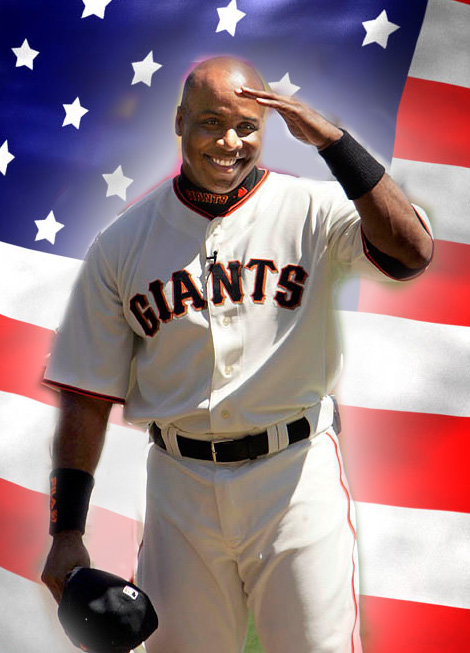
Nope.
In the Baseball Hall of Fame balloting announced today, those who elect baseball’s greats to its shrine of heroes failed to give anyone the requisite 75% ballots required for election. That’s too bad: Craig Biggio, Jeff Bagwell, Tim Raines and Mike Piazza are deserving candidates.
The writers also did not elect unrepentant cheater, record thief and game-corrupter Barry Bonds, however, who was on only 36.2% of the ballots, slightly less than suspected steroid cheat Roger Clemens (37.6).
Good.
Ethics Elephant In The Room: The ASPCA Was Wrong, And Should Admit It

The Association for the Prevention of Cruelty to Animals finally capitulated and has agreed to pay over 9 million dollars in damages to the Ringling Bros. Barnum & Bailey Circus. Way back in 2000, the ASPCA and other animal advocacy groups sued the circus company’s owners, alleging cruel treatment of elephants. The problem was, courts found, that the law suit had been built on the claims and testimony of a former Ringling barn helper who had been paid at least $190,000 for his participation in the lawsuit. This meant that the suit was dead.
Ringling Bros. Barnum & Bailey Circus counter-sued, as would I, as would you. I don’t doubt that elephants are abused sometimes in the circus; I’m sensitive to the argument that putting elephants in a circus is inherent abuse. It seems clear that a lot of dedicated, well-meaning people who care deeply about animals and their treatment couldn’t press their claims persuasively without help, so, essentially, they cheated. You can’t pay witnesses, whether the witness is telling the truth or not. It’s unfair. It’s illegal. It corrupts the justice system. Continue reading
Of Course Barry Bonds Doesn’t Belong In The Hall Of Fame
Buy a ticket, Barry.
A full complement of baseball’s steroid class is among the 37 players on the 2013 Hall of Fame ballot, so it was predictable that a new round of arguments would surface claiming that it is unfair, illogical, inconsistent or otherwise unseemly to exclude Barry Bonds and others from enshrinement. Predictable but frustrating: the arguments in favor of Bonds are arguments against maintaining ethical values, in baseball, sports, and American society. It is also an annoying debate to engage in, and I have been engaging in it in various forms for many years, because Bonds’ defenders typically represent themselves as modern, reasonable, and realistic, while anyone making the quaint argument that cheating on a grand scale should earn shame rather than honors is mocked as judgmental, sanctimonious and naïve. As ever, I am a glutton for punishment, and since otherwise wise and perceptive commentators like NBC Sports’ Craig Calcaterra choose to ally themselves with Bonds, I really am obligated to point out what a corrupt, illogical and unethical position it is. If I and people like me don’t persist in this, we’ll have cheating approved as a cultural norm before we know what hit us.
Calcaterra has been supporting Bonds as a Hall of Fame candidate for a while now, but the title of his latest essay, “It’s Lunacy To Keep Barry Bonds and Roger Clemens Out of the Hall of Fame” is a gauntlet that begs to be picked up. “Bonds and Clemens,” Craig writes, “ are two players who, in a just world, would be unanimous selections for induction…” I find this an indefensible, even shocking, statement, both before and after the writer attempts to defend it. In a just world, a member of a profession who achieved his prominence in part by breaking the law and the rules, as well as lying about it, should be accorded the highest honor that profession has! What an astounding point of view.
For simplicity’s sake, I’m going to leave Clemens out of this, in part because I can see a Hall of Fame voter credibly deciding that there isn’t enough evidence to conclude that The Rocket really did use performance enhancing drugs on the way to forging one of the top five pitching careers of all time, and in part because I suspect Craig of pairing Bonds and Clemens to make his various rationalizations more pallatable than they would be in defense of Bonds alone. Belief in Roger’s steroid cheating rests entirely on the testimony of a proven liar and slime-ball, his former trainer. MLB’s Mitchell Report sided with the trainer, and I’m inclined to as well, but Clemens’ unfitness for the Hall of Fame, unlike Bonds (and Mark McGwire, Rafael Palmeiro, and some others), is not an open-and-shut case.
I give credit to Craig for not raising my least favorite of the Bonds defenses, that he has to be regarded as innocent because he has not been “proven guilty.” Calcaterra is a lawyer, and he understands the over-use and misuse of that cliché, as well as how it only applies when “guilty” means “you’re going to jail.” Indeed, he begins by conceding the obvious, that the evidence that Barry Bonds used steroids is overwhelming, which it is.
His first argument, however, is terrible. Under the ironic heading “Baseball Bonafides,” Calcaterra begins by reciting Bonds’ (and Clemens’) impressive list of achievements, which taken at face value show Barry Bonds to be one the best of the best, not just a qualified Hall of Fame baseball player, but an epitome of a Hall of Fame player along with such legends as Babe Ruth, Walter Johnson , Ted Williams and Willie Mays. “Put simply,” Craig says in conclusion, Bonds is an “immortal.” But he’s not-–not if he cheated, not if he achieved his historic status by corrupting his sport and lying to team mates and fans. And, as Calcaterra admits at the outset, this he did. As a result, the fact that Bonds won a record seven Most Valuable Player Awards is irrelevant. He cheated to win some of those awards. He gets no credit for them. In Bonds’s case, “baseball bonafides” are not bona fide at all. Continue reading
 Ethics Alarms