Ethics Quote of the Week: Harvard Dean Jay Harris

“We always stress academic integrity with our students. It’s very hard to explain to someone that this raises ethical concerns and that it’s not OK.”

—-Jay Harris, Dean of Undergraduate Education at Harvard College, where about 125 students in a Government course are under investigation for cheating on a take-home final. Similarities in the tests handed in for Government 1310 ( Introduction to Congress) raised suspicions of copying or collaboration. It is the largest cheating scandal in Harvard history.

Wait…what?

Yeah, right.

Harvard stresses academic integrity, but about half a class cheated as soon as some lazy professor was willing to trust the students with a take-home exam? Well, you’re not doing a very good job stressing integrity,are you, Dean? But why does Harvard have to stress integrity—aren’t these supposed to be the best and the brightest? Doesn’t the nation’s most prestigious college only admit students with integrity, or did they cheat to get into Harvard, too? Isn’t part of “best” being honest, and doesn’t “brightest” mean “doesn’t have to cheat”? I’m so confused!

Please help us understand, Dean Harris! Continue reading

The Last of Lance

The Lance Armstrong Fan Club writes to the US Anti-Doping Agency to protest its witch hunt.

Lance Armstrong has announced that he will no longer fight doping allegations, meaning that the Anti-US Doping Agency will effectively ban him from cycling and strip him of his titles. “If I thought for one moment that by participating in USADA’s process, I could confront these allegations in a fair setting and — once and for all — put these charges to rest, I would jump at the chance,” Armstrong said in a statement. “But I refuse to participate in a process that is so one-sided and unfair.”

It’s a shrewd move. Now Armstrong fans and admirers who refuse to acknowledge what is overwhelmingly likely bordering on certain—that he is a cheat, a liar and a fraud—can argue that poor Lance is a victim, and never was “proven guilty.” Of course, poor Lance has made millions of dollars and lived the life of a celebrity and hero for more than a decade, and he not going to forfeit any of that, or his freedom, no matter what rational people think of him. Like Barry Bonds, baseball’s most successful steroid cheat, he pulled it off, exploiting his sport, deceiving the public and taking advantage of a “look the other way” culture that corrupted bicycle racing even more thoroughly than steroids corrupted baseball. Continue reading

The Great Scrabble Cheating Scandal

And you get a 50 point bonus for CHEATERS…

Over at Slate, Stefan Fatsis, one of the competitors at the recently completed National Scrabble Championship—Olympics? What Olympics?— gives background and details to the cheating scandal that put the Championship front and center in the blogosphere  and cable news fare, if only for a little while.

Fatsis has two complaints about the coverage: first, that the cheater (he palmed extra blank tiles to help him make high scoring words) was a kid, not an adult, and thus the media abuse heaped on him for his transgression was unduly harsh and cruel, and second, that…

“Two of the greatest players of all time, joined in one of the most remarkable finishes Scrabble has ever seen, and all anyone wants to talk about is a kid who made a terrible mistake.”

He’s dead wrong on both points. Continue reading

Ethics Dunce: Suspended Giants Outfielder Melky Cabrera (And Not For The Reason You Think)

Who is “Melky Cabrera” really?

Melky Cabrera shocked Major League Baseball by getting caught mid-season using banned metabolic steroids, it’s true. It is also true that this marks him for all time as a cheater, and something of an idiot, since the penalties for PED (performance enhancing drug) use are devastating to a baseball player’s reputation and wallet, and because, unlike when Barry Bonds was breaking records and racking up MVP trophies while being juiced, the game has belatedly decided that it isn’t going to let games, championships and records be distorted by chemical means.

Melky, however, is special among baseball’s cheaters. Only he, as far as we know, decided to attempt an elaborate internet deception to try to duck responsibility after he had been caught.

From today’s New York Daily News: Continue reading

The Melky Cabrera Affair: When Fair Isn’t Fair

A useful tool, when the government decides that what you did should have been illegal.

Let me bring the non-baseball fans among you up to date, reminding you that while the immediate subject is baseball, the ethical implications of this story are far broader.

Melky Cabrera, until last season, was a standard issue major league outfielder of substantial but undistinguished abilities and accomplishments. Last season, playing with the frequent destination of such players, the Kansas City Royals, Cabrera suddenly and unexpectedly emerged as a star, surpassing all expectations and his previous levels of performance. The Royals traded him, like an over-priced stock, to the San Francisco Giants in the off-season, getting a package of players in exchange for one they probably thought was as valuable as he would ever be.

This season, however, he was even better.  Not only was he selected to the All-Star team for the first time, he was also on the way to leading the Giants to the play-offs and possibly a World Series appearance. Then, this week, a drug test came in positive for testosterone: steroids. By MLB’s rules, Cabrera was suspended from play for 50 games, effectively eliminating him from the Giants season and post season and, not incidentally, marking him as a cheat and an idiot.

And maybe a batting champion. When he was suspended, Cabrera was second in the National League in batting average, and had already amassed the necessary at bats to qualify for the championship (actually, there are some complications with that, but for all intents and purposes, that’s true). He’s only 13 points behind the leader, and averages tend to come down as the season drags on. Not only is Cabrera’s high average a likely product of pharmaceutically-aided cheating, but his suspension for getting caught at cheating may actually help him win the prestigious batting crown, by freezing his average at a lofty .346. Is this fair? Certainly not. Continue reading

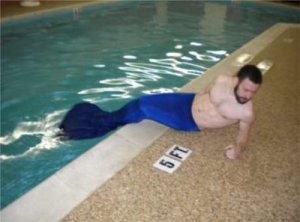
Unethical Quote of the Week: Men’s Breast Stroke Olymipic Gold Medal Winner Cameron van der Burgh

“If you’re not doing it, you’re falling behind. It’s not obviously – shall we say – the moral thing to do, but I’m not willing to sacrifice my personal performance and four years of hard work for someone that is willing to do it and get away with it.”

—– South African Olympic swimmer Cameron van der Burgh, admitting that he cheated in his gold medal winning race because, you understand, everybody else cheats too.

Yechhh.
Maybe they won’t notice…

The commercialism is blatant, the nationalism is sickening, the warping of the lives of the young athletes as they prepare for the Games is disturbing. The one constant that has made the Olympics worth our attention is the opportunity to see great athletes in fair and intense competition with the most capable rivals in the world, and to see the best of the best triumph in the various sports by dint of superior effort, skill, training and character.

Who wants to see who the most effective cheater is? If you do, what’s the matter with you? The most disturbing aspect of van der Burgh’s admission is that there was no shame in it. He matter-of-factly explained that he cheated, how he cheated and why, and apparently believes that this doesn’t diminish his victory at all. And, also apparently, he’s right. Despite the fact that a gold medal winner blandly declaring that he cheated robs the Olympics of any pretense of integrity, it appears unlikely that anything will happen to the swimmer or his prize.

See? Cheating works!

And nobody cares!

Well, if the Olympics are going to stand for the cultural standard that cheating is acceptable as long as enough competitors do it, I have better things to do with my time, like making dust bunny sculptures under my bed. Just about everything we see and read about these days is corrupting and cynicism-producing; if the Olympics are just going to add one more toxic lesson to the array, what good are they? What’s the point?

Higher, faster, sneakier?

Wonderful.

_____________________________________

Pointer: Rick Jones

Facts: NBC

Graphic: Deviant Art

Ethics Alarms attempts to give proper attribution and credit to all sources of facts, analysis and other assistance that go into its blog posts. If you are aware of one I missed, or believe your own work was used in any way without proper attribution, please contact me, Jack Marshall, at  jamproethics@verizon.net.

 

Massachusetts: A State Lottery Shows Its Corrupt And Irresponsible Core

“Hey! No fair! Smart people aren’t supposed to play the lottery!”

On one level, I love this story, for it confirms what I have been arguing for over a decade. State lotteries represent an unethical capitulation of governments to laziness, cowardice and greed, as they choose  emulate casinos to entice the poor, desperate and stupid to give away their money rather than do their duty and make hard political choices about taxes. The inherent corruption this engenders was beautifully demonstrated by the lottery scandal recently revealed in Massachusetts.

A group of science and math whizzes, many of whom had MIT credentials, formed a gambling syndicate to beat the lottery, and did, generating almost $8 million in winnings after exploiting a flaw in the lottery rules to execute a system that virtually guaranteed profit. Their domination of the lottery continued over seven years, and was known about by lottery officials, who did nothing. Why? Because the money was coming in, and they didn’t understand that they were facing a net loss. Continue reading

Comment of the Day: “Ethics Quiz: The Peculiar Ethics of Carnival Games”

Reader John Owens supplies  perspective and expertise on carnivals and local fairs in his Comment of the Day regarding the post “Ethics Quiz: The Peculiar Ethics of Carnival Games.”    Here it is: Continue reading

Ethics Quiz: The Peculiar Ethics of Carnival Games

The AARP website has a post about rigged carnival games, a topic that I have always found intriguing from an ethics perspective. The games…The Basketball Shoot, The Balloon Dart Throw, The Ring Toss, The Milk Bottle Pyramid, The Duck Pond and the rest…are rigged, and I can’t remember a time when I didn’t know they were rigged. It didn’t stop me from playing the silly things. A carnival is a state of mind, a flashback to the days of P.T. Barnum and flim-flam artists. An ethical carnival? Isn’t that an oxymoron? We eat terrible food, pay to go on disappointing rides, listen to barkers who we know are lying through their teeth, and play games that are scams in order to win cheesy prizes worth a fraction of what we paid out to win them and that we wouldn’t dream of buying outside a carnival anyway. That’s the carnival experience. It’s all unethical, and we consent to it.

Or is this just a rationalization? Is capitulation the proper ethical course, or should we carefully regulate carnival games, make sure all of the food is cholesterol-lite and sugar-free, and force the barkers to issue disclaimers and warnings like the recitations in TV drug commercials?

That’s your Ethics Alarms Ethics Quiz for the day, my friends:

Do traditional unethical practices become ethical in the culture of a carnival and similar environments, where the public voluntarily participates in and consents to its own victimization?

With cotton candy dancing in my head, corn dogs singing their siren song and images of the Wild Man of Borneo howling in my fevered brain, I have to confess that my inclination is to say, “Yes.”

And you?

_______________________________________________

Spark: AARP

Graphic: Photolibra

Bob Nightengale’s Rationalization Orgy

“OK, he got caught, but it doesn’t mean he isn’t still the BEST at Rubik’s Cube…”

I was interviewed on a radio news show early this morning, and one of the questions I was asked was whether what the host called “the decline of ethics in the country” could be reversed. I’m not convinced there has been such a decline, but if there is, it sure doesn’t help to have so many  journalists with big microphones displaying infantile analysis of ethics-related issues on a regular basis.

Today’s case was USA Today sportswriter Bob Nightengale, who took the occasion of the annual induction of new members into baseball’s Hall of Fame in Cooperstown this weekend to trot out nearly every rationalization and ethical invalid argument imaginable to explain why he would be voting for all the proven or suspected steroid cheats  for the Hall when their time comes:

“There, I said it. I will vote for Bonds. And Clemens. And Sosa. And Piazza. I’ll think about Bagwell. And will continue voting for Rafael Palmeiro, who tested positive in his final season when he reached 3,000 hits.”

And then come the rationalizations:

  • “Hey, it’s OK to admit racists, criminals, drunks and recreational drug abusers, but let’s not tarnish the sacredness of the Hall of Fame.” This is essentially a “there are worse things” argument with an overlay of ignorance and stupidity. This is a baseball Hall of Fame with very clear character requirements: “Voting shall be based upon the player’s record, playing ability, integrity, sportsmanship, character, and contributions to the team(s) on which the player played.” No other sports Hall of Fame has such standards: just wait for the fight over admitting Joe Paterno into the College Football Hall of Fame (O.J. is a member in good standing.). Continue reading