Reader John Owens supplies perspective and expertise on carnivals and local fairs in his Comment of the Day regarding the post “Ethics Quiz: The Peculiar Ethics of Carnival Games.” Here it is: Continue reading
cheating
Ethics Quiz: The Peculiar Ethics of Carnival Games
 The AARP website has a post about rigged carnival games, a topic that I have always found intriguing from an ethics perspective. The games…The Basketball Shoot, The Balloon Dart Throw, The Ring Toss, The Milk Bottle Pyramid, The Duck Pond and the rest…are rigged, and I can’t remember a time when I didn’t know they were rigged. It didn’t stop me from playing the silly things. A carnival is a state of mind, a flashback to the days of P.T. Barnum and flim-flam artists. An ethical carnival? Isn’t that an oxymoron? We eat terrible food, pay to go on disappointing rides, listen to barkers who we know are lying through their teeth, and play games that are scams in order to win cheesy prizes worth a fraction of what we paid out to win them and that we wouldn’t dream of buying outside a carnival anyway. That’s the carnival experience. It’s all unethical, and we consent to it.
Or is this just a rationalization? Is capitulation the proper ethical course, or should we carefully regulate carnival games, make sure all of the food is cholesterol-lite and sugar-free, and force the barkers to issue disclaimers and warnings like the recitations in TV drug commercials?
That’s your Ethics Alarms Ethics Quiz for the day, my friends:
Do traditional unethical practices become ethical in the culture of a carnival and similar environments, where the public voluntarily participates in and consents to its own victimization?
With cotton candy dancing in my head, corn dogs singing their siren song and images of the Wild Man of Borneo howling in my fevered brain, I have to confess that my inclination is to say, “Yes.”
And you?
_______________________________________________
Spark: AARP
Graphic: Photolibra
Bob Nightengale’s Rationalization Orgy

“OK, he got caught, but it doesn’t mean he isn’t still the BEST at Rubik’s Cube…”
I was interviewed on a radio news show early this morning, and one of the questions I was asked was whether what the host called “the decline of ethics in the country” could be reversed. I’m not convinced there has been such a decline, but if there is, it sure doesn’t help to have so many journalists with big microphones displaying infantile analysis of ethics-related issues on a regular basis.
Today’s case was USA Today sportswriter Bob Nightengale, who took the occasion of the annual induction of new members into baseball’s Hall of Fame in Cooperstown this weekend to trot out nearly every rationalization and ethical invalid argument imaginable to explain why he would be voting for all the proven or suspected steroid cheats for the Hall when their time comes:
“There, I said it. I will vote for Bonds. And Clemens. And Sosa. And Piazza. I’ll think about Bagwell. And will continue voting for Rafael Palmeiro, who tested positive in his final season when he reached 3,000 hits.”
And then come the rationalizations:
- “Hey, it’s OK to admit racists, criminals, drunks and recreational drug abusers, but let’s not tarnish the sacredness of the Hall of Fame.” This is essentially a “there are worse things” argument with an overlay of ignorance and stupidity. This is a baseball Hall of Fame with very clear character requirements: “Voting shall be based upon the player’s record, playing ability, integrity, sportsmanship, character, and contributions to the team(s) on which the player played.” No other sports Hall of Fame has such standards: just wait for the fight over admitting Joe Paterno into the College Football Hall of Fame (O.J. is a member in good standing.). Continue reading
Dan Ariely: Without Ethics, We Are Governed By Psychological Enablers of Cheating and Worse

And it’s nothing to be proud of.
Duke behavioral scientist (or, as he likes to call himself, “behavioral economist”) Dan Ariely, has a new book out. This is a boon for my ethics classes, since I’m sure they are getting a little sick of me quoting the last one, “Predictably Irrational.” His new best seller is “The Honest Truth About Dishonesty,” and Ariely has been making the rounds of NPR and various publications promoting it. Like Malcolm Gladwell (“The Tipping Point”), Ariely writes provocative and easily digested books that seemed to be designed to make you skip the movie on airplane flights; they are not deep, but they are helpful, at promoting self-understanding if nothing else.
I’ve been saving my copy of “The Honest Truth About Dishonesty” for my next trip, but the most valuable thing about it from my perspective is that it validates the importance of developing the skills of ethical analysis. As the author explained in a recent interview, when most human beings ( Ariely pegs the percentage at a depressing 98%—and one of the two missing percentage points are people who cheat no matter what! ) human beings let their gut determine whether they are going to cheat or not, they will make their choice according to a potpourri of rationalizions and quirky psychological factors that have little to do with right and wrong.
Among the useful observations he made in his recent interview with journalist Gary Belsky: Continue reading
When Your Genius Is A Dunce: The Depressing Self-Outing of Rays’ Manager Joe Madden

I trusted you, Joe. You broke my heart..
Organizations and institutions tell us a lot about themselves by the individuals they hold up as exemplary. To cite an example much on my mind these days, the conservative blogosphere’s canonization of the late Andrew Breitbart, master of the intentional half-truth, makes me dubious about its reliability and integrity. On the other side of the spectrum, the fact that so many Democrats, and especially Democratic women, worship Bill Clinton reflects horribly on their values and tolerance for hypocrisy. Now, in the wake of Roger Clemens’ well-deserved acquittal for denying under oath acts that he almost certainly did, we have strong confirmation that a prominent individual Major League Baseball holds up as exemplifying, in the immortal and irritatingly pretentious words of “Terence Mann” about that corn field in Iowa, “all that once was good and it could be again”* is in truth an Ethics Dunce, and a big one at that. His name is Joe Madden, the American League’s 2011 Manager of the Year, and I am disappointed and depressed. (Yes, I have named Joe an Ethics Hero in the past.) Continue reading
Armstrong’s Unmasking: Better Late Than Never
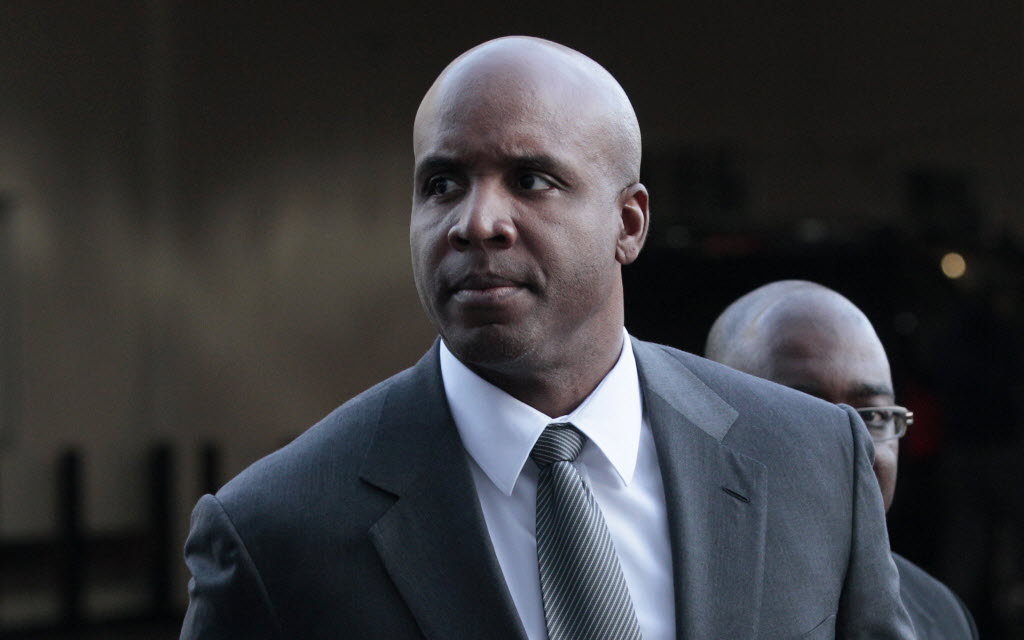
Don’t worry, Barry; Lance should be joining you soon.
Well, I guess I have to hand it to Lance Armstrong, a bit like Ozzie Guillen when he praised Fidel Castro for surviving his dictatorship against all odds. The evidence, circumstantial and otherwise, that Armstrong is a prohibited drug cheater ( like most successful cyclists) has been mounting for over a decade, and yet he has managed to hold on to much of his prestige and iconic status. Meanwhile, retired baseball slugger Barry Bonds has been reviled, condemned, prosecuted and vilified, by me among many others, for presumed illicit performing enhancing drug use in his sport that is backed by very similar kinds of evidence that incriminate Armstrong. Yet while Bonds faces the humiliation of being rejected for election to baseball’s Hall of Fame next year when he becomes eligible, despite being the sport’s all-time career home run leader, Armstrong was preparing to race again to cheering throngs in an upcoming iron man triathlon.
Then came the news, yesterday, that the U.S. Anti-Doping Agency has brought formal doping charges against him. No one should underestimate Armstrong’s skill in wiggling off the hook, but this really should settle the issue of whether he is a hero or a manipulative charlatan. He is the latter. Whether he was a good but weak man trapped in a lie, or a sociopathic con man and cheat can be investigated by biographers and sportswriter, and psychologists. The harm that will be done when his false heroism is irrefutably exposed, however, will be the same no matter how Armstrong came about causing it. His sport will be permanently tarnished beyond recovery. Scores of children and teens will be disillusioned, betrayed into a cynicism about role models and human nature that should only descend later in life. Worst of all,. his example will stand for some as proof that cheating pays. Armstrong, whatever happens to him, will be rich, like Barry Bonds, even if he is disgraced. He will, as my father liked to say, cry all the way to the bank. Continue reading
PolitiFact Bias: the Smoking Gun
 I could not resist this one. Colleague Bob Stone, better known as “Ethics Bob,” has jousted with me over the Tampa Bay Times’ “fact check” web page, PolitiFact. Though far from the worst of the newspaper fact check features, PolitiFact is routinely biased leftward, and sometimes worse than biased. Bob, and some other worthy visitors here, rise to PolitiFact’s defense whenever I smite it, though it deseves to be smought, or smitten, or whatever. Here is a ringing example of why Politifact drives me crazy, and a ridiculous display of biased reporting.
You may recall that when she was House Speaker, Nancy Pelosi used military aircraft to travel to and from her home district in California, costing taxpayers millions of dollars. This became a Tea Party rallying cry (as well it should have), and was taken as symbolic of the profligate Democratic Congress. John Boehner, the current Speaker, pledged during the 2010 campaign that if he took over, he would fly commercial. He reiterated the pledge after 2010’s red tide gave him the gavel. Continue reading
Comment of the Day: “Ethical If We Want It To Be: NBA Flopping and Fooling the Ref”
 This is a wonderful comment by Dwayne N. Zechman, which goes to the heart of what makes sports ethics so perplexing. Let me leave it to Dwayne now, and I’ll have some comments at the end. Here is his Comment of the Day on the post Ethical If We Want It To Be: NBA Flopping and Fooling the Ref:
“I admit I’m having a little trouble with this one.
“If I understand correctly, your premise is that each sport has its rulebook, and what’s ethical or not is mostly determined by what’s in that rulebook. The outside margins of “mostly” come from long-standing traditions, and de facto rules related to safety or practicality. The game isn’t life–it’s a distinct “closed system” if you will, and the rules about life might not apply. Or perhaps it’s better to say that we can choose to declare (in the rulebook or through tradition) that certain rules of life do not apply within the game and that’s okay. Doing so diminishes neither the ethical rule nor the game itself.
“So the beginning of my trouble is that this smacks a little of a combination of “Everybody does it”, “If it isn’t illegal, it’s ethical”, and The Compliance Dodge. Okay, I can accept that, though, because we’ve already stipulated that specific ethical principles can be exempted from a game/sport.
“Next comes my own dissonance in trying to reconcile this article with other recent articles here on Ethics Alarms about pro football, where the same exemption of ethical principles is applied, but somehow shouldn’t be. Okay, I can accept this, too. There is a distinction in that an ethical principle shouldn’t be exempted from the game when there are clear, demonstrable consequences to the player that persist after the game is over and the player’s real life resumes. In a situation such as that, it’s impossible to exempt an ethical principle JUST for the game because the exemption itself renders the game no longer a “closed system”. Continue reading
Ethical If We Want It To Be: NBA Flopping and Fooling the Ref

“And in the category of Best Feigned Foul in An NBA Play-Off Game, the nominees are….”
Once again, the issue of players in professional sports intentionally deceiving the referees is enlivening the sports pages. I welcome it: the intersection of sports and ethics is always fascinating. This particular intersection is as old as sports itself. Is deceiving the referee (or umpire) for the benefit of one’s team competitive gamesmanship or cheating? Is it an accepted tactic, or poor sportsmanship? In short, is it ethical or unethical?
The current version of this controversy has broken out in the National Basketball Association, where Commissioner Daniel Stern has declared war on “flopping”—the maneuver where a player draws an undeserved foul on an opposing player by acting as if minor contact or even no contact at all was near-criminal battery. Stern has suggested that the NBA needs to start handing out major fines for these performances, which in the heat and speed of the game are often only detectable with the aid of slow-motion replay after the fact Continue reading
The Jack Berghouse Cheating Conundrum: Bad Father? Good Father? Ethics Corrupter?
Should we condemn Jack Berghouse for being a good lawyer?

Should a parent defend a bad egg? A cheating bad egg?
Berghouse has intervened to keep his son, a sophomore at Sequoia High School in Redwood City, California, from being kicked out of the honors program for copying his homework assignment from the work of another student. He doesn’t dispute that his son cheated—-his son admits it, and was caught red-handed. Dad is suing the school because he says its policies are conflicting, and thus his son was deprived of due process. He may be right about that. He is also doing it because, as a father concerned about his son’s future, he worries that the blemish on his record will affect his ability to get into an Ivy League college. He’s probably right about that, too.
But is it right—that is to say, responsible and ethical— for parents to use lawyers and the court system to intimidate schools into whitewashing a student’s records? The vast majority say no, which is doubtlessly the reason why Berghouse reports that he is getting hate mail. Continue reading

