Ethics Dunce: The University of Alberta

"Now that you've been caught red-handed, there need to be an investigation to determine what color your hand is."

The University of Alberta’s Faculty of Medicine dean, Dr. Philip Baker, delivered a convocation speech to medical students last Friday that included verbatim excerpts from a speech given last year by Harvard professor Atul Gawande to graduates of Stanford University Medical School. Nevertheless, the plagiarizing dean has not been suspended and will remain working “until allegations are investigated in a formal procedure,” University officials announced. “This is somebody’s reputation and we take this very seriously.”

If the University takes it seriously, why hasn’t Baker been fired, or, for that matter, why hasn’t he resigned? Continue reading

Pointless, Obvious, Unbelievable Lies: How I Hate Them!

No, I'm not talking about Newt's statement that he is still a viable presidential candidate despite his whole staff quitting. But that too.

From the Washington Post:

A Northern California youth baseball league has barred Barry Bonds’ former personal trainer from coaching his son’s team. The president of the Burlingame Youth Baseball Association says Greg Anderson is not a registered coach and is prohibited from being on the field during games.Anderson, who has coached for years, was told of the prohibition after a parent complained about the convicted steroids dealer’s participation….Anderson spent three weeks in prison this year for refusing to testify at Bonds’ trial on charges that he lied about steroids use. Anderson earlier pleaded guilty to steroids distribution. Continue reading

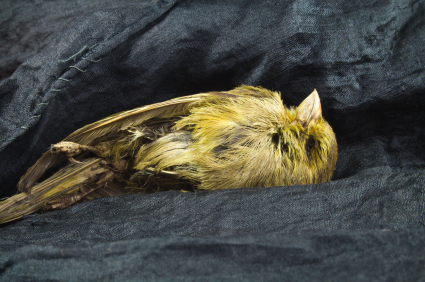
Another Dead Canary

The bald eagle isn't feeling so good either...

Eric Kleefeld of Talking Points Memo reports that Wisconsin Democrats are now pondering whether they should plant fake Republican candidates in Republican primaries, since the GOP has declared that it intends to plant fake candidates in the Democratic primaries, which could delay the general elections from July to August, and complicate the Democratic primaries while the GOP incumbents run unopposed.

The Democrats are being egged on by a labor-backed progressive group called We Are Wisconsin, which has stated: Continue reading

The News Media’s Unethical Political Word Games

Reasonable people can disagree about the prudence and fairness of the various get-tough state and local laws targeting illegal immigrants, such as the recent law passed in Alabama (I like it, by the way). They can even disagree—though I personally don’t see how—about the wisdom of state-sanctioned incentives for illegals to smuggle their children into the country, like Maryland’s batty “Dream Act.”

What reasonable people should not accept and must not accept is the increasingly routine practice among many news outlets of dropping “illegal” from the phrase “illegal immigration” and “illegal immigrants” when discussing such measures. The practice is no less than a lie, an effort to misrepresent as bigotry legitimate objections to providing the benefits of American citizenship to those who willfully violate U.S. immigration laws and procedures. The papers, reporters, columnists and bloggers who do this inevitably follow the misrepresentation by denigrating anyone who doesn’t think scofflaws should be celebrated as heroes and handed the keys to the country as “nativists.”

I resent it, because my maternal grandparents were immigrants, the legal kind, and I would no more oppose the progress and success of law-abiding immigrants in the country than I would saw off my arm. I condemn it, because the tactic—and it is a tactic— is unethical journalism, an example of intentionally muddying an issue by imprecision so that the apathetic, the lazy or the none-too-bright—a sizable group, that—are confused about what is the real issue. Continue reading

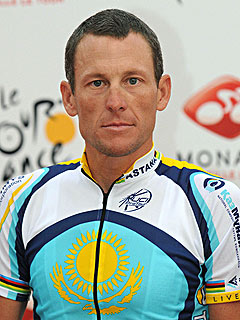
No Excuses and No Mercy For Lance Armstrong

Sorry, Lance…good guys don’t cheat.

Back when Barry Bonds was still playing baseball, a sportswriter mused about why it was that everyone assumed  Bonds was a performance-enhancing drug cheater despite his protestations to the contrary, while most Americans and sports journalists brushed away similar allegations regarding Lance Armstrong. Both competed in sports with acknowledged steroid abuse problems; indeed, the problem in bicycle racing was presumed to be more pervasive than in baseball. (A few years later, with the banning of multiple Tour winners, the presumption became a certainty.) Both athletes had improbable late career improvements in their performance to reach previously unimaginable dominance in their respective sports. Both had to explain or deflect multiple credible accusations of cheating and circumstantial evidence that suggested that they were doping. Both claimed they had never failed drug tests, and there were good reasons to doubt the denials.

So why was Bonds a villain by consensus and Lance an untouchable hero? The sportswriter explored many theories (Apologies: I cannot locate the article. If someone can, please send it), among them the greater popularity of baseball over cycling, Bond’s startling physical transformation into a behemoth while Armstrong remained cyclist-sinewy,  Armstrong’s inspiring story as a cancer survivor, Armstrong’s philanthropic work,and the fact that Bonds, unlike Armstrong, was black. The biggest difference, however, and to the writer the key one, was that Armstrong acted the role of a hero, while Bonds refused to. Armstrong was friendly and accommodating, while Bonds was angry, intimidating and antagonistic. Armstrong seemed like someone who played by the rules, and who lived his ethical values. Bonds seemed like a rebel, one who wouldn’t hesitate to break the rules for his own benefit. In short, the public wanted Armstrong to be the hero he seemed to be, so they ignored the evidence linking him to performance-enhancing drugs.

After last Sunday, the disparate public perception of Bonds and Armstrong, always illogical, became unsustainable. Continue reading

Oxymoron Alert: “Ethical Cheating”

What will they think of next?

From Arthur M. Harkins, Associate Professor based in the Department of Organizational Leadership, Policy, and Development, University of Minnesota, and George Kubik, comes a scholarly paper that will have students cheering. Here is the abstract…you can buy the paper here.  Personally, I can tell where this is going, and I can think of more productive ways to spend my money.

Here is the abstract…a good workout for those of you who like to spot euphemisms, buzz words, and looming rationalizations:

Title:    “Ethical” cheating in formal education Continue reading

Unethical Quote of the Month: Tim Gannon

The choice came down to Greg Anderson or Jack the Ripper...

“Some parents have a problem with him being a coach, but it’s not like he was caught stealing or did some bad things with children.”

Tim Gannon, a real estate broker and father, explaining why he has no problems with Barry Bonds’ steroid-pushing trainer, Greg Anderson, serving as an assistant coach for his son’s Capitol Electric team in the Burlingame Youth Baseball Association, according to an article in Sunday’s New York Times.

It’s seldom that one sees in print a more perfect example of my least favorite rationalization for unethical conduct, “It’s not the worst thing.” This popular and despicable rationalization seeks to excuse bad conduct by comparing it to worse conduct, an intellectually dishonest device that can be used to try to minimize the seriousness of literally any behavior, no matter how heinous. (“Sure, Jack the Ripper did some bad things, but he was no Hitler!” ) It is the ethics embodiment of the dishonest rhetorical technique of the false choice. Continue reading

Unethical Quote of the Week: Adam Dachis

“All posts that belong to the Dark Side are going to feature some ideas that might be a little evil or at least require some flexible ethics. Some things will be downright horrible, and you should not do them, but are either for your information or simply for the point of interest (and will be noted as such). Your judgment and actions are your own, so think before you do anything you read here and only use your dark side for good.”

Adam Dachis, ethics corrupter, in the “Dark Side Disclaimer” that accompanies his column on the website Lifehacker, called “Secrets from the Dark Side.”

His current “Secrets from the Dark Side” column is entitled “How to Lie, Cheat, and Steal Your Way to a Perfect Flight,” which is an accurate description of its contents. Some of Dachis’s “tips” (scams? cheats?) are interesting, some are humorous, and all (well, maybe with one exception) are unethical. Dachis, for his part, doesn’t have the guts to advocate outright the conduct that he is explicitly promoting, nor does he condemn it. As his ethically incoherent ( “Only use your dark side for good”) disclaimer demonstrates, he thinks ethics is a game of some sort, and that being a “little evil” is cute, or trivial, or something.

A true ethics corrupter, Dachis wants to avoid personal accountability for the unethical acts of his readers spurred entirely by his post, while at the same time getting credit for his cleverness. This is the Richard Nixon approach to ethical corruption, planting seeds and disclaiming responsibility for the crop, telling followers, “We could do that, but it would be wrong.” Wink, wink.

Yechhh.

Loop-Hole Ethics and The New York Times

The NYT’s website paywall plan floats in a sea of holes.

Ariel Kaminer, author of “The Ethicist” column in The New York Times Magazine, made an interesting assertion in her answer to a reader who asked about whether he could exploit several loop-holes in the Times’ new paywall plan for its website.

Noting that he was a struggling freelance journalist who visits the Times website often, he asked if it was unethical for him to use his parents’ free access to the content, since they are subscribers.  Then he Mused about other scenarios. “If I buy online access, can I share the password with my live-in girlfriend, even if I move to New York for the summer? What about our other housemates?” Continue reading

The Professions Most Likely to Cheat on Their Taxes?

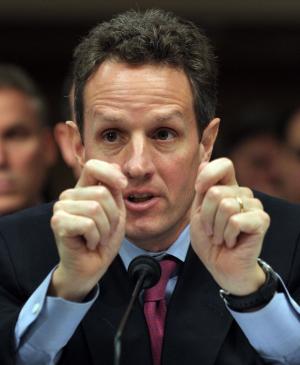
Gee, where do "Treasury Secretaries" fall on the list?

A study of I.R.S. data by a University of Chicago graduate student, now Doctor, Oscar Vela,  produced the following list of the professions most likely to file fraudulent tax returns, at least according to his analysis. Make of it what you will. The Time Magazine website blog post about the list is worth reading, first for the blogger’s highly questionable theories explaining, for example, why lawyers aren’t on it, but mostly to see conclusive proof that Time is hiring English-as-a-second-language night students, relatives of Ko-Ko the talking gorilla, or stroke victims to write their blogs. Sample sentence: “His conclusion was that as much as we would like to think so we pay taxes out of  the goodness of our hearts, or even because we are fearful of fines or worse.” Henry Luce just did a back-flip in his grave.

Dr. Vela’s theory is that the professions that are required to maintain a perception of integrity are less likely to cheat. Let us say that I am dubious. Why then are scientists so high on the list?

Here it is: Continue reading