
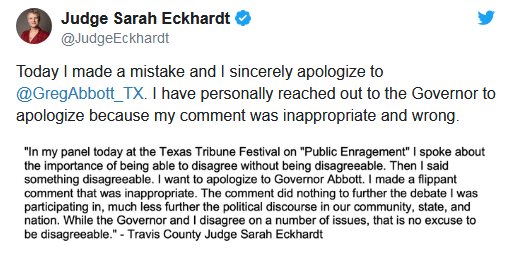
It has come to this: the above image currently appears on a Dhavani billboard in Times Square. The company proudly tweeted it out, writing,
As you know, we’re extremely passionate about creating high-quality, fashionable and innovative products in the most sustainable and ethical ways possible.…But the state of the world weighs heavily on us. There is a palpable tension in the air, an untenable clash of ideals, and we can no longer just sit back and watch….hat’s why we’ve decided to #StandForSomething and become the world’s first and only Activ(ist)Wear™ company. DHVANI is a brand for people who are committed to making the world a better place. As of today, with each purchase, we will donate to a featured nonprofit partner.
Yes, fomenting hate and denigrating the elected leader of the United States is the way to make the world a better place. That’s the message. Now run out and put money in their pockets.
It is increasingly clear to me that the future of our nation, government and culture depends upon how many Americans eventually realize that no matter what they may think of President Trump, those who shamelessly employ these tactics and this kind of rhetoric are a far, far greater threat to our values.
Commenting on this phenomenon, conservative commentator John Hinderaker writes, Continue reading





 Ethics Alarms