Cognitive Dissonance Scale Lesson For Senate Democrats

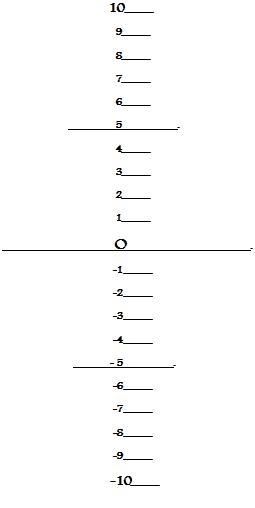
I have mentioned here frequently that one of two things I learned in college that have been most useful in my life and career is Leon Festinger’s Cognitive Dissonance Scale. The concept illustrated by the scale is also one of the most useful tools for ethical analysis, often essential to answering the question, “What’s going on here?” the entry point to many perplexing situations. Check the tag: it just took me 15 minutes to scroll though the posts that got it. I was surprised to find that I didn’t use the tag until 2014, when the scale helped me conclude that the Tea Party, then in ascendancy, was “doomed by a powerful phenomenon it obviously doesn’t understand: Cognitive Dissonance.” Heard much about the Tea Party lately? See, I’m smart! I’m not dumb like everybody says… I wrote then,

As psychologist Leon Festinger showed a half a century ago, we form our likes, dislikes, opinions and beliefs to a great extent based on our subconscious reactions to who and what they are connected with and associated to. This is, to a considerable extent, why leaders and celebrities are such powerful influences on society. It explains why we tend to adopt the values of our parents, and it largely explains many marketing and advertising techniques that manipulate our desires and preferences. Simply put, if someone we admire adopts a position or endorses a product, person or idea, he or she will naturally raise it in our estimation. If however, that position, product, person or idea is already extremely low in our esteem, even though his endorsement might raise it, even substantially, his own status will suffer, and fall. He will slide down the admiration scale, even if that which he endorses rises. If what the individual endorses is sufficiently deplored, it might even wipe out his positive standing entirely.

The implications of this phenomenon are many and varied, and sometimes complex. If a popular and admired politician espouses a policy, many will assume the policy is wise simply because he supports it. If an unpopular fool then argues passionately for the same policy, Festinger’s theory tells us, it might..

1. Raise the fool’s popularity, if the policy is sufficiently popular.

2. Lower support for the policy, if he is sufficiently reviled, and even

3. Lower the popularity of the admired politician, who will suffer for being associated with an idea that had been embraced by a despised dolt.

This subconscious shifting, said Festinger, goes on constantly, effecting everything from what movies we like to the clothes we wear to how we vote.

Here, for the heaven-knows-how-many-th time, is the scale in simplified form…

Continue reading

Comment of the Day: “Hello. This Is Mira!….Trump Derangement Destroyed Her Brain…”

AM Golden has delivered a fascinating Comment of the Day describing a phenomenon I was barely aware of: the practice of paying celebrities to attend conventions that have little of nothing to do with what the celebrity does or is famous for.

The COTD was inspired by my commentary on the brain-meltingly stupid anti-Trump “X” screed by one-time Academy Award winning actress Mira Sorvino, now on the shady side of what turned into a disappointing career. (To be fair, she was black-balled in her prime by Harvey Weinstein for not accommodating his sexual demands when he was one of biggest power-brokers in Hollywood.)

Incidentally, appropo of subsequent events, Mira’s polemic proclaimed Trump as the second coming of Hitler and said that if he was elected, it would mean the end of America as we know it. And as it is beginning to look like he will be elected…what is the patriotic thing to do to save the nation, hmmmmmmmmmmmmmm?

But I digress…

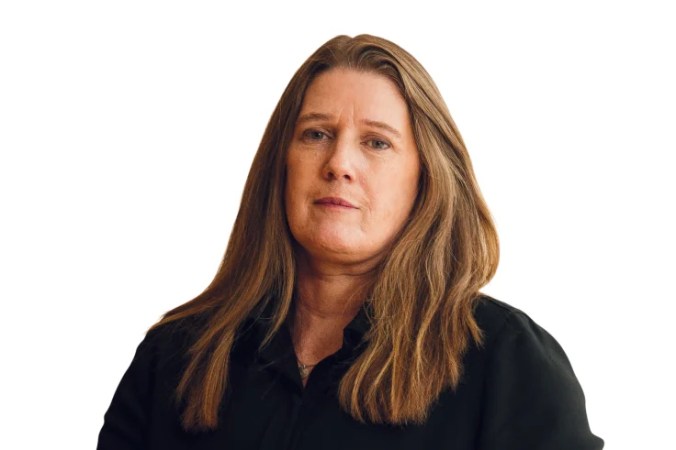
The convention practice is clearly a cognitive dissonance scale stunt in part: an organization that sponsors a generally admired and beloved public figure as a “guest” gets a boost up the positive end of the scale. Or the celebrity is more like a freak show attraction: Come meet Joey Buttafuoco! Kato Kaelin! And a convention that features a professional leach like Mary Trump (above)? Don’t expect me to register.

AM’s Comment of the Day is also something of an ethics quiz. Don’t jump to the end: that’s cheating.

Here is AM Golden’s Comment of the Day on the post, “Hello. This Is Mira! She Used To Be A Successful Hollywood Actress Until Trump Derangement Destroyed Her Brain. Won’t You Give a Tax-Deductible Donation To Defeat This Terrible Disease?”

***

Continue reading

Ethics Dunce: The Biden Campaign

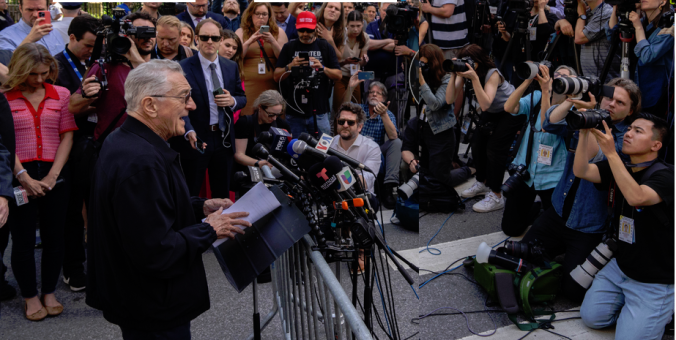
This might be the easiest Ethics Dunce pick ever; at least I am certain that there couldn’t have been an easier one. When I heard which ever Democratic Party hack it was introduce Robert DeNiro as a featured speaker for the Biden campaign’s Trump Hate presser outside the Manhattan courthouse where this kangaroo kaper is inching to a conclusion, I thought, “No! They can’t be this crude, obvious and stupid. They just can’t be.”

They were, and they are.

Continue reading

Ethics Dunce: Don Surber

Don Surber is a former journalist and current conservative pundit whose blog and substack I occasionally peruse, usually without too much alarm. However, he has issued a substack essay that, if I had to summarize in three words my objections to it and any culture wars guerilla who cited him as authority would be, “This doesn’t help.” A longer version follows.

Surber’s piece is called “In praise of ties” and carries the subheading, “They helped build a society that we are destroying.” If Glenn Reynolds had not endorsed the link, I would have stopped reading right there. I know ties are going to be used as a metaphor for the decline of elegance, respect, adulthood, civility, dignity, elan and eclat, blattity-blah, but still. Don’t insult my intelligence. This is the equivalent of “In praise of stovepipe hats,” “In praise of spats,” “In praise of derbies” or “In praise of bustles.” These are all fashions, and fashions rise and fall like steam and autumn leaves. We get used to them, if they hang around long enough, and yes, sometimes their demise are linked to cultural factors that have little to do with fashion. Nonetheless, longing for a time when men wore ties as a matter of societal conformity makes one seem like Grandpa Simpson, screaming at clouds. Worse, in fact.

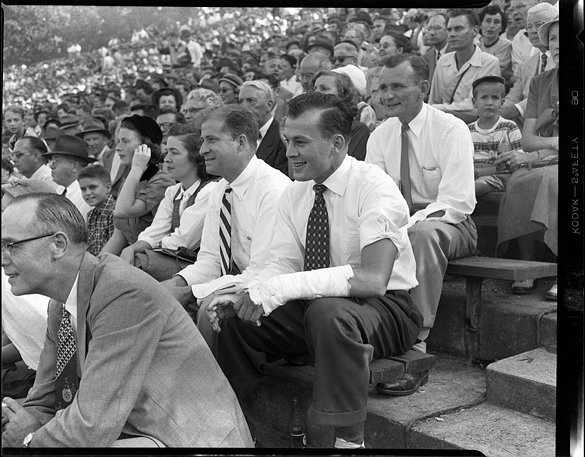
Surber writes, “Chuck Berry always wore a tie. Gas station attendants wore them. You could trust your car to the man who wore the star because he had a tie on. Men wore ties to ballgames because men were civilized. Ties were important because they gave a sense of authority but ties also showed that a man wants to belong in society. As Benjamin Franklin said, “Eat to please thyself, but dress to please others.”

Sure, Don. I always thought those pictures of men wearing ties at baseball games were ridiculous. Ted Williams, one of my father’s heroes whom he passed on to me, famously refused to wear a tie: he had a very long neck and didn’t think ties looked good on him. Ben was right, but when the tie as a symbol of wanting to appear formal and serious wane—it hasn’t waned completely —then people will adopt other ways of “dressing to please.” It is the way of the world, and there is nothing about these transitions to lament.

But Surber was just getting started. Here he is at full speed:

Continue reading

Unethical Headline of the Week: The LA Times

“How throwing soup at the Mona Lisa can help fight climate change”

You can read this opinion piece if you want, but the headline accurately conveys all you need to know by itself, I hope. The author, an associate professor of environmental studies at USC (so you know the quality of critical thinking and ethical analysis they are teaching there), essentially is making an argument for terrorism, because sometimes it works.

“Objections to acts of climate activism such as the latest food fight at the Louvre are understandable but might miss the point. Protesters’ perceived madness is indeed method,” Shannon Gibson writes. And the method is attracting attention to a cause by disruptive, selfish and destructive acts having no relationship to the goals of the activists. In some respects, violent acts of terrorism are easier to rationalize: at least those seeking a Palestinian state are directing their “method” at those with some direct relationship to the entity the terrorist blame for their plight. Throwing tomato soup at Van Gogh’s “Sunflowers” or the Mona Lisa has no such relevance.

Continue reading

Ethics Quiz: Christmas Dancing At The White House

Relax…today’s ethics quiz has nothing to do with whether Jill Biden’s Christmas video featuring the modern ballet troupe Dorrance Dance is your cup of eggnog.

Rather it is this…

Is it responsible and ethical for the White House to use the holidays to promote a politically radical, anti-police, anti-white, Marxist organization like Dorrance Dance?

For Dorrance Dance is an overtly and outspokenly Marxist dance company that even prominently displays a quote from Angela Davis on its website: “You have to act as if it were possible to radically transform the world. And you have to do it all the time.” The group advocates defunding the police across the country, and prominently endorses Black Lives Matters, another Marxist organization.

The group’s radical politics are a bit buried on its website behind standard aspirational artistic blather like “Our goal is to engage with audiences on a musical and emotional level, and to share the complex history and powerful legacy of this American art form throughout the country and the world.” Well, yes, that, and ending capitalism and the United States of America as we know it in order to achieve “racial justice.”

My answer to the quiz is that as long as the group keeps its politics out of its work for the White House, good luck to them. They were engaged—I hope—because of their dance artistry rather than their contempt for the United States. I wouldn’t be surprised if the Bidens had no idea what the group advocates.

Yes, it’s annoying that Dorrance Dance will undoubtedly use its White House gig as cognitive dissonance helium to elevate their public image into more positive territory than any organization connected to Angela Davis, Black Lives Matter and Karl Marx deserves. But if we chose our art based on the political sophistication and delusions of artists, we’d just end up with bad art.

The Cognitive Dissonance Scale And Jobs Lost After Hamas-Israel War Outbursts On Social Media

The scenario has been a theme this week. Someone shoots off his or her metaphorical mouth showing ignorance and probable anti-Semitic bias in a social media post designed for public consumption, and loses a job when the employer decides that it doesn’t want to lose business from those who might wonder, “Why do they hire people like that?”

It is not a First Amendment issue. It is a an irresponsible employee issue. Hollywood has been especially busy. Spyglass, the company that owns the “Scream” film franchise, fired actress Melissa Barrera from the upcoming “Scream VII” (There are going to be seven of these?) after she posted standard issue “genocide/innocent Gazans/ cruel Israel messages. “THIS IS GENOCIDE & ETHNIC CLEANSING,” she concluded.

1) No, it isn’t, and 2) You really don’t understand the Cognitive Dissonance Scale, do you?

It’s really quite simple, Melissa…

For the vast majority of Americans who pay attention and aren’t intersectional fanatics, supporting the Palestinian-Hamas “From the river to the sea” mission is at the bottom of the scale. People who want to see movies must regard the films and its stars above zero, ideally quite a bit above. If that film or its stars associate themselves with a deeply negative point of view or conduct, that connection (think of being tied to an anchor) drags the positive attitudes down, meaning fewer tickets sold, and in turn fewer profits.

Continue reading

Addendum To The Senate Dress Code Fiasco: Althouse’s Ethically-Muddled Analysis

Well, I’ve been nice to Ann lately, but as she does sometimes, she botched her analysis of this story badly, and attention should be paid. I’ll have Ann’s words in italics, and my comments without them…

Ann wrote, beginning with the NPR quote, “The Senate’s move to relax its unofficial dress code has led to a surprising development: an official dress code,”

“It’s not the way it always goes, but it shows the risk of seeking a new rule. You may end up with a reinforcement of the old rule. More precisely, it shows the risk of ending the enforcement of an informal practice. It led to the formalization of the old practice into an official rule.”

Why is that a “risk”? The risk of ending the enforcement of an old rule is that the consequences the old rule was designed to prevent occur. There were reasons for the old rule, and as Herman Kahn once told me, people have a tendency to take traditions and standards for granted after a while, forget why they existed, and have to learn, often painfully, all over again. That’s what happened here. As the Ethics Alarms motto goes, “When ethics fails, the law steps in.” Fetterman was unethical, and Schumer, rather than being a responsible leader and telling him to shape up, eliminated the ethical standard he was breaching instead.

Continue reading

See? Cultural Rot CAN Be Reversed!

The Senate yesterday unanimously passed a bill that requires members to follow a dress code that will include a coat, tie, and slacks for men. Just a bit less than three weeks ago, Senate Majority Leader Chuck Schumer, in a vulgar and obnoxious capitulation to lowered standards of public conduct and a blatant endorsement of the King’s Pass had ruled that all Senators could dress like Pennsylvania’s senatorial slob, John Fetterman, whose favorite attire is a sneakers shorts hoodie ensemble. This was an itsy-bitsy microcosm of what the party of Fetterman and Schumer are attempting to inflict on American society, and, incredibly, the vox populi rebelled. It seems that a lot of Americans don’t like the idea of their elected representatives in the U.S. Capitol appearing in public dressed like Frankenstein’s Monster on vacation.

Continue reading

Ethics Quiz: Censorship At The U.S. Open [Corrected]

Touchy-touchy!

During his a match at the US Open yesterday, German player Alexander Zverev complained that he heard a fan sing out, “Deutschland über alles!” Zverev went to umpire James Keothavong and said, “He just said the most famous Hitler phrase there is in this world, it’s unacceptable. This is unbelievable.”

The phrase, which translates to “Germany above all,” has been removed from the German national anthem, which is sung to melody composed by Haydn, (NOT Handel. as was initially posted). The original lyrics were written way back in 1800, but “Deutschland über alles” is associated with Hitler, the Nazis, the Holocaust, WW II, all sorts of bad things. It’s a casualty of the cognitive dissonance scale.

Continue reading