Ethic Quiz: Is Eva Kor An Ethics Hero, Or An Ethics Dunce?

Kissed by a murderous Nazi. Yum.

Kissed by a murderous Nazi. Yum.

81-year-old Holocaust survivor Eva Kor recounted her memories of being one of Dr. Josef Mengele’s human guinea pigs  in a letter to Oskar Groening, a former member of the SS at Auschwitz-Birkenau who is on trial in Germany for 300,000 counts of accessory to murder:

In May 1944, when we were taken to Auschwitz, my name was Eva Mozes. My family and I were part of the Hungarian transport. My family included my father Alexander Mozes, 44 years old; my mother Jaffa Mozes, 38 years old; my older sister Edit, 14 years old; my middle sister Aliz, 12 years old; and my twin sister, Miriam, 10 years old. Within thirty minutes after arriving on the selection platform, Miriam and I were ripped apart from our family forever. Only she and I survived, because we were used in experiments conducted by .

Within half an hour we became part of a group of twin girls aged two to sixteen: thirteen sets of little girls and one mother. We were taken to a processing center where they cut our hair short and took our clothes away. That evening they returned them with a red cross at the backs. Then they lined us up for tattooing. When my turn came, I decided to cause them as much trouble as a ten year-old could. Two Nazis and two women prisoners restrained me with all their force. They began by heating a needle. When the needle got hot, they dipped it into ink and burned into my left arm, dot by dot, the capital letter A-7063. Miriam became A-7064…

For the next two weeks I only have one clear memory: I was crawling on the floor because I could no longer walk. I was crawling to reach a faucet with water because they did not even give us water anymore.

In 1984, Kor founded CANDLES (Children of Auschwitz Nazi Deadly Lab Experiments Survivors), in an effort to locate other surviving Mengele twins; and in 1995 she opened the CANDLES Holocaust Museum and Education Center in Terra Haute, Indiana. She calls herself a “forgiveness advocate,” teaching children:

1. Never give up on yourself or your dreams. I did not know how to survive Auschwitz, but I was determined to do it. Here I am 70 years later because I never gave up.

2. Treat people with respect and fairness to eliminate prejudice from your life.

3. Forgive your worst enemy and forgive anybody who [h]as ever hurt you. I forgave the Nazis and I forgave everybody who hurt me.

Kor is one of the Holocaust survivors testifying at Groening’s trial. On its first day, Groening told the court that  “it is beyond question that I am morally complicit. This moral guilt I acknowledge here, before the victims, with regret and humility.”  Kor told him, “I appreciate the fact that you are willing to come here and face us.” She offered the defendant her hand, and he took it, brought her into a near embrace, and kissed her on the cheek. 

Your Ethics Alarms Ethics Quiz as this week ends is…

Is Eva Kor an Ethics Hero, or an Ethics Dunce?

Continue reading

Fugitive for 39 Years Turns Himself In For Free Health Care…Wait, WHAT??

"Oh, Mr. Moore? We have that bed you made 39 years ago. Now lie on it."

“Oh, Mr. Moore? We have that bed you made 39 years ago. Now lie on it.”

From NBC:

“…Clarence David Moore, 66, called the Franklin County (Kentucky)Sheriff’s Office on Monday and said he wanted to turn himself in, the sheriff’s office said. When deputies arrived, they found Moore — who’d been living in Frankfort since 2009 and had ID’d himself as Ronnie Dickinson — partially paralyzed and unable to walk because of a recent stroke. He was arrested and taken by ambulance to a hospital for examination before he was taken to the Franklin County Regional Jail.

“Sheriff Pat Melton told NBC station WLEX of Lexington on Tuesday that Moore said he’d escaped from the Henderson County, North Carolina, Prison Unit in the mid-1970s and has been on the lam for almost four decades. But as he got sicker, he couldn’t get medical coverage to pay for the complications of his stroke and other health problems, because he doesn’t have a valid Social Security number under his alias…Moore was arraigned Tuesday morning and waived extradition to North Carolina on a charge of being a fugitive from another state. He was being held without bond pending his being returned sometime this week….”

I hate to appear uncharitable, but I don’t understand this at all.

Moore chose to defy the justice system for 39 years, and now wants to get the benefit of it on his terms, when it’s useful and convenient to him?

He chose to avoid paying his debt to society. Society certainly has no debt to him. The ethical course is for the North Carolina’s governor to pardon Moore, and allow him to fend for himself, stroke or not. For taxpayers to have to foot the bill for a felon’s health care when he has shown nothing but utter contempt for the justice system is a travesty of justice, logic and ethics. If it’s compassion at issue, take the money that would have to be spent on Moore and use it to help an elderly law-abiding citizen who can’t pay his medical bills.

Or burn it.

Does the State have some subtle ethical obligation to the fugitive that I’m missing?

Wasting A Heart

Heart transplant patient

I don’t have a solution to an ethics fiasco like this or know how it could be avoided, but there have to be some lessons buried here somewhere.

In 2013, 15-year-old Anthony Stokes was denied a place on the waiting list for a life-saving heart transplant  at Children’s Healthcare of Atlanta at Egleston because, the hospital explained, he had “a history of noncompliance, which is one of our center’s contraindications to listing for heart transplant.”

This means that doctors doubted that Anthony would take his medicine or go to follow-up appointments. In other words, he was too unreliable and irresponsible to be entrusted with a heart that could save the life of someone else more likely to make good use of it. When a doctor told the family that Anthony’s low grades and time spent in juvenile detention factored into the assessment, however, that gave the family an opening to save the boy’s life. They played the race card. Anthony was being sentenced to death because he was poor and black, and a white patient would naturally be a better risk. The media ran with the narrative, and there was national outrage. Fearing a public relations disaster, the hospital reversed its decision, and Stokes got his heart.

From the Washington Post today:

Tuesday afternoon, [Anthony] Stokes died after a vehicle he was driving jumped a curb, hit a pedestrian and collided with a pole in a car chase with police, according to WSBTV. The pedestrian was hospitalized for her injuries, but Stokes’s car was nearly split in half by the sign, according to the Atlanta Journal-Constitution.

Police said he had to be cut out of the Honda by first responders and rushed to a hospital where he later died…Stokes was driving a car that matched the description of one used by a person suspected of breaking into an elderly woman’s home. The chase began after officers responding to her 911 call attempted to pull Stokes over, according to WXIA.

Pensive and Rueful Observations: Continue reading

Ethics Quiz: The Lettering Of Michael Kelley

Michael-Kelley-Down-Syndrome

Controversy in Kansas:

Michael Kelley is a high school student who has Down Syndrome and autism. He plays extra-curricular special needs basketball, so his family bought him a varsity letter and had it sewed to a school jacket to resemble the jacket the school’s athletes wear. The school’s special needs teams are not regarded as  varsity sports.

The school asked Michael to remove the jacket or the letter, since East High’s policies dictate that only varsity teams can wear the letter.

Now Michael’s mother is petitioning the school board to ensure that special needs team members get letters. Public reaction in Wichita is running against the school, which is being painted as cruel and lacking compassion by not letting Michael wear his letter jacket.

Your Ethics Alarm Ethics Quiz this almost spring weekend (March is back to being a lion here in the D.C. area) is this:

Should the school have let the special needs athlete wear his counterfeit letter jacket?

Continue reading

The Unethical Cosby Victim: Jewel Allison

accuser

The thirty or so declared victims of sexual assault by Bill Cosby (sorry: when we get into double figures, “alleged” is misleading) have given various reasons for not reporting the crimes against them: fear of Cosby’s power, fear of retribution from the entertainment industry, fear of publicity, fear of not being believed, fear of humiliation. A recent addition to the list, however, has given an unequivocally unethical explanation for her 20 year silence in a Washington Post op-ed that has been called “courageous.” Jewell Allison’s confession is not courageous. It is disturbing and ominous. It shows what the trauma of the black experience in the United States has done to some African Americans, causing them to place group identification above reason, decency, good citizenship, compassion and common sense.

She writes:

“When I first heard Andrea Constand and Tamara Green publicly tell their stories about being drugged and assaulted by Cosby, I wasn’t relieved; I was terrified. I knew these women weren’t fabricating stories and conspiring to destroy America’s favorite dad, but I did not want to see yet another African American man vilified in the media. As I debated whether to come forward, I struggled with where my allegiances should lie – with the women who were sexually victimized or with black America, which had been systemically victimized.”

This makes no ethical sense or rational sense. Continue reading

“Ethics Dunce” Doesn’t Do This Judge Justice: Ferguson Judge Ronald J. Brockmeyer

When "judge not lest you be judged" is really good advice...

When “judge not lest you be judged” is really good advice…

Meet Ferguson Judge Ronald J. Brockmeyer. He  has been Ferguson’s municipal court judge for 12 years and serves simultaneously as a prosecutor in two nearby cities, as well as a private attorney. This is not as unusual a situation as you might think in rural areas, but it is certainly a fertile one for conflicts of interest, unless the busy individual is trustworthy and ethical.

This description would not seem to apply to this judge. While the Justice Department is alleging that his court in Ferguson, Mo. has reinstated the deplorable tradition of debtor’s prison, sending poor citizens of the city to jail for not paying fines they have no money to pay, Brockmeyer personally owes the US government $172,646 in taxes.

Federal tax liens filed against Brockmeyer by the Internal Revenue Service (IRS) state that he has tens of thousands of dollars in overdue personal income taxes from joint filings with his wife, Amy, and owes tens of thousands in employer taxes for his law firm.

Justice? Compassion? Empathy? Fairness? Integrity? Trustworthiness? Don’t look for any of those from the judiciary in Ferguson. How amused  Judge Brockmeyer must have been to see Darren Wilson vilified, while his villainy passed unnoticed.

“Hands up, Don’t shoot,” being a lie, is no longer even an arguably legitimate rallying cry for the kind of systemic wrong the people of Ferguson have endured. Surely this despicable and cruel hypocrite can inspire a better one.

______________________

Pointer: Lucian Pera

The Tangled Ethics of the Down Syndrome Cheerleader

There’s a lot going on here, and I may lack the ethics dexterity, or perhaps the courage, to figure it out.

I learned about the story on CNN this morning, as the newscasters were getting misty-eyed and “Awwing” all over the place. With a lot of fairly disturbing ethics issues rotting on my plate, I was looking for something uplifting to write about. I’m not sure whether this is it or not.

Here is the most recent on-line story about Kory Mitchell, a sophomore on the varsity cheerleading squad for Manitou Springs (Colorado) High School, who was born with Down Syndrome:

DENVER, Colo. – A Colorado teen with Down syndrome has made her dream of competing in a cheerleading competition come true.

Colorado’s 3-A cheerleading champions hail from Manitou Springs. At the top of their pyramid is a teenager who has overcome serious challenges in her life. The countdown is on as thirteen girls get one last practice in at the Colorado School of Mines. In minutes, the Manitou Springs Mustangs huddle will compete against other top teams.

Cheerleaders take center stage showcasing their spirit and synchronicity. The Manitou Springs Mustangs huddle one last time. And for the first time, joining them in competition is 16-year-old Kory Mitchell.

“She is full of life and full of energy and always wants to be a part of everything,” says her mom, Bonnie King, as she watches with pride.

Her daughter has dreamt about being a cheerleader since elementary school. Her mom is emotional.

But learning these already complicated routines is harder for Kory. “It`s just a tough road when you have a differently-abled child. And to see them have a sense of belonging and acceptance is what she wants, of course, is just so beautiful to see it,” mom says.

Kory’s teammates see what’s under the surface. Things like courage, patience and unconditional acceptance.

“She`s pretty spunky. And she`s got some sass. She loves being out there. It`s nice to see her smile and part of the team,” says one of her teammates. Sometimes competitions aren’t about who wins, but a little hardware doesn’t hurt.

Kory accepted the trophy and a hand from her teammates.

“It`s my dream come true. I love my girls a lot. I`m a big fan of cheerleaders,” Kory said.And Kory’s teammates are big fans of her. This was Kory`s first competition, but she has cheered with the team since last year at football and basketball games.

Observations (some of them reluctant): Continue reading

Ethics Quiz: Eddie Murphy’s Golden Rule Moment

Wait..that's all?

Wait..that’s all?

As the long, live, “Saturday Night Live” 4oth anniversary show was being aired on NBC, twitter and various websites gave moment by moment accounts of what was occurring. Everyone was puzzled by the much-ballyhooed appearance of Eddie Murphy, who had a returning hero’s introduction, and was on screen for about a minute, never to return. Why didn’t Eddie do anything funny? Later we found out, though backstage revelations by SNL mediocrity Norm McDonald.

From “Rolling Stone”:

At the tail end of the “Celebrity Jeopardy” sketch – which reintroduced Darrell Hammond as Sean Connery, Will Ferrell as Alex Trebek and Macdonald as Burt Reynolds/Turd Ferguson – a Video Daily Double appeared in the Potent Potables category. Current SNL cast member Kenan Thompson played Bill Cosby revealing his cocktail recipe, a nod to the sweeping allegations against the comedian.

As Macdonald revealed on Twitter, that cameo was originally written for Murphy, who – after a few days of being pursued by Macdonald, Michaels and even director Brett Ratner (the latter serving as an intermediary for the comic) – decided not to appear in the sketch.

“Murphy knew the laughs would bring the house down. Eddie Murphy knows what will work on SNL better than anyone. Eddie decides the laughs are not worth it. He will not kick a man when he is down,” Macdonald wrote.

Your Ethics Alarms Ethics Quiz is…

Is Eddie Murphy an Ethics Hero?

Continue reading

Ethics Quiz: Honoring The Dead and Deadly Team Mate

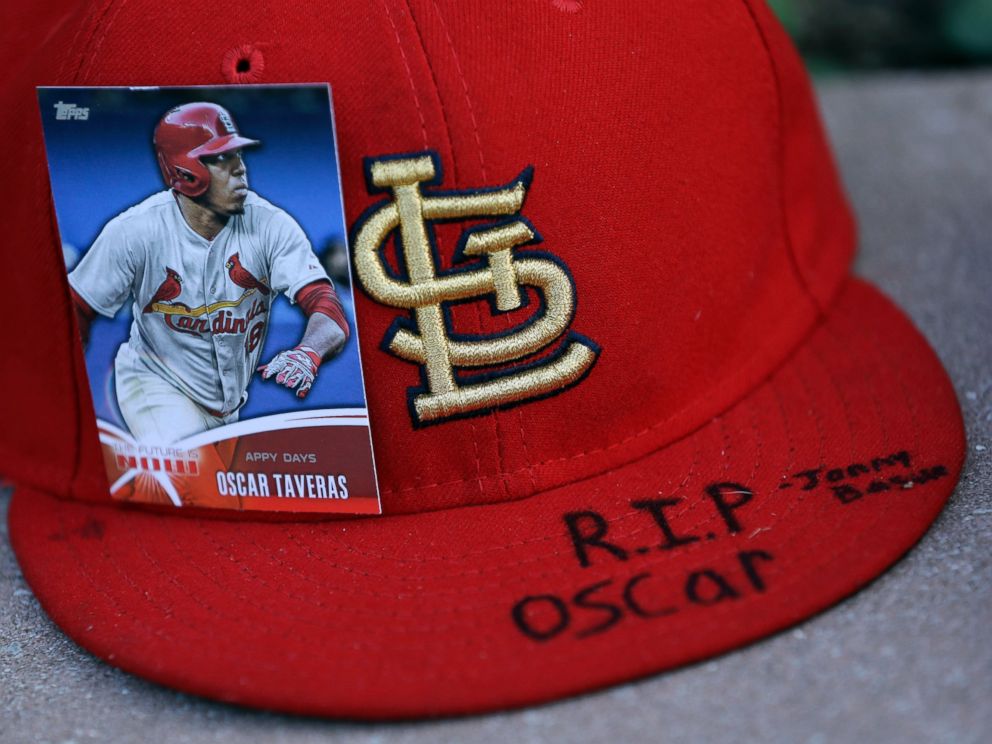
Taveras

When they take the field in Spring Training and for the rest of the 2015 baseball season, the St. Louis Cardinals will be wearing a memorial patch reading “OT” in honor of outfielder Oscar Taveras, the 22-year-old budding star outfielder who died in a car crash in his native Dominican Republic last October. Such mourning patches have become common since 1972, when the Pittsburgh Pirates moved beyond the traditional black armband to a personalized patch following the tragic death of the team’s Hall of Fame outfielder Roberto Clemente in a plane crash, as he was flying humanitarian aid to Nicaragua.

Taveras, however, unlike Clemente, died in an act of reckless stupidity that took not only his own life but that of his 18-year-old girlfriend, Edilia Arvelo, as well. Toxicology tests showed that his blood alcohol level was five times the legal limit before the crash. situation is more complex because toxicology tests showed that his blood alcohol level at the time of his death was five times the legal limit. Moreover, Taveras’, also was killed in the crash. If Taveras had lived and Arvelo alone had died, he would have been prosecuted for manslaughter.

And thus your first Ethics Alarms Baseball Ethics Quiz of 2015 is this:

Is it ethical for the Cardinals to publicly honor Taveras with a uniform patch?

Continue reading

“Maybe Republicans should just keep their mouths shut whenever rape is being discussed” (Cont.)

To go into the "Gallery of Republicans Who Say Offensive Things About Rape  Making The Whole Party Look Stupid." The sad part is, the gallery is filling up...

To go into the “Gallery of Republicans Who Say Offensive Things About Rape Making The Whole Party Look Stupid.” The sad part is, the gallery is filling up…

I just wrote the quote in the title a couple hours ago, and now this.

Rep. Brian Kurcaba of the West Virginia House of Delegates was involved in the body’s debate over a proposed bill to ban abortions after 20 weeks of pregnancy, and that does not allow an exception in cases of rape. He said:

“For somebody to take advantage of somebody else in such a horrible and terrifying and brutal way is absolutely disgusting. But what is beautiful is the child that could come as a production of this.”

I’m sorry to be uncivil and blunt, but he’s an idiot, the comment is signature significance of a near-clinical deficit of compassion and common sense, and any man this dull should not be allowed within 50 yards of a legislature. Continue reading