Unethical Quote Of The Month: Rep. John Lewis

open-borders

“We are all connected. We can’t just build a wall or a fence and say no more. This is America. Our doors are open. #AskDems”

Rep. John Lewis (D-GA), in a tweet that is part of a concerted Democratic effort to announce to the world that U.S. immigration laws will not be enforced.

“The doors are open.”

“The doors are open”???

How can any sensible, honest, objective American read this, from a leader of the Democratic Party, and not be appalled? This is an assertion of open borders, in defiance of U.S. sovereignty. This is an abdication of the rule of law. Go to twitter and search for #AskDems: Lewis’s tweet is the worst, but many of the Democratic leadership are making similar, and similarly irresponsible statements that undermine the effort to stop illegals, including the current torrent of illegal children, from streaming across the border. Continue reading

Ethics Trainwreck At The Border

border-warehousing-children-bbtx

Eight ethics observations on the army of child illegals clogging the Mexican border:

1. I predicted this would happen four years ago, and anyone who was paying attention should have been able to as well. Both the actions of President Obama, in essentially enacting the unethical “Dream Act” by fiat, and the rhetoric surrounding the “Dream Act” itself, constituted a national invitation to parents to send their children to the border. A nation cannot provide incentives to break the law, celebrate those who break it, and then credibly tell us that they are dismayed when a flood of law-breakers appear.

2. Even more influential in attracting desperate children to the border has been the loud, reckless and irresponsible messages coming from all quarters that the U.S. doesn’t regard law-breaking as anything but admirable and forgivable when children are involved. California, to the applause of lawyers and most of my colleagues in the legal ethics establishment, has allowed an illegal immigrant, brought here as a child, to practice law. Jeb Bush, proving himself to be muddle-headed, a rank sentimentalist, or a coward, pronounced illegal immigration with children as “an act of love.” Come on—the United States of America isn’t going to make love illegal, is it? Didn’t we just go through this with gay marriage? Democrats and illegal immigration advocates use the term “comprehensive immigration reform” as a code for “open borders,” and the code has been cracked in South America. Continue reading

On Mockery, The Streisand Effect, Incompetent Lawyers And The Sleeping Yankee Fan

ESPN cameras caught Andrew Rector sleeping in his seat in the fourth inning of  the April 13 Boston Red Sox-New York Yankees game. In the time-honored tradition of TV play-by-play when something funny, weird or, most especially, sexy is spied in the stands, ESPN commentators Dan Shulman and John Kruk  began making fun of him. The clip ended up on YouTube, naturally, and thus on various sports websites, followed by the various idiotic, cruel, gratuitously mean-spirited insults, usually composed by brave anonymous commenters.

This is a familiar pattern of unethical public mockery, and we have become inured to it. Though the ESPN team’s jibes were rather mild in nature, and Rector’s legitimate embarrassment quota would be far, far less than, say, that of George Costanza when this happened at the U.S. Open, let me say for the record that picking fans out of the crowd at sporting events and making fun of them, whatever they are doing, is generally a rotten thing to do. I know: it’s public, you know you might be on camera, and the fine print on the ticket stub puts you on notice. Unless, however, the conduct involved is actually newsworthy or despicable (as in instances where an adult has snatched a baseball from a child), the Golden Rule applies. Who knows why Rector was sleeping? Maybe he was up all night with a dying relative or a grievously ill child—Shulman and Kruk don’t know. And if he chooses to pay for a ticket and nap during the game—and it wasn’t exactly a scintillating game, I should add—so what? Continue reading

A New “Don’t Ask, Don’t Tell” For Conservative Politicians? You Wish, Jennifer Rubin…

creationismOne of the Washington Post’s rare conservative columnists has a solution for GOP candidates and office holders whose views on some subjects are likely to make them targets of furious criticism: refuse to express them. She writes in her latest column:

“Not everything is a political issue, nor one on which politicians have any particular insight. Candidates are not asked their views on divorce, for example. Each state has laws on the topic, and one’s religious views aren’t a topic for public debate. It is not (and shouldn’t be) asked of nor answered by politicians…Creationism? Unless you are running for school board and intend to be guided by your religious convictions, it does not matter. Born again? None of my business.

“…[Q]uestions about creationism, gay marriage, the nature of homosexuality and other value-specific questions serve no purpose other than to provide targets for faux outrage. These questions are designed to divide the population into believers and nonbelievers, between those who share the same cultural touchstones and those who differ.

“If a topic has no relevance to public policy or character or fitness to serve, why ask the question and why answer it? We aren’t electing pastors, family counselors or philosophers; we’re electing politicians whose job description and qualifications don’t include a great many topics. If we are heading for a more tolerant society, we have to agree to disagree on some issues and to respect some realm of private opinion and faith. For Republicans running in 2016, I would suggest a simple response to the sort of question intended to provoke divisiveness over irrelevant topics: “I can’t think of a single instance in which [creationism/the origin of homosexuality] would be relevant. I’m not here to sow division or take sides in faith-based debates. Let’s talk about something germane to the presidency.”

Wrong.

Incredibly wrong. Continue reading

Ethical Conflict: The Case Of The Confused Cabbie

taxi1Heading to downtown Washington D.C. for an early morning ethics presentation for the Federal Bar (at the GAO building), I encountered an ethical dilemma that got the day off to a challenging start.

Traffic in D.C. is ridiculous, so I arranged to have an Alexandria cab pick me up at 8:15 AM for a 9:30 AM presentation, assuming that I would arrive close to 9:00. I would have too, except that my young, African-accented cab driver had no idea where he, or I was going. I should have foreseen the problem when the cab was ten minutes late (this company knows my address and typically arrives early), but it came into sharp focus when the driver asked “So you know how to get there, right?” (No, I don’t know how to get anywhere, which is why you are the cab  driver, and I’m not) and made it startlingly clear that he didn’t know how to read his GPS. As a result, he made multiple wrong turns, even though the screen in front of him was showing him the way, and I ultimately had to interpret the GPS directions for him. I barely arrived on time, and felt like I had done the driving.

My initial instinct was to call the company and complain. I even took down the cab number.

And my thinking went like this: Continue reading

An Untrustworthy Study About Perceptions Of Untrustworthiness That Shows Something Else Entirely

Research is frequently polluted by confirmation bias; personally, I believe this is the case more often than not. A particularly vivid example is the work on “vocal fry,” described as “slowly fluttering the vocal cords, resulting in a popping or creaking sound at the bottom of the vocal register.” Supposedly a 2011 study determined that two-thirds of college women were doing it, and now a paper by Rindy C. Anderson, Casey A. Klofstad , William J. Mayew, and Mohan Venkatachalam announces the results of further research showing how harmful it is. I admit: I’ve now read a lot of stuff about vocal fry, which I had never heard of until recently, and I’m still unclear on exactly what the hell it is, other than “talking in an annoying fashion.” The Atlantic tells us that this is vocal fry, which means it consists of talking like Zooey Deschanel does here:

Got it? OK, now you can explain it to me.

Anyway, what the exact phenomenon is doesn’t matter to the ethics issue; all you have to know is that a respected, serious, scholarly study has spawned lots of media attention by claiming that its data shows that women and men who exhibit vocal fry in their speech patterns will tend to be hired less often than job interviewees who don’t, because employers view them as untrustworthy, among other things. (The study’s catchy title is “Vocal Fry May Undermine the Success of Young Women in the Labor Market,” because, as we know, women are all that matter these days, having had war declared on them and all.) Continue reading

Zeynep Tufekci Thinks We Should Trust Journalists To Protect Us From Mass Murderers Like Elliot Rodger, And Yet Restrain Themselves From “Protecting” Us From Other Things They Don’t Want Us To Know. And She Is A Fool.

Zeynep Tufekci: so thoughtful, so gentle, so concerned, so dangerous, so terribly, terribly WRONG.

Zeynep Tufekci: so thoughtful, so gentle, so concerned, so dangerous, so terribly, terribly WRONG.

Zeynep Tufekci is a fellow at the Center for Information Technology Policy at Princeton University, an assistant professor at the School of Information and Department of Sociology at the University of North Carolina, and a faculty associate at the Harvard Berkman Center for Internet and Society. She wants  journalists to censor the news and information they publish for our own good, to protect us from mad killers like Elliot Rodger. Because she has surfaced again, as before, to spread her “solution” to mass killings, this well-meaning, sensitive, smug and utterly deluded academic is once again getting respectful quotes, interviews and nods of approval from the likes of The Atlantic, Vox and National Public Radio. Since the hysterics can’t seem to take down the Second Amendment, now they want to use the latest mass shooting (it was a stabbing too) to wound the principles underlying First.

I have been waiting for someone with more influence than me to point out how dangerous and wrong-headed her “solutions” are. So far, nothing. I guess I have to do it myself.

Tufekci laid out her plan in detail two years ago, and it is being resurrected now. In an article for the Atlantic, she opined that the media is complicit in mass murders like the Santa Barbara shooting, because such deranged killers are primarily seeking fame and publicity as they exit this cruel world in blood and bullets. For the sake of time and argument, let us accept her dubious premise that this is indeed the driving motive behind these incidents. (I am sure that this is the motive in some such cases; it is certainly not the motive in all of them, as with the University of Texas tower shooter Charles Whitman.)

Here were her five recommendations: Continue reading

KABOOM! Wait, Head, Why Did You Explode When Nothing About This Story Should Come As A Surprise?

Wait, this shouldn't be happening...

Wait, this shouldn’t be happening…

As I once again pick my brains and skull fragments off the walls and ceiling and get the Crazy Glue, I am decided annoyed at my head for exploding at this latest blatant example of the White House screwing up in amateurish and damaging fashion, and a respected (not by me, but you know what I mean) member of the news media taking blatantly unethical steps to try to assist in damage control. After all, the Ethics Alarms KABOOM! designation is supposed to be reserved for ethics news so outrageous or beyond the realm of plausibility that it causes rational brains to overload and blow. This story, in contrast, is typical of what has been going on for the last six years. It perfectly illustrates the destructive sequence we have seen since 2008, with evidence of Obama administration incompetence and media seeing its responsibility not as informing the country so it can make informed decisions about its government, journalism’s ethical duty, but protecting the President it worked so hard to elect. I need to solve this mystery, because head explosions are bad for my heath, not to mention the decor. Let’s look at the story, and then come back to “The Mystery Of Jack’s Exploding Head.”

From the Washington Post yesterday, in a story by reporters Greg Miller:

The CIA’s top officer in Kabul was exposed Saturday by the White House when his name was inadvertently included on a list provided to news organizations of senior U.S. officials participating in President Obama’s surprise visit with U.S. troops. The White House recognized the mistake and quickly issued a revised list that did not include the individual, who had been identified on the initial release as the “Chief of Station” in Kabul, a designation used by the CIA for its highest-ranking spy in a country. The disclosure marked a rare instance in which a CIA officer working overseas had his cover — the secrecy meant to protect his actual identity — pierced by his own government. The only other recent case came under significantly different circumstances, when former CIA operative Valerie Plame was exposed as officials of the George W. Bush administration sought to discredit her husband, a former ambassador and fierce critic of the decision to invade Iraq.”

As I have pointed out, again, just recently, this isn’t an isolated incident but rather the inevitable result of the top-to-bottom incompetence in the administration assembled by Barack Obama.There are undoubtedly thousands of gaffes and botches like this, big and small, with long-term consequences and short, all over the government, all the time. Some get people killed, some will, some will help countries be ravaged by despots, some waste millions, or billions of dollars. There is so much incompetence that an outrageous amount of time, manpower and effort is being diverted to covering up the messes or trying to make sure they don’t become outright catastrophes, and this government is incompetent at that, too. Continue reading

Noted: A Familiar Debate Over At Slate

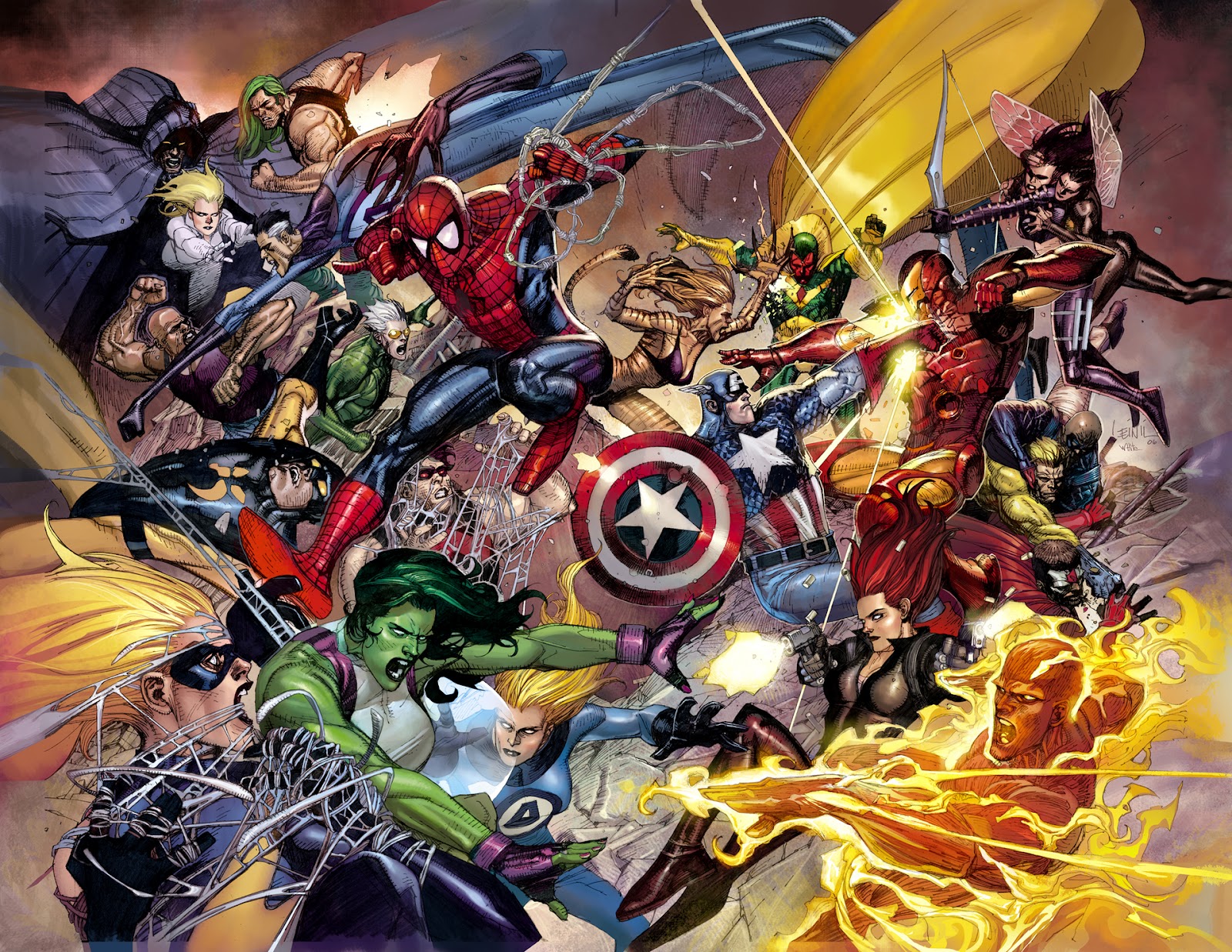
battle-marvel

Those who participated in the epic, star-studded battle in February here, led by the departed Bruce Bartup, over what are acceptable levels of intensity and personal attack on Ethics Alarms, will experience some nostalgia reading this debate on Slate about the website’s policies. My favorite line: “…if someone is a dick, and we’ve explained that he’s a dick, why shouldn’t we also call him a dick? He’s earned it!”

If you missed Bruce’s Lament and the terrific donnybrook it generated (sadly, Bruce took his bruised feelings and went home to the British Isles, though I urged him to persevere) can read his Comment of the Day and the responses to it here.

___________________________

Graphic: kiss my wonder woman

Comment of the Day: “Ethics Rant: Here Is The Smoking Gun Proof That The Government Doesn’t Care How Much Money…”

Whatever anyone might think of Ethics Alarms, it can’t be accused of not being eclectic. Today’s Comment of the Day illustrates the point, with an impressive  and informative debut by new commenter Dave on the cost savings to be had based on choice of  printing fonts, and more. The original post used a sixth-graders science project conclusion that our federal and state governments could save hundreds of millions of dollars by simply conserving ink as a departure point for a general critique of government diligence, responsibility, and competence.

Here is his exposition, inspired by the post, Ethics Rant: Here Is The Smoking Gun Proof That The Government Doesn’t Care How Much Money It Wastes, Or, In The Alternative, That It Isn’t Run By Sufficiently Competent People To Be Trusted To Spend What It Does:

The most important aspect of the 14 year old’s study is valid. You can save money with a better font. How you get there is not important. So I support the hypothesis of the study. Of course, as in almost all studies, it requires more study. Adding paper to the mix makes it more hopeful.

I like his study for three reasons:

1. It puts ink and paper into the public discussion
2. It illustrates that really large numbers times really small numbers equals a big number.
3. It moves us ahead in our quest to the use of something other than Times New Roman. It’s a newspaper font!

First off, names are useless in discussing typefaces as they were trashed by the patent/copyright office many years ago. Garamond is one of dozens of great type families. Each has it’s unique features but most do not perform optimally in all applications. The criticism of using Garamond in the testing misses the point entirely. Successfully curtailing the weight of an optimized font, versus a newspaper font, to image on bond paper is likely. Let’s move on from nitpicking Garamond. 

Ink is measured in dimes with inkjet, nickels with toner and pennies with printer’s ink. Breaking down the imaging techniques of all government documents is a massive effort, census like. But, for now, let’s address word processed documents. This is probably the largest population of original documents. (We’re not going to make much headway in savings attacking the professional typeset material that is printed in the millions.)

Given we tune a font for ink/toner use, one of the last considerations influencing legibility and readability of a word processed document is typeface. Because MS Word is used exhaustively for this application, I would order the priorities leading to better legibility and readability as follows:

1. Word Spacing. You can see in the example used to trash the study (3rd line of Garamond) It’s like talking to someone who says “uh” every other word.

2. Serifs v. Sans Serif. This choice is more of a readability thing than a legibility thing.  I choose sans-serif for heads (eliminating the need for bold italic serif fonts) and serif for text  when I create a typical Word doc. Generally, type really doesn’t have to be serif if the document is short but the longer it gets….

3. Line Measure. This goes together with word spacing, the longer the measure the worse word spacing becomes with MS Word. And personally I have attention issues so I need a break more often.

4. Body leading. Otherwise known as line spacing in the world of glorified type writers; it’s like word spacing only in the vertical direction.

5. Letter-spacing. This is font design dependent but not typeface dependent. They can screw this up no matter how the the letters look. It’s one of MS Times New Roman most nasty offenses. It’s not only looks awful, it wastes paper.

6. Hyphenation and Justification (H&J). Justified type is lined up on both sides of the page. Word Processors are not good at this, MS is particularly bad at both H&J.  It’s an old requirement with setting type, but it helps readability with long documents. It generally saves paper to boot but it’s not worth botching up word spacing to get these advantages. (It’s not as critical with 1-2 page documents so that’s why it’s 6th on the list.)

7. Type Style. If we excel at all of the above, like professional design software, then the particular type design is a factor. Because we are focused on text, the theory is if we significantly adjust the design for 12 point and with word processing in mind we can do well here in ink savings.

8. Paper color. Office paper is very good here.

9. Type color. Anything other than black type can’t be discussed here but it is realistic to discuss grey. I exclusively  use draft mode on my inkjet printer and nobody notices.

10 . Room light. Using serifs or not and setting an appropriate type size is about wearing out your eyes with too little or too much light. Serifs on text cut back on light, while size impacts detail helping legibility. Sans serif type in headlines are not an issue because they are short and it provides contrast with the text.

So, the student’s focus on the smaller, most used type is appropriate. The focus on weight relative to ink usage is also appropriate. A focus on more sophisticated typography than MS offers today would significantly impact paper usage, even without using two sided features we have today.

TrueType, GX stuff, et al were all awesome in 1996, a big accomplishment. They are still relevant for designers, but here we are stuck with MS Word; Opentype features are wasted. Moving to a maybe more primitive technology but optimized for both savings and readability would be a good start towards the $400 million goal.

We are in a transition period, so it may be awhile. Saving money along the way to fully electronic isn’t a bad thing. These no valid reason to make trade offs during the transition. It will be complicated but in step with the transition. All ideas are worthwhile, there is no reason not to implement all of them.


Continue reading