A Good Reason To Question Chris Christie’s Ethics

Thank you for that completely voluntary and generous contribution to the new ethics center at  my alma mater! You can leave your cell now."

Thank you for that completely voluntary and generous contribution to the new ethics center at my alma mater! You can leave your cell now.”

In a long report published in the Washington Post a week ago, New Jersey Governor Chris Christie’s conduct as a federal prosecutor was examined, under the headline, “Chris Christie’s long record of pushing boundaries, sparking controversy.” This is euphemistic, to say the least. What the report describes is clear-cut, undeniably unethical practices by Christie. They were arguably legal and technically permitted at the time (though no longer), but never mind: they were unethical, and would quickly set off the ethics alarms of any ethical lawyer or politician. For Christie, they did not.

I’ll focus only on the main practice in question. The Post’s Carol Morello and Carol D. Leonnig write,

“As the top federal prosecutor in New Jersey, Chris Christie struck an unusual deal with Bristol- Myers Squibb. In exchange for not charging the drugmaking giant with securities fraud, Christie’s office would require it to fund a professorship at Seton Hall University’s law school — Christie’s alma mater.The $5 million gift, one component of a larger agreement between the company and prosecutors, was hailed by the school, in South Orange, N.J., as a cornerstone of its new center on business ethics.”

Now there’s irony for you: a center on business ethics funded with an unethical gift from security fraudsters. For the passage above just as easily, and more accurately, might have read: Continue reading

Good News On Business Ethics? Maybe: The Ethics Research Center’s 2014 National Business Ethics Survey

ERC surveyThe Ethics Resource Center, a distinguished Washington, D.C. based ethics research and consulting firm, performs a survey of business employees every two years to measure trends in workplace ethics. It’s 2013 survey and report was released last week, and appears to bear good tidings. Workplace misconduct is on the decline, the data says.  41 percent of employees observed misconduct in 2013, way down from 55 percent in 2007. Moreover, ERC’s “National Business Ethics Survey,” which polled 6,400 U.S. employees, found that only 9 percent of employees polled felt pressure to compromise their standards in 2013, down from 13 percent in the previous survey in 2011.

ERC Chairman Michael G. Oxley  (of Sarbanes-Oxley fame) said in a release,“The results of the survey are encouraging and show that companies are doing a better job of holding workers accountable, imposing discipline for misconduct, and letting it be known publicly that bad behavior will be punished.”

Among the survey’s intriguing findings:

  • “Over the last two years, observed misconduct fell in every one of the 26 specific categories we asked about in both NBES 2011 and NBES 2013.
  • “Pressure to compromise standards, often a leading indicator of future misconduct, also was down – falling from 13 percent in 2011 to nine percent in the latest survey.”

Less encouraging are these: Continue reading

What A Hollywood Journalist Calls “Ethics”

Listen to me, Roger, and I mean this in the nicest way: stick to gossip.

Listen to me, Roger, and I mean this in the nicest way: stick to gossip.

The Hollywood wagons are already circling around Woody Allen, accused—again, but now as an adult who can speak for herself—by Dylan Farrow of sexually abusing her when she was only 7 years old. Reading some of the statements issuing from Tinseltown, I am struck again by the ugly opposition any non-celebrity victim must face when accusing a powerful industry figure of wrongdoing. Luckily, many of the most vociferous defenders signal their desperation and their lack of basic comprehension of the issues, undermining their arguments.

Exhibit A is veteran Hollywood journalist Roger Friedman, who was quick to issue an article alleging, as he has for 20 years, that Dylan’s story is all part of a Mia Farrow plot to destroy innocent Woody. On his website, Friedman headlines his piece, “Mia Farrow Uses Close Pal Journalist in Woody Allen War: Writer of Latest Piece is Close Friend.” Friedman’s concept of what constitutes a “conflict of interest” is intriguing. His argument is that Times journalist Nicholas Kristof, who published Dylan’s open letter on his blog, is friends with Mia Farrow (Friedman implies that they are romantically involved while specifically saying that he isn’t implying it–his evident journalistic sliminess would undermine even a fair article, which this is not), and that this makes Dylan’s letter less credible. What he doesn’t explain, since he can’t, is why the same letter would be any more credible or reliable whether Kristof published it or someone else did. Continue reading

The Unforgivable Conflict of Interest: Sports Agents, Robbing Their Ignorant Clients

The ethical course is to choose.

The ethical course is to choose.

Sports agents are rich, powerful, and ethically handicapped by inherent conflicts of interest. The first two qualities so far have insulated them from dealing fairly and openly with the second. This is wrong, and has got to stop. For it to stop, it would help if the players, their unions, the sports leagues and the sports media didn’t either intentionally pretend not to see the obvious, or weren’t too biased and ignorant to realize what’s going on.

Four years ago, I wrote about this problem in a long piece for Hardball Times, a baseball wonk blog of consistent high quality.  The specific agent I was writing about was Scott Boras, the king of baseball player agents, but the egregious conflict I flagged isn’t confined to that professional sport; it’s present in all of them. In the article, I argued that Boras, a lawyer, is engaged in the practice of law when serving as an agent and was therefore violating the legal ethics rules, which prohibits having clients whose interests are directly adverse to each other, specifically in the so-called “Zero-Sum Conflict” situation.

A lawyer can’t assist two clients bidding for the same contract, because the better job he does for one, the worse his other client fares. A lawyer can’t sue a defendant for every penny that defendant has on behalf of one client when he or she has another client or two that have grievances against that same defendant—if the lawyer is successful with the first client, he’s just ruined his other clients’ chances of recovery. There is some controversy over whether the legal ethics rules automatically apply to a lawyer-agent like Boras, but never mind—whether he is subject to the legal ethics rules or not when serving as an agent, the conflict of interest he is blithely ignoring still applies, still harms his clients, still puts money in his pockets, and still should not be permitted. Continue reading

The Fifth Annual Ethics Alarms Awards: The Worst of Ethics 2013 (Part Two of Three)

Snowden

The Ethics Alarms review of a truly disheartening year in ethics continues with fallen heroes, ficks, fools and follies with Part Two of the 2013 Worst of Ethics awards….and there’s one last section to come. Be afraid..be very afraid:

Fallen Hero of the Year

Edward Snowden, whose claim to civil disobedience was marred by his unwillingness to accept the consequences of his actions, whose pose as a whistle-blower was ruined by the disclosure that he took his job with the intention of exposing national secrets, and whose status as a freedom-defending patriot lies in ruins as he seeks harbor with not only America’s enemy, but a human rights-crushing enemy at that. The NSA’s over-reach and mismanagement is a scandal, but Snowden proved that he is no hero.

Unmitigated Gall of  The Year

Minnesota divorce lawyer Thomas P. Lowes not only violated the bar’s ethics rules by having sex with his female  client…he also billed her his hourly fee for the time they spent having sex , a breach of the legal profession’s rule against “unreasonable fees.” Yes, he was suspended. But for not long enough…

Jumbo Of The Year

(Awarded To The Most Futile And Obvious Lie)

Jumbo film

“Now, if you had one of these plans before the Affordable Care Act came into law and you really liked that plan, what we said was you can keep it if it hasn’t changed since the law passed.”

—–President Obama

2013 Conflicts of Interest of the Year Continue reading

Worlds Are Colliding! A Conflicted Holiday Invitation For Ethics Alarms Readers, Their Friends And Families…

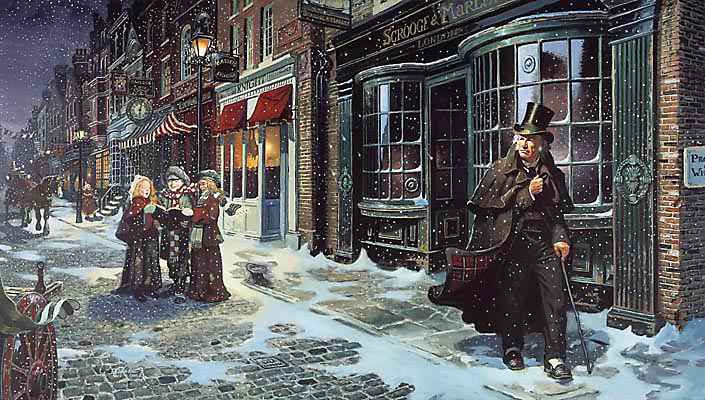
A-christmas-carol1

Now I know how George Costanza felt. This time it is the world of Ethics Jack and Theater Jack that are colliding….

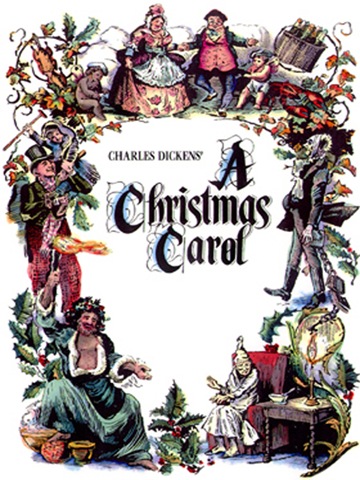
The American Century Theater, the small, Arlington, Virginia-based non-profit professional theater company—you know, one of those “culture palaces” that rich people give to so they can “hobnob” with each other (our performing space is in a Middle School) according to Robert Reich—which I helped found and have served as Artistic Director for 18 years— is producing a unique—and free—dramatized version of Charles Dickens’ “A Christmas Carol” that Ethics Alarms readers can actually “attend” and enjoy with the families, friends and ghosts.

Using a technique pioneered by Ethics Jack’s company ProEthics for Continuing Legal Education teleseminars under the auspices of Virginia Continuing Legal Education,  the production will recreate the sound and feel of old time radio drama using modern teleconferencing technology. All of the actors are snug in their own homes, using telephones as their microphones, as their vocal portrayals are mixed, live, with music and sound effects by sound designer Ed Moser, also The American Century Theater’s technical director. More than 20 current and former professional actors from  Maryland to Utah will be involved, creating an hour-long, live recreation of a script adapted from the Golden Age of radio drama, when Campbell’s Soup presented an annual live broadcast of “A Christmas Carol” starring Lionel Barrymore ( you know him best as “Mister Potter”) as Scrooge, to millions of families across the country every Christmas Eve.

Theater Jack is the director of the show, which you can listen to over your own phone, or better yet, through the speaker phone with your family taking in the sounds of the classic tale by your side.

How do you do this?

It’s as simple as licking a candy cane!

Anyone wishing to hear the broadcast will only have to call in a few minutes before 8 PM, E.S.T., on Sunday next, December 22. The  audience Dial-in number is 1-443-453-0034, followed by entering the Christmas Carol Conference Code: 758246. Then, upon entering the virtual theater, audience members must press *4 to mute their lines (if only theater audiences and their cell phones were so neatly muted!) and wait for the show to begin. There will be no charge to the listening audience for “A Christmas Carol,” except for regular long distance rates where they apply.

Feel free to let your friends, colleagues and neighbors know about the event, and consider this worlds collision-risking invitation my thanks to you for helping Ethics Alarms have a banner year of ethics debate and illumination.

Merry Christmas!

-A-Christmas-Carol

The Lawyer, The Bar And The Nigerian Prince: A Bar Can Teach A Lawyer Ethics Lessons With Sanctions, But How Does It Fix Stupid?

"YOU again!"

“YOU again!”

It can’t.

You can read, here, the jaw-dropping Iowa Supreme Court opinion affirming a one-year suspension of Iowa lawyer Robert Allan Wright Jr.for talking his clients into loaning money to…that ubiquitous Nigerian Prince. Wright  solicited more than $200,000 in loans from five current and former clients, promising them they would receive as much as quadruple their investment when proceeds of the inheritance described in that helpful e-mail was obtained.  He was only going to take a 10% contingency, which is actually very reasonable…or would be, if this hadn’t been a scam.

After his clients lost all their money, Wright was cited for violations of several Iowa Rules of Professional Conduct, including… Continue reading

The T-Rex Escapes: Lessons Of The Washington Redskins’ Nepotism

I can’t exactly say, like Jeff Goldblum as Dr. Ian Malacolm in “Jurassic Park,” that I hate being right all the time…in part because I’m not. It sure is frustrating, however, to see an ethics crisis looming, write about it once, then twice, and still see so many people surprised when it arrives like an angry T-Rex. Thus today, I began the morning by pounding my head against the wall to read in the Washington Post sports section a column by Jason Reid with the headline, “Mike Shanahan, by hiring his son Kyle, has created an untenable situation.” Wait, what year is this? Shanahan, the coach of the Washington Redskins, that team with the name that we’re not supposed to say, hired his son Kyle as the team’s offensive coordinator many moons ago, in 2010. It was a terrible idea at the time, an example of classic nepotism that created an immediate risk of exactly what is occurring now, and perhaps the certainty of it, if the situation endured long enough.

Last season, when the Redskins swept to the NFC East Championship behind thrilling rookie QB Robert Griffin III, the ethics-challenged sports fandom here (Washington, D.C., remember) cited the success as proof that nepotism is an ethics boogie man, nothing more. This was pure consequentialism. As I concluded my post on the topic last January,

“This is rank consequentialism in its worst form. Nepotism is an unethical way to run any staff, company, team, business or government, unfair, inherently conflicted, irresponsible, dangerous and corrupting. It should be recognized as such from the beginning, and rejected, not retroactively justified if it “works.”I’m sure there were and are non-relatives of the Redskins coach who could have devised a successful offense with RG3 taking the hikes. The ethical thing to do was to find them and give one of them the job. The Redskins coach’s nepotism is just as unethical in 2013 as it was in 2012, 2011, and 2010.”

In “Jurassic Park,” the same day that chaotician Malcolm warns that the dinosaur park is so complex that a fatal loss of control is inevitable, the systems break down and he gets nearly gets eaten. The same year I wrote those words, ten months later, it’s Mike Shanahan on the menu as Jason Reid wrote these: Continue reading

Cuomo Interviewing Cuomo? Of Course It’s A Conflict!

The interesting question isn’t whether CNN’s Chris Cuomo blithely interviewing the Governor of New York Andrew Cuomo—who happens to be his brother–is a conflict of interest and an example of unethical journalism. Of course it is. The interesting question is what it tells us about the state of U.S. journalism that such an interview could even occur.

Here are two prominent provisions of the Society of Professional Journalists Code of Ethics, requiring that ethical journalists…

  • “Avoid conflicts of interest, real or perceived.”
  • “Remain free of associations and activities that may compromise integrity or damage credibility.”

Is there any question that a CNN anchor man interviewing his brother regarding anything whatsoever violates both of these? Real or perceived? Compromise integrity or damage credibility? Seriously?

Cuomo the Anchorman was interviewing Cuomo the Governor regarding the recent train accident. Conflict? Sure: the journalist is supposed to have only one duty, and that is to his audience. But Cuomo the Anchorman obviously has another, potentially confounding duty of loyalty to his interview subject, and this he must not have. It calls into question his willingness to probe and, if the facts warrant it, to ask uncomfortable questions of his subject. If Chris Cuomo’s duty to his audience unexpectedly requires him to breach his loyalty to his own brother, which will he choose? We don’t know. Perhaps Cuomo himself doesn’t know. He was obligated not to place himself in a situation where the question even needed to be asked.

The various defenses being offered are, I have to say, misguided and disturbing. The usually sensible Joe Concha of Mediaite writes that the controversy is “much ado about nothing.” His reasons are … Continue reading

Wait…The Judge And The Defense Attorney Were Having An Affair, And The Defendants Were Convicted Anyway? So What’s The Problem?

"Yes, counsel, I am throwing the book at your clients because I love you."*

“Yes, counsel, I am throwing the book at your clients because I love you.”*

The Georgia Court of Appeals has ordered new trials for five men convicted of serious crimes in Fayette County because their trial judge was having an undisclosed affair with defendants’ public defender.

Doesn’t  that seem strange to you? After all, the clients of the judge’s secret love were convicted and sentenced. Why should they get the benefit of  new trials when the judge’s evident conflict and judicial misconduct didn’t benefit them or harm them in any way (unless a judge making sure his lover’s clients get prison time is a quirky way to say “I love you” in the Peach Tree State). This isn’t like the horrendous Charles Dean Hood case in Texas, where a man was sentenced to death after a trial in which the state prosecutor was sleeping with the judge.

The Georgia judge-lawyer affair (and I thought Steven Bochco was making it all up!) came to light in 2010. Paschal English, who subsequently resigned as chief Superior Court judge, had been involved in a romantic relationship with assistant public defender Kimberly Cornwell, who has also moved on to new pursuits, ideally those that don’t require trust or ethics. A three judge panel recently agreed that this relationship, undisclosed and a clear cut ethical violation for both judge and attorney, required that there be new trials for Christopher Wakefield and Travion Willis on charges of armed robbery, kidnapping, aggravated assault and other crimes; William Nutt for aggravated child molestation and aggravated sexual battery; Rashad Arnold for burglary; and Calvin Boynton for armed robbery, aggravated assault, possession of a sawed-off shotgun and drug possession.

Hmmmm… Continue reading