“Hmmmm!”: Conflicts of Interest, Appearance of Impropriety, the National Parks Service

David Uberuaga, real estate whiz

David Uberuaga, then superintendent of Mount Rainier National Park sold his Ashford, Washington home to the owner of Rainier Mountaineering, Inc. for three times the property’s assessed value, while Uberuaga was charged with oversight of the concessionaire. Later, Park Service Director Jon Jarvis, at one time Uberuaga’s immediate boss, saw that Uberuaga was appointed the superintendent of Grand Canyon National Park. This is especially interesting in view of the fact that Jarvis’s older brother, Destry Jarvis, has been a lobbyist on behalf of motorized river runners on the Colorado River, which runs through that park.

Hmmmm.

Do you agree with that? “Hmmmm”? Because in government ethics, “Hmmmm” is enough to indicate that the appearance of impropriety threshold has been crossed. The public isn’t supposed to think, “Hmmmm.” In this case, however, how could they not? To prevent “Hmmmm,” Jarvis needed to remove himself from any decision affecting a National Park that is being lobbied by his brother. To prevent “Hmmmm,” Uberuaga can’t have business transactions, especially mysteriously enriching ones, with a company that seeks contracts with a park that he manages. Continue reading

Texas Gov. Rick Perry: Ethics Hero REVOKED, Integrity Missing

Wow, that was fast.

Rick Perry has Jenny McCarthy's vote back...and that's worth a little more cervical cancer, right Governor?

It didn’t take long for newly-minted GOP presidential contender Rick Perry, now leading in the polls, to tell us what we needed to know about his values and integrity.

He doesn’t have them.

Back in 2007, I awarded Perry an Ethics Hero designation for leading Texas to become the first state in the nation to mandate vaccination of young girls for the human papilloma virus, or HPV, which is sexually transmitted and can cause cervical cancer. “Requiring young girls to get vaccinated before they come into contact with HPV is responsible health and fiscal policy that has the potential to significantly reduce cases of cervical cancer and mitigate future medical costs,” Perry said then in a news release explaining his executive order. Now, however, Perry is declaring what I thought was a courageous decision four years ago “a mistake.”

I hereby revoke his Ethics Hero award. Continue reading

The Ethics of Interviewing Kids on Camera


Art Linkletter was right: "Kids say the darndest things!"

When I initially learned about  Chicago TV station WBBM editing  an interview with a 4-year-old boy last month to make him sound like an aspiring gang-member when he actually said that he wanted to be a policeman, I decided to pass. I try to avoid making obvious observations, and nobody could defend the conduct of the station’s editors, who intentionally truncated the child’s remarks to the interviewer to make them sound chilling. The larger question of whether the child should have been interviewed at all, however, is more challenging. We see kids being interviewed on TV all the time, and it is far from certain that reporters are doing so ethically.

In the wake of  the WBBM incident, journalistic ethics expert Al Thompkins reprinted his guidelines for interviewing juveniles on the Poynter site. I’m an admirer of Thompkins, but I found his guidelines almost as chilling as the distorted interview itself. Here is his guidance on the issue of interviewing kids, with my reactions: Continue reading

The Raymond Jefferson Mystery: Isn’t There Ethics Training for Obama Administration Officials?


Raymond Jefferson's government ethics tool box

Based on the sorry Raymond Jefferson scandal, I would assume that the answer to that question is: “What’s ethics training?” Sure, there are reams and reams of government ethics regulations; I’ve read a lot of them. Apparently there is no one making sure that high-ranking officials have read them or understand them, however.

Jefferson, the Assistant Secretary of the Labor Department’s Veterans’ Employment and Training Service appointed by President Obama to oversee a job-training program for veterans, has resigned following an inspector general’s finding that he violated federal procurement rules and ethics principles by fast-tracking lucrative consulting contracts to his friends. Jefferson, says the report from the Labor Department’s inspector general, engaged in “a pattern of conduct . . . which reflects a consistent disregard of federal procurement regulations, federal ethics rules and the proper stewardship of appropriated dollars.” Continue reading

Judicial Non-Ethics, Pennsylvania Division: Now THAT’S a Conflict of Interest!

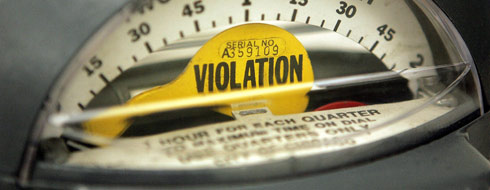
The judge apparently found the meter to be in contempt of court.

Lancaster, Pennsylvania District Judge Kelly Ballentine dismissed several of her own parking tickets and an expired registration ticket within the past year, according to court records.

“According to the state Judicial Conduct Board’s rules, district judges should disqualify themselves in proceedings where they are a party,” notes the news report.

Yes, I rather think that’s a good idea, don’t you?

It appears that Judge Balentine’s colleagues understand this not-so-fine point of conflict of interest principles and basic ethics: a check of court records with regard to all of the county’s district judges revealed that those who had parking or traffic tickets had another magisterial judge handle their cases at the district court level. Sometimes we hear objections to court proceedings in which a judge over-stepped his or her proper role and became de facto “judge, jury, and prosecutor.” A judge serving as judge, defendant and defense attorney, however, is much, much worse. Continue reading

We Know Enough about Ethics Already

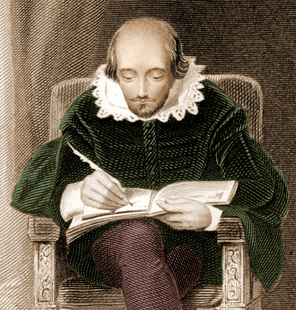
If Shakespeare understood ethics so well, why are we still pretending to be ignorant about it?

I awoke to read about a breathlessly announced new work on ethics, a book called “Blind Spots: Why We Fail to do What’s Right and What to do About it.” Business Professor  Ann Tenbrunsel and co-author Max Bazerman write that we are unaware of the “ethical blind spots” that keep us from recognizing how we engage in unethical actions. The book cites tests and new research showing behavior that the authors call “ethical fading” and “motivated blindness.” They examine such case studies as Enron and the Madoff scam to show how people “believe they will behave ethically in a given situation, but they don’t. Then they believe they behaved ethically when they didn’t. It’s no surprise, then, that most individuals erroneously believe they are more ethical than the majority of their peers.”

Stop the presses! Conflicts of interest make us ignore core values and act in our own best interests, and we rationalize our actions to avoid confronting the true nature of our conduct!

Oops! I just stated the entire thesis of the book. I’m sorry, Ann! Apologies, Max! Continue reading

The Case of the Excessively Flexible Lawyer

A Louisville lawyer named Keith Kamenish wants to defend Dion Neal, a drug dealer, against a murder-for-hire charge.  A police informant wearing a wire recorded a hit man as he said  that he was paid by Neal to kill a competitor for him. “I put 36 slugs in that nigger’s face and stood on his head,” the independent contractor boasted, according to a transcript of the conversation filed in court. “The whole head collapsed!”

Nice.

The government is trying to get Kamenish kicked off the case, and here is why: the guy whose head collapsed, LaJuante “B.B.” Jackson, was a Kamenish client at the time of his murder. Jackson was shot just four weeks after Kamenish got Jackson released on bond on a state drug charge; the lawyer’s blood- stained business card was found in Jackson’s wallet. Continue reading

Marcia Clark, Exploiting the Anthony Verdict for Her Own Sake

Marcia Clark. OK, this really isn't Marcia, but the real picture of her doesn't look like her either.

Marcia Clark’s article on the Casey Anthony verdict is so tainted with obvious conflicts of interest that it should have been rejected by The Daily Beast…or rather would be rejected by any website more selective and less shameless than the Daily Beast. This would be any fair site that does not deal in over-the-top opinion as a matter of course.

Marcia, like her colleague Chris Darden, is a rather tragic figure these days. The former lead prosecutor in the O.J. case is struggling to make it as a pundit, freshly botoxed and rendered almost unrecognizable so as to be fetching in those close-ups. After she sold the inevitable cash-in book about the Trial of the Century, she has wandered in the C-List celebrity wilderness, and will soon join Newt Gingrich and William Shatner as a celebrity novelist. She will be remembered, quite correctly, as the prosecutor who botched the O.J. murder trial, even if we give Darden an assist for the gloves debacle. (Why cable news shows insist on recycling failures as experts is an enduring mystery, the mystery being “how can the producers look themselves in the mirror after choosing recognizable flops over less well-known but more accomplished authorities?”)

But Clark apparently saw an opportunity in the Casey Anthony verdict to rehabilitate her tarnished reputation, and grabbed it. The result is “Worse Than O.J.!”, a new low in self-serving analysis. Continue reading

The Supreme Court Saves An Ethics Principle

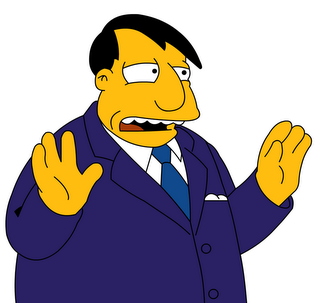
Mayor Quimby is honest about being corrupt. Isn't that good enough?

Rescuing the states’ power to insist on more ethical conduct from their elected legislators, The U.S. Supreme Court ruled Monday that there was no Constitutional prohibition on state rules against legislators voting on issues in which they have a private, personal interests.

The unanimous decision upheld a Nevada ethics law that governs when lawmakers recuse themselves from voting on official business because they might have conflicts of interest. The challenge to the  law came from Michael Carrigan, a conflicted city council member from the Sparks, Nev., who was reprimanded by the state ethics commission after he voted  on a casino proposal though his campaign manager had been hired as a consultant to the project.

The law prohibits a public official from voting on an issue when a “reasonable person” would suspect a conflict because of financial ties or the interest of a spouse or family member. This is the essence of “the appearance of impropriety.” It also includes “any other commitment or relationship that is substantially similar” to those spelled out.  Carrigan had argued that the Nevada’s law was overly broad and that he should be able to vote on the project, so long as he disclosed his relationship with the consultant.

Ah, disclosure! Continue reading

Today’s Ethics Quiz: How Do You React To Congressional Insider Trading?


Gekko for Congress. He has what It takes...Insider trading experience!

An  study in the journal Business and Politics last week reported that the investments of members of the House of Representatives outperformed those of the average investor by 55 basis points per month, or 6 percent annually. It concluded that lawmakers are taking advantage of inside information to make significant profits, engaging in conduct that would send a Gordon Gekko or Martha Stewart to jail.

“We find strong evidence that members of the House have some type of non-public information which they use for personal gain,” the four researchers who authored  “Abnormal Returns From the Common Stock Investments of Members of the U.S. House of Representatives” wrote. Continue reading