The ABA’s Guidance For Judges With Potentially Conflicting Relationships

“Now now, your Honor—that’s the Plaintiff!”

This is as good an example as you’ll find of why professionals can’t and shouldn’t rely solely on the ethics rules-making bodies to solve their ethical dilemmas when they arise.

American Bar Association Formal Opinion 488 purports to tackle the persistent question of when judges must disqualify themselves in proceedings because their impartiality might reasonably be questioned because of relationships with parties. After seven pages and many footnotes,  we are enlightened that  “ a judge must disqualify himself or herself when the judge has a romantic relationship with a lawyer or party in the proceeding, or desires or is pursuing such a relationship.”
Continue reading

Comment Of The Day: “Open Forum!” Thread On For-Profit Prisons

Finally having the opportunity to read what the recent “Open Form!” necessitated by my enforced absence from blogging for two days, hath wrought, I encountered several deserving Comment of the Day candidates. I will be choosing the winner from the wonderfully entertaining rumble among multiple Ethics Alarms stalwarts on the alleged “school-to-prison” pipeline and a whole bundle of other ethics topics (proper treatment of elected officials on social media, appropriate treatment of citizen criticism by elected officials, and others) imminently, but for now, let’s focus on the topic of for-profit prisons, an ethics issue under-discussed here previously. In this case, the Comment of the Day format is especially useful, because this excellent post is buried deeply among  117 others.

Here is James M.’s Comment of the Day on the topic, from the open forum of 8/28/2019…

As someone who worked for the Arizona Department of Corrections for 25 years, I think I can fairly assess both the advantages and problems associated with privately-run prisons. Contracting with various companies to provide various prison services can produce some substantial cost savings to the public, but has some negative effects that aren’t always considered. The Arizona Department of Corrections privatized several different areas during my career there, including medical care, food service, and some rehabilitative programs. The department has also held portions of the inmate population in units run by private contractors.

Advantages of privatization included direct cost savings (with private prisons costing less per bed) and the ability to share prison construction costs with the contractor, allowing the construction to become part of a multi-year contract, rather than an up-front payment. The direct cost savings can be difficult to fairly assess, as contractors would often refuse to accept those inmates who were most expensive to house, either due to having major medical issues, a tendency toward harassment litigation, or membership in a prison gang. Since the private prisons had some security issues that led to inmate escapes, departmental staff also spent considerable time screening inmates before they would be considered for placement in the private prison units. The complaint from ADC staff involved in these assessments was that “Of course they’re cheaper! If I got to pick and choose only the inmates who were least difficult to deal with, I could run my unit more cheaply, too!” Continue reading

Morning Ethics Warm-Up, 8/27/2019: Desperation

Good morning.

1. Here is why the breast-beating about “doing something” about climate change is dishonest, disingenuous, futile and pointless. Brazil is telling the rest of the world, especially nations that developed their own economies with reckless impunity on the way to wealth and power, to back off its demands that Brazil stop burning its own rain forest. Of course it is taking this stance, and Brazil isn’t the only developing nation that will take that position and has every right to take that position.

Brazil’s defiance is also a definitive rebuttal to the argument that the United States should spend billions—trillions?—in virtue-signaling climate change policies that under the most optimistic scenarios won’t “fix” anything without mass cooperation by nations in Brazil’s position—and that’s not going to happen.

2.  The theory: somebody has to pay. A judge in Oklahoma yesterday ruled that Johnson & Johnson  intentionally hid the risks and hyped the benefits of opioids, ordering the company to pay the state $572 million in damages. This is the first trial of a drug manufacturer for the destruction wrought by prescription painkillers.

I don’t know if the verdict is fair, having not seen the evidence and heard the arguments. I don’t know that the verdict will hold up on appeal. The theory used by the state was questionable: the judge found that Johnson & Johnson perpetuated a “public nuisance” by  contributing to an ongoing public health crisis that could take decades to address successfully. Yet there was no proof offered that doctors who prescribed the drugs were misled, or that Johnson & Johnson violated federal drug regulations.

Public nuisance laws typically apply in cases where something interferes with a right common to the general public and results in danger on roads, parks,and other public areas, and not usually public health, which is what the state argued in this case. Johnson & Johnson’s lawyers contended that the state was contorting public nuisance law to the point of being unrecognizable. Of course, the same argument was made when product liability laws started moving beyond the “buyer beware” stage.

Not reading and hearing all the evidence, I can only wonder if this is case of deep pockets being held responsible for a tragedy that had no single, obvious villain. Doctors prescribed drugs approved by federal regulators, and the drug manufacturers supplied them, legally. Then citizens took the drugs, voluntarily, in a political and social culture that increasingly shrugs off drug use and abuse. Continue reading

How Ironic! An Anti-Clinton Conservative Lawyer Plays The “Vast Left-Wing Conspiracy” Card

Attorney Larry Klayman was familiar presence during the Clinton administration.  The founder of Freedom Watch and Judicial Watch and conservative gadfly  helped bring dozens of cases against Bill Clinton, the White House, and various staff members and agencies, uncovered some damning documents in FOIA requests, filed government ethics complaints, and continued to champion conservative causes after he left Judicial Watch in other hands. He  represented  former Arizona Sheriff Joe Arpaio and  state’s rights activist rancher Cliven Bundy, among other clients. Now the District of Columbia Court of Appeals Board on Professional Responsibility Ad Hoc Hearing Committee has handed down a 183-page report finding that Klayman breached the D.C. professional ethics rules, recommending that he be suspended from the practice of law for 33 months, and have  he prove his rehabilitation and fitness to gain reinstatement.

According to the report, Klayman represented Elham Sataki, whom he helped file a 2010 sexual harassment suit against her employer, Voice of America.  Klayman persuaded Sataki to move to Los Angeles and offered to pay her housing and living expenses, telling Sataki she could later reimburse him. She took him up on the offer, but when  Sataki rejected Klayman’s overtures for a romantic relationship,  the findings state, the lawyer raised his fee demands to continue representing her sexual harassment claim. As a result, the report concludes, Sataki did not pursue her case. Continue reading

Somewhere, Steven Bochco Is Smiling…

In Steven Bochco TV legal dramas—the immortal “Hill Street Blues” was the best of them—everyone was sleeping with everyone else in the judicial and law enforcement system. Police chiefs were having affairs with defense attorneys, prosecutors were having affairs with judges, judges were having affairs with defendants. It was ridiculous, if entertaining, but gave an absurdly misleading impression to the gullible public about the legal system. Later, as Bochco’s star was waning, writer-producer David Kelley continued the myth with his many legal dramas

However, this is not to say that such unethical relationships don’t occasionally occur. Bochco, who died in 2018, would like this story, since he could have written it.

Alabama’s Judicial Inquiry Commission on Tuesday filed a complaint against Coffee County District Judge Christopher Kaminski, alleging that he has been carrying on a romantic relationship with an attorney who frequently practices in his court. Continue reading

Sunday Ethics Warm-Up, 5/12/2019: The Tricky Edition

Well, the news from Harvard has me half-headed and depressed, so I think I need to hear Winston Churchill’s favorite hymn…and my Dad’s, too.

1. I think this is known as “a drop in the bucket.”James Bennet, the editorial page editor of The New York Times, announced that he would recuse himself from any involvement in opinion coverage of the 2020 presidential election, after his brother, Senator Michael Bennet of Colorado, announced his candidacy for the Democratic nomination. I suppose this is admirable, as it is a standard conflicts of interest move, but I’m sorely tempted to call it grandstanding, and maybe even a diversion. Bennet’s brother candidacy is hardly the only blatant conflict of interest on the times staff that makes its news coverage and punditry suspect. Virtually all of them are Democrats, for example, and progressives. What’s so special about an editor’s brother making a completely futile run for the Presidency? (Quick: if you’re not in Colorado, can you picture his face? Name anything he has accomplished?)

This note from 2017 (in RealClearPolitics) puts the Times editor’s decision in proper perspective:

There is a pretty substantial symbiotic relationship between the political left in Washington and the media. While a few people went from the media to the Bush Administration, it was never like it was with Obama.

Jay Carney went from Time to the White House press secretary’s office. Shailagh Murray went from the Washington Post to the Veep’s office while married to Neil King at the Wall Street Journal. Neil King has left the Wall Street Journal to work for Fusion GPS. Linda Douglass went from ABC News to the White House and then the Atlantic. Jill Zuckman went from the Chicago Tribune to the Obama Administration’s Transportation Department. Douglas Frantz went from the Washington Post to the State Department and Stephen Barr went from the Post to the Labor Department.

Ruth Marcus, who heads the Washington Post Editorial Board, is married to the Obama Administration’s former Federal Trade Commission Chairman. Jonathan Allen had been at the Politico before going to work for Debbie Wasserman Schultz, then back to Politico before going to the left leaning Vox. Now he is at NBC News. Andy Barr worked for the Politico before leaving for Democrat politics. Michael Scherer was at both Salon and Mother Jones before going to Time. Laura Rozen was at Mother Jones and the American Prospect before Foreign Policy magazine. Even Nate Silver had started out at Daily Kos. Then, of course, there is Matthew Dowd, who worked for scores of Democrats before working for George Bush. That, though he later washed his hands of Bush, bought him street credibility with ABC News to become its senior politically analyst alongside George Stephanopoulos, formerly of the Clinton Administration.

It goes on and on in a feedback loop of incestuous politics and worldview shaping. In the Obama Era, it was all about protecting their precious. Now it is about undermining the President.

2.  Puerto Rico Ethics. OK, explain to me, if you can,  why this isn’t incredibly unethical:

From the Times:

The government oversight board leading Puerto Rico through its $123 billion debt crisis sued dozens of banks and financial firms on Thursday, saying that they had helped the island issue $9 billion of debt illegally, and that the people of Puerto Rico should not have to repay it.

The board said the debt should be voided because it exceeded the territory’s constitutional debt limit, and it added that Puerto Rico would try to recover hundreds of millions of dollars in interest and principal payments that it has already made.

The board was joined in the litigation by the official committee representing Puerto Rico’s unsecured creditors in the territory’s bankruptcy-like legal proceedings. Both plaintiffs said they understood they were making an unusual request, but asserted that no other approach would be legal or fair.

“The laws of Puerto Rico limit government borrowing authority for a reason: to prevent the government and its financiers from hitching the Commonwealth and its instrumentalities, as well as taxpayers and legitimate creditors, to a level of debt that cannot be repaid without sacrificing services necessary to maintain the health, safety and welfare of Puerto Rico and its people,” the plaintiffs said in one of several complaints…

What a great theory! The government of Puerto Rico has managed its finances irresponsibly and needs more money. “Hey!” says a brilliant staffer. “There’s a law that limits how much debt we can run up. Let’s borrow billions from banks illegally, then later sue them saying that the debt is invalid because they abetted our illegal act!”

3.  Candidate for the Rationalization #22 Hall of Fame. Rationalization #22 is one of the most cited entries on the Rationalization List, and in my opinion, the worst of them all:

22. The Comparative Virtue Excuse: “There are worse things.”

If “Everybody does it” is the Golden Rationalization, this is the bottom of the barrel. Yet amazingly, this excuse is popular in high places: witness the “Abu Ghraib was bad, but our soldiers would never cut off Nick Berg’s head” argument that was common during the height of the Iraq prisoner abuse scandal. It is true that for most ethical misconduct, there are indeed “worse things.” Lying to your boss in order to goof off at the golf course isn’t as bad as stealing a ham, and stealing a ham is nothing compared selling military secrets to North Korea. So what? We judge human conduct against ideals of good behavior that we aspire to, not by the bad behavior of others. One’s objective is to be the best human being that we can be, not to just avoid being the worst rotter anyone has ever met.

Behavior has to be assessed on its own terms, not according to some imaginary comparative scale. The fact that someone’s act is more or less ethical than yours has no effect on the ethical nature of your conduct. “There are worse things” is not an argument; it’s the desperate cry of someone who has run out of rationalizations.

Now outgoing Mayor of Chicago Rahm Emanuel has boasted in the  New York Times about his success at  introducing  police reform and reducing crime.Emanuel  makes his case in part by comparing Chicago’s crime numbers over the last two years with those of  Baltimore, one of America’s most dangerous, murder-prone, mismanaged cities. He omitted mentioning New York orLos Angeles, perhaps because his city had more murders in 2018 than New York and L.A. combined, though Chicago is smaller then either.

I wonder if the Chamber of Commerce is considering “Less dangerous than Baltimore!” as a promotional slogan. [Pointer: City-journal]

The Pulitzer’s Deliberate Ethics Blindness [Corrected]

It was incredible: the only qualified candidate for the Pulitzer Prize just happened to be the spouse of a Pulitzer board member! What are the odds?

[Note: an incompletely edited and proofed version of this post was mistakenly published. I apologize. Thanks to Tim LeVier for flagging the problem.]

All awards and prize organizations are subject to fair suspicion about their integrity, and collectively, they undermine each other. The Academy Awards get criticized by prominent blacks, and suddenly the number of black nominees explodes. The Nobel Prize committee, once the epitome of a well-respected and trusted awards program, exposes its political bias by giving a Peace Prize to Barack Obama for no good reason whatsoever.

Then, beginning in late 2017, in an expose published late last year by a Swedish newspaper, the Swedish institution was rocked by accusations  from18 women who said they were sexually harassed or assaulted by French arts promoter  Jean-Claude Arnault, who is married to poet Katarina Frostenson and is friends with Horace Engdahl, both  members of the  Academy that awards the Nobel Prize in literature.  Arnault was sentenced to two years in prison after being found guilty of raping a woman in 2011. This ugly publicity cast unwelcome light on more unethical conduct: a club called Forum that Arnault and Frostenson owned received a subsidy from the Academy. Yes, the members were voting finnacial benefits to themselves.  There were also credible reports of Frostenson giving names of winners to Arnault before they were announced,, allowing him place wagers and win money with insider information. As the scandal expanded, Frostenson and Engdahl refused to resign. Three other members of the Academy left in protest.

Nice. The Committee decided not to award a Nobel Prize for Literature in 2018.

I’m surprised they didn’t just give it to Barack Obama.

This brings us to the Pulitzers, which have always been suspect. Continue reading

Once Again, Baseball Agent Conflicts Are Hurting Players Who Don’t Understand Why

Baseball writers are the tools of baseball player agents, useful idiots who write on and on about the underpaid millionaire players and the unfair owners, who won’t pay them what they “deserve.” They scrupulously avoid educating readers about the unethical player agents who manipulate the system and the players for their own benefit, not their clients.  I have written about the unregulated and largely ethics-free baseball agents before, but their conduct this off-season is unusually revolting.

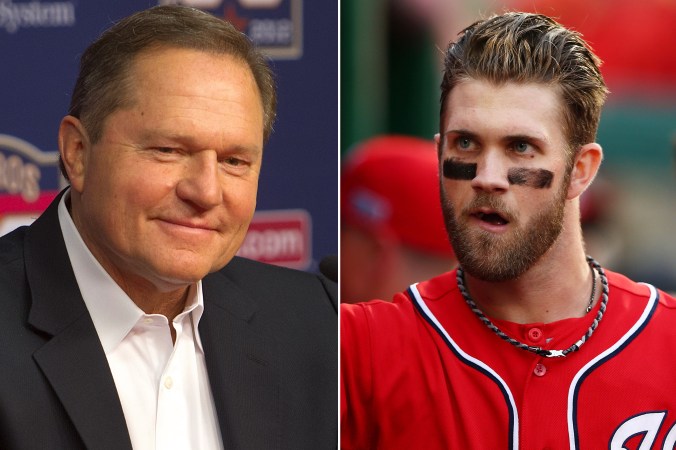
At the top of the list, as usual, is mega-agent Scott Boras, who cleverly treads the line between being an agent and a lawyer—he is both—while having too many stars under his thumb for the sports organizations or bar associations to hold him to account. For example, as a lawyer, Boras would be absolutely bound to tell his clients about a settlement offer, and would be subject to disbarment if he rejected an offer without communicating it to his client (you know, like you regularly see lawyers doing on TV and in the movies). However, there are no player agent rules that require an agent to communicate a team’s salary offer to a player. Agents can, and presumably do, reject offers without their clients ever hearing about them. This, of course, avoids the problem of a baseball star saying, “Oh, hell, that’s more money than I could ever spend anyway. I know it’s less than we talked about, but go ahead and take it.”

Agents have conflicts of interest so grand, and apparently so little understood, that meaningful consent from the client, theoretically the remedy, is virtually impossible. Let’s look at Bryce Harper, Boras’s client who is seeking more than $300 million dollars over a ten year guaranteed contract. Harper is 26 years old and has already made 49 million dollars, not counting endorsements. The functional utility of each dollar he earns is less than the one earned before in his situation. Realistically, there is very little difference between a $250,000,000 contract and a $300,000,000 contract to Harper, except from an ego perspective. The extra 50,000,000 won’t make any difference to him. Boras, however, is a different matter. Let’s say his cut of Harper’s salary is 5%.  He’ll get 15,000,000 if Harper signs for the high figure, but “only” 12,500,000 if Harper agrees to the lower figure. $2.5 million means nothing to Harper: he could throw it down the toilet, and wouldn’t feel a thing. The difference to Boras, however, is much greater in practical, and add to that the marketing advantage of being able to tell potential clients that he set the new all-time record for a free agent contract for his client. Continue reading

Comment Of The Day: “KABOOM! Biden Takes A Bribe”

Well, yes, he took the 30 pieces of silver, but Judas genuinely supported what the Romans had done, in a spirit of bi-partisanship…

Side-issue: Is it proper to give out a Comment of the Day when it is almost entirely a quote from another source? In this case, I’m doing it, in part because the commenter, Michael, is perfectly capable of writing the same sentiment just as articulately, if not better, and second, because I want his argument on the record, because it is so wrong.

I must admit, I never expected anyone to disagree with the post regarding Joe Biden’s betrayal of his party in exchange for $200,000. Such speaking fees are per se ethically dubious, as the Clinton Foundation experience should have taught us, especially when the speaker is a blathering fool like Joe Biden. I’d pay something to hear Hillary, Bill or Obama speak. But giving Biden six figures for his usual gaffes reminds me of Gerald Ford’s speaking fees after he left the Presidency. Gerald Ford never gave a non-soporific, inciteful speech in his life. He was selling influence, just like the Clintons, and just like Biden. It’s not illegal if you’re not holding office, but it is always unethical.

What Biden did was especially unethical. Both Michael and his authority call what Biden did bi-partisanship. It was not. Bi-partisanship is when partisan elected officials work across the aisle toward legislation and policies that their had-core party base might oppose, in the best interests of the nation and the public. That’s ethical, because an elected official’s duties, which all swear tom are bipartisan. Joe Biden, however, is not an elected official. He is a leader of the Democratic Party. His duty is to the party and the party’s legitimate interests. If he does not support those interests, then he should stop calling himself a Democrat, or at very least abstain from leadership.

Biden’s duty was to try to make sure his party won the House. Losing the House would have been a disaster. For all he knew, that single race might have been the difference between a House majority and a Democratic loss. He could not ethically choose his own interests over the party, and that’s what he did. The endorsement was based on Biden’s personal interests—cancer research, because of his son—and not the party’s. This is a serious conflict of interest. Now, since Joe is a dolt, this might not have occurred to him. Still, based on his personal agenda, he saw fit to harm the prospects of his own party’s candidate. Betrayal, by definition. Frankly (to quote from Miachel’s quoted source), I don’t care whether “most Americans” don’t recognize what’s wrong here. Most Americans, indeed most politicians, don’t comprehend what conflicts of interest are. I do. It’s my job.

Biden’s conduct was unethical, placing his personal agenda above hos party’s, even before we get to the ugly fact that he was paid to do it—by a foundation run by the family of the GOP candidate he was praising. Note that the piece ahead doesn’t mention this little detail at all.  It’s hilarious, really. “This is what we’ve come to: partisans attacking a lifelong public servant because he has the nerve to show active support for a member of another party who played a key role in the passage of legislation that vastly improves efforts to fight a disease that took the life of his child.” Yes, and all he need to work up that “nerve” was a check for $200,000. 

Here is Michael’s Comment of the Day on the post, KABOOM! Biden Takes A Bribe:

My “feeling” (perhaps naive, or perhaps you infer more than I do) are almost captured by this from The Hill:

“Recently, the New York Times breathlessly reported that former Vice President Joe Biden had the temerity to praise a long-serving Republican member of Congress during a speech to a Midwest audience in the run-up to the 2018 election. This member—Rep. Fred Upton of Michigan—went on to win re-election by a relatively narrow margin. And now that Biden is signaling that he may very well run for president in 2020, the partisan knives are out—and it’s members of his own party who are holding them. This sad little vignette exemplifies exactly what is wrong with American politics today.

“Mr. Biden stunned Democrats and elated Republicans by praising Mr. Upton while the lawmaker looked on from the audience,” the Times reports. “Alluding to Mr. Upton’s support for a landmark medical-research law, Mr. Biden called him a champion in the fight against cancer—and ‘one of the finest guys I’ve ever worked with.’” As the Times also notes, Upton had nothing to do with Biden giving the speech, and there is “no evidence Mr. Biden was motivated to praise the lawmaker by anything other than sincere admiration, stemming from Mr. Upton’s role in crafting the 21st Century Cures Act after the death of Mr. Biden’s elder son, Beau, from cancer in 2015.”

This is what we’ve come to: partisans attacking a lifelong public servant because he has the nerve to show active support for a member of another party who played a key role in the passage of legislation that vastly improves efforts to fight a disease that took the life of his child. It’s shameful, self-serving—and frankly bad politics. Most Americans would look at Biden’s praise for Upton for what it is: a genuine expression of humanity, respect, and gratitude. Upton responded in turn: “Being in the audience with my family and hearing Vice President Biden reference our work together was an immense honor…He was warmly received by everyone in attendance who were thrilled to have him there, including myself.”

As Biden spokesman Bill Russo says in response, “Vice President Biden believes to his core that you can disagree politically on a lot and still work together in good faith on issues of common cause—like funding cancer research.” Biden himself responded similarly and with good humor: “I read in New York Times today…that one of my problems is if I ever run for president, I like Republicans,” Biden told the Conference of Mayors. “Bless me, Father, for I have sinned.” He added: “But, you know, from where I come from, I don’t know how you get anything done…unless we start talking to one another again.” Continue reading

Saturday Ethics Warm-Up, 12/15/2018: A Good Firing, A Good Trend, A Bad Law, An Unethical Complaint, And A Tardy Confession

Rain rain go away; come back another day; Jackie wants to GET THE %$#^&@!!! Christmas tree up and start the annual  10 hour HELL of decorating it!

1. Is Facebook blocking Ethics Alarms? Several readers have reported that their efforts to share posts have been foiled. I can’t post links to it; my last several tries on two different posts have gleaned an error message. No one has shared a post to Facebook anywhere for nine days, which is very unusual. The last Ethics Alarms post with any shares was the “Kiss the Girl” post, which had quite a few.

I also have no idea what to do if Facebook is blocking the blog, and not much motivation to do it. Increasingly I am finding that my Facebook friends are making me lose respect for them with their constant virtue-signaling to the Left and refusal to accept any contrary opinions without stooping to personal insults. The “Facebook community” standards are incompatible with ethics commentary? I’m not surprised, and it can bite me.

I have literally never written anything that would justify social media censorship, assuming fair, responsible and free speech-respecting social media.

2. “The best people.” Ryan Zinke is finally leaving the Cabinet, and the President will be looking for a new Interior Secretary. The former Montana congressman and Navy Seal had an ethically tone-deaf and politically controversial tenure, facing nearly 20 federal investigations ― one of which his agency’s inspector general recently referred to the Justice Department for possible criminal violations. Like Trump himself, Zinke was incapable of recognizing that when you embark on a controversial policy mission, you have to stay squeaky clean, or the news media bring you down. This is simply stupid, arrogant and self-destructive.  Zinke should have been fired months ago.

3. Hooray!The NFL isn’t as criminal as it used to be! I guess that’s something. It was reported that “only” 36  incidents occurred in 2018 that ended in the arrest of an NFL player, down (so far) from 49 last year, and 80 a decade ago.

I guarantee that you can count the parallel incidents in Major League Baseball on one hand, every year.

4. Obamacare was declared unconstitutional in federal court, whatever that means.  I don’t know at this point whether the decision has a prayer of surviving. I do know that the legislation is and was a fiasco, and that this is what one gets when a party decides to rush major legislation through while by-passing the other party, a President repeatedly lies about it to get public support based on misinformation, and the bill is voted on with few, if any, legislators actually reading the law.

I also continue to marvel at the number of otherwise intelligent Americans who continue to idolize President Obama, who is responsible for this mess and claims it as his “signature achievement”—all while the same Americans rail about President Trump’s “lies.” He has not made a single misstatement in the past two years that has been a fraction as consequential as Obama’s lie about the Affordable Care Act. Continue reading