Now That The ACLU No Longer Wants To Be The ACLU, The United States Needs An ACLU

In a confidential memo obtained by former board member Wendy Kaminer, the American Civil Liberties Union has defined a policy that retreats from and undermines—perhaps the best word is betrays— its traditional mission of protecting the Bill of Rights, and especially the First Amendment rights of all Americans.  The memo says in part,

Work to protect speech rights may raise tensions with racial justice, reproductive freedom, or a myriad of other rights, where the content of the speech we seek to protect conflicts with our policies on those matters, and/or otherwise is directed at menacing vulnerable groups or individuals….We are also firmly committed to fighting bigotry and oppression against other marginalized groups, including women, immigrants, religious groups, LGBT individuals, Native Americans, and people with disabilities. Accordingly, we work to extend the protections embodied in the Bill of Rights to people who have traditionally been denied those rights. And the ACLU understands that speech that denigrates such groups can inflict serious harms and is intended to and often will impede progress toward equality.

…There is no presumption that the First Amendment trumps all other amendments, or vice versa. We recognize that taking a position on one issue can affect our advocacy in other areas and create particular challenges for staff members engaged in that advocacy. For example, a decision by the ACLU to represent a white supremacist group may well undermine relationships with allies or coalition partners, create distrust with particular communities, necessitate the expenditure of resources to mitigate the impact of those harms, make it more difficult to recruit and retain a diverse staff and board across multiple dimensions, and in some circumstances, directly further an agenda that is antithetical to our mission and values and that may inflict harm on listeners…Our defense of speech may have a greater or lesser harmful impact on the equality and justice work to which we are also committed, depending on factors such as the (present and historical) context of the proposed speech; the potential effect on marginalized communities; the extent to which the speech may assist in advancing the goals of white supremacists or others whose views are contrary to our values; and the structural and power inequalities in the community in which the speech will occur….

Where the ACLU defends the right to speak of those with whom it disagrees, it should generally engage in counter-measures both to reinforce the
values the speaker attacks and to make clear that we do not endorse the substance of the views. Some options might include:

1. Denouncing the views in press statements, op-eds, social media, and other available fora.

2. Participating in counter-protests. When we assist people in securing the right to march or demonstrate for views we condemn, we can and generally should support and participate in counter-protests, with consideration given to participation by senior staff or board members to highlight the ACLU’s commitment and ensure that such participation does not disproportionately burden other staff.

3. Supporting other counter-speech by supporting, organizing or helping to organize events, facilitating access to media, or taking other actions that will amplify and
strengthen the voices of those espousing our values.

4. Expanding our work on behalf of the values the speaker attacks.

5. Earmarking any fees recovered from the case to projects within the ACLU that further the values that we support and the speaker attacked, or donating them to another organization that works to advance those values, preferably in the geographical area where the speech occurred….

Continue reading

Mid-Day Ethics Refreshment, 6/12/2018: “Ethics Isn’t A Horse Race, It’s A Marathon” Edition

Good afternoon…

1. Culture rot symptoms. Once upon a time it would have been unthinkable and shameful for the owner of a losing horse in a Triple Crown race to claim that dirty tactics have affected the outcome. That, however, was before the loser of the 2016 Presidential election did the equivalent sour grapes act, loudly and continuously. This is how important cultural ethics norms fall off in chunks.

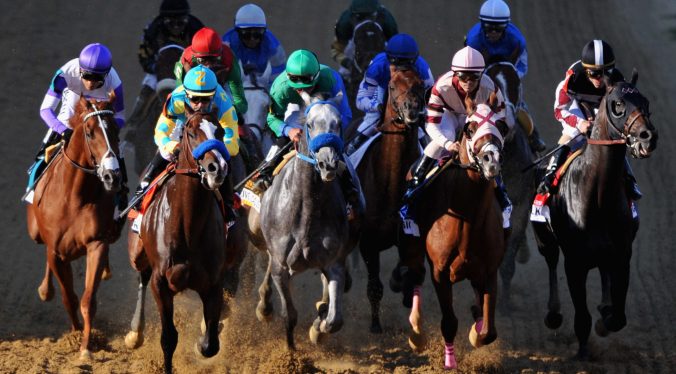
Justify becoming the only undefeated Triple Crown champion after Seattle Slew as he won the Belmont Stakes was immediately smeared  by Mike Repole, co-owner of fourth-place Vino Rosso and last-place Noble Indy. He didn’t claim Russian collusion, just equine collusion.

“Justify is a super horse. He is a Triple Crown winner and he’s undefeated,” said Repole “But I can see the stewards looking into this over the next couple of days. I probably expect them to look into reckless riding by Florent and bring him in to question him about what he was thinking and what his tactics were.”  He accused jockey Florent Geroux of riding Restoring Hope, Justify’s stablemate, to clear the way for Justify to win the race.

“It definitely seemed to me [Restoring Hope] was more of an offensive lineman than a racehorse trying to win the Belmont,” Repole told reporters, “and Justify was a running back trying to run for a touchdown.” Nice. the complaint instantly became the main story of the race, before Justify’s jockey and owners were able to bask in the rare accomplishment for a day or two. Ironically, Repole’s own Vino Rosso was assisted by similar “lineman” tactics by another horse, Noble Indy, like Vino Rosso trained by Todd Pletcher. Concludes racing expert Pat Forde,  “It’s almost certainly why Noble Indy was entered. Basically, Pletcher’s two-horse racing tactic simply ran up against a better two-horse racing tactic.”

And the tactic is legal. Never mind. Graceful losing is on the way out, thanks to our politicians.

2. He gets it, and he doesn’t even read Ethics Alarms! The Ethiopian cabbie who drove me home from the morning mandatory legal ethics seminar that I teach every month for newly-minted D.C. lawyers spent that first half of the trip complaining about President Trump. Then he said, “Now, I didn’t vote for him, but I respect him. I respect him because he is the President of my country, and my fellow citizens elected him. I can complain about him to you, because you are an American too. If a foreigner gets in my cab, however, and starts insulting the President, I pull over and order him out.” Continue reading

Morning Ethics Warm-Up, 5/15/2018: Alito Gets One Right, Ellison Deceived, And An Ancient, Unethical Tactic Works Once Again…

To a glorious morning, Ethics-Lovers!

1. Bad Alito, Good Alito.  As I briefly noted yesterday (and hopefully will do in detail today), Justice Alito authored an unethical and embarrassing dissent defending a lawyer who deliberately betrayed his client by telling the jury that he had killed someone his client denied killing. Bad Alito. However, the arch-conservative jurist also authored the majority opinion in Murphy v. National Collegiate Athletic Association, in which the SCOTUS majority struck down a virtuous but unconstitutional law, and did so clearly and well.

These are, I think, my favorite Supreme Court opinions, where the Court ignores the motives and objectives of a law and simply rules whether the legislature is allowed to behave like that. I don’t know, but I would guess that most of the majority feel the way I do about organized sports gambling: nothing good can come of it, and a lot of harm is inevitable. One they get the green light, I’m sure that as many states will take over sports gambling for its easy revenue as now prey on its poor, desperate and stupid with their state lottery scams. Everyone involved–sports, fans, athletes, states, the public’s ethical compass—is going to be corrupted by letting the sports betting genie out of its bottle: just watch.

Nevertheless, the Professional and Amateur Sports Protection Act, a 1992  law known as PASPA, should have been struck down decades ago; I’d love to know why it took so long. No, it did NOT ban sports betting, though this is what far too many news reports tell you. Congress can ban sports betting directly if it chooses to, as it is interstate commerce. This isn’t in dispute. What it did in 1992, however, was to order states not to pass laws states have a constitutional right to pass. The distinction matters. From SCOTUS Blog, which is usually the best source for analysis of these things:

The 10th Amendment provides that, if the Constitution does not either give a power to the federal government or take that power away from the states, that power is reserved for the states or the people themselves. The Supreme Court has long interpreted this provision to bar the federal government from “commandeering” the states to enforce federal laws or policies. [The] justices ruled that a federal law that bars states from legalizing sports betting violates the anti-commandeering doctrine…

…In a decision by Justice Samuel Alito, the court began by explaining that the “anticommandeering doctrine may sound arcane, but it is simply the expression of a fundamental structural decision incorporated into the Constitution” – “the decision to withhold from Congress the power to issue orders directly to the States.” And that, the majority continued, is exactly the problem with the provision of PASPA that the state challenged, which bars states from authorizing sports gambling: It “unequivocally dictates what a state legislature may and may not do.” “It is as if,” the majority suggested, “federal officers were installed in state legislative chambers and were armed with the authority to stop legislators from voting on any offending proposals. A more direct affront to state sovereignty,” Alito concluded, “is not easy to imagine.”

…The court also rejected the argument, made by the leagues and the federal government, that the PASPA provision barring states from authorizing sports betting does not “commandeer” the states, but instead merely supersedes any state laws that conflict with the provision – a legal doctrine known as pre-emption. Pre-emption, the majority explained, “is based on a federal law that regulates the conduct of private actors,” but here “there is simply no way to understand the provision prohibiting state authorization as anything other than a direct command to the States,” which “is exactly what the anticommandeering rule does not allow.”

Got it.

Good decision. Continue reading

Morning Ethics Warm-Up, 5/8/2018: George Washington, Elaine Chao, Brown-Haired Fox News Babes And Clumsy Cheerleaders

Good Morning!

1. Diversity at Fox News! There was a brunette co-anchor sitting with Bill Hemmer this morning. I almost spit out my coffee, Now if the network would only hire a female newsreader who wouldn’t be a credible contestant in a beauty pageant, the culture might advance a bit…

2.  Can an employer refuse to hire an asshole? The NFL Players Association has filed a grievance  on behalf of free-agent safety Eric Reid,  alleging collusion that has denied him a job for the upcoming 2018 season, and arguing that no NFL rule mandates players stand during the playing of the national anthem, that the league has indicated it respects “the rights of players to demonstrate,” and the collective bargaining agreement states “league rules supersede club rules.”

The grievance loses, or the NFL is in big trouble. Well, it is already in trouble, but more trouble. Demonstrating players annoys fans and hurts business. The NFL may force teams to allow jerks like Reid and ex-player Colin Kaepernick to interfere with Sunday head-bashing frolic by imposing their half-baked politics on the proceedings, but team can certainly choose to pay million dollar contracts to players who have better judgment, and are thus more trustworthy employees.

3. At George Washington University, it’s The Political Correctness Morons vs. The Conflict-Averse Spineless! I can’t believe I’m writing this. No, of course I can: I’ve predicted it.

The following on-line petition has garnered the requisite number of signatures among George Washington University students, and now will get an official response:

“We, as students of the George Washington University, believe it is of great exigence that the University changes its official mascot. The use of “Colonials,” no matter how innocent the intention, is received as extremely offensive by not only students of the University, but the nation and world at large. The historically, negatively-charged figure of Colonials has too deep a connection to colonization and glorifies the act of systemic oppression. Alternative nickname recommendations are “Hippos,” “Revolutionaries”, or “Riverhorses.”

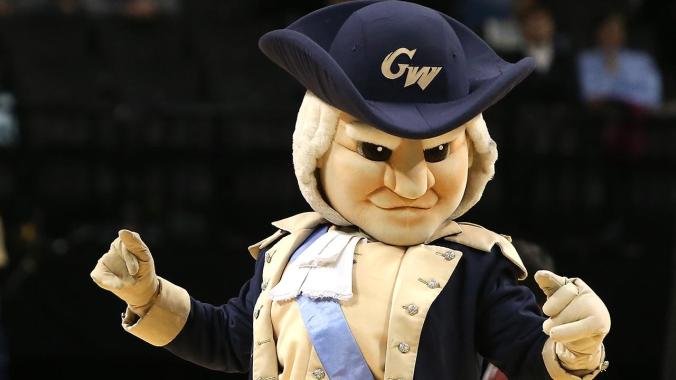
They apparently don’t teach American history at GW.  The nickname  for the athletic teams  is “The Colonials” because the United States, prior to its liberation, were called “the Colonies,” because they were colonies. Colonials are those who have been colonized, not those who do the colonizing. The mascot, meanwhile, is called “George,” because he is a caricature of George Washington, who led the Colonials to victory over Great Britain, and anyone who can’t puzzle that out shouldn’t be in college.

The petition represents the mutant offspring of a one night stand between The Confederate Statuary Ethics Train Wreck and The Niggardly Principles.

Who will win? Oh, the Morons, probably. On campuses the Morons almost always defeat the spineless administrators, as well as common sense and rationality. [Pointer: Res Ipsa Loquitur]

Oh…here’s George:

4.  Speaking of spineless…The cheerleading  coaches at Hanover Park High School in New Jersey decided that there would be no more try-outs for the squad. The school’s athletic director said that after a single mother complained about her daughter not making the cut, the policy would be changed in favor of “inclusion.” The school board released a statement saying: Continue reading

Morning Ethics Warm-Up, 4/18/2018: The Bad, The Beautiful, And The Stupid

Good morning, everyone…

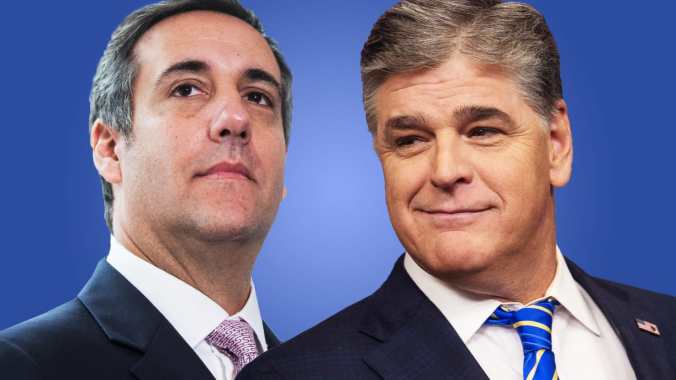
1. Tales of the King’s Pass. Fox News put out a statement saying that Sean Hannity had its “full support.” We can assume that means no punishment, no sanctions, not even any public regrets, despite the fact, and it is a fact, that the right-wing talk-show host-turned-Trump propagandist went on the air and defended Trump’s fixer, Michael Cohen, without mentioning the fact that Hannity was Cohen’s client. Thus Fox is announcing, in effect, that undisclosed conflicts of interest are just fine and dandy if your ratings are good enough. This also means that Fox News is admitting that it really doesn’t care about candor, honesty, and objectivity, since it will ignore blatant violations of all three if the profit is sufficient.

In fairness to Fox, Hannity’s blatant biases toward all things Trump are no more egregious than the open Obama bias displayed across the mainstream media’s full spectrum of journalists and pundits; it just stands out more because he has less company. However, this is a specific conflict of interest, with Hannity having undisclosed connections to a newsmaker that could reasonably affect his commentary. The closest parallel would be ABC’s George Stephanopoulos reporting on the Clinton Foundation’s dubious activities without telling viewers that he was a $75,000 donor. ABC didn’t discipline him, either, but at least he made a public apology on the air.

To make the King’s Pass case even stronger, after Politico reported this week that dinnertime news anchor Bret Baier played nine holes of golf with President Trump over the weekend, Fox News acknowledged that Baier was admonished by the president of the network.  I don’t agree with the reprimand at all. The opportunity to spend that kind of time with a President is invaluable, a rare opportunity to acquire insight and access over an extended period of time. The idea, I assume, is that it creates the illusion of chumminess. It’s a dumb illusion. If I were a journalist,  I would play golf with anyone if it allowed me to learn something. If I were president of a network, I’d reprimand a reporter for turning down such an opportunity.

2. The Virtue-Signaling Hall Of Fame. Starbucks is reacting to the PR nightmare arising out of the arrest of two black men for refusing to order anything while waiting for a companion in a Philadelphia Starbucks by a grand gesture: it will close all U.S. stores and corporate offices on the afternoon of May 29 for “employee racial bias training.” I suppose this is good crisis management, though cynical and non-substantive. It also permanently tars as a racist the Starbucks ex-manager, who says she was following a locale-specific company policy in an area that had experienced problems with loitering. Continue reading

Clearing Up A Matter Of Widespread Confusion: How Lawyers Acquire Accidental Clients

When I pointed out this morning that by Sean Hannity’s own description of his relationship to Trump fixer Michael Cohen, he was Cohen’s client, several commenters protested, including a lawyer or two. This suggests that many more were similarly confused, and it is no surprise. A disturbing number of lawyers fall into the trap of acquiring “accidental clients.” There are many ways this can happen, but the most insidious of them is this, which people like me constantly and repeatedly warn lawyers about, often to no avail.

A relative or a friend approaches you, a lawyer, at a party. He or she asks you a question about some legal issue, and you give an off-the-cuff answer. Because you are a lawyer, and because you gave advice, however vague, that individual accepts it as a free legal opinion, and also assumes that the conversation was confidential. Usually nothing happens. Sometimes, however, the friend or relation acts based on your advice. If the results turn out badly, he or she may sue for malpractice, and sometimes will win damages. In an infamous case that is still good law, an individual went to a medical malpractice specialist to engage him to sue a hospital. After describing the facts, the potential client was told, “You have no case,” and informed that the lawyer would not accept the representation. But the individual relied on that statement, and didn’t bring a suit until the statute of limitations had run. Then he learned, from another lawyer, that he did have a valid case, though one he could no longer pursue. The first lawyer was sued for malpractice, and the court found that indeed “You have no case” constituted legal advice, and the advice was relied upon, meaning that an attorney-client relationship had been formed. Continue reading

Morning Ethics Warm-Up, 4/17/2018: Blacklisting, Boycotts, And A Fox News Ethics Breach

Good Morning, all.

1 The blacklisting of R. Lee Ermey. Ermey, the ex-Marine turned actor who gained fame playing a Marine drill sergeant in “Full Metal Jacket,” died this week. I had thought he might already be dead, since I hadn’t seen him show up in movies or TV shows for quite a while. No, it appears that he was blackballed by Hollywood after he criticized President Obama in 2010, while he was being hired with some regularity. Speaking at a Marine Corps Reserve’s Toys for Tots rally, he said it was difficult to raise money for the charity because “the economy sucks” and went on to blame the Obama Administration, saying,

“We should all rise up, and we should stop this administration from what they’re doing because they’re destroying this country. They’re driving us into bankruptcy so that they can impose socialism on us, and that’s exactly what they’re doing, and I’m sick and damn tired of it and I know you are too.”

Ermey’s agent and the sudden reduction in his offers persuaded the tough Marine to beg for forgiveness with an abject apology for daring to critique Obama so harshly. Never mind:  His contract as a GEICO character was terminated, and the company removed Ermey’s commercial from their official YouTube channel. He later told interviewers that he had been blacklisted by Hollywood, and that he never had major film offer after he criticized Obama.

Observations:

a) I wonder when fair, decent, ethical Americans who believe in freedom of thought and expression will become sufficiently alarmed about progressives and Democrats using blacklists and boycotts  to enforce ideological conformity. This increasingly totalitarian end of the political spectrum needs to be informed that its ethics alarms are seriously malfunctioning.

b) Actors identified with products and companies cannot complain when they lose those jobs after making divisive political comments. If Ermey wanted to do commercials for anyone other than the NRA, his comments about Obama were just plain stupid.

c) As an actor in films, however, Ermey played villains and parodies of military characters.  His political views in those contexts should have been irrelevant, and certainly wouldn’t harm receipts for movies he was in. If he really was blacklisted, it was an act of punishment for refusing to accept the Hollywood community’s lockstep worship of a weak and divisive President.

d) In contrast, recall this public rant from actor Robert DeNiro in January regarding the current President of the United States:

“This fucking idiot is the President. It’s The Emperor’s New Clothes – the guy is a fucking fool. The publication of the Pentagon Papers was a proud moment for American journalism. The Times and the Post challenged the government over critical First Amendment issues. And the press prevailed. Our government today, with the propping-up of our baby-in-chief – the jerkoff-in-chief I call him – has put the press under siege, trying to discredit it through outrageous attacks and lies.’

I don’t think Bobby has lost any roles over this. To be fair, if there is a place where The King’s Pass, aka “The Star Syndrome,” rules supreme, it’s Hollywood. A major star like DeNiro obviously has more leeway than a narrow-range character actor like Ermey, and Ermey had to know that. Still, the double standard is striking. Continue reading

Morning Ethics Warm-Up, 3/31/2018: The Baseball-Trained Rifleman, The Hockey Hero Accountant, And Some Other Stuff That’s Just Annoying…

http://www.youtube.com/watch?v=xbAfEfBUuyw

Good morning!

1. “The Rifleman” and “Fix the problem.” I recently was interviewed by a graduate student in organizational leadership and ethics. One thing we discussed was how popular culture in America once dedicated itself to teaching ethical values and ethics problem-solving, especially in shows aimed at young audiences. This is not so true any more; indeed, popular culture models unethical conduct at least as often today.

I told my interviewer about recently watching an episode of “The Rifleman,” the early ’60s TV Western about a single father raising his young son while being called upon to use his skill with a rifle to fight for civilization in the harsh frontier.  In the episode, hero Lucas McCain (played by the under-rated Chuck Connors) had to deal with an old friend, now an infamous outlaw, who had come to town. (The ethical conflict between personal loyalty and an individual’s  duty to society was a frequent theme in Westerns.) Lucas was a part-time deputy, and at the climax of the episode, his friend-gone-bad is prepared to ride out of town to escape arrest for his latest crime. Lucas tells him not to leave, and that if he tries to escape, Lucas will have to let his custom-made rifle settle the matter, as usual. (Peace-loving Lucas somehow managed to kill over a hundred men during the run of the series.)  Smirking, his friend (Richard Anderson, later known as the genius behind “The Six Million Dollar Man”), says that he knows his old friend is bluffing. For Lucas owes him a lifetime debt: he once saved “The Rifleman’s” life.  You’re a good man and a fair man, the villain says. “You won’t shoot me. I know you.” Then he mounts his horse , and with a smiling glance back at “The Rifleman,” who is seemingly paralyzed by the ethical conflict, starts to depart. Now his back is all Lucas has to shoot at, doubling the dilemma.  You never shoot a man in the back, an ethical principle that the two officers who killed Stephon Clark somehow missed. We see McCain look at his deadly rifle, then again at the receding horseman. Then, suddenly, he hurls his rifle, knocking his friend off his horse. The stunned man is arrested by the sheriff, and says, lamely, as he’s led away. “I knew you wouldn’t shoot me.”

I love this episode. It teaches that we have to seek the best solution available when we face ethics conflicts, and that this often requires rejecting the binary option presented to us, and finding a way to fix the problem.

Of course, it helped that Chuck Connors used to play for the Dodgers, and could hurl that rifle with the accuracy of Sandy Koufax.

2. Here we go again! Now that anti-gun hysteria is again “in,” thanks to the cynical use of some Parkland students to carry the anti-Second Amendment message without having to accept the accountability adults do when they make ignorant, dishonest, and illogical arguments in public, teachers and school administrators are back to chilling free speech and expression by abusing their students with absurd “no-tolerance” enforcement. At North Carolina’s Roseboro-Salemburg Middle School, for example, a 13-year-old boy in the seventh grade was suspended for two days for drawing  a stick figure holding a gun.

I drew pictures like this—well, I was little better at it—well into my teens. It’s a picture. It isn’t a threat. It isn’t anything sinister, except to hysterics and fanatics without a sense of perspective or proportion—you know, the kind of people who shouldn’t be trusted to mold young minds. “Due to everything happening in the nation, we’re just being extra vigilant about all issues of safety,” said Sampson County Schools’ Superintendent Eric Bracy, an idiot. How does punishing a boy for a drawing make anyone safer? It makes all of us less safe, by pushing  us one step closer to government censorship of speech and thought.

Then we have Zach Cassidento, a high school senior at Amity High Regional School in Connecticut who was suspended and arrestedarrested!—for posting a picture of his birthday gift, an Airsoft gun, on Snapchat. He was not charged, but was suspended for a day from school….for posting, outside of school, on his personal account, the picture of an entirely legal toy gun (It shoots plastic pellets: my son has several of them).

The people who do this kind of thing to children in violation of their rights as Americans are the same people who cheer on David Hogg while signing factually and legally ridiculous petitions. They should not be permitted to teach, and this kind of conduct ought to be punished.

Where is the ACLU? For the organization not to attack these abuses is an abdication of the organization’s mission. Continue reading

Ethics Quiz: Bill Cosby’s Bias Argument

As Bill Cosby’s latest trial gets underway, “the Cos” and his lawyers contend that the presiding judge should recuse himself because the judge’s wife is an advocate for sexual assault victims. Judge Steven O’Neill’s wife, Deborah O’Neill, is a social worker on a University of Pennsylvania special staff that advocates for students who are alleged victims of sexual assault. According to the motion for the judge to recuse, she has donated money to a victims advocacy group that plans an anti-Cosby rally outside the courthouse during Cosby’s trial.


Your Ethics Alarms Ethics Quiz of the Day:

Should the political activities, public statements or occupation of a spouse be considered a sufficient conflict of interest to mandate judge’s recusal?

Continue reading

Morning Ethics Warm-Up, 3/18/18: McCabe, Brennan, And “Fighting Joe” Hooker

Good Morning!

1 McCabe Ethics. If you want a starting place to find smoking guns regarding the stunning bias of the mainstream media, one need look no further than the overwhelming sympathy being expressed for Andrew McCabe, the senior FBI official just fired by AG Jeff Sessions.

 Justice Department Inspector General Michael Horowitz concluded that McCabe misled investigators about his role in directing other officials at the FBI to speak to “The Wall Street Journal” regarding his involvement in a public corruption investigation into the Clinton Foundation. Horowitz’s report on McCabe was referred to the FBI’s Office of Professional Responsibility and the career officials there recommended McCabe’s termination.That means McCabe had to be fired. I never had a job in which I wouldn’t have been fired if an internal investigation showed I had lied on the job. Have you? In a law enforcement job, this is an even worse offense. Firing for cause is virtually mandatory. Of course it is. But here, for example, is “The Atlantic”:

“Andrew McCabe, a former acting and deputy FBI director who had drawn the ire of President Trump, was fired by Attorney General Jeff Sessions late Friday evening, a decision that raises troubling questions about the independence of both the Justice Department and the FBI.”

What? It raises no “troubling questions” at all! McCabe had to be fired. The fact that the President had criticized him is 100% irrelevant. He would have had to be fired if the President said he was the salt of the earth. He would have to be fired if the President said he was the spawn of Hell. McCabe lied. The internal investigation said so. He was fired. Good.

There were plenty of other reasons to be suspicious of McCabe. NBC News reported,  for example, that when McCabe’s wife, Jill, ran for the state Senate in Virginia in 2015, she accepted a donation from a political action committee controlled by then Virginia governor Terry McAuliffe, one of the Clintons’ closest allies. Then, in 2017, McCabe became a key official in the investigation of Hillary’s e-mail tricks. He should have recused himself: it’s called the appearance of impropriety. James Comey should have forced him to recuse himself. Never mind: the lies alone were enough to mandate a firing.

The news media, many believe (including me), support McCabe because he was a source for leaks—in other words, he violated the law and legal ethics to pass along confidential information. For that, if it could be proven, McCabe ought to be disbarred and prosecuted.

To read my progressive Facebook friends’ rants, as their IQ and integrity declines further every day, the current outrage is over the fact that McCabe was fired a mere day before he could take early retirement. Again, good. A high-ranked FBI official who lies on the job must be fired, not allowed to escape accountability by retiring. Once he retired, the only recourse for the Justice Department would be to indict him. It doesn’t matter that he was a day away from retiring. So what? What if he was a month away? A year? A minute? He lied. He deserved to be fired, not to be allowed to retire. The quick retirement dodge was how the Obama Administration justified letting IRS officials that criminally misused the agency for partisan warfare escape accountability.

2. And this is why the President of the United States shouldn’t tweet like a junior high school student, or like Larry Tribe  Here is former CIA Director John Brennan’s tweet in response to McCabe’s firing”

When the full extent of your venality, moral turpitude, and political corruption becomes known, you will take your rightful place as a disgraced demagogue in the dustbin of history. You may scapegoat Andy McCabe, but you will not destroy America…America will triumph over you.

It is unprofessional, uncivil, misleading and unethical. However, when the President of the United States’ daily habits make such tweets a Presidential norm, this is what you get: not just a Nation of Assholes, but a government of assholes.

Kudos to journalist Sharyl Attkisson for tweeting the perfect response to Brennan’s thuggishness:

“A guy like this would never misuse intel or his authority—would he?” Continue reading