Curtis Morrison, The Face Of Ethics Bankruptcy

How did you get this way, Curtis?

How did you get this way, Curtis?

Curtis Morrison’s post at Salon, “Why I secretly recorded Mitch McConnell,’ is disturbing in the manner of those periodic exposés where a journalist gets candid answers from a soul-dead 14-year-old inner city drug dealer,  a short-order cook who hates his customers and spits in their food, mad Islamic terrorist, or venal hedge fund manager. Morrison exposes himself as a politically active, ethically ignorant zealot, and ludicrously proud of it. I’m sure that conservative bloggers will seize on his damning post as evidence of the character rot at work on the Left, but he could just as easily be a young Andrew* Breitbart, or James O’Keefe.

The chilling revelation that dawns as one reads Morrison’s  piece is that mis-wired people like him increasingly warp our political process and turn it into incoherent, useless and destructive warfare. I don’t want to think about how many will read his words and admire him, rather than feel their gorges rise, but unfortunately, it’s my job to think about it. Our task is to make sure there are fewer Curtis Morrisons in the future. Maybe his Salon article, which should horrify anyone who isn’t already beyond ethics repair, will help. Continue reading

Advertising Ethics: How Low Can It Go?

Trade commentators have noticed a welter of really offensive ads lately, and a suspicious pattern: an ad is released online that no sentient being could possibly believe is tasteful or appropriate, the ad attracts exactly the kind of negative response that any 13-year-old could have predicted, and the company remorsefully removes it, with an abject apology.  The latest of this invasive species was a Hyundai ad showing a despondent  man rigging a hose from a Hyundai IX35’s exhaust pipe to the car interior as a suicide attempt. As he sits in his car, waiting to die by inhaling carbon monoxide in the dark garage, a light comes on he opens the garage door, with the words appearing on the screen,  “The New IX35 with 100% water emissions.” See? You can’t kill yourself with a Hyundai! Hilarious!

Yechhh, and most viewers detested the ad. Hyundai Motor Europe quickly responded,

“We understand that some people may have found the IX35 video offensive. We are very sorry if we have offended anyone. We have taken the video down and have no intention of using it in any of our advertising or marketing.”

“No intention”?  That’s odd, because the ad was already online. Hyundai North America quickly took the moral high ground in apparent contrast to its European sibling. “We at Hyundai Motor America are shocked and saddened by the depiction of a suicide attempt in an inappropriate UK video featuring a Hyundai,’ it said. “Suicide merits thoughtful discussion, not this type of treatment.” Continue reading

Why The Gun Bill Deserved To Lose, and Why We Should All Be Glad It Did

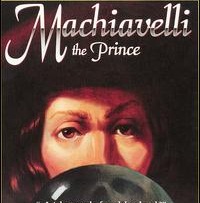
A bad day for Machiavelli is a good day for America.

A bad day for Machiavelli is a good day for America.

Consequentialism rules supreme in Washington, D.C.; that is the tragedy of our political system. If unethical conduct is perceived as having a positive outcome, few in D.C. will continue to condemn the means whereby those beneficial and lauded were achieved. Worse, the results will be seen as validating the tactics, moving them from the category of ethically objectionable into standard practice, and for both political parties

Thus we should all reluctantly cheer the likely demise of the Senate’s gun control bill yesterday. The compromise background check provision that failed wasn’t perfect, but it would have been an improvement over the current system. Nevertheless, the post-Sandy Hook tactics of gun control advocates, including the President and most of the media, have been so misleading, cynical, manipulative and offensive that their tactics needed to be discouraged by the only thing that has real influence in the nation’s Capital: embarrassing failure.

The tainted enterprise begins with the fact that it should not have been a priority at this time at all. Newtown did not signal a crisis; it was one event, and that particular bloody horse had left the barn. The supposedly urgent need to “prevent more Sandy Hooks” was imaginary, but it apparently served the President’s purpose of distracting attention from more genuinely pressing matters, notably the stalled employment situation and the need to find common ground with Republican on deficit and debt reduction. Meanwhile, the conditions in Syria have been deteriorating and North Korea is threatening nuclear war: why, at this time, was the President of the United states acting as if gun control was at the top of his agenda? It was irresponsible, placing political grandstanding above governing. In this context, Obama’s angry words yesterday about the bill’s defeat being caused by “politics” were stunningly hypocritical. The whole effort by his party was about nothing other than politics. Continue reading

Ethics Dunce: Tony Kornheiser

Ugh.

No pardon for you, Tony...

No pardon for you, Tony…

Tony Kornheiser is a sportswriter and humorist as well as a television and radio personality. I’ve been reading, watching and occasionally laughing at him since I moved to D.C. eons ago, when he was a Washington Post columnist. This post has nothing to do with sports, however, though the issue arose in a sports context. It has to do with the depressing fact that Tony’s mode of ethical analysis is still based on consequentialism and an ignorance of moral luck, and that he is, despite being an educated, erudite and clever man, typical of the public in this respect.

It is depressing, and thus I say, “Ugh.”

For the second time in two days,  the ten minutes I had time to watch TV randomly brought me to a discussion of umpire Marty Foster’s botched third strike call to end a close game between the Tampa Bay Rays and the Texas Rangers. Tony was arguing with Michael Wilbon on their hit ESPN show, “Pardon the Interruption.” [ Aside: And why did my channel surfing pause there? Because the project that has eaten my life the last couple weeks requires me to mention, in a speech, the HBO Larry David show “Curb Your Enthusiasm, ” and I keep wanting to say “Pardon the Interruption.” I blew it again last night, so naturally, the first thing I see this morning is the show I’m trying to purge from my brain.] They were debating whether Foster should be disciplined for his bad call, an idiotic issue, since the answer is “Of course not; are you nuts?” Umpires make hundreds of judgment calls every game, and mistakes are inevitable. As I wrote yesterday, Foster’s handling of this botched call was exemplary, because he admitted that he had erred. Punishing him or any umpire who misses a visual call would be unfair and destructive; such punishment could only be valid in the case of actual misconduct or negligence, as in the case of an umpire ignoring or not knowing the rules. Continue reading

Ethics Poison From Nike and Tiger Woods

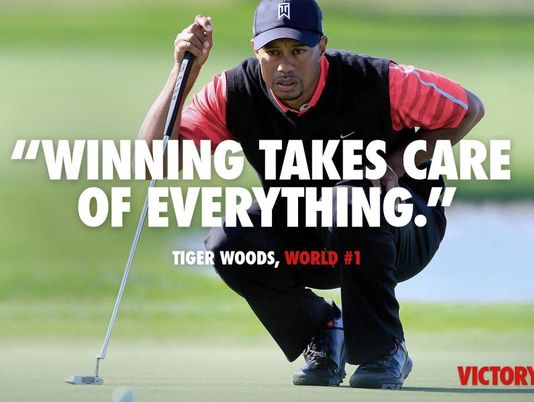
Woods AdWoods Ad2

…and not for the first time, in either case.

But Woods’ new ad for Nike in the wake of his resurgence in his sport, is audaciously unethical, braying a dangerous, corrupting message into the cultural atmosphere, endorsing, in five simple-minded words, consequentialism, the Star Syndrome, the King’s Pass, non-ethical considerations over ethical ones, and “the ends justify the means.” That’s a pretty impressive load of ethics offal in so few words: congratulations to the soulless ignoramus who devised it.

The assorted miscreants, past and present, who would have gladly stood in for Tiger in his damning ad include dictators, despots, mass murderers, gangsters and corrupt politicians like Richard Daley, Marion Barry, Charley Rangel and Tom DeLay, corporate bandits, assassins, robber barons, Wall Street criminals, athletic cheaters like Lance Armstrong and Barry Bonds, serial fathers like the NBA’s priapic stars, arrogant social misfits like Charley Sheen, con artists and liars in all walks of life, and of course, our most popular politician, the man whose entire career is based on Nike’s new motto, William Jefferson Clinton.

I almost forgot the terrorists. Continue reading

The Portman Reversal: Why He Did It DOES Matter

reversalI feel it necessary to return to the topic of  Senator Rob Portman’s reversal of his long-held and much-publicized opposition to same sex marriage and homosexuality in general in the wake of his son’s disclosure that he is gay.

Anyone who required further evidence that current events analysis, not to mention public consciousness, is almost untouched by an understanding of ethics, need look no further than the near universal pronouncements in the editorial pages and the Sunday talk shows that “it doesn’t matter” why  Portman suddenly decided that he was in favor of gay marriage once the issue affected someone he cared about.

It is not yet 11:00 AM in Virginia, and I have already read and heard this reaction so many times that the flashing red light on my head that signals an imminent explosion is flashing bright. It doesn’t matter? It doesn’t matter that Senator Portman firmly, strongly, extensively and consistently declared in public forums, to interviewers and in op-ed pieces that the sanctity of the institution of marriage as well as the moral fiber of the nation depended on withholding the right to marry from millions of law-abiding American citizens, but that the minute one such citizen, someone he actually gave a damn about, risked being adversely affected by his supposedly heart-felt and principled position, he changed his “principles” like he was changing his socks? That doesn’t matter? Continue reading

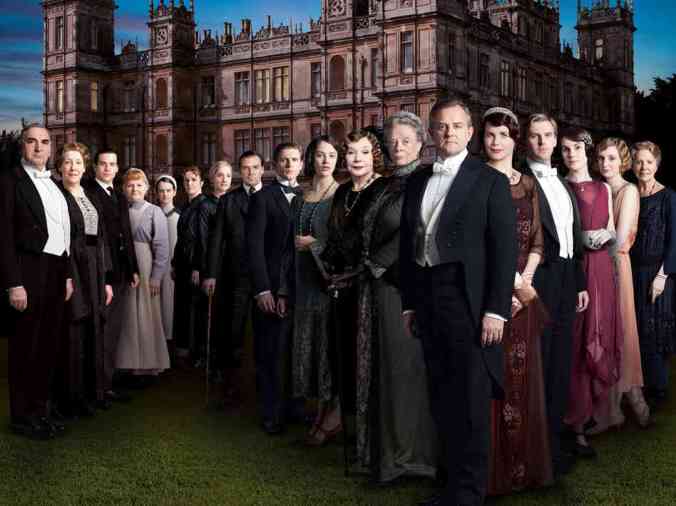
Consequentialism, Bias, Moral Luck and Malpractice on PBS’s “Downton Abbey”

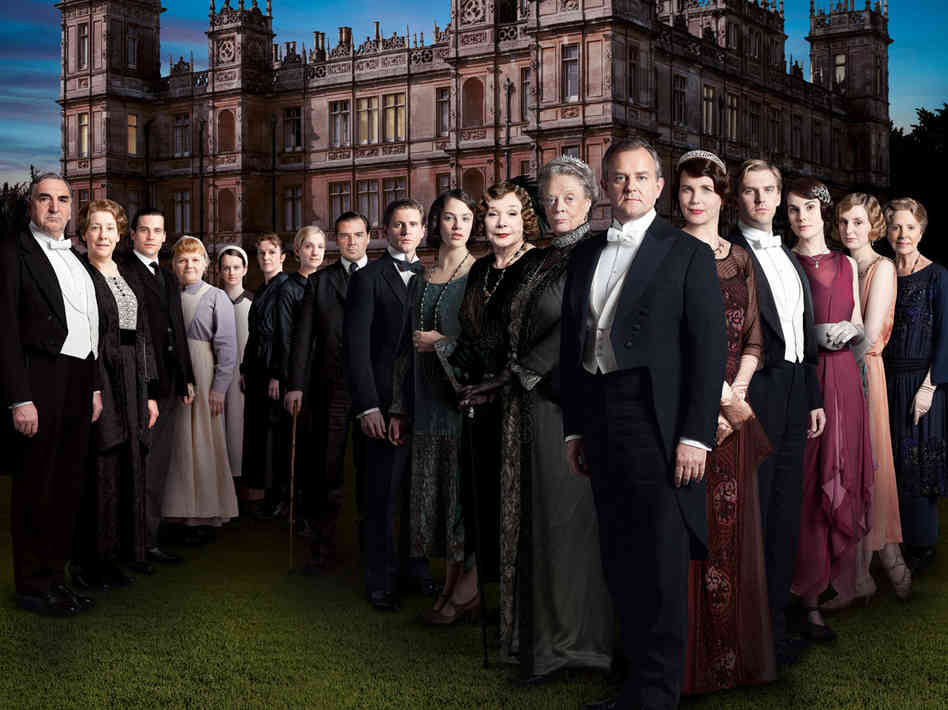
downton_abbey

The fourth episode of the PBS sensation “Downton Abbey” provided a clinical examination of how bias of all kinds can rule the most important decisions in our lives, and how moral luck so frequently determines our conclusions about whether those decisions were right, wrong, or really, really wrong. It also shed some light on the  current policy conundrum of how best to consider medical malpractice suits—as a fair and necessary means of rewarding the victims of professional errors, or as a decidedly unfair device that distorts the practice of medicine and inflates its costs without improving treatment.

For those who have not caught the trans-Atlantic mania of following the saga of the Earl of Grantham and his extended family as they try to maintain their life of luxury as members of the landed aristocracy post-World War I, here are the relevant plot points of the most recent episode (in the U.S.; Great Britain is a season ahead of us):

Sybil, the much loved but rebellious daughter of the Earl is staying at the family estate (all right, castle) as she prepares for childbirth. (She and her Irish revolutionary husband Tom are on the lam from British authorities, but never mind that). The Earl naturally wants the best medical care for his daughter, and rejects the long-time family physician, Dr. Clarkson, for the task, because he has made some faulty diagnoses of late that led to all kinds of sorrow in last season’s drama. So the Earl calls in a renowned surgeon to the upper crust who is upper crust himself, Sir Philip Tapsell. (He appears to be an arrogant, pompous jerk, but the show’s writers show him giving sage and well-worded advice to the Earl’s non-Irish revolutionary son-in-law on the delicate matter of his sperm count, so we know he’s not a fraud as well.)

The Earl’s American but far too deferential wife Cora (in case you wondered whatever happened to the cute Elizabeth McGovern from “Ordinary People,” the answer is, “This!”) seeks to rescue Dr. Clarkson from a stinging snub by insisting that he come to Downton Abbey and be present for the childbirth as what we would call a consulting physician to Sir Philip, who doesn’t want one. Two head-strong doctors and hostile doctors looking after the same patient—yes, this will work out well.

Sure enough, Sybil’s pregnancy takes an ominous turn. Her ankles are swollen (“Perhaps she has thick ankles!” huffs Sir Philip, pooh-poohing the symptom. “She does not!” replies loyal Dr. Clarkson), her mental state is confused, and there is protein in her blood. Clarkson concludes that Sybil is toxemic and believes she could suffer eclampsia if she isn’t taken to the hospital immediately for a Caesarian section. Sir Philip dismisses him as a hysteric hack, and insists that Sybil’s pregnancy is normal and fine. Since Caesarians were risky in the 1920’s, often resulting in the deaths of the mother, the baby, or both, he believes Dr. Clarkson is giving irresponsible advice. As critical minutes tick away, Lord Grantham asks Clarkson if he can guarantee that Sybil will survive the ordeal of a Caesarian. “There are no guarantees,” he replies, correctly. Not hearing what he wanted to hear, the worried father turns to Sir Phillip and asks how certain the blue-blood doc is that the operation is unnecessary. “Completely certain,” is the ridiculous reply.

Announcing that certainty is a better bet than equivocation, Lord Grantham decrees that Sybil will remain at the castle to have her child, which she promptly does. All seems to be well, too, with a healthy baby, a beaming mother, a relieved family, and a smugly gloating Sir Phillip. But then Sybil goes into the violent seizures characteristic of eclampsia, and it is too late to save her. She dies. Dr. Clarkson’s diagnosis was correct. The family is devastated; Sir Philip is stunned, Cora is furious at both him and her husband, and the Earl of Grantham is feeling guilty.

Got that?

Cora’s anger, the Earl’s guilt and the vindication of Dr. Clarkson are all the result of a bad-tasting recipe of hindsight bias and moral luck. Sybil might have not gone into convulsions. She might not have survived the Caesarian, in which case Dr. Clarkson would be the one looking incompetent, Sir Phillip would say “I told you so,” and Cora would be furious at a different doctor but the same decision-maker, her husband, who would still be sleeping in the guest room. Continue reading

Robert Griffin III, Wally Pipp, and the Catch-22 of Lies

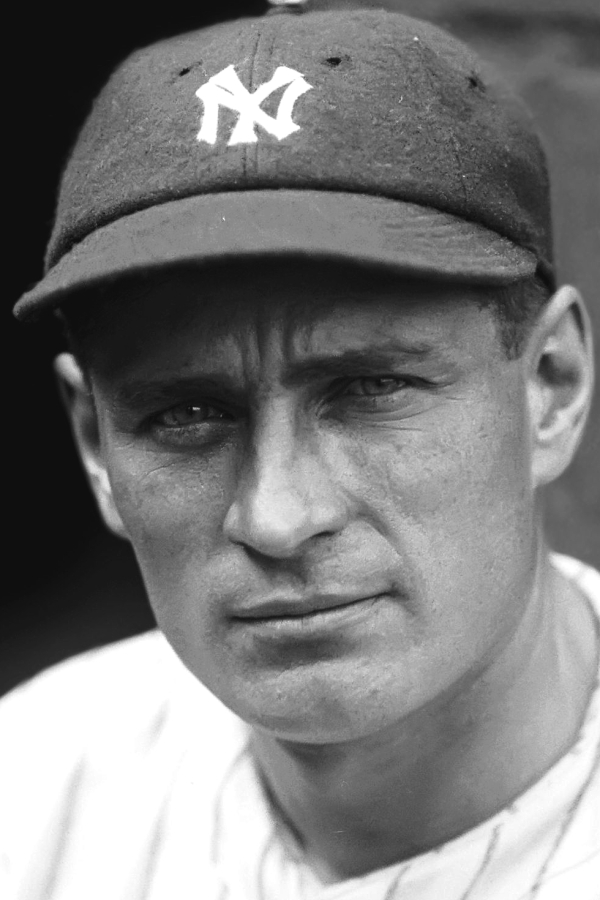
Dan Wetzel would have loved Wally Pipp

Dan Wetzel would have loved Wally Pipp

If you want to see the stark difference between the culture of baseball and the culture of football. look no further than Washington, D.C., where the city’s sports fans are in mourning for the second time in barely three months’ time. The surging Redskins just met play-off elimination, because their young star quarterback was injured but allowed to stay in the game. Back in October, the city’s new sports darlings, baseball’s Nationals, were eliminated in their first play-off round, in part, fans believe, because the team wouldn’t let its completely healthy young star pitcher play for fear that he would get injured.

This week everyone from my local sandwich shop proprietor to the driver of the cab I just got out of is furious  at Redskins coach Mike Shanahan for allowing the obviously hobbled Robert Griffin III to stay in the doomed game against the Seattle Seahawks when there was a competent back-up on the bench. And some, like Yahoo! sportswriter Dan Wetzel, are blaming Griffin, for “lying”:

“Robert Griffin III couldn’t do much of anything Sunday except lie, which is what he’s been trained to do in situations like this.
Lie to himself that he can still deliver like no backup could. Lie to his coach that this was nothing big. Lie to the doctors who tried to assess him in the swirl of a playoff sideline. So Robert Griffin III lied, which is to be excused because this is a sport that rewards toughness in the face of common sense, a culture that celebrates the warrior who is willing to leave everything on the field, a business that believes such lies are part of the road to greatness.” Continue reading

The Shock Jocks and the Suicide: A Moral Luck Cautionary Tale

With every action we take, we're rolling the dice...

With every action we take, we’re rolling the dice…

Jacintha Saldanha, a nurse at the King Edward VII hospital in Great Britain, happened to be the staffer on duty when two Australian disc jockeys made a prank call to the hospital ward where the Duchess of Cambridge was staying for treatment of the symptoms of her recently disclosed pregnancy. The DJs, Mel Greig and Michael Christian,  pretended to be the Queen and Prince Charles, and the gullible nurse discussed the royal patient’s condition with them, violating protocol and security.  Three days later, Saldanha, the 46-year-old mother of two, was found dead of an apparent suicide.

Now the disc jockeys are off the air indefinitely, and being pilloried as virtual murderers in some local media as if Saldanha’s death was a predictable and reasonable outcome of their admittedly irresponsible gag. It wasn’t. Presumably the same people screaming for Gaig’s and Christian’s heads would also be doing so if the nurse had been asked, in the fashion of a gentler, dumber era of phone pranks, if she had Prince Albert (tobacco) in a can (“You do? Then for God’s sake, let him out!”) and killed herself in humiliation. This was not a natural outcome of their juvenile routine. This was an unhinged over-reaction that had to have underlying causes far deeper than a practical joke phone call. The shock jocks were the victims of moral luck, the same phenomenon that leaves a tipsy partier who drives home without incident a respected citizen, but turns a driver who is no more intoxicated and  attended the same party into a community pariah because a careless child ran in front of his car. The two drunk drivers were identical in their conduct. One was lucky. The other was not. Continue reading

Chris Christie and the Curse of Consequentialism

It will be scant consolation to Chris Christie, who probably lost forever any chance of becoming President, but his bi-partisan actions in the wake of Superstorm Sandy provide a perfect example of how a completely ethical and responsible decision can have consequences that cause it to be judged unethical and irresponsible.

Even before Obama won Ohio’s electoral votes, guaranteeing his re-election, analysts were pointing to Christie’s much-photographed stroll with (and hugging of) the President, and the well-timed opportunity it provided to allow Obama to appear both Presidential and willing to co-operate with Republicans, as the tipping point in a close race, breaking Mitt Romney’s momentum and undercutting the argument that only he could “reach across the aisle.” I doubt that Chris and Barack’s New Jersey Adventure was in fact the primary reason Romney lost, but I have no doubt at all that conservatives will blame Christie, among others, for the loss. Continue reading