Jesse Jackson, Jr. and Our Sick Democracy

Exactly what we deserve.

Exactly what we deserve.

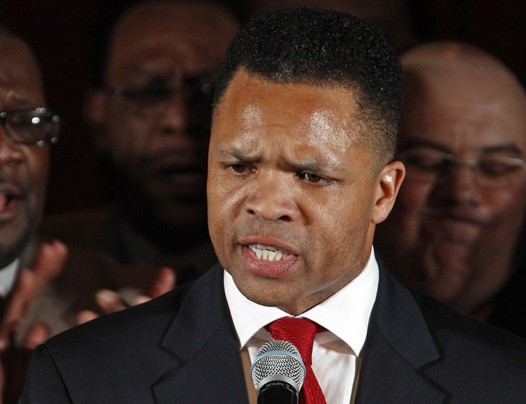
In the end, the fact that Jesse Jackson, Jr. is going to jail in disgrace is less significant than what his disgraceful career represents. Jackson is only one man, and many men have failed their responsibilities to society while showing dire deficits of character in the process. Jackson’s career, however, is smoking gun evidence of the travesty we have allowed America’s democratic system of government to become. If there are any who still wonder why the nation seems incapable of addressing its problems and challenges responsibly,  look no further. This is a democracy whose citizenry has become too complacent, lazy, apathetic and ignorant for the privilege of self-government. The implications of this are terrifying.

Reading the various articles about Jackson’s imminent guilty plea to conspiracy charges, I was struck by the realization that this one-time rising political star is a child. He misappropriated over $750,000 in campaign funds to buy, among other gewgaws like a Rolex watch, such indefensible treasures as Bruce Lee memorabilia ($10,105), Michael Jackson mementos ($14,200), a “Michael Jackson and Eddie Van Halen” guitar for $4,000, and a Michael Jackson fedora, a bargain at $4,600…all with money donated to his political campaign. This is the caliber of mind and the considered priorities of the man entrusted by an Illinois congressional district to participate on their behalf in crucial decisions affecting jobs, the economy, and the course of the nation, while being consistently endorsed by our toadying news media. Continue reading

Cost of Rick Curl’s ‘Stay-Out-Of-Jail-And Keep-Molesting-Girls’ Card: $6,250 a Year

I hope it was worth the cash, Kelley.

I hope it was worth the cash, Kelley.

All in all, you would have to say that renowned Maryland swimming coach Rick Curl made a pretty sweet deal for himself. True, he’s headed to jail now, after pleading guilty to charges of child sexual abuse as a result of the testimony of Kelley Currin. Currin, now 41, was a former swimmer coached by Curl, and was molested and ultimately raped by him over six years beginning when she was only 13. But Curl paid Kelley’s parents, Gerald and Pamela Davies, $150,000 to keep his secret from police, the community, and the swim team (the Davies had read about his abuse in their daughter’s journal and confronted him) in 1989.  Kelley, who was 19 when her family got paid off, waited until last year to finally alert authorities, so Curl kept his freedom, reputation, and most important of all, his opportunity to be trusted with the yummy, young, nubile daughters of other, unsuspecting parents, for a bargain yearly rate of only $6,250.

Not bad! Not bad at all. Continue reading

Soccer, Sports, Corruption, and Cultural Rot

Bitter rot After a moment’s reflection, I realized that it was inevitable that international soccer would be rocked by a match-fixing scandal. If I should have seen it coming, and I care as much about soccer as George S. Kaufman cared about Eddie Fisher’s social life*, then the officials of the sport should have seen it coming too.

From the New York Times:

“…A European police intelligence agency said Monday that its 19-month investigation, code-named Operation Veto, revealed widespread occurrences of match-fixing in recent years, with 680 games globally deemed suspicious. The extent was staggering: some 150 international matches, mostly in Africa, Asia and Latin America; roughly 380 games in Europe, covering World Cup and European championship qualifiers as well as two Champions League games; and games that run the gamut from lower-division semiprofessional matches to contests in top domestic leagues.”

Thus soccer, the most played, most followed, most passionately cheered of all major team sports has been rigged. It doesn’t matter that all the games weren’t rigged; what matters is that now nobody can be sure that a game isn’t rigged. How can a fan care, deeply care, about the outcome of an athletic contest when there is always a lurking, justified suspicion that victory is undeserved and that defeat is unfair? In the span of just a few weeks, we have heard the golden boy of American and international cycling admit that he was at the center of a cheating conspiracy, and that he used lies, influence and financial power to make his sport a contest of which competitor could break the rules most effectively. New revelations from Miami, meanwhile, indicate that Major League Baseball’s so-called steroid era, which supposedly had been vanquished forever, may never have gone away at all: several current stars, like the Yankees’ Alex Rodriguez and 2011 National League MVP Ryan Braun, have been linked to treatments at a clinic known for human growth hormone therapy. Big sports mean big money, and where there is big money, there will always be clever, dishonest people willing to crush laws, ethics, sportsmanship and public trust in order to get more of it. Continue reading

Bizarro World Ethics in North Carolina

bizarro_world

Also known as “North Carolina”…

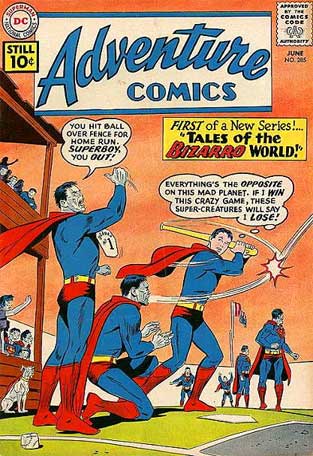
The Bizarro planet, occasionally mentioned on “Seinfeld,” was a humorous feature in Superman comics, a cube-shaped planet populated by flawed clones of Superman and Lois Lane. Nothing made sense on the Bizaaro world, since its denizens were sub-cretinous, their traditions absurd, and their logic inverted. They threw away food and ate the plates—that sort of thing, hilarious if you’re a nine-year old boy in 1962.

I sometimes refer to “Bizarro World ethics,” which invokes the principle that it is difficult, if not impossible, to be ethical in a culture where a lack of ethics is the norm, just as behaving normally with Bizarro Supie and Bizarro Lois would be rude and confusing to them. This is the dilemma facing North Carolina, which is apparently trying to devise an ethical way to run a state lottery. That is a hopeless goal. It is like insisting on clean mud-wrestling, non-violent Jason Statham films, or healthy junk food. State-run lotteries are by definition unethical. The states that run them, and almost all do, have traded principle for encouraging and endorsing activities they once declared harmful and criminal, as a cowardly way to acquire revenue without paying the political price of raising taxes.

By doing this, they… Continue reading

The House Ethics Committee Sends A Message: “Keep Your Corruption Within The Loopholes, And You’re Still ‘Ethical'”

"We just want to be friends."

“We just want to be friends.”

Let us stipulate that when a body’s ethics committee shows itself to be hopelessly confused about ethics, the chances that the body it is supposed to enlighten will be anything other than habitually, shamelessly and irreparable unethical are somewhere between Frosty’s chances of surviving in Hell, and the likelihood of me doing an infomercial for Wen Hair.

Remember the “Friends of Angelo” scandal? This was the so-called  “VIP program” that former Countrywide founder and CEO Angelo Mozilo used, not to be unkind, to bribe lawmakers into assisting Countrywide’s predatory mortgage loan practices, or at least to look the other way. In June 2008  it was revealed that key policy makers, including former Senate Banking Committee Chairman Christopher Dodd  (D-Conn.), and current Senate Budget Committee Chairman Kent Conrad (D-N.D.) received special terms on mortgages from Countrywide.

In 2009,the House Oversight Committee began investigating the program and learned that similar sweetheart loans were extended to almost a dozen lawmakers, executive branch officials, and other employees of Congress, the White House, Fannie Mae, Freddie Mac, and other government agencies. Countrywide also allowed some VIP program participants “free floats,” which meant that if interest rates fell during the time when loans were being processed, the company allowed applicants to take the lower rate at closing, something it does not typically do.

Let’s be clear: these are bribes. No matter whether they fall within or without specific laws or regulations, they are bribes. This is a large corporation providing special benefits to legislators and others in the government that it did not make available to the general public, in order to make “friends” with them. Why would a financial company like Countrywide want policy-makers indebted to it, to “like” it? Use your imagination. This is called creating a conflict of interest and warping independent judgment. We should expect our officials and elected representatives to recognize such transparent corruption, and avoid it. But they didn’t, and don’t.

One reason they don’t is that voters refuse to hold them accountable. Another is this:

From the LA Times:

“The House Ethics Committee has found no rules violations by  lawmakers and staffers who used a VIP loan program from Countrywide Financial Corp. saying the allegations of special treatment fell outside the panel’s jurisdiction. The committee’s leaders said its investigation largely led to the same conclusions as the Senate Ethics Committee, which determined in 2009 that there was “no substantial credible evidence” that Sen. Kent Conrad (D-S.D.) and former Sen. Christopher Dodd (D-Conn.) had broken rules by accepting loans through the special program…”

“The House Ethics Committee statement said that people in the VIP program appeared to be offered ‘quicker, more efficient loan processing and some discounts.’ But the committee said there was evidence showing those discounts “were not the best deals that were available at Countrywide or in the marketplace at large.” Because participation in the program “did not necessarily mean that borrowers received the best financial deal available either from Countrywide or other lenders,” it was not a violation of House rules to participate, according to the Ethics Committee.” Continue reading

Unethical Quote of the Week: W.G. Hamm

“What I know about Lance Armstrong is that he inspired thousands of cancer victims and made their lives better. What I know about Mr. Armstrong is that when my wife and my son were both suffering from cancer, his story and his book helped them cope with their diseases. What I know about Mr. Armstrong is that the good that he did far outweighs the fact that he was trapped in a culture of drug use within the cycling fraternity. What I know about Mr. Armstrong is that he has been needlessly demonized by people who do not realize the balance between his good deeds and his bad deeds.”

—-W. G. Hamm, in his Letter to the Editor of the Washington Post. Hamm was praising a fatuous, rationalization-riddled  column by Post sportswriter Sally Jenkins in which she catalogued and endorsed every excuse and justification trotted out by Armstrong’s enablers and defenders.

would have loved Vlad.

W. G. would have loved Vlad.

I don’t know W.G. Hamm. I’m sure he’s the salt of the earth, and a part of me is queasy about picking on his letter praising Jenkins’ ridiculous column rather than tackling the truly ethically offensive and brain-dead column itself. One reason is that I have written extensively, frequently and recently about the arguments, if you can call them that, made by Jenkins. Her column really is spectacularly bad; here’s one passage that send me to the bathroom, for example:

“Maybe I’m not angry at Lance because for two decades now I’ve had serious questions about the wisdom and fairness of the “anti-doping” effort, which consists of criminalizing and demonizing athletes for what boils down to using medications without a prescription.”

No, it boils down to using medications without a prescription and using them to cheat in athletic contests for money and fame, while defrauding the public, you silly, dishonest woman. Continue reading

The Complete “It’s A Wonderful Life” Ethics Guide [UPDATED]

 Frank Capra’s 1946 masterpiece “It’s A Wonderful Life” is one of the great ethics movies of all time, perhaps the ethics movie of all time. In 2011 I prepared a guide through its complex ethics thicket. The post was divided into three separate posts, and I eventually combined them s0 readers can have the pleasure, if one can call it that, of watching the film like I do: having ethics arguments the whole way through. And now, here is your guide. Additions are welcome and encouraged.

1. “If It’s About Ethics, God Must Be Involved”

The movie begins in heaven, represented by twinkling stars. There is no way around this, as divine intervention is at the core of the fantasy. Heaven and angels were big in Hollywood in the Forties. Nevertheless, the framing of the tale advances the anti-ethical idea, central to many religions, that good behavior on earth will be rewarded in the hereafter, bolstering the theory that without God and eternal rewards, doing good is pointless.

We are introduced to George Bailey, who, we are told, is in trouble and has prayed for help. He’s going to get it, too, or at least the heavenly authorities will make the effort. They are assigning an Angel 2nd Class, Clarence Oddbody, to the job. He is, we learn later, something of a second rate angel as well as a 2nd Class one, so it is interesting that whether or not George is in fact saved will be entrusted to less than heaven’s best. Some lack of commitment, there—then again, George says he’s “not a praying man.” This will teach him—sub-par service!

2. Extra Credit for Moral Luck Continue reading

Ten More Hollywood Ethics Cures For A Post-Election Hangover (Part 2)

Here are the final five ethics movies, making 25 on the Ethics Alarms list so far. Except for the last, they are a sober batch. I think I now understand why they are at the back end of my list of 25; this group is darker than the first 15 and more tinged with defeat than hope. Their ethics lessons, however, remain inspiring, or if not quite that, thought-provoking:

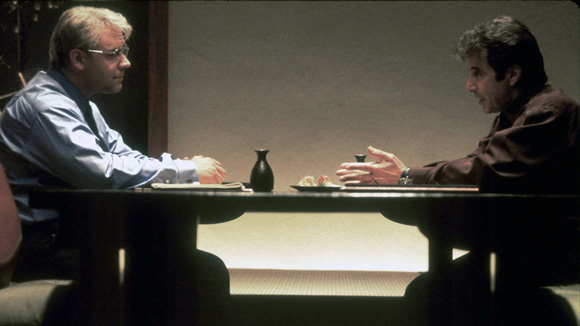
6. The Insider (1999)

Another true story, one that explores the murky area of whistleblowing and whistleblowers as well as the conflict between the business of journalism and the profession of journalism.

Ethical issues highlighted: confidentiality, whistleblowing, law vs. ethics, sacrifice, courage, media ethics, integrity, honesty, trustworthiness, betrayal

Favorite quote: “You’re in a state of conflict. Here’s how it lays out. If you have vital insider stuff that the American people for their welfare need to know and you feel compelled to disclose it and this violates the agreement – that’s one thing. On the other hand, if you want to honor the agreement, it’s simple. Say nothing. Do nothing. The only guy who can figure this out is you, and that’s you all by yourself.” Lowell Bergman (Al Pacino) Continue reading

Accountability Check: Blame Yourselves, Conservatives

…twice shy.

The rhetoric, accusations, insults and breast-beating from conservative talk radio and its audience are every bit as offensive as Michael Moore’s bleating that American voters were morons after the 2004 election. No, it is more offensive—that’s right, more offensive than Michael Moore. Conservatives thoroughly disgraced themselves when they had control in Washington, and have barely improved since. They deserved to lose in 2008 because of their unethical conduct from 2000-2008, and that they are still paying for those years in 2012 is obvious and just. If conservatives don’t like the Obama Administration and its policies, if they think the United States is in deep trouble as a consequence, they should stop blaming voters and admit that it couldn’t have happened without their greed, stupidity, arrogance and incompetence: Continue reading

Morning After Report: Six Steps Forward and Seven Back In The Quest For A Trustworthy Congress

We’ll never get a trustworthy Congress this way.

So much for “the wisdom of crowds.” Last night, knowing (theoretically, at least) that the one completely irrational choice for the nation at this critical juncture in its history is more gridlock born of ideological intransigence, voters sent a dysfunctional Congress back to Washington, opting for a radical conservative House and a radical liberal Senate despite telling pollsters that this was the least trusted Congress in history. Just to make sure compromise and movement would be as difficult as possible, the public also re-elected a President who, whatever his other virtues, has shown neither the ability nor the inclination to engage in effective negotiation with his political adversaries on the Hill. There were plenty of more responsible options available to voters:

  • Commit to the President, and give his party majorities in both Houses of Congress so he could get his policies implemented, for better or worse,
  • Give the Senate back to the GOP, so some of the bills the House has passed can be sent to the President’s desk
  • Sweep everybody out and try a new team to see if it can do any better.

But no. The American public, in its infinite wisdom, opted for nearly the exact toxic partisan mix that has served the nation so miserably for the past two years. Unquestionably, the biggest ethics failure on election night was this one.

Yet there was progress, as voters rejected some of the more unethical officials offering their services. Unfortunately, these wise and ethical choices were greatly diluted by other unforgivable ones. On the plus side: Continue reading