Natasha Leggero’s Stand: Protecting The Jester’s Privilege


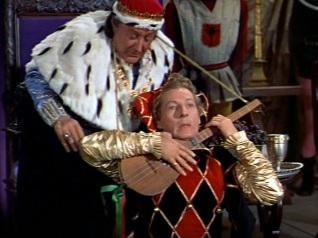
"Sing what you like, Fool. Just make sure I laugh."

“Sing what you like, Fool. Just make sure I laugh.”

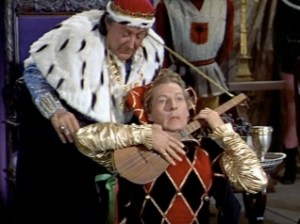
In days of old when knights were bold, it is said, the King’s Fool was able to safely say outrageous, disrespectful things to the sovereign that might get anyone else drawn and quartered. This lucky exemption came to be known as the Jester’s Privilege, and it existed, and exists, for valid reasons. Humor, satire and all the other permutations of comedy are essential to societal sanity, and it makes sense to give the broadest discretion to practitioners of the craft in their efforts to provoke laughter—which is, as Reader’s Digest still reminds us monthly, “the best medicine.” That means that comics should not fear decapitation if their inspiration of the moment fails to provoke the desired mirth, or touches an audience member’s sensitive areas. In addition, the jester is sometimes able to expose a truth that will not be reached any other way.

It sounds like a good rule, and it is a good rule, but as with most ethics-related rules, applying it is difficult. Who gets the Jester’s Privilege…only professional comics, or does it apply to amateurs too? What about non-jesters just trying to be funny? “It was just a joke!” is a classic excuse invoked by insensitive and vicious people, including politicians, when they say something outrageous, as they try to use the privilege without a license, and in so doing, make it less effective for the humorists who really need its protection. Not everyone should assume that they have the full armor of the Jester’s Privilege. Mockery and ridicule are too often used as political weapons of targeted destruction.

Should some subjects be exempt from the Jester’s Privilege? The official position of comics, comedians, wags and wits has long been “No,” but even in Ye Olde Days, jesters sometimes went too far, and ended up with their heads on pikes. The problem any humorless king had after doing this, of course, was finding a jester willing to hazard a joke more edgy than “Why did the king cross the road?” For that reason, I think it’s vital that the Jester’s Privilege be strong and a near absolute. The sin that matters is not being funny, which means topics of unusual sensitivity take care of themselves.For centuries, for example, comics imitated and mocked those afflicted with speech impediments, especially stuttering, with big laughs guaranteed. Somewhere along the line, though, Porky Pig stopped being funny. The absence of laughs was enough to retire him; no heads had to roll.

On NBC’s New Year’s Eve show, the following exchange occurred between host Carson Daly, comic actress Jane Lynch and rising comedienne Natasha Leggero:

CARSON DALY: SpaghettiOs on Pearl Harbor Day, they sent out a tweet featuring their mascot holding an American flag asking people to quote “take a moment to remember #PearlHarbor with us.” It offended a lot of people, corporations glomming on to, you know, sentimental American historic traditions, seemingly looking for people in business. It wasn’t good. But you were offended for another reason.

JANE LYNCH: I’m offended because they were referring to SpaghettiOs as pasta.

NATASHA LEGGERO: I mean, it sucks that the only survivors of Pearl Harbor are being mocked by the only food they can still chew. It’s just sad.

Hilarity ensued, as the NBC gang laughed uproariously. Almost immediately, Leggero was getting flamed all over the social media and the wbs for denigrating the Greatest Generation. Steve Martin, I assume, would have humbled himself and apologized immediately, but not Leggero. Continue reading

The Fifth Annual Ethics Alarms Awards: The Best of Ethics 2013

Ethics Story 2013

I decided to start with the Best in Ethics this year, in contrast to other years, on the theory that it would get things off to a positive start in 2014. What it did, instead, was make me realize how negative Ethics Alarms was in 2013. Either there wasn’t much positive going on in ethics, or I wasn’t seeing it. My thanks to those of you who send me nominations for Ethics Heroes (and other stories); even when I don’t write about them, they are valuable. Please keep them coming. In the meantime, I pledge to try to keep the jaundice out of my eye in 2014. Things just can’t be as dire as they seemed last year.

Could they?

Here are the 2013 Ethics Alarms Awards for the Best in Ethics:

Most Important Ethical Act of the Year:

The U.S. Supreme Court declared the Defense of Marriage Act unconstitutional, paving the way for the universal legalization of gay marriage. Yes, it was a legal decision, but it was also based, as all such culturally important decisions are, on a societal recognition that what was once thought to be wrong and immoral was, in fact, not. This is ethics, an ongoing process of enlightenment and wisdom about what is right and wrong, and the U.S. Supreme Court did its part. Continue reading

Bob Newhart, Legatus And GLAAD: “What’s Going On Here?” Is Tricky To Answer

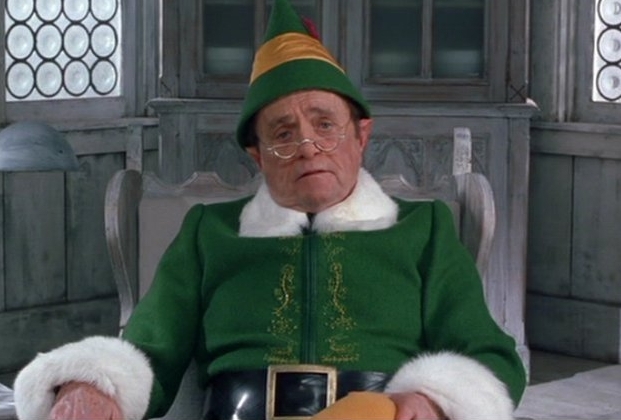
"Hey, Bob---What's going on here?"

“Hey, Bob—What’s going on here?”

The news item about comedian Bob Newhart cancelling an appearance for the Catholic executives networking group Legatus under pressure from GLAAD is fascinating.

From the perspective of Ethics Alarms, it illustrates a peculiar phenomenon I experience often, where a prominent story seems to have been designed by the Ethics Gods specifically to combine and coalesce several issues that have been discussed here recently. For Bob’s travails neatly touch on the issues of pro-gay  advocacy groups attempting to restrict expression they disagree with( The Phil Robertson-A&E Affair, Dec. 19), a comedian being pressured to alter the course of his comedy (Steve Martin’s Tweet Retreat, Dec. 23) and an entertainment figure being criticized for the activities of his audience (Mariah’s Dirty Money, Dec. 23). You would think I could analyze the Newhart controversy by just sticking my conclusions from those recent posts, plus some of the more illuminating reader comments, into my Ethics-O-Tron, and it would spit out the verdict promptly.

It doesn’t work that way, at least in this instance, and that prompts the other observation. In most ethics problems, the starting point is the question, “What’s going on here?”, which forces us to determine the factual and ethical context of the choices made by the participants. Here, the question can be framed  several diverging ways, leading to different assessments of the ethics involved. Thus, asking “What’s going on here?” in the Bob Newhart Episode, we might get: Continue reading

Obamacare, “The March Of Folly,” And The Ethical Obligation To Accept Unpleasant Facts

Charge+of+the+Light+Brigade+Cavalry+Charge

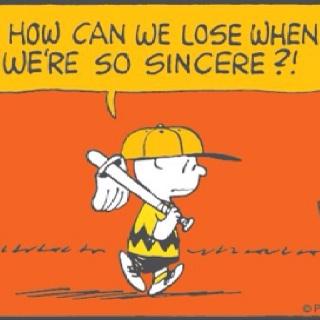
Today, while listening to the furious efforts of such liberal talking heads as E.J. Dionne (NBC’s Meet the Press), Donna Brazile (ABC’s Sunday Morning With George) and Juan Williams (Fox News Sunday) to explain why the Affordable Care Act disaster is not really a disaster and why it should be full steam ahead even as the legislation is unraveling before our eyes, my mind kept jerking back to two disparate sources. One was Barbara Tuchman’s “The March of Folly,” the celebrated historian’s 1985 examination of how governments persist in doomed policies long after it is obvious to all, including them, that the effort is not only futile but disastrous. The other was “Peanuts:”

Sincere

For this is what the bitter-enders regarding the Affordable Care Act have become. Because the absurdly flawed and over-reaching legislation was well-intentioned, and because it was sincerely designed to help people who need and deserve help, and because the hearts of those who rammed it through the process, ignoring warnings, systemic checks and balances, prudence and common sense, were pure, the law just has to work. Former White House spokesperson Robert Gibbs literally said this to David Gregory on “Meet the Press” this morning. There’s just no choice, he said. The administration just has to make it work, that’s all. Anyone who has read Tuchman, or who has been alive longer than Justin Bieber, should get chills to hear sentiments like that. Continue reading

Ethics Dunce: Dallas Cowboys Wide Receiver Dez Bryant

Bryant quits

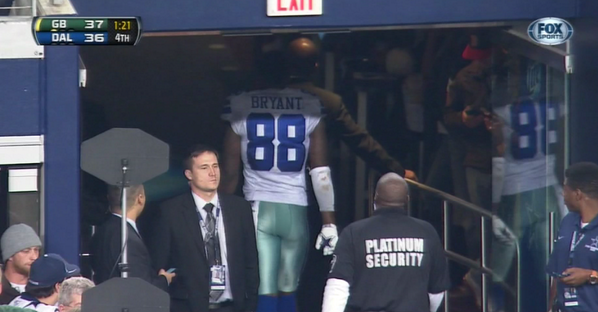
The NFL appears to be having a collective values breakdown. First the Miami Dolphins lose two players in an alleged bullying scandal, and last Sunday, star Cowboy wide receiver Dez Bryant walked off the field with more than a minute left to play in the game. After Dallas quarterback Tony Romo threw the last of his two second-half interceptions to virtually ensure a humiliating come-back defeat at the hands of the Green Bay Packers, cameras followed Bryant as he left his team for the locker room with 1:21 remaining on the clock. Later, he apologized and explained his actions by tweeting:

“I walked back to the locker room because I was emotional…it had nothing to do with my teammates we had it…We fought and didn’t finish”

Oh. What?

That’s no explanation. To reporters, he said that he didn’t want the cameras catching him crying. On the professionalism scale, this is minus 1000. He’s emotional? So what? Suck it up! He doesn’t like to lose? Who does? He couldn’t take it any more? Tough—he’s paid to take it, and damn well too. Continue reading

Comment of the Day: “Ethics Observations On The “Affluenza” Sentence”


I don't think this is the same "Theodoric of York" who authored this excellent "Comment of the Day"...at least I hope it isn't.

I don’t think this is the same “Theodoric of York” who authored this excellent “Comment of the Day”…at least I hope it isn’t.

The heat/ light ratio in the comments to the post about the controversial sentencing of a 16-year-old scofflaw in Texas has been depressing, but among the rational, measured, well-considered and thought-provoking responses by those who actually read the post, this one, by new commenter Theodoric of York,  is a winner. His politeness is especially appreciated among all the posts calling me names that would shock my mother. I hope he comes again, and often.

I’ll have some further comments after he’s had his say. Meanwhile, here is Theodoric of York’s Comment or the Day on the post Ethics Observations on the “Affluenza” Sentence.

Disclaimer the first: I’m not an attorney, nor do I play one on TV. Disclaimer the second: I have no knowledge of Texas law regarding juvenile justice, nor do I have any knowledge of Texas state law regarding negligent vehicular homicide, nor do I have any real knowledge of that state’s laws regarding DUI, homicide, manslaughter or murder. And yes, I know the difference between murder and negligent vehicular homicide, and I am also aware that young Mr. Couch is a minor. Disclaimer the third: I have not read Judge Boyd’s actual ruling, nor have I seen actual video of her sentencing. If someone could provide a link to that (if a link exists), it would be appreciated. That being said: Continue reading

“Affluenza”: The Podcast

inside-maine-podcasts-620x400

Arthur King of WGAN newsradio engaged me in a segment of his show “Inside Maine” this afternoon.

You can, if you are so inclined, hear it here.

Much thanks to Arthur for the chance to chat with him about these issues.

Ethics Observations On The “Affluenza” Sentence (And None Of Them Involve Criticizing The Judge)

Judge Boyd, being judged. (The earlier photo posted was NOT Judge Boyd. I apologize to the judge, readers, and whoever's photo that was.)

Judge Boyd, being judged. (The earlier photo posted was NOT Judge Boyd. I apologize to the judge, readers, and whoever’s photo that was, for the error)

The newsmedia and blogosphere are going bonkers over the sentence given to Ethan Couch, the 16-year-old Texan who pleaded guilty last week to four counts of intoxication manslaughter and two counts of intoxication assault causing serious bodily injury. He had a blood-alcohol level three times the legal limit (Couch had stolen beer from a Walmart), plus traces of Valium in his system, when he lost control of  the Ford F-350 pick-up he was driving (over the speed limit) and slammed into four people trying to fix a disabled car on the shoulder. They were killed; two of his seven passengers were critically injured. Prosecutors proposed 20 years in jail as the proper punishment for Couch, but his attorneys tried a novel defense: they had experts testify that their client suffered from “affluenza,” a malady caused by his rich, amoral, neglectful parents, who taught him (the theory goes) that there are no consequences for anything, if one has enough money.

Rejecting the prosecution’s argument, State District Judge Jean Boyd, presiding over the Fort Worth Juvenile Court, shocked everyone by sentencing Couch to only 10 years of probation—no prison time at all. The gist of the media outrage: once again, the life philosophy of Couch’s sociopathic parents is validated. The rich get away with everything: a poor, minority defendant who engaged in the same conduct would have been imprisoned. This is the injustice of the criminal law system in America.

Maybe. But let’s not get ahead of ourselves.

I think the judge, despite what we are hearing from the media, may have done her job well.

Continue reading

Ethics Dunce: University of Alabama Student NewsPaper Editor Maizie Bryant

Ala Cartoon

I hate to criticize the ethical instincts of a college student, but Maizie Bryant’s school obviously isn’t doing its job regarding ethics instruction, so it is up to the rest of us.

Last week, following the epic and shocking finish to the Alabama Auburn football game—Auburn’s Chris Davis turned defeat into victory by grabbing an ill-advised Alabama field goal attempt with one second left and running it back 109 yards for a game-winning touchdown—the University of Alabama’s cartoonist drew the cartoon above. The message to anyone familiar with the devices of satire  and sarcasm was obvious: this was intended as mockery for the perceived tendency of the President’s critics to blame all misfortunes and problems on Obama. I think it’s a misguided cartoon, in that the message–the “joke”— follows the persistent defensive spin of the Obama Administration, its protective media and the President himself that critics unfairly hold him responsible for those matters  for which he is accountable and should be. (If the cartoon was going to be accurate, it would have shown the President attributing Alabama’s loss to George W. Bush.) Whatever its virtues and deficits, however, one thing the cartoon was not is racist.

How could it be racist? It is not racist to criticize Obama even for those things he is not responsible for—such criticism goes with the office. And the cartoon does exactly the opposite anyway. There is nothing whatsoever racial about the drawing. Anyone who perceives racism in this cartoon is

1. Unable to comprehend satire.

2. Unable to comprehend cartoons.

3. Race-baiting, and/or

4. Nuts. Continue reading

“Would You Rather”: An Ethics-Horror-Health Care-Dinner Party In Hell Movie You May Have Missed

“Would You Rather” is an odd 2012 film that sets up a film-long set of unlikely ethical dilemmas for its characters to solve. Desperate to save her dying brother with expensive medical treatment she can’t afford, the heroine (played by Brittany Snow) finds herself at a dinner party with seven other desperate strangers, hosted by a wacko family of millionaires who will help one of them after the others have been “eliminated” during the course of the evening. As what is described as a game progresses, each contestant is put through escalating rounds of risk, pain and torture in which they must make various Sophie’s Choices, such as…

  • Would you rather administer a painful shock to yourself with high-voltage electricity, or the person next to you? What if that person has been weakened by a previous shock? What if she is in a wheelchair?