Welcome to Carlos Zambrano’s Ethics Fun House!

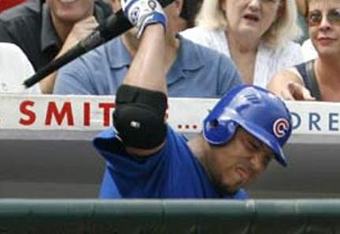
Carlos Zambrano, bludgeoning his career into submission

Carlos Zambrano is the supposed pitching ace of the Chicago Cubs, though after signing a monster multi-year contract for millions, he has shown himself to be inconsistent, over-rated, and nuts. Yesterday the flamboyant hurler gave up five home runs, seemingly attempted to bisect the Braves’ Chipper Jones with a fast ball, and got ejected from the game. Then the ethics fun started:

Ethics Fun #1: Carlos cleaned out his locker, told a Cubs trainer that he was retiring, and left the premises before the game was over. A Major League ethics whiff. Continue reading

Ethics Quiz: Is It Wrong For A Rescuer To Sue The Victim He Rescued?

"OK, Princess, you'll get my bill for this rescue in five to seven business days."

On March 11, 2009, Mark Kinkaid and David Kelley were riding in Kinkaid’s truck when they saw a detached bumper, headlights and all, lying in the middle of Rt. 23.  Smoke was rising up from the highway embankment,  and the two men concluded that someone was in trouble. The truck stopped, and they got out, hopped a barbed-wire fence, made their way down the steep highway embankment, where they saw a flaming Hummer. Theresa Tanner was trapped inside, screaming for help. They forced their way into the vehicle, pried a door open and pulled Tanner out. She was injured and burned, but after weeks in intensive care, survived.

Now Kinkaid and David Kelley are suing Tanner, claiming that the crash was her fault and that she is liable for the injuries they sustained in rescuing her. They have filed a lawsuit asking for damages of at least $25,000 each. “All I know is that I am not the same man I used to be,” says Kelley, a 39-year-old truck driver and father of five, who says the heavy smoke and fire that day damaged his lungs so that he can’t carry a laundry basket up the three flights of stairs in his home.

The law provides a rationale for such a lawsuit. “The precedent is clear: danger invites rescue … and if you’ve acted recklessly or negligently and someone gets hurt rescuing you, you could be in trouble,” says Stan Darling, a tort law specialist. A well-established principle known as “the Rescue Doctrine” holds that if someone is in peril because of their own negligence or recklessness, an injured rescuer can recover damages if he acted reasonably and can prove that his injuries were caused by the rescue attempt.

That’s the law, however. This is ethics, and your Ethics Quiz today is:

Is it ethical for a rescuer to sue the person he rescued? Continue reading

The Widener School of Law Ethics Train Wreck: Political Correctness and Its Carnage

I have posted twice this year about the persecution of  Prof. Lawrence Connell, a tenured associate professor at Widener University School of Law in Delaware, but let me summarize the story for you, lets you missed the original post.

Connell is a criminal law professor, and is adept at concocting memorable hypotheticals to illustrate principles of law, often using celebrities and other people well-known to the students as characters. In one class, he illustrated the dilemmas in determining the crime of attempted murder with this hypothetical:

“The Dean has threatened to fire me if she comes to school one more time and finds that I have parked in her designated parking space. Upset about the possibility of losing both my job and the parking space, I bring my .357 to school, get out of my car, put the .357 into my waistband, walk to the top floor where her office is located, open the door to her office, see her seated at her desk, draw my weapon, aim my weapon, and fire my weapon directly into what I believe to be her head. To my surprise, it’s not the Dean at all, but an ingeniously painted pumpkin — a pumpkin that has been intricately painted to look like the Dean. Dick Tracy rushes in and immediately wrestles me to the ground. I am charged with the attempted murder of the Dean.”

Good hypothetical. But some of Connell’s students complained that the hypo communicated violent attitudes towards women and blacks, since the Dean, Linda Ammons, is both female and black. Continue reading

Ethics Hero: Meat Loaf

Bravo.

I’m sure many of you will react to this with a hardy, “What an idiot!” That’s all right. You don’t understand.

In the grandest tradition of “The show must go on!”, 70’s rock legend Meat Loaf, now 63, finished a concert in Pittsburgh after he fainted on stage and lay unconscious for a full ten minutes. He got up, apologized, explained (obscenely) that it was his asthma, and continued to sing his old hits for a cheering crowd. “Kept suckin’ on his inhaler & singing his ass off,” one fan tweeted from the scene.

Grand. I love it.

In these times when rock acts are often hours late or severely shortened by the artist’s physical or pharmaceutical maladies, and when performers in general often consider it too much of a sacrifice to give their best efforts when healthy, not to mention when they have the sniffles, Meat Loaf’s dedication to his craft and particularly his audience is impressive, although not surprising. Continue reading

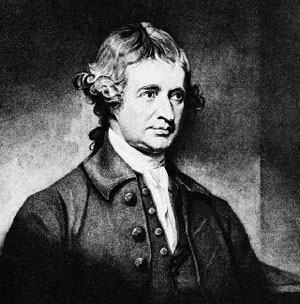
Ethics Quote of the Week: Edmund Burke (1729-1797)

So...any chance of you coming out of retirement, Ed?

“Parliament is not a congress of ambassadors from different and hostile interests; which interests each must maintain, as an agent and advocate, against other agents and advocates; but parliament is a deliberative assembly of one nation, with one interest, that of the whole; where, not local purposes, not local prejudices, ought to guide, but the general good, resulting from the general reason of the whole. You choose a member indeed; but when you have chosen him, he is not member of Bristol, but he is a member of parliament. If the local constituent should have an interest, or should form an hasty opinion, evidently opposite to the real good of the rest of the community, the member for that place ought to be as far, as any other, from any endeavour to give it effect.”

—-Edmund Burke, British political theorist, philosopher and statesman, in his speech to the electors at Bristol, November 3, 1774

Why Burke’s principles are relevant today should be obvious. What is depressing is that I have to resort to quoting an 18th Century statesman to express them, because no current elected officials in the United States seems to be capable of either articulating such ideals or acting accordingly.

Thanks to Ethics Bob Stone for reminding me of one of Burke’s best speeches.

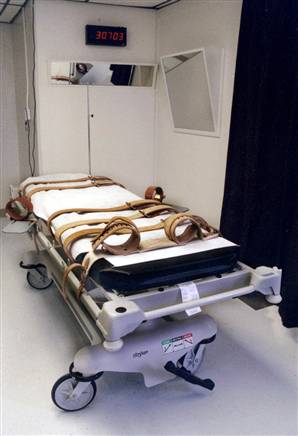
The Ethics of Stopping the Condemned From Accepting Death

In Oregon, a judge has granted death row inmate Gary Haugen’s motion to dismiss his lawyers after they persisted in taking measures to block his execution. They had declared he was not mentally competent to waive his appeals and allow his own state-decreed death to proceed.

Leave it to lawyers to be convinced that they know what’s best, even when it involves someone else’s wishes about his own life and death.

Is the condemend prisoner who approves of his own excecution insane, or courageous?

In an attorney-client relationship, the lawyer is ethically bound to do what the client wants as long as it is legal and within the bounds of the ethical constraints on the lawyer. A lawyer can render advice and should; a lawyer can explain the legal consequences of a course of action. But substituting the attorney’s judgment for that of the client is taboo…except, all too often, in cases like this one, in which a death row inmate decides that letting justice take its course and accepting the state’s death decree is preferable to rotting in prison.  Continue reading

A Tale of Two Heathers

All right, cooking your child doesn't mean you're a bad person.

Heather #1: Ethics Hero Heather Elliott, who saw two small boys locked in a car parked outside a Kroger store in Indianapolis. The temperature was in the 90s and climbing, and the boys looked red-faced and hot. One was screaming and crying, and banging at the closed window. Elliott decided to take action, and began to try to find a way to open the car doors.

Heather #2: Ethics Dunce Heather Query, 21-year-old mother of the two cooking boys, who arrived on the scene just as Heather #1 was trying to rescue her children. “How long were you in that store?’ Heather #1 asked #2.  “It’s 100 degrees outside.” ‘What do you care?” said Ethics Dunce Heather. “Mind your own business” When Ethics Hero Heather responded, “I’m just concerned about your kids. I’m just thinking about the safety of your kids,” Heather #2 attacked her, punching her in the face.

There’s gratitude for you. Continue reading

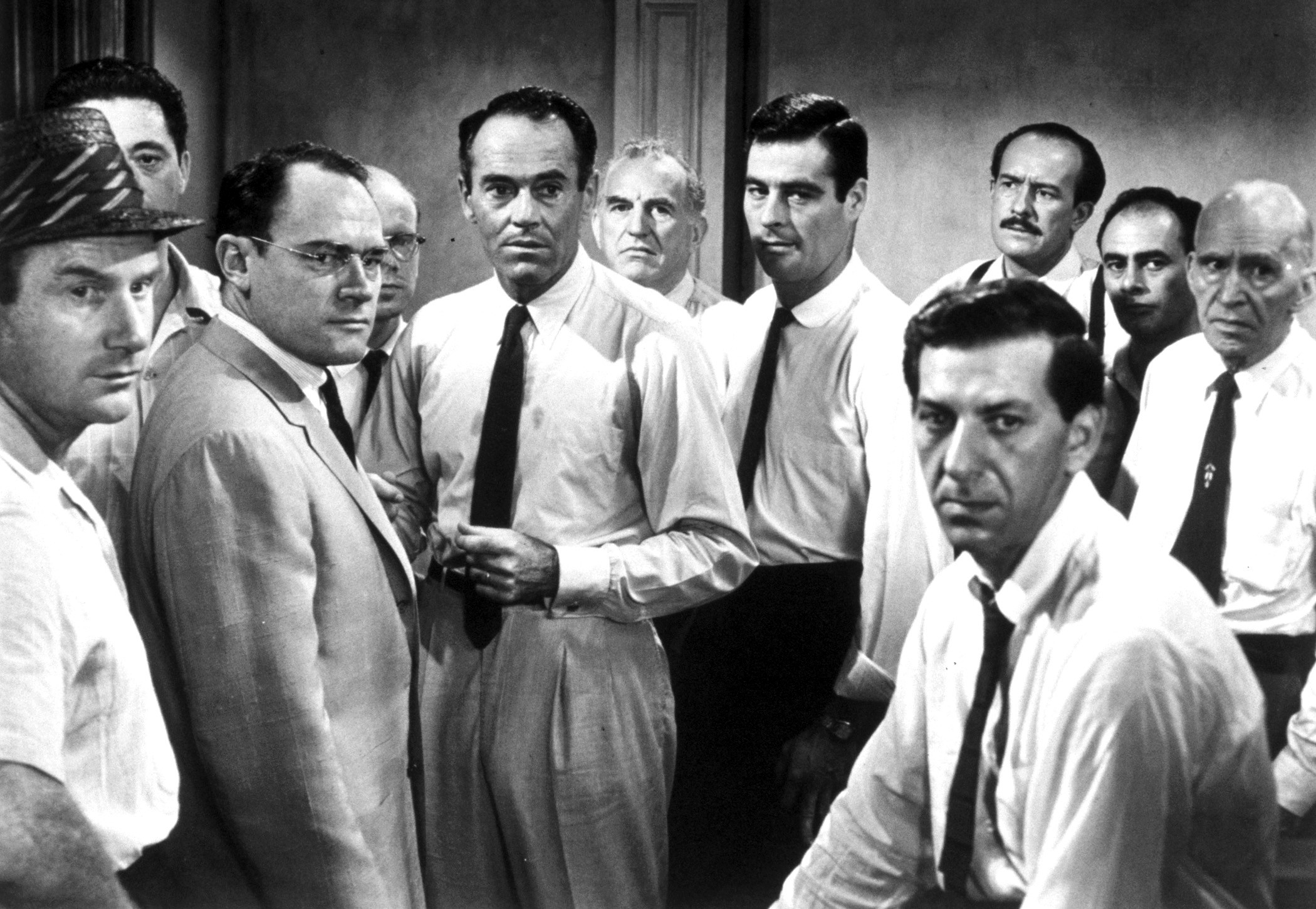
“Twelve Angry Men,” A Million Angry Fools, and the Jury System

Their defendant was probably guilty too.

Ethics Alarms All-Star Lianne Best sent me this link about a member of the Casey Anthony jury who is going into hiding because of all the hate and criticism being directed at jury members and their controversial verdict. Her plight, which must be shared by other members of the much-maligned jury, highlights the unethical, not to mention ignorant, reaction of the public to the Florida ex-mother’s narrow escape from a murder conviction she almost certainly deserved.

The problem begins with publicity. We may need to re-examine the logic behind broadcasting high-profile cases. The combination of live courtroom feeds and quasi-semi-competent commentary gives viewers the mistaken belief that they are qualified to second guess the jury, and they are not. They are not because the jury is in the courtroom, and the viewers aren’t. The jury and TV watchers see different things; individuals communicate different emotions and reactions in person than they do on camera. There is only one fair and sensible way to answer those on-line instant polls that ask, “Do you think Casey Anthony should be found guilty?”, and that is “I don’t know.”

Most of all, the viewers and pundits are not present in the jury room. Continue reading

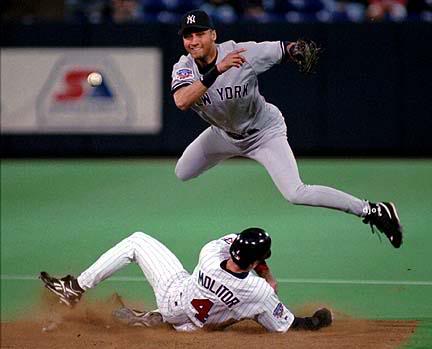
Ethics Hero: Derek Jeter

Roger Clemens is now on trial facing perjury charges. Barry Bonds has been convicted of obstruction of justice. Pacman Jones has just been arrested again; Tiger Woods hasn’t won a golf tournament since he was exposed as a serial adulterer. Through the travails and embarrassments of all of these and many more tarnished athletes who were once looked upon as cultural heroes, Yankee shortstop Derek Jeter has remained a constant— a team player, a clutch player, and an undeniably great player who has maintained his integrity and high values of competition and sportsmanship, never betraying the trust of his fans, his city, his team, or his game.

Yesterday Jeter reached 3000 hits, the watermark of the greatest of the greats, becoming the only lifetime New York Yankee to do so. He achieved the magic number with the flair only special players can muster, rising to a grand occasion like Ted Williams, hitting a home run in his final at bat, or Cal Ripken, marking  his passing of Lou Gehrig’s “iron man” record for consecutive games with a homer. Yesterday, Jeter passed 3000 in a rush, going 5 for 5 with the hit # 3000 being, yes, a round-tripper. Continue reading

Thanking Dick Williams…Finally

The late Dick Williams, doing what great leaders do

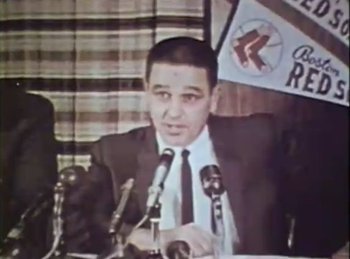
If you are not a baseball fan, or under the age of thirty, you probably never heard of Hall of Fame manager Dick Williams, who died yesterday at the age of 84. I never met Williams myself, but I have been indebted to him for four decades. I never told him the immense difference he made in my life, just by doing his job.

In the winter of 1967, I was a devoted fan of my home town team, the Boston Red Sox, and had been since 1962.  Over that period I had listened to every single baseball game on my transistor radio when a game wasn’t on TV, which was most of the time, or when I wasn’t at the game, which was almost always the case. I was the only person I knew who followed the team, and for good reason: it was torture. The Red Sox were hopelessly mediocre on the way to awful, and hadn’t had a winning season in more than ten years.

It is a great character builder to follow the fortunes of a terrible baseball team. Almost every day, for six months, you are let down, and yet return to the scene of your despair the next, attempting to muster hope while steeling yourself against likely disappointment. You find yourself finding things to appreciate other than winning: the gallant veteran player who “plays the right way” (Eddie Bressoud, shortstop, 1962-1965); the exciting rookie who gives promise of a better future (Tony Conigliaro, right fielder—rest in peace, Tony); the unique talent who is worth watching for his own sake (Dick Radatz, relief pitcher, 1962-1966). These things help, but following a perennial losing team and caring about them is like being punched in the gut four or five days a week without knowing which day you’re getting it.

Since 1965, I had always reserved seats for the first day of the season and one of the last two home games, just in case those last games would be crucial to a (hahahaha!) Red Sox pennant drive. This was especially pathetic, since the team was getting worse. They had finished in a tie for 9th place in 1966, and as the 1967 season loomed, Vegas had them installed as 100-1 underdogs to win the American League pennant. In truth, the odds should have been longer. Nonetheless, I wrote the Red Sox and got my tickets, this time for the next to last day of the season.

The team was full of rookies and near rookies, and appropriately had hired a minor league manager, Dick Williams, to be the new skipper. Williams was something else, however: he was a gifted leader. One day, in the middle of Spring Training, a Boston scribe asked the new manager what the prospects were for the upcoming season. Would the team escape the cellar? Would there be forward progress? Williams’ answer was instant front page news:

“We’ll win more than we lose.” Continue reading