Jumbo! The Substitute Teacher’s Defense

girl-elephant-clip-art

Presenting the first Jumbo* of 2015, and it’s a lulu.

A jury convicted Sheila Kearns, a former substitute teacher in Columbus, Ohio, of four felony counts of disseminating matter harmful to juveniles. For some inexplicable reason—she reportedly told a colleague that “those kids see worse” at home— had shown the film “The ABCs of Death” during five periods of a Spanish class at East High School  in April 2013.The movie consists of 26 chapters, each representing a graphic death and representing a letter of the alphabet:  “E is for Exterminate,” “L is for Libido,” ”O is for Orgasm,” “T is for Toilet,” and so on. You know, perfect classroom fare.

Kearns earned her Jumbo for swearing in court that she had no idea what the movie—titled “The ABCs of Death,” remember—was about.  Her attorney said she never would have knowingly showed it. One of her students. however, testified that Kearns watched the 129-minute movie, which presumably would have given her a pretty good idea that it was about, uh, death. And ABC’s….

After watching the movie the jury became convinced, its foreman told reporters, that Kearns might not have been aware of the movie’s content the first time she showed it, but she would have figured it out by by the second, third, fourth and fifth showings.

Can’t slip anything by these twelve!

*Jumbo: a Jumbo is a special Ethics Alarms award for conduct that emulates the gag from the Broadway musical and film “Jumbo,” in which Jimmy Durante, as a circus clown trying to steal an elephant, is caught red-handed by a sheriff, and asked, “Where are you going with that elephant?” “Elephant? What elephant?,” Jimmy replied.

_______________________

Facts: Seattle PI

In Massachusetts, The Unethical Kind Of Prosecutorial Discretion

The DA explains why he's glad the law was broken. Wait...WHAT?

The DA explains why he’s glad the law was broken. Wait…WHAT?

Prosecutorial discretion is a critical aspect of the prosecutorial function. There are many good reasons for a prosecutor  to charge an individual with a crime in a particular case, and among the factors a prosecutor may legitimately consider in making this decision are, according to the American Bar Association’s ethical guidelines:

  • whether there is evidence of the existence of criminal conduct;
  • the nature and seriousness of the problem or alleged offense, including the risk or degree of harm from ongoing criminal conduct;
  • a history of prior violations of the same or similar laws and whether those violations have previously been addressed through law enforcement or other means;
  • the motive, interest, bias or other improper factors that may influence those seeking to initiate or cause the initiation of a criminal investigation;
  • the need for, and expected impact of, criminal enforcement to punish blameworthy behavior; provide specific and/or general deterrence;
  • provide protection to the community; reinforce norms embodied in the criminal law; prevent unauthorized private action to enforce the law;
  • preserve the credibility of the criminal justice system; and other legitimate public interests.
  • whether the costs and benefits of the investigation and of particular investigative tools and techniques are justified in consideration of, among other things, the nature of the criminal activity as well as the impact of conducting the investigation on other enforcement priorities and resources
  • the collateral effects of the investigation on witnesses, subjects, targets and non-culpable third parties, including financial damage and harm to reputation
  • the probability of obtaining sufficient evidence for a successful prosecution of the matter in question, including, if there is a trial, the probability of obtaining a conviction and having the conviction upheld upon appellate review; and
  • whether society’s interest in the matter might be better or equally vindicated by available civil, regulatory, administrative, or private remedies.

None of these suggest that the prosecutor’s personal sympathy with the motives of the lawbreaker is a sufficient or ethical reason not to charge when a serious crime has been committed. That, however, appears to be how Bristol County (Massachusetts) District Attorney Sam Sutter sees his role: arbiter and enabler of righteous criminal activity. Continue reading

Ethics Quiz: Blaming the Messenger

"Hey, I just deliver the boxcar contents to someplace called "Aushwitz." It's not my business what's in them..."

“Hey, I just deliver the boxcar contents to someplace called “Aushwitz.” It’s not my business what’s in them…”

In 2013, the United Parcel Service Inc  agreed to forfeit $40 million in fees that it had received from illegal internet pharmacies shipping bootleg prescription drugs using UPS services, in exchange for a non-prosecution agreement with the U.S. Department of Justice. UPS also agreed to put policies and procedures in place to prevent illegal online pharmacies from distributing drugs through its shipping services in the future. Naturally, the faux pharmacies moved over to FedEx, and when that shipping service refused to cut a similar deal with DOJ under threat of prosecution, the government persuaded a Federal grand jury to indict the company for delivering drugs associated with internet pharmacies, and thus being a willing party to a criminal enterprise.

Now many are cheering FedEx as, in essence, an ethics hero for refusing to knuckle under to the government and accept responsibility where it has none. There are two arguments against the government’s prosecution of FedEx. One is that its natural result would be to require shipping companies to open every parcel and be certain that nothing illegal is inside. The other is that trying to eradicate crime and other misconduct by creating secondary service liability is inherently unjust. By pressuring credit card companies  to refuse payments to companies the government regards as breaking the law, for example, alleged illegal enterprises can be put out of business without the government having to meet its burden of proof to show they really are breaking the law. If the government can intimidate carrying companies into refusing the business of illegal pharmacies, then the illegal pharmacies never have to be prosecuted. There is a third argument, but it is irrelevant: that the government shouldn’t be prosecuting the crime of providing prescription drugs over the internet at all.  This is an entirely different and separate issue: The point is that the shipments are illegal now, and FedEx is facilitating them.

Your Ethics Alarms Ethics Quiz to begin what I sense will be a busy ethics week is…

Is FedEx an Ethics Hero?

Continue reading

Ethics Heroes: The Massachusetts Supreme Judicial Court

Michael Robertson: pervert, creep, outrageous abuser of women who deserves to be shunned, despised and condemned by all decent people. But a criminal? Not yet...

Michael Robertson: pervert, creep, outrageous abuser of women who deserves to be shunned, despised and condemned by all decent people. But a criminal? Not yet…

The degree to which our media pundits fail to grasp the essential nature of the rule of law remains confounding, and this is another in a long line of examples. Worse, the lower court in this weird case failed to grasp it as well.

You see, there is conduct that is obviously wrong, which we call unethical. Some of that conduct is so wrong, so harmful, and so difficult to discourage with social opprobrium and informal enforcement alone that we pass laws against it, both to signal strong disapproval but also to add serious negative reinforcement, in the form of tangible punishment, to the mix. Then the wrongful conduct becomes both unethical and illegal. If we skip the essential intermediate step of writing and duly passing the law that designate the conduct as illegal, however, we have established a dangerous, indeed frightening precedent. Then we have created a society where one can be imprisoned or fined for conduct that is regarded as unethical without a law in place that empowers the state to take such actions against citizens who engage in it. Ethics, unlike law, especially on the margins, is never etched in stone. Once society starts imprisoning individuals based on ethics alone, none of us are safe.

Yet this morning I was subjected to the protests of one TV commentator after another who derided the absolutely correct decision of the Massachusetts Supreme Judicial Court to uphold this principle by throwing out the conviction of Michael Robertson, a sick sleaze-ball who was arrested in August 2010 by Boston transit police who had set up a sting after getting reports that he was using his cellphone to take photos and video up female riders’ skirts and dresses: Continue reading

Ethics Dunce (Advice Columnist Division): “Dear Prudence”

Hmmm...refreshing! And strangely tangy!

Hmmm…refreshing! And strangely tangy!

Here is my guess: nearly 100% of all people with two ethics alarms to rub together would be able to answer this question correctly, responsibly, and within about 1o seconds of thought. The question, in essence:

‘I worked as a nanny for a couple I didn’t like, so to make myself feel better, I secretly poisoned them. Now I work elsewhere, and I hear that they are both ill and doctors are stumped. I feel kinda bad about it. What should I do?’

The obvious answer: “For God’s sake, you idiot, tell them what you did, so the doctors can treat them! Why are you wasting time talking to me? They could die, and you would be responsible!”

But this answer isn’t the one given by Emily Yoffe, Slate’s serially incompetent and unethical advice columnist. She responded, in a live online chat that uncovered this vile supplicant, who confessed to routinely dipping her employers’ toothbrushes in the toilet and periodically spiking their bedside water with the same fecal solution, by writing this:

“Part of me would love to tell you to rush to confess. However, I will extend you a courtesy that you didn’t give your “inconsiderate” and “rude” employers. That is, while I think this couple should know the source of their illness, confessing could leave you open to potential prosecution. You may deserve it, but you need to consider the stakes here.”

That part of Emily, apparently, is the sensible, compassionate, ethical part, and it was over-ruled by the unethical, irresponsible, dumb part. The lawyer, if he or she is more ethical than Emily, a good bet, will tell the Potty Poisoner that she should confess immediately in case an E Coli infestation is what is making the couple ill, particularly because they might die, greatly increasing her risk of serious criminal penalties as well as, you know, ending their lives and leaving their children parentless.  The lawyer will also explain all the possible scenarios resulting from what Emily seems to dread, honesty and accountability. Even lawyers, who are required to place their clients’ best interests first, are not supposed to advise them to cover up their crimes and allow their victims to perish. Advice columnists are definitely not supposed to do this, and are duty bound to give wise and responsible advice that is in the best interests of all concerned, not just their correspondents, who are likely to be, in general, less than bright, ethically-clueless, and in need of nannies themselves.

“Dear Ethics Alarms: I’m an advice columnist and I told someone who said that she had been poisoning her employers with fecal matter that she didn’t need to ‘fess up, even though they became deathly ill. Now she has written me a follow-up, thanking me for my advice since the couple died, leaving several young children orphaned, and she would have been in big trouble if she had come clean. Now I feel guilty. Should I?”

Yes.

______________________
Pointer: Fark

Source: Slate

Ethics Quote Of The Month: Dr. Jonathan Gruber

“We currently have a highly discriminatory system where if you’re sick, if you’ve been sick or [if] you’re going to get sick, you cannot get health insurance. The only way to end that discriminatory system is to bring everyone into the system and pay one fair price. That means that the genetic winners, the lottery winners who’ve been paying an artificially low price because of this discrimination now will have to pay more in return. And that, by my estimate, is about four million people. In return, we’ll have a fixed system where over 30 million people will now for the first time be able to access fairly price and guaranteed health insurance.”

—– Dr. Jonathan Gruber of MIT, an economics professor who is among the designers of the Affordable Care Act, a.k.a Obamacare. He was interviewed by NBC’s Chuck Todd regarding the troubled law’s problems.

lottery

Could it be that the act of getting involved with this administration turns even non-politicians into deceivers and liars? For an economist to talk so deceitfully and manipulatively is distressing. He, of all people, certainly knows how insurance works, and has to work. The insurance company accepts, in essence, wagers from its insured, in the form of premiums, that they will “win” by incurring health care costs that require more funds more than the accumulated “wagers.” The insurance company gambles that it will “win” by the insured remaining relatively healthy, so that the premiums (and whatever investment income they generate) exceed what the company has to pay in medical costs for that individual. The only way a company can keep providing insurance is to win more bets than it loses.

Saying that an insurance company is “discriminating” (in the unjust and biased sense) when it refuses to  accept a wager that is virtually certain to win is like saying that a poker player is engaging in discriminatory conduct by refusing to play with a new player who brings a royal flush to the table with him. It is not discrimination to refuse to lose money, and Gruber knows it. But  like an expert liar, as I must presume he is, he plants a false definition of discrimination at the beginning of his discussion and then treats it as an agreed-upon description of what is occurring. Not selling something to a customer who can’t afford a fair price is not discrimination, and refusing to gamble with someone who is assured of winning is also not discrimination. But discrimination is something that everyone regards as wrong, unfair, and unlawful, so that is how the lawful operation of insurance companies is framed by this clever, learned, dishonest man.

I no longer trust Dr. Gruber, nor should you.

His statement is of additional interest, however, because it starkly defines the unique Progressive definition of “fairness,” by his repeated use of lottery imagery to describe the fact that some people, through no fault of their own, have fewer advantages than others, while those others, often through no virtue of their own, have more resources and opportunities. Progressives regard this as inherently wrong and unfair, and so unfair that it must be remedied by obtrusive government interference. The rest of America regards this as “life.” Continue reading

Racism, Abuse of Power, And Grosse Pointe Abu Graib

This story is so upsetting, I recommend periodically checking this picture to get you through it. It helped me.

This story is so upsetting, I recommend periodically checking this picture of a Jack Russell puppy to get you through it. It helped me, anyway.

This, I think, should be a crime, and perhaps it is, a civil rights law violation. The police officers who perpetrated this outrage on African-Americans—I really don’t care what the victims did, from petty theft to mass murder, it doesn’t matter–need to be jailed, and for a long, long time. I wish they could be deported. They aren’t Americans. They are viruses.

In Grosse Pointe Park, the ritzy section of Detroit—which sounds like an oxymoron, I know—police forced African-American citizens to sing, dance, and make noises “like a chimp.” Then, like idiots everywhere, these cops posted the videos of this racist cruelty online. They were proud of it, you see.

The racism alone is sufficient cause to fire these villains, but bigotry alone isn’t a crime. Using police power to humiliate another human being, strip him of dignity and attack the essence of his humanity is a crime, whether it happens to fit the specifics of any statute or not. What the Detroit police did was the domestic, racist equivilent to what was done to the Abu Ghraib Muslim prisoners, which Rush Limbaugh, to his permanent shame, called “just fooling around.” Treating another human being as a toy, a prop, and a puppet isn’t fooling around, it is dastardly. Showing such contempt and disrespect for American citizens based on color, creed, or on any basis smacks of a domestic Kristallnacht. When the military or the police do it in our name, it implicates all of us, undermines trust in government, impugns the honor of good and professional police officers and soldiers, and divides communities, races, and civilizations.

It has to be a crime. And every second those officers are allowed to keep their badges disgraces Detroit, Michigan, and the United States of America.

_____________________________________

Facts: New York Daily News

Ethics Alarms Presents …The Kaboom! The First Recipient: Fun Mom Judy Viger

kaboom

With this post, I am introducing the Kaboom!, a special category reserved for cases that should require no ethics commentary from me, since the ethical breach is beyond obvious, but where the individual’s ethics alarms have proven so spectacularly useless that attention must be paid.

The name of the award derives from the sound my head made as I read the story, because I don’t know how to spell the sound my brains made when they hit hit the ceiling and then slowly fell to the floor.

The first Kaboom! goes to the most deserving Judy Viger, 33, of Gansevoort, New York. Viger is taking a plea deal after being charged with five counts of endangering the welfare of a child. Just for fun, let me tell this story in stages, and let me know when you hear the Kaboom!

1.Police arrested Viger for after she arranged to have two strippers perform at her son’s 16th birthday party in November.

2. Some of the party-goers were 14.

3. The two women performed lap dances for the male teenaged guests, and the birthday boy, of course.

4. Viger did nothing to stop it.

5. One teenaged boy sustained a bitten nipple.

6. Viger then posted pictures of the proceedings on Facebook.

How did you do?

My head went off at #1.

_______________________________________

Pointer: ABA Journal

Facts: Post Star

Toronto’s Pathetic Mayor: What’s The Question?

If Chris Farley had been elected mayor....

If Chris Farley had been elected mayor….

I’ve received a wave of emails from helpful readers, with links to news reports about Canada’s shame,  drunk, crack-smoking, lying Toronto mayor, Rob Ford. “Write about this!” they suggest.

Write what?

The mayor of a major Canadian city is a law-breaker, a substance abuser, an addict, and ill. When your defense to a video showing you smoking crack is “I was so drunk, I don’t remember it,” that should say it all. He initially lied about the allegations of his crack use. He calls up radio stations in a drunken state. He is caught on tape drunkenly screaming that he want to murder someone. His various public stances to keep his job have ranged from shameless appeals to pity— “I hope none of you ever find yourself” in such a state, a reverse Golden Rule tactic that amounts to arguing “Do unto others as you would want others to do unto you if you were the irresponsible, addict mayor who will do and say anything to stay in office”—to that old stand-by, Bill Clinton’s “I’m just going to concentrate on doing my job and accomplishing what the voters elected me to do,” as if they elected Ford to embarrass the city. Continue reading

Can A Prostitute Be Raped?

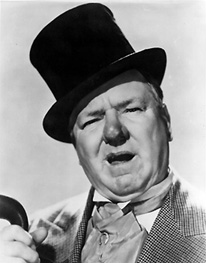
On Nov. 5, we'll find out if W.C. Fields' low opinion of Philadelphia was justified...

On Nov. 5, we’ll find out if W.C. Fields’ low opinion of Philadelphia was justified…

An unethical and incompetent judge in Philadelphia doesn’t think so, thus making a powerful argument against electing judges, being a prostitute, and living in Philadelphia.

Philadelphia Municipal Court judge Teresa Carr Deni ruled that the 2007 rape of a prostitute at gunpoint was merely “theft of services.”The  woman had agreed to meet a man have sex with him for the bargain fee of $150. He asked her if his friend could join in the fun for an additional $100, and she agreed. When these two sterling citizens arrived for the appointment, however, they held her at gunpoint and forced her to have sex with them free of charge.

If this isn’t rape when a prostitute is involved—forced, unconsented intercourse, through the threat of deadly force—then any prostitute can be raped at will, with the worst charge being “theft.” Selling sex doesn’t convert sexual battery into nothing, a non-crime, once consent for that sale is withdrawn. If you know someone is preparing to sell blood to a blood bank, and you attack him, subdue him, and drain his blood to sell yourself, is this merely theft, or a crime of violence? If he was going to be an organ donor, and you rip out his kidney, is that just theft? There is no route through law or reason that allows us to ignore the fact that a woman was forced to have sex with two men without her consent. Judge Deni clearly has a monstrous bias against prostitutes, and thus believes that they shouldn’t receive equal protection under the law. When criticized, her rationalization was that prosecuting the men for rape “minimizes true rape cases and demeans women who are really raped.” Continue reading