CBS’s “Blue Bloods”: Endorsing the Saint’s Excuse and Polk County Justice


Time for the department ethics training, Chief. You should sit in on it too...

Time for the department ethics training, Chief. You should sit in on it too…

“Blue Bloods,” Tom Selleck’s New York police family drama on CBS, began as a paean to the core values of public service, nobility, justice, courage and honesty as it chronicled the work and lives of three generations of the Reagan family. The Reagan men are all cops, the one female is a DA, and Selleck is the paternal Chief of Police. Based on last night’s episode, “The Truth About Lying,” series creators Mitchell Burgess and Robin Green have permitted the show’s writing staff to be infiltrated by the Dark Side in its fourth season, and now its calling cards will include the enthusiastic promotion of the abuse of power and the celebration of lying as long as it’s all for a good cause. That’s the Saint’s Excuse, one of the most deadly of the rationalizations, in which “good” people decide that they are empowered to do unethical things in the pursuit of what they believe are worthy goals. The Saint’s Excuse is something of a theme in the United States these days. Now “Blue Bloods” is making sure popular culture spreads the word.

The episode, which you can watch here, was ostensibly about Selleck’s Chief’s efforts to foil the city’s newly appointed “inspector general,” installed in the wake of a “ripped from the headlines” court rejection of an effective “stop and frisk” program by New York’s finest. Continue reading


What’s Wrong With The Florida Cyber-Bullying Arrests? Everything.

“Bullying, as they are supposed to teach you in school, is when someone uses their superior power to subordinate and humiliate someone weaker than themselves. This is wrong, and it is always wrong.”

The Sheriff of Polk County...wait, no, that's Tom Cruise, searching for pre-criminals in "Minority Report." Well, close enough.

The Sheriff of Polk County…wait, no, that’s Tom Cruise, searching for pre-criminals in “Minority Report.” Well, close enough.

This is a quote from an Ethics Alarms post earlier this year, about a school that forced students to do embarrassing things in a warped effort to discourage bullying. There is a disturbing societal consensus brewing that opposition to bullying justifies all sorts of extra-legal, unethical, excessive, abusive and unconstitutional measures, and there are a dearth of persuasive voices point out that this consensus is dangerous and wrong. Those potential voices are being stilled by a kind of cultural bullying. How can you defend bullies! Look at the victims! Think of the children! What a horrible, unfeeling person you are!

This is the only explanation I can generate for the fact that none of the commentary and media coverage regarding the Florida arrests of a 14-year-old girl and a 12-year-old girl on trumped-up charges of “stalking” following the suicide of Rebecca Ann Sedwick pointed out that the arrests were a travesty of the justice system, an abuse of power, child abuse, legally and constitutionally offensive, and, yes, bullying of a different kind. Continue reading

From Oklahoma, A Remarkable Ethics Lesson

hartmanparkinglot_610x458

Young Christian Lunsford was disgusted when he saw the TV report about the mugging of seventy-eight-year-old Tona Herndon of Bethany, Oklahoma, robbed while visiting the gravesite of her husband of 60 years, who had died just two weeks earlier. It wasn’t merely that the mugger took a purse and $700 from a vulnerable and grieving woman, but that the culprit was Christian’s father. He had been quickly arrested, and his mug shot, shown on TV, was all-too-familiar to his fifteen-year-old son. Christian’s parents divorced when he was two, and his contact with his father had been minimal as the elder Lunsford kept ending up in jail. The teen had recently heard from his dad, however, when he sent Christian $250 to pay for his participation in a school band trip.

The latest crime, however, moved Christian to do something exemplary. He contacted Tona Herndon and asked her to meet him in a church parking lot. When she did, he mugged her too, as a tribute to his father.

No, that’s not what happened: I was just messing with you. Continue reading

And You Thought “North West” Was A Terrible Name To Give A Kid…

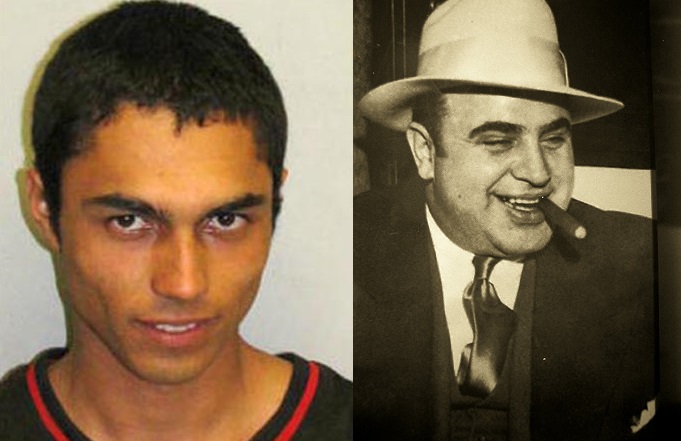
Alkapone and his namesake

Alkapone and his namesake

Being the daughter of Kanye West and Kim Kardashian is handicap enough, one would think, without having to go through life branded with the name “North West.” But in the annals of self-indulgent and reckless child-abuse-by-birth-certificate, what the rapper and the whatever-the-hell-she-is inflicted on their love child is small potatoes compared to the cruel and horrible name affixed to this unfortunate:

From Hawaii News Now:

“Big Island police have charged the man arrested in connection with a carjacking Wednesday night in Hilo. Alkapone Cruz-Balles, 19, who has no permanent address, was charged late Friday afternoon (July 19) with first-degree robbery and unauthorized control of a propelled vehicle…A Hilo man was ready to get into his car at the Target parking lot of on Puainako Avenue when police say Cruz-Balles brandished a weapon and threatened the victim. Police say he then took the keys and took off in the car….”

“Alkapone Cruz-Balls?” Continue reading

Unethical Quote of the Week: Economist Paul Krugman

“…The prostitute thing is embarrassing and painful to think about, but not a disqualification for public office. David Vitter is still in the Senate, and in internal LA Republican politics is apparently squashing the very pious Bobby Jindal like a bug…I know that opinions differ about just how effective Spitzer’s confrontations were. But at least he tried — which is more than you can say about almost anyone else in our political life. Basically, the malefactors of great leverage were bailed out and went right back to being bad guys again, and everyone in public life pretended that nothing had happened. That, I think, is why there’s a surprising reservoir of support for Spitzer; people remember him as someone who showed at least some of the righteous outrage that has been so wrongly absent from our national discourse. It’s a useful reminder, and it’s why I regard his entry into the race, win or lose, as a good thing.”

— Inexplicably revered progressive economist and New York Times columnist Paul Krugman, discussing the re-entry of Eliot Spitzer into New York state politics on his blog. Spitzer, despite having to resign from office as governor because he was caught partaking in the services of a prostitution ring—the same kind of enterprise he aggressively prosecuted as state attorney general, is now running for comptroller.

Explain, please: How can anyone rely on the judgment of someone whose ethical reasoning is this miserable?

Explain, please: How can anyone rely on the judgment of someone whose ethical reasoning is this miserable?

I do not understand how anyone can read or take seriously Krugman’s opinions on budget management and national affairs—he thinks that the national debt is no big deal at the moment, a position that is essential to Obama-enabling—when the favorite economist of progressives and Democrats can write something as indicting as the quote above. The post is appallingly irrational, irresponsible and unethical: it suggests that the author’s judgment is miserable, that his ethics are negligible, that his biases rule his intellect….and that, apparently with justification, he is confident that the Park Avenue liberals who quote him at dinner parties won’t lose an ounce of respect for or abandon an inch of reliance regarding a champion who believes such rot. Continue reading

James Lipton: Proud To Be A Pimp

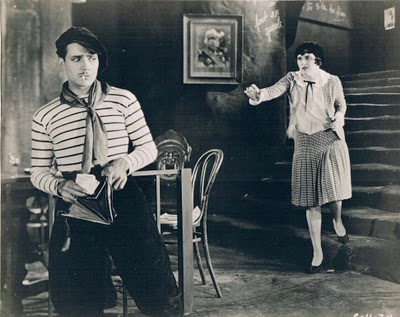
James Lipton, circa. 1951

James Lipton, circa. 1951

James Lipton, he of the most pompous interview show in the universe, Inside the Actor’s Studio, has decided to celebrate that franchise’s 250th episode by cheerily revealing that he worked as a pimp in Paris in the 1950’s. This was apparently legal there and then, and Lipton, he tells us, was out of a job, so why not earn your money by recruiting desperate women into accepting cash to have sex with strangers, and take a cut of their proceeds for your trouble?

Lipton tells Parade:

“I had to be okayed by the underworld; otherwise they would’ve found me floating in the Seine.The great bordellos were still flourishing in those days before the sheriff of Paris, a woman, closed them down. It was a different time.”

Oh…you mean there was a time when dealing with organized crime was good? There was a time when it was admirable to trap innocent young waifs into the sex trade because of their poverty? To facilitate adultery and infidelity? To tell women who they had to have sex with, and accept a percentage of their fees for doing so? There was a time when doing all of this didn’t mean you were an exploitive, venal, amoral, low life?

I don’t think so. I don’t think there has ever been such a time, no matter what France may think. Continue reading

Bloomberg Is Right About Teen Pregnancy, We Are Right To Condemn It

murphy_Brown3

No, Candace, we haven’t forgotten Murphy and her amazing vanishing baby.

Conduct that is harmful to society needs to be rejected and condemned by society, and society has limited options for accomplishing that. It can make destructive and harmful conduct illegal, but some kinds of conduct can’t be illegalized. Uncivil speech, for example, is ugly and causes discord, and the only way to make it less common is to let those who engage in it know that neither they nor their communication habits are appreciated. The Supreme Court has decided that we can’t make lying illegal, but we certainly have the power to make habitual liars feel unpopular.

When society sends mixed messages about destructive conduct, or worse, tell those who engage in it that they are still wonderful people and that their conduct might be just fine for them, it poisons itself. There is a solid, practical reason for Kant’s Rule of Universality, which holds that conduct that would be lead to societal catastrophe if everybody engaged in it is wrong should be discouraged. If everybody doing it would be bad, it’s a good bet that the fewer doing it, the better.

No toxic social conduct illustrates the folly of hesitating to condemn it more vividly than unwed pregnancy, particularly teen pregnancy. While shunning and shaming pregnant teens was undoubtedly cruel, sending the message that unwed motherhood is socially acceptable is arguably crueler. This kinder, gentler response, combined with the warping influence of wealthy celebrities proudly parading their “baby bumps” courtesy of equally rich celebrity boyfriends, has led to an explosion of births without wedlock, especially in the black community. The children of these non-marriages are handicapped from birth, more likely to fall into poverty,substance abuse, illiteracy and crime; the mothers involved less are likely to succeed in careers or life; government programs, funded by taxpayers, are too often required to mitigate the damage. Continue reading

Ethics Hero: Lawyer/Blogger Scott Greenfield

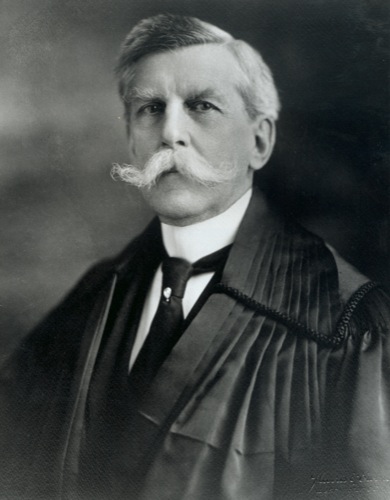
No question: Justice Holmes would think Scott Greenfield is a good man.

No question: Justice Holmes would think Scott Greenfield is a good man.

Criminal defense lawyer and caustic, if trenchant, blogger Scott Greenfield stakes out a noble and correct stand on legal ethics and ethics generally in a superb post titled, “What Tastes Good To You?” Read the entire post, but his essay springs from a question that has been posed in various forums (including,  in slightly different form,the Jack Lemmon comedy “How To Murder Your Wife”), to wit:

If you could commit any crime and get away with it, what would it be? 

Greenfield’s answer, the ethically correct one, is “none” : “Just because we can get away with it isn’t a reason to do wrong.” Thus does he definitively separate himself from what Justice Oliver Wendell Holmes referred to as “the Bad Man” in his famous 1897 essay, “The Path of the Law.”  For Holmes’ “bad man” never breaks a law, but only because he abhors punishment.From this starting point, Greenfield considers a professional debate about whether the legal marketing tactic (as determined by the courts) of buying up another firm’s name as a web “key word” to lead customers to one’s competing firm is “unseemly,” which is to say, unethical, though not technically unethical under the professional rules of conduct. One of the defenders of the practice describes the division on the issue to a difference in “taste,” leading Greenfield to aim carefully and fire: Continue reading

The Costs of Ignorance and Stupidity: Not Unfair, But Obvious

Now, if I were a psychic, I would have seen this argument coming...

Now, if I were a psychic, I would have seen this argument coming…

A rather uncontroversial Ethics Alarms post from September is suddenly getting bombarded with links from Reddit, heaven knows why. This was the article where I took The Learning Channel to task for building a reality show around a psychic (a.k.a “fraud”) and advertising it as if her abilities were real (Irresponsible TLC, Promoting Ignorance and Fraud). I appreciate the traffic when Reddit focuses on a post, but the experience is usually annoying. Reddit readers never make comments here, but make snarky, often ill-informed snipes on their own site, where it’s too much trouble to set them straight.

One of the Reddit critics of the Ethics Alarms post had a complaint that surprised me. He wrote…

“For an article about yelling at someone who makes unverified claims, it sure starts off with a doozy.

‘Public ignorance and stupidity costs the nation billions of dollars, kills untold people in the hundreds of thousands, vastly increases crime and unemployment, and generally makes life far less productive, safe and enjoyable for the minority that are not ignorant and stupid, as well as for those who are.'”

It never occurred to me that anyone would find that statement “unsubstantiated,” or even debatable. To begin with, it is obviously an opinion, though there are few opinions I am more certain about than this one. It is also not remotely like the assertion of a psychic that she communicates with the dead, which isn’t just an unsubstantiated claim, but an outright lie. Continue reading

Ethics Quiz: What Rationalization Is This?

A gang of Washington, D.C. rocks, plotting an attack on city buses.

A gang of Washington, D.C. rocks, plotting an attack on city buses.

If living near the District of Columbia doesn’t transform you into a right-wing nut, it’s probably because you quickly learned not to read the columns in the Washington Post Metro Section. There refugees from the darkest, looniest corners of the Sixties have held sway for about fifty years, making illogical, emotional, angry and reliably leftist arguments, often in semi-literate form. The Post obviously believes, with good reason, that these would embarrass the paper if they were allowed to invade the Op-Ed Page, so they are buried in the middle of the paper.

The Post has a passel  of these writers, who only occasionally venture into the land of the fair and reasonable. About 30% of the time, their creative output is devoted to race-baiting. I decided decades ago that my sanity and political equilibrium depended on my ignoring these daily sanity-bombs, way back in the days when a community-revered wacko named Dorothy Gilliam regularly defied logic in her 700 word rants. I now only learn about the most absurd of these columns only when a Post letter-writer flags one of them as particularly mind-blowing.

Coutland Milloy has been the main offender on the Post’s Metro page since Gilliam retired to the Big Angry Leftist Padded Room in the Sky, and he was in top form last week, when he addressed the recent problem of city buses being pelted with stones in some of the poorer areas in D.C. Read his piece if you dare: his basic premise was that it is significant that at a public hearing about the problem, nobody “spoke up for the kids” or discussed “why” the rocks were being thrown. You don’t really have to read the essay to guess its larger thesis: the areas are poor, city resources are misaligned, gentrification is breaking up neighborhoods, kids are frustrated, so it’s not the kids fault that they are attacking Metro buses. In the printed version of the Post, his column was titled “Don’t Pin the Rock Problem On The Kids.” Continue reading