This Is The Way It’s Done, Ethics Warriors….Well, ALMOST

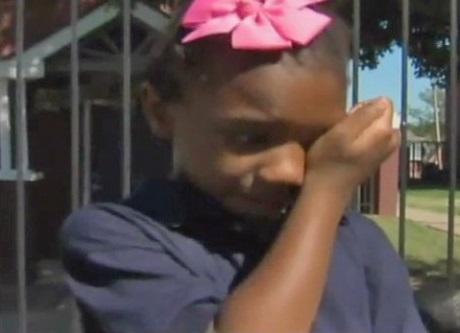
Quit being distracting, Triana...

“Quit being so distracting, Triana…”

Deborah Brown Community School in Tulsa, Oklahoma forbids its students from wearing their hair in dreadlocks, afros “and other faddish styles.” Terrence Parker, a barber, challenged the rule by sending his 7-year-old daughter Tiana to class there wearing her hair in dreadlocks. She was told that she could not attend school with her hair in a (stupid and ignorant) rule-violating style. Tiana is now attending another school, while the story, reported on the web in various sources, is holding the school up to well-earned ridicule for a dress code that if not racist in intent, is racist in impact. Eventually, I would think, the school will be shamed into seeing the error of its ways, which is enforcing an inappropriately narrowly-viewed, culturally-biased interpretation of what constitutes a “presentable” hairstyle as opposed to one that might “distract from the respectful and serious atmosphere [the school] strives for.”

This is the way unethical rules get changed. Parker confronted the rule by violating it, and accepted the penalty while publicizing the unjust rule to the greater community, which is making its disapproval known. Continue reading

Ethics Quiz: The Deadly Rock Festival

Looks like fun! Little do these unsuspecting rock music-lovers realize that a deadly culture lurks at the festival, eager to kill them...

Looks like fun! Little do these unsuspecting rock music-lovers realize that a deadly culture lurks at the festival, eager to kill them…

The final day of New York City’s Electric Zoo Festival, held over Labor Day weekend since 2009, was canceled due to “serious health risks,” according to a release from NYC government.

The reason?  Two fans died and at least four became “critically ill” during the first two days of the festival on  Randall’s Island. The statement from Fortress Bloomberg  explained that the reason for the cancellation was “serious health risks.”  Jeffrey Russ, 24 and Olivia Rotondo, 20,  both died after ingesting the drug ecstasy.

The organizers posted, “The founders of Electric Zoo send our deepest condolences to the families of the two people who passed away this weekend. Because there is nothing more important to us than our patrons, we have decided in consultation with the New York City Parks Department that there will be no show today.” Thousands of non-illegal drug-users who planned their holiday around the festival have been sent home.

Your Ethics Alarms Labor Day Ethics Quiz is this…

Is cancelling the music festival an ethical response to two drug-related deaths? Continue reading

Sugardaddies, Pregnancy Tests and Nigeria, or “If U.S. Culture Is More Ethical Than The Rest Of The World, The Rest Of The World Is In Big Trouble”

Our surprisingly ethical U.S. culture on display...

Our surprisingly ethical U.S. culture on display…

Aniruddh Khachaturi an is from Mumbai, India, and has been in the U.S. for the past two years, studying  computer science at Carnegie Mellon. For some reason his observations about what surprises him about American culture are newsworthy, according to Investors Daily, as opposed to, say, anyone else. They are thought-provoking, however, especially this : he is impressed with the nation’s “strong ethics”:

“…everyone has a lot of integrity. If someone cannot submit their completed assignment in time, they will turn in the assignment incomplete rather than asking for answers at the last minute. People take pride in their hard work and usually do not cheat. This is different from students from India and China as well as back home in India, where everyone collaborates to the extent that it can be categorized as cheating.”

I happen to think he is right, and that this is probably the reaction of most foreigners who spend much time here. Compared to almost everywhere else on the planet, the population of the U.S. is more ethical, and the U.S. culture is more concerned with ethical values, as one should expect in the only nation expressly founded as the expression of ethical ideals.

Nonetheless, our culture has shown alarming signs of growing more tolerant and even accepting of unethical conduct, and that is worthy of more than merely academic concern. Continue reading

Twerk Ethics

[The following is blurry, but perhaps that is for the best. It is the only full version of the performance at issue currently available on YouTube, and it may not be there for long. Watch at your own risk.]

To listen to the horrified reaction to Miley Cyrus’s relatively obscene performance at the nationally televised MTV Music Video awards (not so long ago, Miley was that cute tween Hannah Montana on the Disney Channel) , one would think that rock and pop stars intentionally crossing the established lines of symbolic pubic sexual decorum was unprecedented. The furious and shocked condemnations seemed to emanate from some parallel culture, like the alternate universe that implicitly exists on CBS’s updated Sherlock Holmes drama “Elementary” (Sherlock is a precariously recovering alcoholic and drug addict; Dr. Watson is a former Charlie’s Angel) where nobody ever heard of “The Hound of the Baskervilles,” Basil Rathbone or the dancing men cipher, because Arthur Conan Doyle never invented the character. ( The British updated Sherlock, uncreatively titled “Sherlock,” is so far superior to “Elementary” —which isn’t bad–that  it’s unsettling.) Have Isadora Duncan, Josephine Baker, Sally Rand, Elvis, the Stones, Jim Morrison,, Madonna and Christina Aguilera been erased from the past by some music-hating cyborg from a dystrophy future where everyone sings like Matt Munro?

Gross simulated sexual display on television prime time has unethical elements, to be sure. It’s uncivil, to begin with, intentionally placing socially objectionable content before a lot of viewers who don’t want to see it. That’s a breach of respect, but a minor one in this context. Janet Jackson flashed a breast during the Superbowl half-time show, after all: the argument that this was a family event that shouldn’t have been unexpectedly transformed into a peep show was grounded in fact. This week, however, I heard earnest mothers protesting that their delicate pre-teens were watching the MTV awards and had the innocence cruelly seared out of them by the unexpected and horrifying sight of Miley twerking ( simulating sex while dancing—a brand new addition to the Oxford dictionary) on Robin Thicke, dressed as Beetlejuice. Those mothers, not to be excessively cruel myself, are idiots.

What did they expect to see? This is a live show populated by competing shameless self-promoting narcissists who know that the performer who says or does the most outrageous thing will win the publicity game, and be a topic of debate for days or even weeks. Miley won, that’s all. If a child saw something age-inappropriate, the parents can only blame themselves.  This was roughly the equivalent of letting your kid watch “The Walking Dead” and complaining to AMC that the show’s violence is excessive for children. Ethics breach #1 is by any parent who allowed a child to watch this show while wanting to protect the child’s exposure to sexually provocative material. Irresponsible, incompetent, and stupid. Continue reading

Of Puppy Ethics, Presidents, And Ruddigore

Sunny

One aspect of being President that cannot be much fun is knowing that anything you do in your very public private life has the potential of permanently altering the culture, like the book about Chicago gangster days left on the developing planet in a famous episode of “Star Trek.” President Kennedy didn’t wear hats because of his bodacious hair (all the better to shag those young girls), and ruined the U.S. fedora trade. Bill Clinton announced that oral sex wasn’t sex after all, and millions of U.S. junior high school students took the hint. Now President Obama and family are being called poor role models because they adopted a new pure-bred puppy from a breeder rather than finding an appropriate rescue dog, as animal welfare activists constantly urge us to do. Continue reading

Congressional Ethics: Why Is This Kind of Brazen Corruption Legal? Why Do We Tolerate A Congress That Conducts Itself This Way?

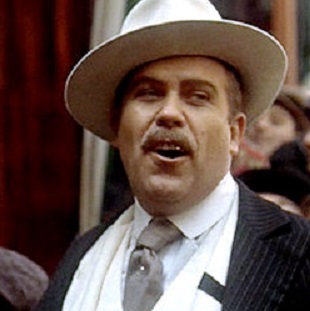
How is Eleanor Holmes Norton like Don Fanucci? In more ways than you might think.

How is Eleanor Holmes Norton like Don Fanucci?
In more ways than you might think.

Someone connected to a lobbyist released a voicemail of the D.C. delegate to Congress, Eleanor Holmes Norton (D, not that the same kind of voice mail hasn’t been left by countless Republicans too), shaking down an industry that is greatly affected by the committee Holmes chairs (though she may not vote on the floor, the District being the victim of taxation without representation) for a financial contribution, in a wounded/threatening tone reminiscent of the Sicilian gangster Don Fanucci in “Godfather Part II” who shakes down a poor merchant by asking for “enough to wet my beak.” Cenk Uygur is almost humorously unsettled by Holmes’ naked venality and the quid pro quo corrupt practices it represents, and I sympathize.

As long as voters, leaders and the news media tolerates this kind of culture, complaints about the unresponsiveness of our elected representatives are laughable. It should be obvious that the first step to a better republic is refusing to tolerate bribery.

Here’s the clip.

Weep.

_____________________________

Pointer: Instapundit

Source: Advice Goddess

Culture, Truthteller Ethics, And Richard Dawkins’ Tweet

What can a leading intellectual say of value in 140 characters?

What can a leading intellectual say of value in 140 characters?

Philosopher/biologist Richard Dawkins, best known as the world’s most formidable atheist, does not shy away from rustling the feathers of some pretty fierce birds. Recently he even infuriated many of his admirers by tweeting, “All the world’s Muslims have fewer Nobel Prizes than Trinity College, Cambridge. They did great things in the Middle Ages, though.” He was immediately called an anti-Muslim bigot by some, while others chose to challenge his assertion with false analogies. Making a strong statement worthy of a treatise in 140 characters is a tricky enterprise, and perhaps an unwise one, but the politically incorrect observation he was making was not about the Nobel Prize’s perfection as a measure of accomplishment, but rather about how the Muslim culture has strangled human progress, creativity and advancement for centuries. In this he is correct. Continue reading

Ethics Quiz: Critic Ethics

How I love critics...

How I love critics…

This is a delicate one for me; the names have been omitted and details disguised to protect…well, for a lot of reasons.

Last week I posted about the mixed-gender version of “I Do! I Do!” I directed for The American Century Theater, which I co-founded and where I am the artistic director. The show met all my objectives and expectations, even surpassed them, and until today, all of the reviews have been raves.

Today, though, a non-rave came out on a local theater website. It is the kind of review I detest, where the standard of the critic is “why didn’t you do it this way? That’s what I would have done.” The answer to that is, bluntly, “Direct your own damn show, then.” Snap judgments from one-time viewers, even extremely sophisticated ones, about what they would do if they were the author, actor, director, or designer of a stage production—when if truth they never have been or could be—are inherently unfair, incompetent and also obnoxious. After considering and experimenting and testing various artistic approaches to any problem over months of preparation, meetings and  intense rehearsal with a large production and artistic team, any production deserves the respect of being assumed to have considered and rejected for cause other solutions, which for various reasons didn’t work.

This is not, of course, a professional reviewer, though a reader could only know that from the quality of the review. Among other tells, the critic misidentifies which performers sing what, and the whole concept of non-realistic sets seems to be alien to him: yes, dear, we could have afforded a four-poster bed; the director felt the show would be better without one, and in fact, it is. Okay, the reviewer is a boob: that’s fine; most theater reviewers are.  I would not make an issue about one sloppy and badly reasoned amateur review, because if I did, I’d be in a padded room.

However, after the review was published, I learned that our company had a prior experience with this reviewer: he had been on the crew of a show last year, and we had to fire him. In 17 years and over 80 productions, he is the only person to be fired from that particular job.

Your Ethics Alarms Ethics Quiz with a theatrical bent:

Does a critic who has a past relationship with a theater company whose production he or she is reviewing have an ethical obligation to disclose it as part of the published review? Continue reading

Anthony Weiner, Gov. McDonnell, Mayor Filner and the Rest: Degrading Democracy, Tainting Leadership

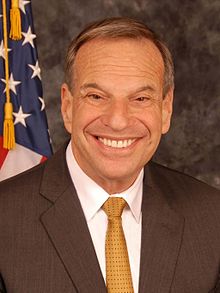
Hey, Mayor Filner, if San Diegans decide they have a proble being led by a serial sexual harasser, you can run for Mayor of New York!

Hey, Mayor Filner, if San Diegans decide they have a problem being led by a serial sexual harasser, you can run for Mayor of New York!

The mandate for leaders and potential leaders who have engaged in blatantly dishonest, corrupt, undignified or otherwise unethical conduct to remove themselves from office or consideration for office is not that, as hundreds of foolish pundits (like this guy) will try to convince you, hypocrites with a keyboard or a vote falsely pretend that such conduct is unique. There are two justifications for the unethical to resign from office, both undeniable and ancient. I have written enough, for now, about the first—that such conduct demonstrates untrustworthiness, the quality a leader must not have— and want to focus on the second, which is this: if they do not step down and away, such leaders and potential leaders mock the aspirations of democracy, insult its underlying hopes, and degrade, by their persistence, the standards of future leadership.

Once, this was thoroughly understood. Leaders who were exposed as lacking honesty, integrity, responsibility and respect for their own office resigned or withdrew from public life, as self-executed punishment and their last chance at redemption. Democracy, as John Adams wrote, is supposed to be a system that elevates the most accomplished, the most able, the most trusted and the most ethically sound to leadership, for obvious reasons. They are qualified to be leaders because, bluntly, they are better than the rest of us. They are also, because they are better, supposed to be capable of sacrifice and humility, and to recognize that power is a privilege, not a possession to be retained at all costs. Continue reading

An Inclusive “I Do! I Do!” for A Post-DOMA U.S.

Cup

I wasn’t going to mention my current theater (at Arlington, Virginia’s American Century Theater) project here, until I dropped Ethics Alarms’ conservative warrior Steven Mark Pilling a note on Facebook that I had just posted on the topic he is most passionate about, preventing the abuse of child actors in Hollywood. Steven is not, to say the least, a fan of gay marriage (this might be the topic he is next most passionate about) , and I realized that my Facebook thumbnail, showing two same-sex couples in an intimate moment from my show, might put him off.

The show I just finished directing ( with the assistance of Quinn Anderson and my musical director Tom Fuller)  the old Harvey Schmidt-Tom Jones chestnut, “I Do! I Do!”, ( Remember “My Cup Runneth Over, Ed Ames fans? Hello? ) the tw0-actor Broadway musical based on the 1950 play “The Fourposter.” Back in 1966, when Robert Preston and Mary Martin starred in the musical, it was considered an affectionate and  perceptive look at the institution of marriage, and the show has attracted nostalgic, usually elderly married couples to regional and dinner theaters ever since. Productions of  “I Do! I Do!” are becoming rarer, however, because the societal developments have rendered the tale of the epic marriage of Agnes and Michael Snow increasingly alien to the current American scene. In particular, what was once a musical intended to speak to all married couples and candidates for future nuptials now appears to exclude the very group that comprises musical theater’s hardiest supporters: gays.

In marked abandonment of my theater’s usual principles (we don’t update shows, believing that it is more interesting and fair to the authors to let audiences reflect on what has changed since an original production, and what has not), I decided that for the benefit of audiences, the culture and the show itself, it was time to re-conceive “I Do! I Do!” so it would gain renewed relevance and vitality in a post DOMA age. My approach, courageously and generously approved by the authors, was to show the marriage of the show’s couple through a constantly rotating prism that alternately revealed them as a same-sex female couple, a same-sex male couple, and the traditional heterosexual couple of the 1966 version. This required four very versatile and gutsy actors who could pull off the illusion of showing one marriage three different ways without giving the audience whiplash or confusing them hopelessly. In Steve Lebens, Esther Covington, Chad Fournwalt and Mary Beth Luckenbaugh, I found the dream cast. Continue reading