Democrats
Ten Questions For Supporters Of “The Movement For Black Lives” And Anyone Else With The Guts To Consider Them
At a “Movement for Black Lives” rally at Cleveland State University, a public institution, an announcement was made to the crowd that “this is a peoples of African descent space. If you are not of African descent please go to the outside of the circle immediately.” White reporter Brandon Blackwell retreated to the back of the crowd while being jeered by participants, as he was told by members of the crowd to stop filming, accused of being a white supremacist, and hands were held up in front of his camera. At one point as Blackwell demanded that those blocking his view not touch his camera, a participant in the rally confronted him by saying, “I got 800 black people behind me, what the fuck you going to do?” [The video is available here .]
I have ten questions for African American activists, progressives, Democrats, BlackLivesMatter supporters, Democratic presidential candidates, liberal pundits, Cleveland State University officials and anybody else who dares to consider them: Continue reading
The Dishonest And Irresponsible Minimum Wage Issue.

Good bye. I know when I’m licked…
I heard Bernie Sanders make another one of his economically-deranged statements as the crowd cheered, this one about how no American should work 40 hours a week and not have enough to live on. Then I went to the local Baskin-Robbins.
I ordered a single scoop of Chocolate Mousse Royale in a waffle cone. The cost was…$4.68.
For a single-scoop ice cream cone.
I will not go back to Baskin-Robbins again, which means I may have had my last ice cream cone. I also cannot believe that the company can continue selling ice cream cones at such absurd prices. When I worked for Baskin-Robbins as a summer job, a single-scoop cone cost $.29, and no, dinosaurs were not roaming the earth. I was paid the minimum wage, because a moron can do that job and you get to eat all the ice cream you want (within limits, which I thoroughly explored.)
Like most minimum wage jobs, scooping ice cream is overwhelmingly one filled by the young, who do not need a living wage, or those who have no skills or experience whatsoever and need to develop some. When the minimum wage goes up, companies eliminate jobs, and when it goes up too much too fast, whole occupations and companies disappear. This isn’t capitalist propaganda: it’s true. Most of the jobs that disappear are those that make life a little more pleasant for those not doing them, like pumping gas, ushering in movie theaters, operating elevators, waiting on tables, and scooping ice cream, jobs that can be learned in about an hour or less by anyone with an IQ hovering around 90. Continue reading
UPDATE: Hillary’s Ongoing Corruption Of Democrats, Progressives, and…
A couple weeks ago, I wrote about how Hillary Clinton was gradually converting her admirers into sociopaths, making her a particularly toxic ethics corrupter. I haven’t written here as much about ethics corrupters as I should have, but Hillary will give me many opportunities to rectify that situation. To quote the Ethics Alarms glossary,
“An ethics corrupter is someone, usually a celebrity, a public official or an accomplished and successful individual, who behaves unethically and forces those who admire him or her, or what they have achieved, to defend indefensible conduct as a matter of loyalty or cognitive dissonance. As a result, the defenders warp their own values, using rationalizations to excuse or justify conduct they once correctly understood was wrong…”
Down That Slippery Slope They Told Me Didn’t Exist: Connecticut Democrats Drop Thomas Jefferson and Andrew Jackson From The Name Of Their Annual Dinner
In the recent post, Stop Your Cultural Bulldozing, America: Disney World Taking Down Bill Cosby’s Bust Is Like Removing The Jefferson Memorial, I described the danger of removing well-earned cultural honors and memorials for individuals who later are found to have engaged in less than admirable conduct by current standards. I wrote in part…
“Sure, it’s uncomfortable having a bust of an unapologetic sexual predator in a Disney World attraction, and it might prompt some uncomfortable question from the kiddies. Well, good. It’s never too soon to learn that human beings are flawed, complex creatures, and that even the most brilliant and talented have dark sides, do terrible things, and can be cruel, selfish, dishonest and even criminal. We honor Thomas Jefferson for his crucial role in giving this nation life, and defining its mission and values for the ages. We’re not honoring his hypocrisy, his cowardice, his own rapes, or his slaveholding….
“First they came for Cosby, and we did not speak out…”
There is no stop to this slippery slope, and the political correctness mob will never stop.”
Some people I respect a great deal really went after me for that pronouncement, particularly on Facebook. “Hyperbole!” “Scaremongering!” “Just because a theme park doesn’t want to sport the bust of a rapist and stunning hypocrite in a TV Hall Of Fame doesn’t mean that there is any danger of politically correct zealots toppling the statue of Tom from his memorial!” “There is no such slippery slope,” I was scolded.
A Brief Note On CNN’S Anti-Republican Glee
I’m in Boston getting ready for a seminar in 45 minutes, so I shouldn’t be writing this now, but I can’t resist.
I have been watching Chris Cuomo and the CNN morning gang whooping it up—I mean, laughter, jokes, unrestrained glee—over Republican leadership’s discomfort with the Donald Trump candidacy. More blatant antagonism towards the Republican Party—and the assumption that it’s viewers share that animus–could not be broadcast if it had been scripted. Apparently CNN thinks naked bias and partisanship is professional and ethical. They aren’t. CNN is embarrassing itself. Disgracing is a better word.
When will they acknowledge the unpleasant fact that a majority of Democrats support the candidacy of corrupt, cynical, dishonest and unqualified Hillary Clinton, and that this is far, far more disturbing, significant, and an indictment of that party than the fact that a 25% of Republicans momentarily favor Trump among a huge field, almost entirely because he was blunt about the genuine problem of illegal immigration?
“Black Lives Matter” Is Unethical, And So Are Politicians Who Pander To It
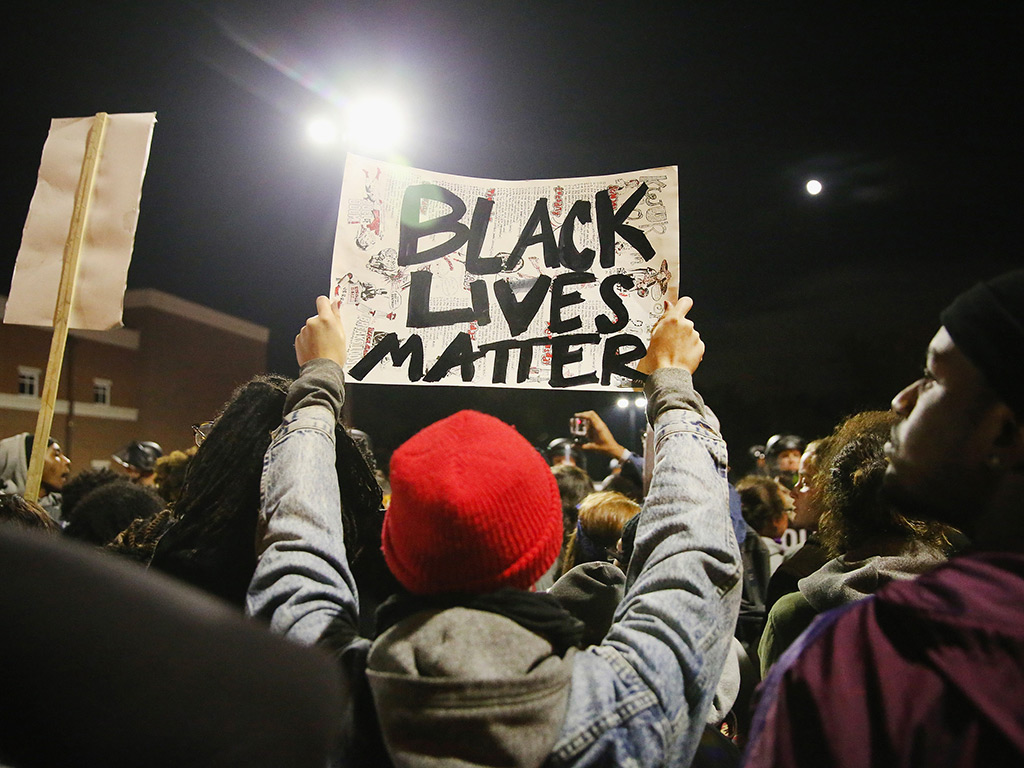 That’s the tipping point for Ethics Alarms. “Black Lives Matter” is unethical, and those who use it are unethical. And politicians who grovel to those who criticize them for not embracing it are contemptible.
The Martin O’Malley embarrassment over the weekend clinched it for me. Demonstrators interrupted the former Maryland governor, mounting a pathetic campaign against Hillary Clinton for the Democratic presidential nomination, as he was speaking at the Netroots Nation conference. When they shouted, “Black lives matter!” a rallying cry of protests that has superseded “Hands Up! Don’t Shoot!” because that one was eventually exposed as a lie, O’Malley—the naive, racist fool!!!!— responded: “Black lives matter. White lives matter. All lives matter.”
The activists responded by jeering him and refusing to let him speak. .Later in the day, O’Malley, “showing the firm commitment to leadership in the face of adversity that we expect in a presidential candidate,” as one wag put it on Jonathan Turley’s blog—apologized, saying…
“I meant no disrespect. That was a mistake on my part and I meant no disrespect. I did not mean to be insensitive in any way or communicate that I did not understand the tremendous passion, commitment and feeling and depth of feeling that all of us should be attaching to this issue.”
I bent over backwards to defend Smith College President Kathleen McCartney when she apologized for using the phrase “all lives matter” in December of 2014. I wrote:
If an activist says to me, “too many children go to bed hungry!” and my retort is, “Too many people go to bed hungry!”, the unspoken argument is “So stop acting like children are a special problem!” If I say, “We need peace in Syria,” and a friend’s response is “We need to end war, period!”, I view that as an effort to minimize my concerns by launching it from the realm of a specific issue into vague, generic territory. “Black Lives Matter!” in the context of recent police episodes where African Americans died under circumstances that many believe show police callousness and excessive force against blacks is a distinct assertion that suggests that the law enforcement and justice systems do not currently function as if black lives matter as much as white lives. It is true that “All Lives Matter” includes the larger subset “black lives matter”; it is also true that it blurs the issue at hand, and dilutes the protesters’ point. It is not inappropriate for President McCartney to apologize in this context…unless, of course, she intended a rebuttal, in which case she is indeed spineless.
I still believe that made sense in December, but “Black Lives Matter” means something very different now, after six police officers were charged with murder to quell a Baltimore mob after Freddie Gray’s death, and after President Obama decided that the merciless shooting of a young white woman in San Francisco by an illegal immigrant wasn’t worthy of the same attention he has given other deaths when it was a black life that had been lost. Continue reading
“You Know I Can’t Hear You With All Those Ethics Alarms Ringing”: Hillary Clinton’s CNN Interview
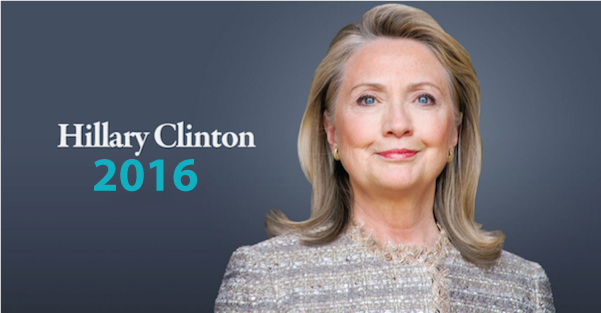
The frightening thing—it should frighten Democrats more than anyone, but if they have let Hillary get this far, they may be beyond frightening—is that Hillary Clinton had a long time to prep for this interview—her first substantive one since announcing her candidacy, about five or six scandals ago—had a hand-picked, friendly interviewer, was not pressed to clarify any of her non-answers, obfuscations or incomprehensible blather, and she still came off looking defensive, evasive, and basically like Tommy Flanagan in drag.
Ethics Alarms were ringing so loudly that the interview was almost inaudible. My observations in bold….
BRIANNA KEILAR, CNN SR. WHITE HOUSE CORRESPONDENT: Secretary Clinton, thank you so much for talking to us today. You’re here in Iowa for a couple of events. You’re the front-runner in this state but we’re also seeing Bernie Sanders attract a lot of attention. He has had big crowds here, 10,000 people in Wisconsin last week, 7,500 people in Maine last night. Why is it, do you think, that someone who is a self-described Democratic socialist is really attracting this organic interest that your campaign seems to be struggling a little bit with?
HILLARY CLINTON, FORMER SECRETARY OF STATE: Well, first of all, I always thought this would be a competitive race. So I am happy to have a chance to get out and run my campaign as I see fit and let other candidates do exactly the same.
Non-responsive. Also a lie: Clinton has always assumed she could get the nomination by just showing up.
I feel very good about where we are in Iowa. We are signing up thousands of volunteers, people committed to caucus for us. We have a committed supporter in every one of the 1,600 precincts. And one of the things that I learned last time is it’s organize, organize, organize. And you’ve got to get people committed. And then they will follow through and then you bring more people.
Non-responsive.
So I feel very good about where my campaign is. It’ll be three months and a few days that we’ve been at this. I think I’ve learned a lot from listening to people in Iowa. And it’s actually affected what I say and what I talk about on the campaign trail.
Non-responsive.
So I couldn’t be happier about my campaign.
Non-responsive. Pretending to open yourself to a candid question and answer session and then refusing to answer the very first question while pretending you did: Dishonest. Disrespectful.
KEILAR: Senator Sanders has talked about how, if he’s president, he would raise taxes. In fact, he said to CNN’s Jake Tapper, he would raise them substantially higher than they are today, on big corporations, on wealthy Americans. Would you?
CLINTON: I will be laying out my own economic policies. Again, everybody has to run his or her own campaign. And I’m going to be telling the American people what propose and how I think it will work and then we’ll let voters make up their minds.
“I refuse to answer on the grounds that I might incriminate myself actually let voters know what I stand for. After all, I’m a vagina. That’s what really matters.”
KEILAR: Is raising taxes on the table?
CLINTON: I’m going to put out my policies and I’ll other people speak to their policies because I think we have to both grow the economy faster and fairer so we have to do what will actually work in the short term, the medium term and the long term. I will be making a speech about my economic proposals on Monday. And then I look forward to the debate about them.
If Clinton made a speech Monday (July 7) about specific economic proposals, she did it in her closet, because all anyone actually heard was this.
KEILAR: I’m wondering if you can address a vulnerability that we’ve seen you dealing with recently. We see in our recent poll that nearly six in 10 Americans say they don’t believe that you’re honest and trustworthy. Do you understand why they feel that way?
CLINTON: Well, I think when you are subjected to the kind of constant barrage of attacks that are largely fomented by and coming from the Right and –
The vast right wing conspiracy again! Ironic, because one very good reason people shouldn’t, and many sane people actually do not, trust Hillary is when she made teh same accusation on the Today Show to Matt Lauer, claiming that the Monica Lewinsky scandal had been “largely fomented by and coming from the Right,” when in fact she knew otherwise and was lying for her husband.
KEILAR: But do you bear any responsibility for that?
CLINTON: – well, I – you know, I can only tell you that I was elected twice in New York against the same kind of onslaught.
“I got away with it before, didn’t I?” Continue reading
Playing Dangerous Cognitive Dissonance Games With U.S. The Supreme Court
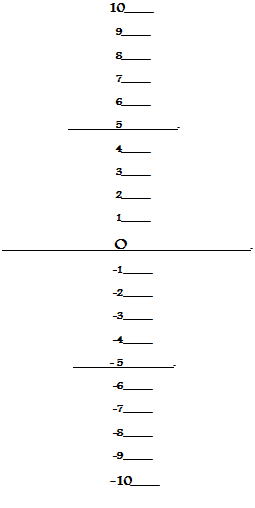
The cognitive dissonance scale, now being used to weaken a crucial U.S. institution for political gain.
Of all government institutions, the U.S. Supreme Court has traditionally only trailed the Presidency in public trust and esteem. There are several good reasons for this. One is that being appointed for life, the Justices are presumed to be less subject to the personal and political agendas that make the positions of politicians suspect. Another is that the Court has often taken heroic stances that made the United States a better nation and more just culture. A third is that unlike elected political offices, that of a judge requires an education and technical expertise that the average citizen does not possess. The Justices are traditionally accorded the deference given to experts. Perhaps the most important reason we trust the Court is because we need to do so. It was made the third branch to protect the Constitution against violations of core rights, as well as to be an objective mediator when the other branches, or states, or courts, reach an impasse. Of the many ingenious devices the Founders put in place, the U.S. Supreme Court is one of the wisest.
That the Court is accorded inherent respect and trust is essential to the stability of our government. What the Court says, goes, and the culture and society, including the most furious dissenters in political parties and interest groups, must follow a ruling and constrain its efforts within those boundaries. There have been times when the Court recognized that its unique credibility obligated it to intercede in dangerous conflicts that might otherwise escalate to social unrest or worse. The 2000 Presidential election was a potentially dangerous situation because the result in Florida rested on a margin of error that the available technology was incapable of resolving with certainty. Unlike the similarly dubious results in the 1960 election, the initial losing candidate and his party decided to plunge the nation into an electoral morass, in this case one complicated by politicized state courts, vague local statutes, confusing ballots, partisan media reports and varying standards of what constituted a vote, with the rotten cherry on top being a rare situation (it had happened only three times before) in which a popular vote loser was the apparent electoral vote winner. The Supreme Court stepped up and stopped it from spinning out of control, in essence declaring a winner. It was a courageous and responsible act, one that many (including me) predicted, and though it came at a high cost, one that exemplified why the Court’s public acceptance must be high—so it has some room to fall when it has to take a controversial stand.
This crisis was not the beginning of the effort by parties and activists to discredit the Court by impugning its motives and undermining the public’s trust, but it caused a permanent escalation. It was when the insinuation that a Justices nominated by Republican Presidents (or Democratic ones, depending on who’s leading the chorus of critics) see their job as bolstering that party’s policies and interests became routine. Continue reading
Ethics Observations On The King v. Burwell and Obergefell v. Hodges Decisions And Their Aftermath
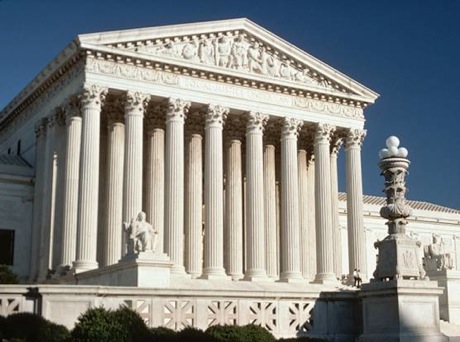
Obergefell v. Hodges, in which the Supreme Court considered whether states had to recognize a right to same-sex marriages, and King v. Burwell, in which the Court was called upon to clarify some incompetent drafting in the Affordable Care Act, could not be more dissimilar in terms of issues, topics, and significance. Nonetheless, because the two decisions involved hot political issues and arrived on consecutive days, and because they ended up favoring the positions that Democratic and progressive partisans support, they have been conglomerated in public discourse to fit several general themes, all, to varying degrees, misleading, simplistic, and biased. The decisions have also launched some of the most hysterical and embarrassing commentary in recent memory.
Some ethics, as opposed to legal, observations:
1. Anyone who hasn’t read the majority opinions and the dissents, who just skimmed them—believe me, if law school taught me anything, it taught me that skimming court opinions was a sure road to error and humiliation—or who read them but could not understand them, should be ignored, and perhaps gently mocked, for expressing any view at all about whether the decisions were the “right” ones. Quite simply, such people are not qualified to hold an opinion. They can have, and express, an opinion regarding whether the Court’s calls on Burwell or Obergefell are consistent with their own needs, desires, belief or political orientation, but they have no basis for asserting that either decision is wrong, or, right, on the law.
2. One can find it troubling and ominous, as I do, that the votes on the two cases were as predictable as they were. Objective legal scholars with integrity should be capable of ruling in ways that are not congruent with the personal political philosophies. A Democratic Presidential appointee who favors expansive government activity in health care control should be able to look at a statute designed to accomplish that purpose and still conclude, “Nope, the law mean what they want it to mean,” or “Sorry, the damn thing is unconstitutional.” Similarly, we should be able to trust a politically conservative justice to examine a statute that he objects to on principle and still conclude, “Yup, it passes the test.” Maybe all the Justices are capable of meeting this standard, but these two cases don’t suggest that. They suggest the opposite. Continue reading
 Ethics Alarms
Yes, it IS the same thing as “out of the circle”: you know, Rude.
I allowed, for the most part, the debate following the post from last week, “Ten Questions For Supporters Of “The Movement For Black Lives” And Anyone Else With The Guts To Consider Them.” to continue largely unimpeded by interjections by me. I did this in part because of lack of time and energy–I am still wiped out by a bout with bronchitis—but eventually because I wanted to see where the discussion went without me. I saw. I read. I was depressed.
Here is how I would answer the ten questions. I will for the most part use Charlie Green’s responses as a foil, because he can take it.
To briefly review for those who did not see the initial post, the questions were sparked by an incident following the a three day conference held at Cleveland State University for the Movement for Black Lives.
On the final day, as supporters of Movement for Black Lives were leaving CSU, they saw Greater Cleveland RTA officers with a black teenage boy in handcuffs at a bus shelter. The rest is from Cleveland.com, linked in the article:
The conference participants immediately assumed that the police – not the boy – had done something wrong and began rallying against the police, demanding to know why he was in handcuffs and that he be released. Nobody could have known what was going on. But that didn’t’ seem to matter. The crowd fed on itself.
The RTA later explained that its officers had removed the boy – who they suspect was intoxicated — without incident from a bus and sat him at shelter at Euclid Avenue and East 24th Street so they could get information from him and call his parents. The police officers said in a report that they found the teen on the bus passed out and drooling. He was cuffed as a matter of procedure. As the crowd swelled, the police placed the boy in a police car for his safety, the RTA said in a statement. Then, protesters — many of whom were filming the action on their cell phones – surrounded the RTA police car and prevented the police from moving the teen. (Normally, RTA officers take juveniles to police headquarters, where they are released to an adult.)
An RTA officer then did something stupid. He shot pepper spray at people blocking the patrol car — a move that incited the crowd and played perfectly into the conference narrative about police. Several people were hit and were seen washing out their eyes with water, according to video of the incident posted online….
When an ambulance arrived to check on the teen boy, the crowd moved to allow him to be examined. As police walked him to the ambulance, the crowd chanted “Take them off, take them off” in reference to the handcuffs. The teen was released to his mother, who arrived on scene, and the incident ended….
Brandon Blackwell, a crime reporter for the Northeast Ohio Media Group who frequently covers police and demonstrations, saw the pepper spray video and rushed to the scene. When he arrived, the police were gone but the crowds remained. Blackwell then did what he always does. He started recording with his cell phone and asking questions. On Sunday, he used Twitter’s Periscope app to broadcast the scene live. But the crowd turned on Blackwell as he filmed a large group gathered in a circle on a sidewalk outside of a CSU building. A man announced the circle was only for people of “African descent.”
Blackwell, who is white, was dressed in his daily uniform of jeans, a black T-shirt and Converse shoes. He stepped outside the circle and continued to record. Then, people began blocking his camera with shirts, theirs hands, signs and other objects, including an orange traffic cone….During one of the tense moments in the exchange, Blackwell demanded that those blocking his view not touch his camera.
“I got 800 black people behind me, what the fuck you going to do,” a man responded, getting in Blackwell’s face while continuing to block his camera.
Blackwell asked for someone to get the guy away from him, but more people came at Blackwell instead.
1. How was this rally ethically distinguishable from a white supremacy or a KKK rally?
To begin with, it was a spontaneous rally arising out of an organized gathering. The apparent purpose of the demonstration, a protest against alleged police mistreatment of black citizens, is ethically valid, unlike protesting the “mongrelization of the white race” or equal rights for African Americans. However the manner of the protest and its demonstrated values—animus to another race and presumed bad character and lack of trustworthiness of “the other,” in this case, those not of “African descent,” is similarly exclusive, unjust, divisive, unfair, irresponsible and prejudiced—racist.
The answer, therefore, is “Not enough.”
Charles answered, “The same way an anti-Jewish Nazi rally is ethically distinguishable from a Jewish anti-Nazi rally. Does this really require explanation given history?” It’s a flip answer, but it is also dead wrong, and more than a little bit of a deflection. The crowd was protesting abusive police practices, supposedly, not white abuse practices, and not whites. Why would an anti-Klan rally or an anti-Nazi rally demand a racial or ethnic qualification to participate? Presumably anyone who objected to these racist movements would be welcome to a protest, and if they weren’t, then there is a rebuttable presumption that was demonstrating against something more than just conduct.
2. If Blackwell refused to “go to the back of the bus” as commanded, why would he be any less in the right than Rosa Parks?
Charles’ deflection got more desperate here. He wrote: “That is an absurd analogy. Blackwell was not a minority. Parks was not a reporter. You didn’t state whether the press was allowed, or disallowed. I honestly don’t know enough to answer, but if you do, you should have mentioned it. Not enough info, and an inflammatory metaphor on your part.” I said that the rally was on public property, and that is enough. The press cannot be excluded from a public event, which this was, on public property.
Let’s assume, for Charles’ comfort, that this spontaneous rally of race-baiters who automatically assumed that a drunk and drooling kid being taken off a bus for his own good was going to be executed a la Walter Scott took place on the bus itself—which is no more or less public than the street or a public university. Blackwell was being relegated to second-class citizen status—“out of the circle” is no different from “the back of the bus,” and arguably it is worse—due to his skin color, and for no other reason. That’s racism. That’s oppression. That’s unethical; that’s wrong. That he may not be a “minority” according to the demographic of the nation—gee, can he feel discriminated against in 2050, when whites will be a minority, Charles?—is absolutely irrelevant, unless you believe, as I am sure Charles does not, that prejudice and discrimination on the basis of skin color is only wrong if a majority member does it. Moreover, Blackwell was not in the majority there, as the nice gentleman who threatened him with mob violence was kind enough to point out.
The correct answer: Blackwell had every bit as much right to hold his ground in a public place against a racist command that denigrated him as a human being and as a citizen as Rosa Parks did. If it’s an inflammatory comparison, that is only because those rationalizing the conduct of the demonstrators recoil at the ugly truth.
3. If this is the developing tenor of the BlackLivesMatter movement, why shouldn’t the movement be regarded as a racist one and treated accordingly?
Is it the tenor of the Black Lives Matter movement, as well as “The Movement For Black Lives”? That certainly seems to be what all the signs point to, though I am willing to wait a bit longer. In this case, the group instantly began interfering with legitimate police work, without knowing any facts. That is certainly bigotry, if not racism. Bigotry arises from an irrational, automatic assumption that a group’s members are not trustworthy because they are assumed to possess unattractive and negative characterizations and behavior traits.
Answer: If the various movements continue to act in a bigoted, prejudicial or racist manner, and they have, then they should be regarded and treated as they are.
Charles answered, in a line he may long regret, “Rudeness still does not constitute racism under the law, at least as I understand it. A false conclusion.” Ordering a black man out of a restaurant because of his skin color is rude—it is also dehumanizing, humiliating, offensive, cruel, divisive, and racist. So is telling a reporter that he must “leave the circle” because of where his ancestors came from.
4. How can a university justify allowing a racially segregated event like this to occur on campus?
Trick question. The university didn’t, because the event itself wasn’t segregated. Reports indicated that the conference was racially diverse. However, no public institution could ever ethically use its authority to allow a racially segregated group to hold an event. White students must be allowed to take Black Studies courses.
Charles wrote: “This is the question that colors all the others. Is the university allowed to distinguish between in-group meetings, or not? If it permits such meetings, I see nothing unique about race that would distinguish it. If you’re allowed to have Jewish-only or gay-only groups, then how can you argue you shouldn’t have race-only groups?”
My position is this: if racial minorities do not want to be excluded on the basis of race, then they cannot argue that racial exclusion is justified. The Golden Rule applies. Any other stance is hypocrisy, and permanently undermines progress in eliminating racial bias as long as it persists. This is why affirmative action is both ethically wrong and counter-productive. It is why there should not be televised awards shows for black athletes and black entertainers, and it is why the race-based appointment policies of the Obama Administration have undermined racial trust. You cannot end discrimination by discriminating, and you cannot simultaneously condemn racism while practicing it.
5. Why isn’t condemning such demonstrations a liberal and progressive obligation, and supporting such a demonstration a reactionary one, hostile to civil rights?
Answer: It is an obligation. Because civil rights advocates are unwilling to give up the racial spoils system that sustains them and their organizations, they refuse to meet it. Obviously supporting a race-segregated demonstration is hostile to civil rights.
6. Is there an African-American leader, elected official, commentator or reporter with the courage and integrity to state that this conduct is unethical, illiberal and damaging to the social fabric of the country?
and
7. Are there any white ones with that courage and integrity?
Charles jumped the shark here, answering: “If it’s not unethical or illegal, then the race of someone refusing to agree with you is irrelevant.” This both unethically re-frames the question as being about me, and eliminates a key element of the question, that the conduct is unethical. The conduct involved discrimination based on skin color and ancestry, and that is per se unethical, racist and wrong, no matter who engages in it. That is not my opinion; that is truth. The reason that I selected these individuals for the query is that their societal roles makes truth-telling part of their professional and ethical obligations. As for whites, the issue is fear of being called racist by a panel on CNN or MSNBC.
Answer: If there are, they have been mighty quiet about it.
8. If a rally at the University of Massachusetts demanded that all non-whites leave, this would be a major news story and pundits would be warning that a new wave of anti-black racism was on the rise on college campuses. Why didn’t this incident spark the same kind of publicity and commentary?
Charles denied that a white mob at UMass demanding that a black reporter step to the back of the circle would get negative publicity, a denial that defies explanation, logic and history.
My answer: It didn’t attract the same kind of publicity and commentary because there is a pernicious double standard among the commentariat and in the culture that excuses and rationalizes anti-white racism, just as Charles does.
Here I will address briefly the cultural comments Charles made in a subsequent comment…briefly, because I believe long-time commenter here Glenn Logan knocked them over the wall. A lot of these discussions end up in dead-end alleys where an advocate for a manifestly bigoted and racially biased-position held by the African American community argues that whites don’t understand why blacks feel the way they do. This was the issue that got me censored on Ampersand’s progressive blog, and ended his helpful, if predictable, ideological contributions here. His f0llowers insisted that it wasn’t unreasonable for blacks to feel that George Zimmerman should have been convicted of murder—absent any convincing evidence other than the color of the victim, Trayvon Martin—because of history, and accumulated grievances. Similarly, this was the argument for why the shooting of Michael Brown should have led to charges against Darren Wilson–because everybody knows “this” happens all the time, ergo it is reasonable to assume that it happened to Brown, regardless of the facts. This was essentially the damaging rationalization offered by President Obama in the wake of the Ferguson riots.
This reasoning is just a rationalization for bias, emotion over reason, bigotry, injustice and prejudice. I can understand how people become racists or sexists or anti-Semites, and why blacks assume that every black suspect killed by a police officer was an unarmed innocent who had no part in his own demise, can’t you? I understand why so many blacks distrust people because of the color of their skin; what I can’t understand is why they can’t figure out that if they act exactly like the whites who made them distrust whites, whites will continue to distrust them. This is all bias, and people telling me that a destructive bias should be accepted because there’s a reason for it is not a persuasive or a responsible argument. Biases always come from something; there are always reasons people are biased. So what? It’s still bias, and anti-white biases are no more acceptable and no less destructive than other biases.
9. How is the sentiment, message and conduct illustrated by demonstrations such as these helpful, productive, or anything but destructive?
Answer: It’s terribly destructive, and since it is, it should be called such by the most respected and trusted voices in the culture, and not minimized with euphemistic terms like “rudeness.”
10. A popular and much quoted tweet, attributed to various conservative wags, is this. It is dismissed by Democrats and progressives as being an anti-Obama shot and no more. Why isn’t its underlying message undeniably true?
Charles said: “This is inflammatory, ridiculous, and goes to the heart of the matter. You know better and it is beneath you. It is people like the echo chamber you lead on this particular issue who insist that racism is the fault of the victims, that Obama has been the cause of greater racism, and that blacks should shut up, ignore history, behave themselves and all of us agree to pretend that racism is something that happened long ago, and if everyone just acted white it would all go away.”
I have never insisted or argued that racism is the fault of the victims. And Charles knows this is no echo chamber. On this topic, it is the mainstream media that is the echo chamber.
But the “underlying message” is 100% true. Railing against those with the integrity to call out the divisive—not always intentionally divisive, but incompetently, irresponsibly divisive—policies, manipulations and rhetoric of the Obama Democrats doesn’t obscure what surveys show, what we see and hear, and the sudden spike of murder statistics across the country as a direct result of casting law enforcement as racial conspiracy.
It all was seeded, of course, by the cynical strategy, developed even before Obama was elected, to characterize the same kind of criticism all recent Presidents have been subjected to as racially-motivated, even as this ill-prepared leader has lurched from one disaster to another, domestically and abroad. This was excellent for the goal of making sure that African Americans, whose fortunes have suffered more under this President than any other group, voted for skin-color over self interest in 2012. It has also been a social and cultural calamity. Still, the strategy continues. In the Washington Post last week, for example, African American columnist Colbert King relayed this:
That’s right, opposition to the insane Iran deal is all about racism. Netanyahu isn’t worried that a nuclear powered state that continues to declare that it will wipe Israel off the face of the earth might just do it; naw, he just doesn’t like blacks who are presidents. And since Republicans gave him a chance to plead for his nation’s existence, this is just more proof that they are racists too.
Hey, but I understand why they feel that way, so it’s okay.