Hillary’s Secret E-Mails: An Invaluable Ethics Litmus Test

finney_newday

All civic minded citizens should encourage as many individuals—public, private, elected, celebrities, media figures, reporters and pundits—to discuss the issues and significance of the Clinton e-mail scandal. It is a marvelous litmus test to unerringly reveal whether the individual understands basic ethical principles like integrity, honesty, responsibility and trust, as well as his or her reliance on intellectually and ethically bankrupt rationalizations like “Everybody does it,” “It’s not the worst thing,” “Don’t sweat the small stuff,” and others, or, just as disturbing, whether the individual is willing to reject basic ethical principles in a misguided effort to defend a public figure unworthy of the sacrifice, like Hillary Clinton. Keep this public debate going. Before it has run its course, we may have outed thousands, hundreds of thousands, who we will know cannot themselves be trusted.

It takes all my will and civility reserves not to say that this is an IQ test as well. I keep reading comments on blogs and Facebook by people who really seem to be unable to fathom why it should matter when the individual who leads our official dealings with foreign governments mysteriously chooses to take dominion over all her official communications, allowing her to destroy them at will, when such conduct violates the policies and directives of the administration of which she is a member, her own department, and common sense, despite incurring security risks, despite questions over her foundation soliciting contributions from foreign governments while she was in a position to have such contributions warp national policy, when the individual involved, was well as her husband, has a history of skirting laws, obfuscation and mendacity. “This is just more manufactured Hillary-bashing!” Seriously? I know the Clintons pay people to say this, but really believing it requires total corruption or life-threatening brain lesions.

As an example of how this issue exposes a lack of honesty and integrity the way those blue light things show traces of blood on “CSI,” let’s examine the CNN transcript of yesterday’s segment on “New Day,” which featured a “point-counterpoint” style debate on the Clinton e-mails featuring former Bush press secretary Ari Fleischer and former Hillary press secretary (and current Media Matters partisan warrior) Karen Finney.

This pairing is manipulation by CNN, by the way. Nobody but hacks, liars and fools honestly defends Clinton’s conduct here, and many non-partisan commentators can articulate clearly exactly what’s wrong with it. Placing a presumed partisan like Fleischer opposite Finney cleverly and unethically suggests that this is one more political dust-up without substance, where there’s no real dispute, just a red/blue divide. That may be what CNN wishes were true, but this issue is not partisan, and shouldn’t be presented as such. The Washington Post, which has, like most of the print media, been pretty straight on this issue, played to the partisan spin by saying,

“Instead of a fresh chapter in which Clinton came into her own, her time as the country’s top diplomat now threatens to remind voters of what some people dislike about her — a tendency toward secrecy and defensiveness, along with the whiff of scandal that clouded the presidency of her husband, Bill Clinton.”

Wait, there are people who like secrecy and scandal? Are they called Democrats, perhaps? Clinton supporters? What an idiotic way to frame Hillary’s problem.

It’s not complicated: the issues involve trust and the character of a potential President.

Now here is the CNN transcript, with my comments in bold: Continue reading

Hillary Clinton and the E-mails: A Case Study In Ethics Corruption

corrupted

I’ve been meaning to write this post for a couple of days now, but haven’t had the heart. Frankly, I am really sick of having to make the same point about the Clintons over and over again—they never learn, and will never change—knowing that so many people will just immediately turn off their brains and run for the rationalizations dispensary any time dishonesty, hypocrisy, deceit or misconduct by one of them is uncovered.

This happens, you see, because the Clinton are perhaps the most prominent among a particular harmful species of individual in our culture, the ethics corrupter. Ethics corrupters are popular, powerful, successful and famous people who, because they are popular, powerful, successful and famous, many citizens conclude that they must also be good and wise, and therefor trustworthy. Since they are (many believe) good and wise, what they choose to do must also be good, and when they are accused of doing wrong, even when the evidence is unavoidable that they have done wrong, there can be only two explanations to those vulnerable to correuption. The first is that the evidence, no matter how strong, cannot be believed, and those wielding it are in fact enemies of right, good, honesty and fairness. The second is that if these good and wise people did it, then what they did cannot be wrong, or can be justified, usually by “the ends justify the means.”

Thus by gaining the trust and admiration of good people, usually through clever use of dishonesty, deception and manipulation, ethics corrupters set their admirers and supporters up to have their own values weakened or destroyed. Richard Nixon caused honest people to defend the covering up of crimes. Charlie Rangel caused people with integrity to support accepting bribes. Bill Clinton made feminists excuse exactly the kind of sexual harassment they persuaded Clinton to sign a law prohibiting, and inspired lawyers to excuse perjury because “everybody lies about sex.” Lance Armstrong made parents who once taught their children not to cheat to defend cheating, because he had a foundation with a noble cause. Brian Williams and Bill O’Reilly made TV viewers excuse lying by journalists.

Ethics corrupters make their supporters worse parents, friends, employees, employers and human beings; in turn, those corrupted supporters make society less ethical and more cynical as well. These are genuine cultural polluters; indeed, they are cultural pollution.

Hillary Clinton is an ethics corrupter, and the response to the revelations of her use of exclusively personal e-mails proves it beyond the shadow of a doubt.

There is no benign interpretation of her conduct regarding her State Department e-mails. It was not a mistake; one cannot claim that it was accidental. Since it was intentional, there must have been a purpose, and the only conceivable purposes are unethical ones. According to the 2009 National Archives and Records Administration regulations in effect when Clinton took office, “Agencies that allow employees to send and receive official electronic mail messages using a system not operated by the agency must ensure that Federal records sent or received on such systems are preserved in the appropriate agency recordkeeping system.”  With a private e-mail account and only using that for official correspondence, Clinton did not have a system that ensured such preservation. She, not the system, determined what would be preserved. Anything not preserved or left on her private account would not be subject to the Freedom of Information Act. Is there any explanation for having a private account only, an justification that is simultaneously responsible, plausible and does not suggest that Clinton wanted to control which of her communications could come before the public and the press?

No.
Continue reading

Hillary’s E-mail Ethics Breach: The Only Questions Are 1) “How Can Anyone Trust Her?” and 2) “Is there Nothing Her Supporters Won’t Excuse?”

hillary-clinton-pointing2The ethics issue here is very straightforward and uncontroversial. As the New York Times put it:

“Hillary Rodham Clinton exclusively used a personal email account to conduct government business as secretary of state, State Department officials said, and may have violated federal requirements that officials’ correspondence be retained as part of the agency’s record. Mrs. Clinton did not have a government email address during her four-year tenure at the State Department. Her aides took no actions to have her personal emails preserved on department servers at the time, as required by the Federal Records Act.”

I don’t know why the Times says “may have violated.” Her exclusive use of personal e-mail does violate the rules, and in fact the law, as the Times correctly states in the final sentence. Moreover:

1. This is a blatant example of Clinton again refusing to abide by rules and laws other officials are required to abide by. As the Washington Post notes, it was intentional: Clinton’s personal account was established on the same day that Clinton began her confirmation hearings to be Secretary of State., and the expiration on the domain is shortly after the 2016 election. Continue reading

Your Presumptive Nominee For President in 2016 Has Been Exposed As Greedy, Arrogant, Dishonest, Conflicted and Corrupt. Now What, Democrats?

Hillary-Clinton-Without-Makeup

Today’s Washington Post expands on the Clinton scandal I wrote about here, with new and damning revelations. Not only did Hillary Clinton’s family Foundation accept millions of dollars in contributions (that is, bribes) from foreign governments while she was Secretary of State, at least one of these violated even the excessively permissive and unethical conditions permitting  such gifts (that is, bribes) agreed to as a condition of her confirmation. Here are some quotes from the story by Post reporters Rosalind S. Helderman and Tom Hamburger, which you should read in its entirely, with horrified comments from me interspersed: Continue reading

Now THIS Is An Ad Hominem Attack! or “Boy, Is Howard Dean An Ass, or What?”

“True, Harry didn’t go to college, but he’s a Democrat.”

People commenting on Ethics Alarms constantly accuse me of making ad hominem attacks, when what they mean to say is “You’re name-calling.” I’ll cop to name-calling. It’s can be a bad habit, but it has its uses, best illustrated when President Ronald Reagan referred to the Soviet Union as an “evil empire.” The description was true, and it immediately focused values-based criticism on a government and culture that needed it and deserved it.

Ad hominem, in contrast, is a logical fallacy in which one attempts to counter a substantive argument by attacking the character or other aspects of the advocate that can’t possibly have any bearing on the argument’s validity. For example, “you’re uglier than a pug” does nothing to disprove the substance of your adversary’s position, even if he is. Similarly, Bill Cosby has argued, even before 34 women accused him of raping them, that his advocacy of black community responsibility should not be undermined because of questions about his own rectitude.

There is nothing inherently fallacious, however, about diagnosing the conduct or statements of someone as proof that he or she is a fool, or a liar, or a jerk. It may not be civil, and it may be unfair, but it is not an ad hominem attack. As I have  explained it before, if I say you are an idiot because I think your comments are idiotic, that is a legitimate, if rebuttable assumption. (I may also be using “you are an idiot” as shorthand for “you are talking/sounding/acting like an idiot, and should avoid that.”) If I say you are an idiot, and therefor everything you say must be dismissed and ignored as the rantings of an idiot, that’s an unethical debating technique, ducking the argument by impugning the advocate.

Distinguishing between these very different but similar-appearing phenomenon can be a problem when trying to be fair to someone whose prior statements and conduct have already generated a negative diagnosis, and thus a bias. I have concluded, for example, that Joe Biden is a dolt, that Michele Bachmann is not playing with a full deck; that Sarah Palin is intellectually lazy and irresponsible, that Newt Gingrich is manipulative and untrustworthy, that Bill Maher is a pompous, none-too-bright blowhard and that Howard Dean is a vicious and unscrupulous ideologue. Nonetheless, I have to fight to assess what they say on the basis of merit, not my well-considered assumptions. It’s hard. When an idiot asserts something, is it unreasonable to be more skeptical of the statement than one would if, say, a brilliant, credentialed, unbiased observer said the same thing? (Wow—I can’t think of a single one!) No. And this is why ad hominem attacks, especially coy, subtle, clever ad hominem attacks, work so well in politics.

This brings us to that vicious and unscrupulous ideologue, Howard Dean. Continue reading

Big Lies Die Hard

No, this was no way to pick a President..

No, this was no way to pick a President..

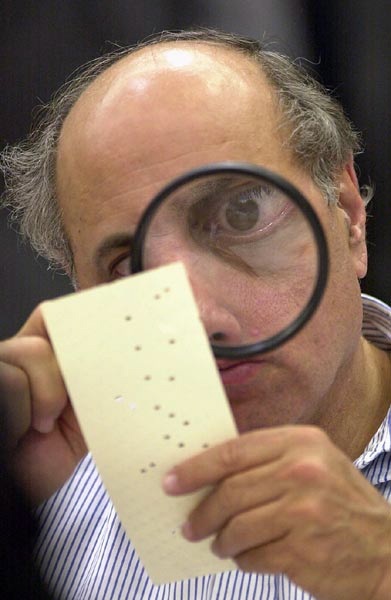
It is clear after nearly 15 years that bitter Democrats will always believe that the 2000 Presidential election was “stolen,” just as the losing parties in 1824, 1876 and 1988 claimed those elections were stolen. (In 1876, the election was stolen.) But as the cliche goes, while they have a right to their opinion, they do not have a right to their own facts. I understand why Democrats flogged this myth during the first term of the Bush Presidency—it was irresponsible, dishonest and divisive, and helped make political discourse the vile swill it is today, but I understand it. However, history should not be permanently warped by strategic lies.

The 2000 Election Big Lie turned up again today, in an indignant letter to the Washington Post. George Will had written a column condemning third party Presidential candidates for warping elections, using Ralph Nader’s quixotic 2000 run as an example and claiming that Nader cost Gore the White House. Will was wrong. Nader ran on his usual “pox on both parties” platform, and nobody knows how his voters would have split if he hadn’t run, or how many of them would have voted at all. Nader’s lawyer, Oliver Hall, protested against Will’s analysis in a letter to the editor, properly pointing out that a chaos-theory illustrating confluence of factors led to Gore’s narrow electoral college loss, not the least of which was that Gore was an inept candidate. (The person most responsible for Gore’s defeat, of course, was Bill Clinton.)

That correct interpretation, however, runs counter to the Big Lie, so partisan reader Bill Yue reiterated it today. His letter claimed that “the removal of any one of those elements ” mentioned by Hall would “likely have put Gore in the White House,” “for example, if the Supreme Court had allowed the recount to continue.” Continue reading

And Now, How A RIGHT Wing “Watchdog” Views The World…

PRinc_rm_photo_of_jaundiced_eye

In commenting on today’s early post about Mediaite inexplicably neglecting to mention that the “ethics watchdog”now accusing Rep. Louis Gohmert of skimming off his campaign funds is in fact part of the Media Matters left-wing hit squad, commenter Steve-O-in-NJ observed…

“As has been pointed out many, many times on this site both by yourself and others, most Americans have some shade of partisan goggles on that makes it harder to see ethical violations by those they are sympathetic to and easier to see them by those they are not. It doesn’t help that there are any number of partisan dyes (racism, sexism, patriotism) we can release to further cloud the waters we swim in with these goggles on. Eventually there’s so much dye in the water and the lenses become so tinted that everyone forgets what clear water actually looks like.”

Truer words were never uttered. To prove Steve’s point from the other side of the political spectrum, I present Newsbusters, which holds a higher level of esteem from me than CREW by being transparent about its skewed perspective: the site, part of arch conservative Brent Bozell’s empire, acknowledges that it exists to show liberal bias in the news media, and Lord knows, there is plenty to show. Unfortunately, Newsbusters is addicted to the same silly routine its counterpart Media Matters employs, the “X spent this much time on this story but only this much time on this story that exposes the rank incompetence and corruption of a politician/program/party we hate” bit. The complaint has legitimacy when the news media is deliberately burying an important development and hiding facts from the public, as the mainstream media has done with the IRS scandal and attempted to do with Jonathan Gruber’s revelations, or as Fox did with results of the Congressional investigation of Benghazi. More often, however, the real complaint is “Why don’t the biased news sources adopt our biases instead of their biases?”

Today brings a classic example on Newsbusters: Continue reading

Ah, Mediaite? CREW Is NOT An “Ethics Watchdog Group,” It’s A Partisan Media Matters Hit Group

See, Congressman, it works this way: if you were a Democrat, CREW would ignore your junket to London, and so would Mediaite. Fox News, however, would be all over your ass...

See, Congressman, it works this way: if you were a Democrat, CREW would ignore your junket to London, and so would Mediaite. Fox News, however, would be all over your ass…

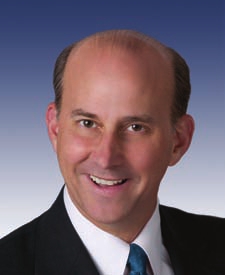
Did Rep. Louis Gohmert (R-Tx)*, one of the prominent conservatives in the Republican-led Congress, misuse over $6,000 in campaign funds on a speaking trip to London? Maybe; it sounds like one of those typical gray election law controversies, and one of the lesser ones, except that Gohmert is on a lot of partisan hit lists. If he did misuse the funds, I’d want to see him fined, or whatever the violation warrants, and chastened too.

That’s not my concern right now, though. What interests me is that the alleged misuse of funds was flagged by Citizens For Responsibility and Ethics in Washington, and in reporting it, Mediaite said, in a story headlined, Ethics Watchdog Accuses Gohmert of Misusing Campaign Funds:

“An ethics watchdog group has filed a complaint against Rep. Louie Gohmert, accusing the Texas Republican of misusing campaign funds to foot the bill for a trip to England that included a 5-star hotel and a $200-plus taxi ride.The complaint, filed by Citizens for Responsibility and Ethics in Washington (CREW), was addressed to the staff director and chief counsel of the Office of Congressional Ethics and demands an investigation into whether Gohmert violated House rules by using campaign money for a trip that seemingly had nothing to do with his campaign.”

CREW, as I have repeatedly pointed out for years, is no “ethics watchdog.”  Continue reading

The Sixth Annual Ethics Alarms Awards: The Worst of Ethics 2014 (Part 3)

ellen-selfie

2014 Conflicts of Interest of the Year

  • Conflicted Elected Official: Philadelphia State Senator LeAnna Washington. This is always an entertaining category. Washington was convicted of using her tax-payer financed staff to organize a yearly campaign fundraiser around her birthday party. When one staffer complained that this was illegal, she reportedly replied, according to his grand jury testimony:

“I am the fucking senator, I do what the fuck I want, and ain’t nobody going to change me. I have been doing it like this for 17 years. So stop trying to change me.”

  • Conflicted Journalist: CNN sent Jay Carney, fresh off his assignment as President Obama’s official spokesman, defender and spinmeister, to cover his ex-boss’s speech.
  • Conflicted  “Non-partisan” Watchdog: CREW. The Center For Responsibility and Ethics in Washington and its chief, Melanie Sloan, finally came clean (after falsely claiming non-profit status as a non-partisan organization for years) by making David Brock, head of the openly partisan, foaming-at-the-mouth anti-Republican media watchdog Media Matters its Chairman of the Board, essentially merging the two groups.
  • Appearance of Impropriety Award: Rep. Steve Scalise (R-La), Republican Whip. It is not certain yet whether Scalise knowingly spoke to a group of white supremacists in 20o2, inadvertently spoke to the group, or just spoke to another group meeting in the same venue before the David Duke-affiliated group of racists started comparing sheets. It isn’t even clear that Scalise knows, but everyone should agree that it looks awful no matter how you categorize it, making the fiasco a classic appearance of impropriety situation. If the Republicans were smart, they would dump him.

Unethical Attire of the Year

Offensive shirt

This.

Unethical Political Candidate of the Year

Wisconsin Democratic gubernatorial candidate Mary Burke, whose campaign materials were largely plagiarized from the materials other candidates.

Ethically Clueless Voters of the Year

New York’s 11th Congressional District, which contains Staten Island and parts of Brooklyn. These alert and ethical citizens sent back to Washington thuggish and crooked Rep. Michael Grimm (R), then facing a 20-count indictment by federal authorities for fraud, federal tax evasion, and perjury, having earlier distinguished himself by threatening to kill a reporter and being recorded doing so.

  Unethical Advertising of the Year

Lawyer Division:

Public Service Announcement Division:

TV Program Division:

The Discovery Channel’s campaign for “Eaten Alive!” which did not, in fact, feature anyone being “eaten alive,” or at all.

Private Sector Product Division:

Halos. Or perhaps this is the Child Abuse Division:

Political Campaign Division:

Wendy Davis, Democratic candidate for Texas Governor, offered an ad attacking her wheelchair- bound opponent that 1) appealed to bias against the disabled 2) misrepresented the duties of a state attorney general 3) misrepresented the facts of the cases the ad referred to and  4)  deceived the public regarding the ethical duties of lawyers, which Davis, a lawyer, presumably understands. Continue reading

Vice President Biden May Be A Boob, A Hypocrite And An Ethics Dunce, But He Understands The American Culture Better Than Most Of His Party

I’m late to the blog today, because I spent it giving a special program for the Smithsonian Associates called  “From Stagecoach to Django Unchained: The Hollywood Western and Its Influence on American Values, Aspirations and Culture.” It consisted of me talking, a terrific Powerpoint presentation by the gifted Grace Marshall, and almost three hours of clips from classic Westerns—the whole session was five hours. My primary message is that anyone who is not literate  regarding the Hollywood Western really doesn’t understand the myths and archetypes that powerfully influence U.S. culture to this day. Within that “anyone” are the majority of pundits and journalists, a large percentage of citizens under 50, and the vast majority of women and minorities. This is a problem.

For example, no one can consider the vast influence of the Western genre on American culture and be the least bit surprised that gun control has an uphill battle with the American public. No other culture has as its primary source of heroes, legends and lore figures and events so dependent on firearms as a means to right wrongs, protect the innocent, and punish evil. Frankly, if a pundit doesn’t understand why John Wayne (who died in 1979) just set a Harris poll record by being included in its annual list of top ten most popular movie actors for twenty consecutive years, from 1994 to 2014, I don’t think they can comprehend the nation sufficiently to opine on it.

Joe Biden, however, understands. I have been critical of Joe, as he is frequently an embarrassment, and there was a lot wrong with his comments today as he was honored with the “Voice of Solidarity” award by Vital Voices, a women’s rights charity, at their event celebrating “men who combat violence against women.” Still, Biden proved that whether he knows it or not, he is more atuned to U.S. culture than most of his colleagues. He deserves credit for that, if nothing else.

You see, Biden told a fascinating personal anecdote from his childhood. He related:

“I remember coming back from Mass on Sunday Always the big treat was, we’d stop at the donut shop…We’d get donuts, and my dad would wait in the car. As I was coming out, my sister tugged on me and said, ‘That’s the boy who kicked me off my bicycle.’ So I went home—we only lived about a quarter mile away—and I got on my bicycle and rode back, and he was in the donut shop.”

Biden said the the boy was in a physically vulnerable position,“leaning down on one of those slanted counters,” so he took immediate advantage:

“I walked up behind him and smashed his head next to the counter.His father grabbed me, and I looked at his son and said, ‘If you ever touch my sister again, I’ll come back here again and I’ll kill your son.’ Now, that was a euphemism. I thought I was really, really in trouble… My father never once raised his hand to any one of his children—never once—and I thought I was in trouble. He pulled me aside and said, ‘Joey, you shouldn’t do that, but I’m proud of you, son.’”

The lesson, Biden said, was that one should to “speak up and speak out” to correct wrongdoings. Like much of what come out of Biden’s mouth, this was nonsense in the context of his own story, and was not what the lesson was at all. The lesson was that force, punishment, violence and intimidation is sometimes necessary to stop bullying, discourage misconduct, protect the innocent and vulnerable,  set standards, and give more than lip service to core values. Little Joey Biden didn’t “speak up”: he bashed a bully’s head and threatened to kill him. Apparently it worked, too. America, Americans, the culture and our history—as well as the Duke–have long believed that sometimes violence is necessary to stop violence, and send important messages, and can therefore be virtuous and ethical.  Biden understood that when he was ten, and somewhere deep in that mess of mush he calls a mind, he understands that now. Continue reading