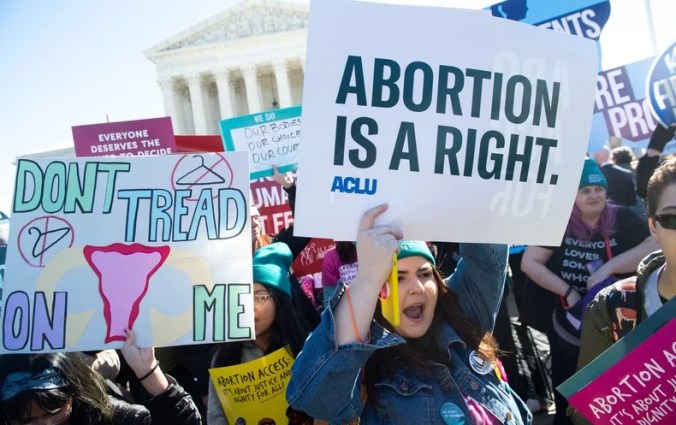
It’s abortion ethics overload here again, and with it, an embarrassment of rich Comments of the Day on the topic. Several more are on the way; I just picked Humble Talent’s comment first because I located it first. As with all of the excellent posts on the topic, part of my concern is to keep the focus on ethics rather than politics. The ethics and politics collide unavoidably on this issue, however, particularly on the special role of the Supreme Court in a democracy.
This vital detail appears to be what the Dobbs critics (as well as the previously hysterical decriers of last week’s decision upholding the second Amendment either never learned in school or deliberately ignore when a decision comes down that they don’t like.
SCOTUS exists to make sure that our government operates within the boundaries of its founding documents and that its constitutional laws are clear, consistent, and within settled norms. It is not a “democratic institution,” but the part of the government plan designed to ensure that the democratic institutions within the other two branches don’t allow popular will and pressures to abuse the core principles that nation was founded to embody.
The furious attacks on the Court for doing exactly what it exists to do are dangerous and corrosive. When I was just a little bitty ethicist, it was the Right that engaged in this practice in response to the Warren Court’s judicial activism. That court, stocked with some of the finest judicial minds of the 20th Century (Black, Harlan, Brennan, Stewart), used the power of the bench to make some crucial course corrections, notably Brown v. Board of Education. Though some of its opinions were literally legislating (composing the Miranda Warning is an egregious example), the Warren Court was the bright side of activism, but also demonstrated the dangers of the slippery slope. For the Burger Court with succeeded it was neither as strong in judicial wisdom nor as prudent in its choice of perilous territory. The Roe decision was the result, a badly reasoned opinion by one of the Court’s most glaring mediocrities (appointed by Richard Nixon), Harry Blackmun. The majority opinion manufactured a Constitutional right that didn’t exist, its members giddy from the exhilaration of Sixties-era rebellion. It snatched the issue of abortion away from the legislatures and the voters who elect them. Roe was an abuse of SCOTUS power, but because the opinion was popular, especially with women—though not with lawyers capable of evaluating it objectively—there were not many opportunities to overturn it. Soon it seemed to have lasted so long that Court tradition would guarantee its survival. Since abortion was now a “right,” though a manufactured one, abortion fans saw no need to fight for what should have been their objective all along: a national law.
That was a serious miscalculation. Ethically, this is the Burger Court’s fault: while we should have been debating a difficult and complex societal problem, women’s rights activists felt it was enough to blur the issue with lazy, deceitful talk of “choice,” making abortion foes out to be male chauvinist pigs who wanted women barefoot and pregnant in the kitchen. Ethics evolves, however, and the sheer weight of millions and millions of post-Roe aborted nascent human beings, combined with the realization that there was more being killed than just a “clump of cells,” inevitably led the Court to reconsider a terrible opinion. In the meantime, the American Left had increasingly sought to rely on liberal judges to accomplish what could not be achieved with an increasingly conservative citizenry. In other words, they abandoned democracy as their favored means of societal change. That was unethical, but to be fair, the abuse of judicial power tempted them.
Here is Humble Talent’s Comment of the Day on the post, “Note On The Final Dobbs Opinion.
The ethical principle involved is “competence,” as well as accountability, arrogance, hubris, and hypocrisy.
***
Continue reading →







 Ethics Alarms