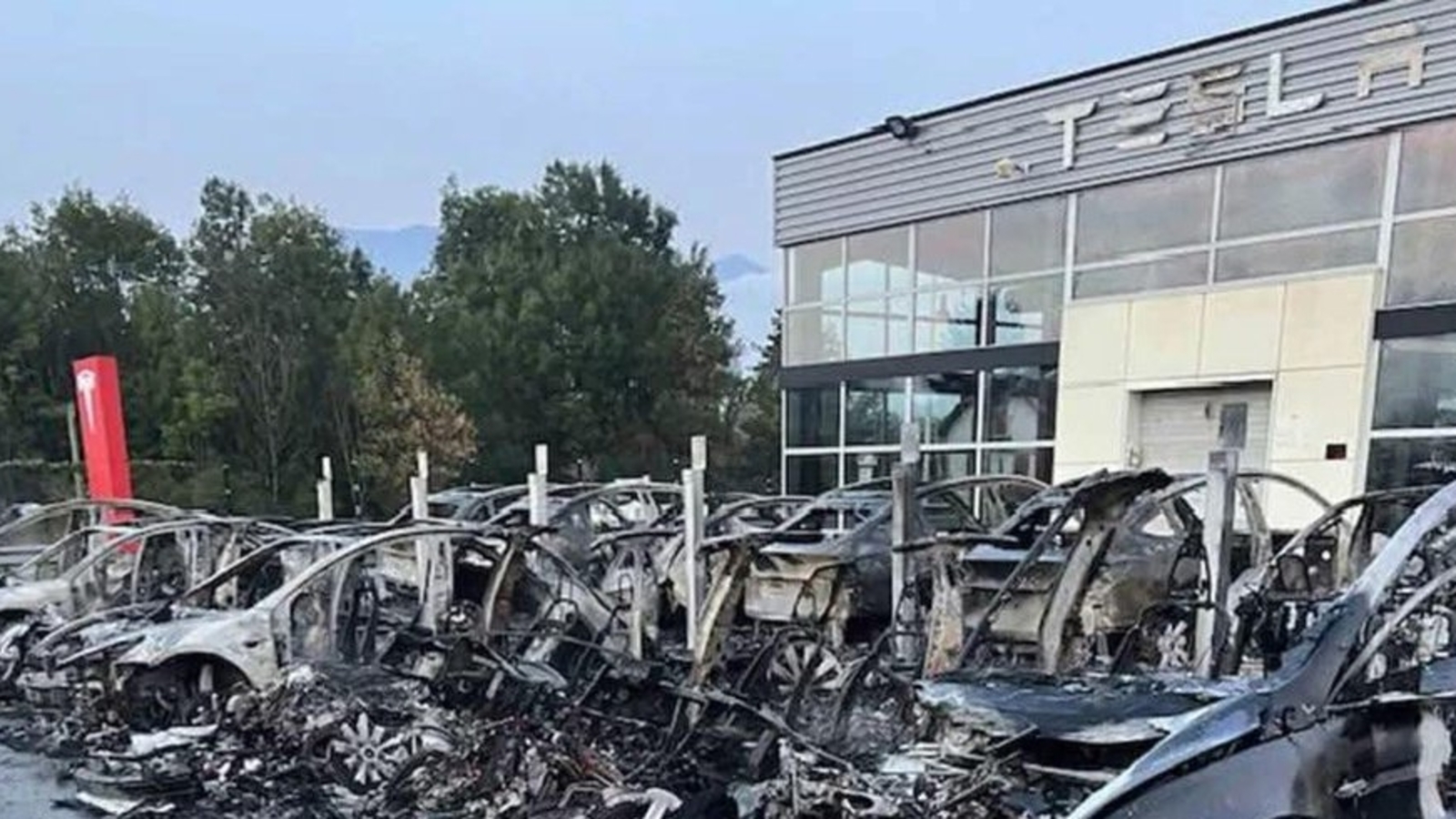
Oh fine. Now Elon Musk is proving that domestic terrorism works.
Elon Musk said yesterday that he will significantly cut back his commitment to DOGE beginning in May to focus more time and energy on Tesla, which this week reported a 71% drop in profits compared with the first quarter of 2024. In so doing, he immediately validated the illegal and unethical domestic terrorism campaign against him that has been wink-winked as valid by leading Democrats and Trump-haters.
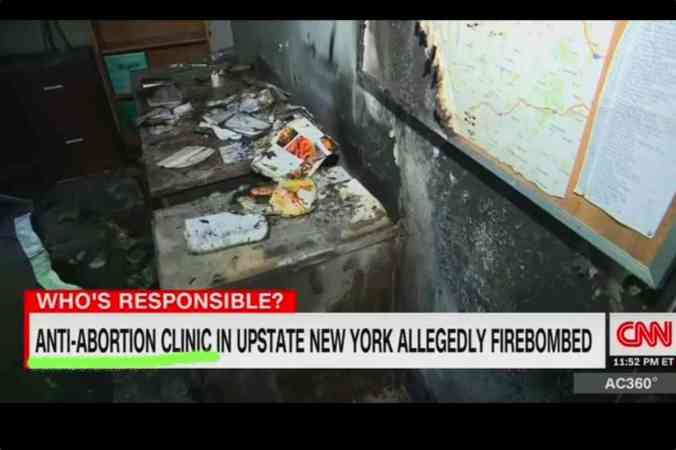
Well that doesn’t leave much question about where CNN stands, does it? These health centers being targeted for violent attacks by the domestic terrorist group Jane’s Revenge (“If abortions aren’t safe, then neither are you”) are pregnancy clinics which help expectant mothers seek other solutions to their plight that don’t kill anything. “Anti-abortion” is an accurate and direct description of political efforts to limit abortions, but clinics are medical, not political, and are correctly called crisis pregnancy centers. CNN’s use of “anti-abortion” is a deliberate effort to rationalize the bombings. I don’t know why I’m surprised…. Continue reading →
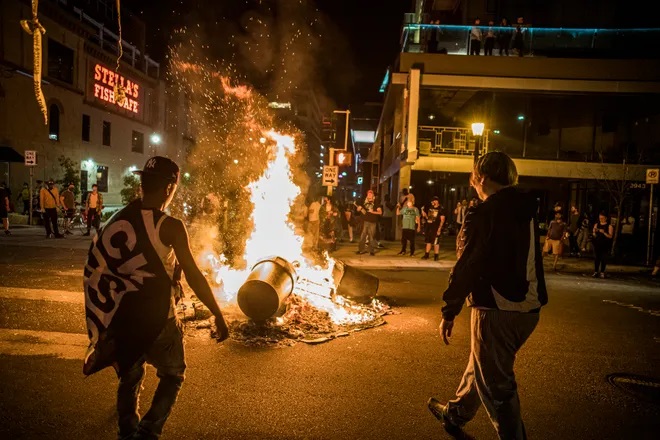
That the latest black shooting victim being used to justify rioting in Minneapolis had the same name as the doomed protagonist in “1984” supports a friend’s theory that a Supreme Being is just using us for his own amusement. But the latest set of reflex rioting—the rule is that if a black suspect/criminal/alleged criminal is killed by police under any circumstances, there must be riots—tells us more than that. It confirms what should have been evident quite a while ago: this process is social extortion, or, if you prefer, domestic terrorism. The aim is to threaten and punish innocent citizens and vilify police using the presumption of racism as an excuse, so that there can be virtually no enforcement of the law against African-Americans at all. “Black Lives Matter,” always a deceitful bit of rhetorical dishonesty, has now completely morphed into Facts Don’t Matter for anyone to see who is bold enough to accept the ugly truth.
Who was Winston Smith? He was convicted in 2017 in the assault and robbery of his ex-girlfriend and sentenced to two years in prison. The sentence was suspended for three years, on the condition that “Boogie” didn’t break more laws. Of course, he did. As a convicted felon, Smith was prohibited from owning or having a firearm. He was charged with illegally possessing a gun in 2019. The U.S. Marshals Service said in a statement that its task force was trying to arrest Smith on a state warrant for illegal possession of a firearm last week. When law enforcement tried to take him into custody from a parked car on the top level of a parking ramp, he “failed to comply with officers’ commands” and “produced a handgun resulting in task force members firing upon the subject.” Task force members took life-saving measures, but Winston Smith was pronounced dead at the scene.
A woman who was also in the car was treated for minor injuries from broken glass. “Evidence at the scene indicates that the man fired his weapon from inside the vehicle. BCA crime scene personnel recovered a handgun as well as spent cartridge cases from inside the driver’s compartment,” the Minnesota Department of Public Safety Bureau of Criminal Apprehension said in a statement.
The big problem here is that was no video. For some reason the U.S. Marshals Service does not allow body cameras for officers on the task force. An investigation is ongoing; at this point, everything is based on what we have been told. Maybe Smith didn’t have a gun. Maybe the gun the investigators found had “Hasbro” on it; maybe they planted it. Maybe he had his hands up, and shouted “Don’t shoot!” or “I can’t breathe!” I don’t know, and neither do the rioters. The difference is that they are rioting and I’m not. All that matters to them is that the police killed a black man, and they want to make sure that officers never do that again, which will be a great help to black criminals. Smith’s conduct doesn’t matter; whether he shot at the marshals doesn’t matter. If police end up killing a black man, they are at fault, the system is at fault, white America is at fault, and people have to be hurt. That’s the script now. After all, it’s worked so far.
I guess that would be a too-short essay on an important topic with special contemporary relevance, so I am bound to say more. Nonetheless, I would be more comfortable with my fellow society members and more confident of the future of the the nation if the answer to the title query was universally accepted in absolute terms. For the acceptance of the principle of pre-crime is dangerous. It places less than a spiked mountain-climber’s boot on a slippery slope to totalitarianism, which is the real-life equivalent of the Devil in the scene above from “A Man For All Seasons,” both the play and the movie, based on the writings of Sir Thomas More, in which More emotionally refuses to arrest a man because of the evil he might do, before he has actually broken any laws:
More’s Wife: Arrest him!
Sir ThomasMore: For what?
Wife: He’s dangerous!
William Roper (More’s Son in Law): He’s a spy.
Margaret (More’s daughter): Father, that man’s bad.
More: There’s no law against that.
Roper: There is – God’s law.
More: Then God can arrest him.
Wife: While you talk, he’s gone.
More: And go he should, were he the Devil himself, until he broke the law.
Roper: So, now you’d give the Devil the benefit of law?
More: Yes! What would you do? Cut a great road through the law to get after the Devil?
Roper: Yes, I’d cut down every law in England to do that!
More: Oh? And when the last law was down, and the Devil turned ’round on you, where would you hide, Roper, the laws all being flat? This country is planted thick with laws, from coast to coast, Man’s laws, not God’s. And if you cut them down – and you’re just the man to do it – do you really think you could stand upright in the winds that would blow then? Yes, I’d give the Devil benefit of law, for my own safety’s sake.
Few more profound and important thoughts have been so eloquently and powerfully presented in a motion picture as this scene from “A Man For All Seasons,” to which I will note (again) in passing, “Rotten Tomatoes” gives a lower score than “Birdman,”a fact that provides a disturbing snapshot of the state of our education, culture and priorities in 2019.
Both political parties have placed their feet on this slippery slope in the past. The essence of pre-crime is punishing a citizen for what he or she is, rather than for what he or she has done, on the theory that what an individual is makes that person “dangerous,” in the words of Mrs. More, for what they might do. President Franklin D. Roosevelt (and the Supreme Court that backed him) was responsible for probably the worst example of pre-crime in our history, when the United States, in full panic mode after the bombing of Pearl Harbor, imprisoned loyal Japanese-American citizens as a precautionary measure. Another panic, also not entirely groundless, led to a pre-crime mentality during the Red Scare and McCarthy episodes, seeking to punish Americans who belonged to the dreaded Communist Party, a nonetheless legal organization.
To be abundantly clear, I will define pre-crime as when the government removes a civil right, a Constitutional right, from a citizen, not as punishment for breaking a law, but based on what that individual believes, says, is or is understood to be. Continue reading →
It should be apparent by now that BlackLivesMatter is a racist domestic terrorist organization. Terrorism is causing chaos for the sake of causing chaos in the imagined pursuit of a political agenda. That’s what the group, smug and shameless as ever, did over the post-Christmas weekend, disrupting the Mall of the Americas and blocking traffic at the Minneapolis airport. No, they haven’t killed anyone yet; they claim to be non-violent. We’ll see about that when they get sufficiently frustrated. One thing is certain about irrational, self-glorifying organizations: you never know how irrational they will get.
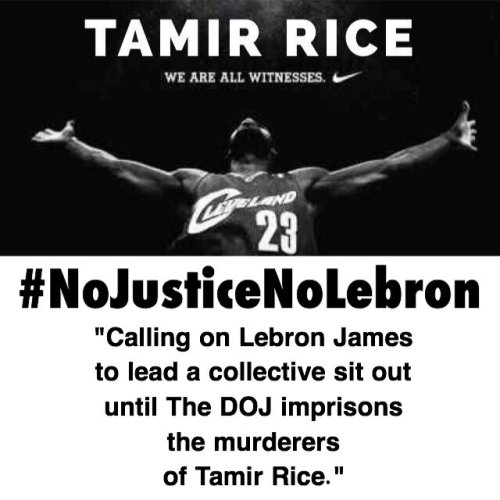
Now the Tamir Rice mess in Cleveland has presented BLM and its allies—which include all three Democratic candidates for President, according to their pandering rhetoric, as well as the Democratic National Committee— with a target more relevant to their alleged mission than disrupting children’s choir performances, losing money for small businesses and inconveniencing Minnesotans who never did an African American harm in their lives. Using the hashtag #NoJusticeNoLebron, the Ferguson activated activists, led by writer Tariq Touré, have launched a Twitter barrage imploring NBA superstar and Cleveland Cavaliers hometown hero LeBron James to refuse to play in NBA games until the Department of Justice, “imprisons the murderers of Tamir Rice.” Justice is of course investigating the fatal November 2014 shooting, since the Obama Administration tacitly encourages the divisive myth that any time a white officer shoots a black man, it is presumptively a civil rights violation.
Like virtually everything that has come out of the incoherent, anti-white, anti-police movement surrounding the various controversial police shootings (of blacks only, however, though there have been more fatal shootings of whites…but never mind, that doesn’t advance the mythical narrative), this plan is ludicrous, unfair, and demonstrates the ignorance and/or contempt the protesters have for due process and the rule of law. Continue reading →
Former President Bill Clinton has sounded an alarm he has sounded before, warning that the intensity of the rhetoric on conservative radio emboldens fringe radicals to violence. As he did in 1995, when he was in the White House, Clinton lays the Oklahoma City bombing at the feet of big-government critics, a strategy that then managed to halt the momentum of Republicans in their assault on Democratic policies. Also as in 1995, King of the Radio Right Rush Limbaugh has countered that Clinton is using revisionist history to avoid his administration’s own responsibility for Timothy McVeigh’s attack, which wasn’t timed to coincide with the anniversary of the Branch Davidian massacre by accident. Limbaugh’s argument that the conduct of Federal agents in Waco (as well as Ruby Ridge) had a lot more to do with McVeigh’s anger than anything he heard on talk radio is persuasive on the merits.
Nevertheless, Clinton’s general point that talk radio is playing with fire is a legitimate one. Continue reading →
 Ethics Alarms