Trayvon Martin-George Zimmerman Ethics Train Wreck Update: The Special Prosecutor Buys a Ticket!

Don’t tell me Angela Corey is unethical too! Hey…I told you not to tell me!

Here, almost in its entirety, is noted legal ethicist Monroe Freedman’s post on the The Legal Ethics Forum, regarding Special Prosecutor Angela Corey’s outrageously unethical press conference. I was going to post on this myself, but I could not improve on Prof. Freedman, which should come as no surprise to anyone familiar with his career and contributions to legal ethics theory. His title was “Trayvon Martin, Angela Corey, and Prosecutors’ Ethics.”  When I read it, the only thing I could say was “Bingo!”  From here on, it is all Monroe:

“Special Prosecutor Angela Corey used her press conference to establish three things.

“First, her investigative team… “worked tirelessly” in a “never-ending search for the truth and a quest to always do the right thing for the right reason.”  We are “not only ministers of justice,” we are “seekers of the truth,” and we “stay true to that mission.” Continue reading
Easy Question With A Sad Answer: If The New York Times Is The Nation’s Most Respected Newspaper, What Does The Patrick Witt Story Say About The State of American Journalism?

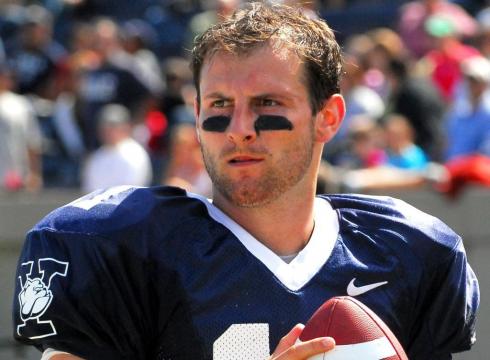
Patrick Witt, rapist. Well, accused rapist. OK, he was accused of something that might have been rape.All right, all right, we can't say what he is accused of or did, but he must be a bad guy, or we wouldn't be publishing this story about what some people say he did. Because the public has a right to know. Thank god for Freedom of the Press!

The jaw-dropping Patrick Witt story in Friday’s New York Times was heavy on my mind when I wrote yesterday’s post about the collapse of the news media’s ethical standards. I decided that it needed its own spotlight. When I read the piece about Yale’s former quarterback, what kept going through my mind was, “What does the Times think it’s doing?” I still can’t figure it out.

Reporter Richard Perez-Pena uses an anonymous complaint of sexual assault levied against Witt as justification for raising questions about a young man’s integrity and character and to undermine his reputation with innuendo, speculation and rumor. The article would be outrageous if it was written about a public figure. Publishing such a cruel and unfair attack on a relatively obscure student athlete defies all reason. Obviously, it is also bottom of the barrel journalism…from America’s premier newspaper. Continue reading

Fick Sighting in Prince George’s County

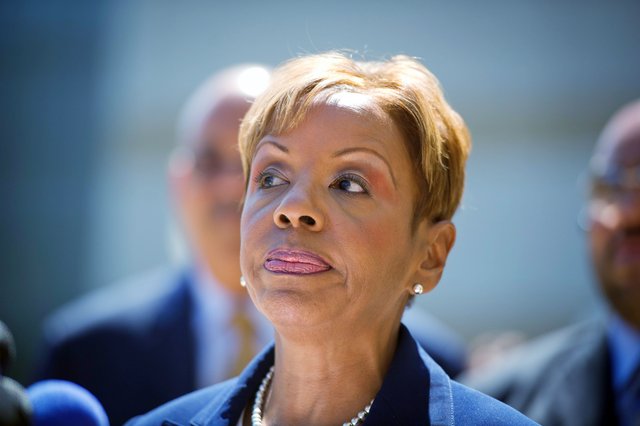
Leslie Johnson, fick.

Ethics Alarms recently coined the useful term fick to describe the especially shameless individual who violates society’s ethical norms openly, publicly and flagrantly, without remorse or apology. It takes a certain kind of anti-social arrogance to be a true fick, with the gold standard established by Michigan lottery winner Leroy Fick, a millionaire who happily continues to collect food stamps because of a statutory loophole despite howls of indignation from his neighbors in one of the most fiscally-challenged states in the nation.  Other ficks who have come to light include Hugh Heffner despicable ex-fiance Crystal Harris, who plotted to humiliate him at the altar to launch a reality show. Of course, there is  longstanding Octo-fick Nadya Suleman, and celebrity fick Charlie Sheen.

Now lucky Prince George’s County in Maryland has a bona fide fick of its own.  Continue reading

Comment of the Day: “The Jaundiced Eye of Noam Chomsky”

You can find the original post here, and under it, my response to this comment by reader Trafford Gazsik. I’d say that Christopher Hitchens’ rebuttal to Chomsky, linked in the post, and my post about the ethics of bin Laden’s execution address the issues raised, make up your own mind.

“I like Chomsky and as a non-American, I can assure you that rather than filling my head with anti-American sentiments, his writings have reassured me that America remains a country populated with mostly decent people and that the world at large should not give up on the place just yet.

“I’m interested to know which part of Chomsky’s analysis you do not agree with:

– Do you disagree with the assertion that the Bin Laden ‘takedown’ was an assassination?

– Do you reject the assertion that the assassination took place within the territory of another sovereign state without the knowledge or permission of the government of that state, in clear contravention of international law and customs?

– Do you deny that Bin Laden had not been tried in any court, and was for legal purposes, an innocent civilian of Non-US nationality residing in Non-US territory? Continue reading

Quiz: Which Law Enforcement Fiasco Was More Unethical?

It’s Quiz Time!

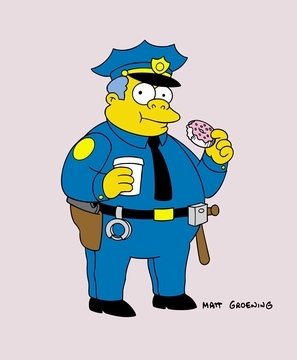
Chief Wiggum would be an upgrade.

Today’s topic: Why the public doesn’t trust the law enforcement system. Here are two horrible and true, tales of AWOL ethics involving law enforcement in New York and Tennessee. Which is more unforgivable, A or B?

A. Brooklyn, NY: The Perpetual Warrant

What is the fair limit of “the police made  an honest mistake”? Let’s say the police have a warrant to search your house, and come to your door because they got the address wrong—and it’s a mistake. At least they didn’t break down the door in the middle of the night. OK, mistakes happen. Then they come again, because they got your address in error again. Annoying, but they seem embarrassed: they aren’t trying to harass you.

And then they arrive 48 more times. Continue reading

Ethics and Freeing the Unjustly Convicted: A Utilitarian Controversy in Illinois

Northwestern University journalism professor David Protess and his student reporters have been carrying out a heroic and aggressive project aimed at rescuing innocent residents of Illinois’s death row. It was Protess’s Medill Innocence Project that played a major role in influencing former Illinois Gov. George Ryan’s decision to halt all executions. Now, however, the Innocence Project’s methods are now under attack by its own university and Cook County prosecutors, who say the students crossed legal and ethical lines while investigating a decades-old murder.

Prosecutors claim that some of Protess’s students used surreptitious taping in an investigation, secretly recording a suspect in violation of Illinois law. Continue reading

Ten Ethics Questions for the Pat-Down Defenders

I, like you, have been reading and listening to my various “My Obama, may he always be right, but my Obama, right or wrong” friends try to argue that having TSA agents sexually assault non-consenting adults is a perfectly reasonable and benign exercise of government power. I, like you, am tired of the posturing and excuse making. Their arguments, in essence, all boil down to: a) they have no choice b) they have our best interests at heart c) it’s no big deal, and 4) trust them, they know what they are doing.

I suggest that you, as I will, pose the following questions to your trusting friends, perhaps beginning with a preliminary query regarding whether they themselves have undergone the humiliating and invasive pat-down procedure that they so willingly approve of for others.

Then ask them these: Continue reading

Unethical Quote of the Week: The Los Angeles Times

“If you can’t handle such a minor inconvenience, perhaps you should stay on the ground.”

The Los Angeles Times Editorial Board, in an editorial called “Shut up and Be Scanned,dismissing the objections of travelers who find the gonad and breast-fondling patdowns now being used by TSA screeners embarrassing and obtrusive. Continue reading

Leslie Johnson, the Implications of Guilt and the “Innocent Until Proven Guilty” Confusion.

In the context of American justice, “innocent until proven guilty” means that nobody is legally guilty of a crime until a court proceeding has ruled so after a fair trial. The term is nowhere in the Constitution or Bill of Rights; it flows from the Due Process clause of the Fifth Amendment, requiring that no one can lose his or her freedom or property without due process of law. What it does not mean is that a wrongdoer is literally innocent of a crime until a jury or judge has officially declared that he is. If he did something, he did it, and if we all know he did it, we don’t have to pretend he didn’t or that we don’t.

I saw Jack Ruby shoot Lee Harvey Oswald on television and get taken into custody on the spot, and still had to listen to broadcasters say he “allegedly shot Kennedy’s assassin” as if it was still just a theory. By this standard, John Wilkes Booth only “allegedly” shot Lincoln, since he was never tried. The fact that a theater full of people saw him do it, leap to the stage and run off derringer smoking, doesn’t mean a thing. He’s as pure as the driven snow, innocent forever. Continue reading

The Internet Censorship Bill and Escalating Abuse of Government Power: Why Do We Continue to Trust These People?

Yesterday, the Senate Judiciary Committee unanimously approved a bill giving the U.S. Attorney General the power to shut down any website with a court order, if  he determines that copyright infringement is  “central to the activity” of the site.  It doesn’t matter if the website has actually committed a crime, and there is no trial, which means that the law is a slam dunk violation of the U.S. Constitution.  The Combating Online Infringement and Counterfeits Act (COICA) is a little goody bought by the lobbyists and PACs of Hollywood, the recording industry and the big media companies, to block the rampant internet file sharing that has cost them a lot of money in lost sales and profits over the past decade.

I am adamantly opposed to filesharing and the ethically dishonest arguments used to defend it, most of which begin with “Everybody does it.” I sympathize with the artists whose work is being stolen, and the companies who have complained to Congress. But all the strong condemnation of filesharing by lawmakers and corporate executives doesn’t change a central fact: the Constitution says you can’t do what COICA allows. It says this in at least two places: the First Amendment, which prohibits government interference with free speech, and the Fifth Amendment, which decrees that property can not be taken from citizens without Due Process of Law. A law that lets a government official just turn off a website without a hearing or showing of proof? Outrageous. and unconstitutional. Continue reading