Morning Ethics Warm-Up, 9/17/17: Boy Scouts, “Will and Grace,” An Actress Whines, Wedding Cakes, And (I’m Sorry!) More Hillary

Good Morning!

1 I’m giving an ethics talk to a Boy Scout troop this afternoon. Figuring out how to use example that are appropriate to ages 11-14 while avoiding hot-button issues like race, sexual orientation, police, guns and politics in general is a lot more difficult than I thought it would be. What pop culture reference points will work is also a conundrum. What movies are they likely to have seen? In the Sixties, I could have referred to Westerns, many of which routinely embodied ethics lessons. But they also often involved shooting people, and kids don’t see Westerns now. In the Eighties, I might have sent Boy Scouts to episodes of “Star Trek: The Next Generation,” which was virtually all about ethics. But Patrick Stewart is just an old guy doing commercials now, and there have been four TV incarnations of the franchise since Data packed it in, not counting the movies. Pixar movies are usually ethics-rich, but a lot of kids will bristle at being presumed to be cartoon fans. Superhero movies? The ones that raise ethics issues usually do so badly, or the issues are too complex—or too dark– for a Boy Scout Troop. Here we see the serious cultural problem of declining cultural literacy and deteriorating cross-generational communications as a result of the loss of common experience. and interests.

Well, it’s early. I’ll figure out something.

One approach I considered was to suggest they practice ethical analysis by reading the newspaper, picking out the ethics dilemmas and controversies that appear, thinking about them and arguing about them. Of course, that was foolish: they would probably ask, “What’s a newspaper?” However this morning’s Sunday Times is a perfect example. I could teach a four hour ethics seminar based on the stories in this edition alone. Look…

2. The baker who refused to sell a cake to a gay couple is back on the front page, thanks to the case winding its way to the Supreme Court. This time, the focus isn’t on Freedom of Religion (in this case, freedom to act like a jackass using your religion as an excuse), but Freedom of Speech. The government cannot compel speech, nor will the law compel specific performance of an artistic nature. The baker claims that his cakes are artistic creations, and he doesn’t have to make them for anyone or anything if he doesn’t want to.  The gay couple says that they weren’t asking for him to create an artwork, just to sell them a wedding cake. If the cake is a commodity, then the bake shop should be a public accommodation, and subject to applicable laws. Then the baker has to sell his cakes to anyone. If the cake is an “artistic creation” made specifically for the couple, then the law cannot force the baker to make it, or punish him if he refuses. Art is speech.

I hate these kinds of cases, and I’m sure the SCOTUS justices do too. A cake is sometimes just a cake, and sometimes a work of art. The confrontation should have been handled with ethics rather than law. The baker is a bigoted jerk, that’s all. I think he has a right not to make a cake for a gay couple, but exercising that right is cruel and insulting. Continue reading
Comment Of The Day: “The ‘Unacceptable Word’ Fiasco: OK, Now I Really Want To Know How Many Progressives Seriously Endorse Stuff Like This?”

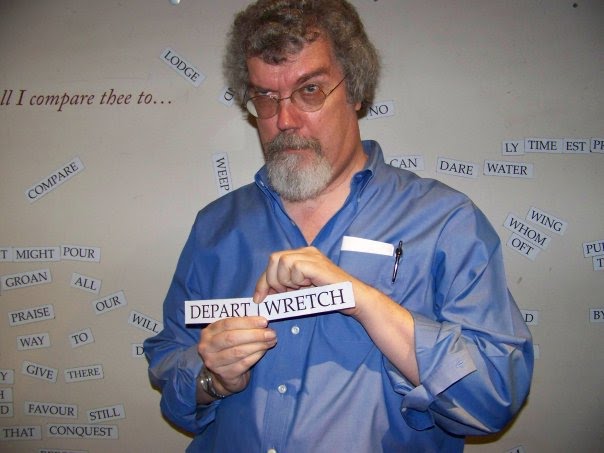
I don’t know if anyone regularly commenting here cares about the punishment of the acting student for his politically incorrect choice of words in an improv exercise as much as Curmie (above) and I do, but we care about it a lot.  As with the Ethics Alarms baseball ethics posts, the various theatrical ethics posts here sink quickly in readership, which, I’m afraid, speaks to a regrettable narrowness of vision. Ethical issues are seldom restricted in their applicability to the specific area in which they arise. I’m especially sensitive to ethics issues others might miss in certain areas where I have a lot of experience and expertise. The same is true, obviously, with Curmie.

Incidentally, I again urge readers to check on Curmie’s blog routinely. He has been through a light writing period of late, but when he speaks, as they once said of E.F. Hutton, people listen, or should. And maybe we can get him writing more again. I know of no more thoughtful, fair, and eloquent blogger, regardless of the topic.

See Curmie? The pressure’s on now!

Here is Curmie’s Comment of the Day on the post, The “Unacceptable Word” Fiasco: OK, Now I Really Want To Know How Many Progressives Seriously Endorse Stuff Like This?:

I am not an acting teacher by trade, but I have taught about two dozen sections of various college-level acting courses over the years. I’ve also taught directing maybe 15 times, and I’ve directed about 40 full-length plays (and a bunch of one-acts)—I’ve used improv techniques in the classroom and in rehearsal many times, although perhaps fewer than some of my colleagues of equivalent experience may have done.

It is remotely possible that the professor, Craig Rosen, imposed some restrictions on the exercise. I’ve done this. For example, if a student is working on a period piece and the language is, shall we say, less explicit than that of a work by David Mamet or Neil Labute or Sarah Kane might be, that young actor may be having trouble finding the anger a character feels if the verbal expression of it seems mild by 21st-century standards.

I’m reminded of working on a book chapter about an Irish version of Chekhov’s Three Sisters. The translator/adapter had Masha, one of the title characters, refer to her sister-in-law as a “bitch.” I happened to have access to a good friend and native Russian speaker, who also happened to be a scholar of dramatic literature. No, she said, Masha’s expletive doesn’t really translate that way… but for her expression of class-driven disgust to have the same effect on a modern audience that Masha’s line would have had in Tsarist Russia, she’d have to call Natasha a “fucking shopkeeper.” Continue reading

Morning Ethics Warm-Up, 9/9/17: The AP Invents A New Misleading Phrase, Deaf Signer Ethics, No Innocent Until Proven Guilty In The NFL, And More…

GOOD MORNING!

1 This is the monthly brief warm-up, as I have to be bright-eyed and bushy-tailed at an obscenely early hour and teach the peculiarities of the District of Columbia Rules of Professional Conduct to about 300 lawyers newly admitted to the bar. And those rules are peculiar, notably Rule 5.4, which allows District lawyers to form multidisciplinary firms, with accountants, economists, professional marketers and other non-legal professionals as partners. Such firms mirror entities in Europe that take international business away from U.S. firms, but are regarded as unethical in every other U.S. jurisdiction, and condemned by the American Bar Association.

2. Yesterday I watched Florida Governor Rick Scott give his pre-hurricane warnings, or tried to, since standing next to him was a signer for the deaf, gesticulating and making more elaborate faces than the late Robin Williams in the throes of a fit. I have mentioned this in the context of theatrical performances: as a small minority, the deaf should not be enabled by political correctness to undermine the best interests of the majority. What Scott was saying was important, and could have been adequately communicated to the deaf citizens present by the signer standing off camera. TV viewers could and should have been able to watch a text crawl following Scott’s speech, or closed captioning. Public speaking involves verbal and visual communications, and having a vivid distraction like a professional signer—many of whom feel it is their duty to add broad facial expressions to their translations—is unfair to both the speaker and his or her audience. This is one more example of a sympathetic minority bullying the majority to establish its power. Continue reading

A DACA Popeye For NYT Pundit Paul Krugman

“That’s all I can stands, cuz I can’t stands no more!”

—Popeye, before downing a can of spinach and beating the crap out of someone who richly deserves it.

Readers often accuse me of being angry. I’m almost never angry about the stories I write; I just write that way. In this case, however, I am angry.

Paul Krugman, a nasty, smug, narrow-minded New York Times pundit who epitomizes the infuriatingly common progressive mindset of condescending to anyone who disagrees with his various, so often biased and ignorant positions on a plethora of issues he knows little about and understands less, used today’s op-ed column to call me a racist. Not just me, of course: all the various constitutional scholars and lawyers, elected officials—and Hillary Clinton, once upon a time—who don’t believe that the United States should be obligated to allow illegal aliens to stay in the United States however they got here, or who don’t believe Presidents should use edicts instead of the legal process described by the Constitution to pass laws, or who don’t believe it is responsible or sensible to create incentives for individuals to break our laws so their children will benefit. For they are all racists according to Krugman. And of course,the President is a racist. Krugman writes,

To yank the rug out from under the Dreamers … is a cruel betrayal. And it’s self-evidently driven by racial hostility. Does anyone believe this would be happening if the typical Dreamer had been born in, say, Norway rather than Mexico?

“Rug”: what rug? There was never a rug, just an incompetent  President who wrongly sent the false message that the United States wouldn’t enforce its sovereignty. What the “dreamers” had was a contrived loophole, and loopholes have a way of closing.

“Cruel” : enforcing a law isn’t cruel unless the law itself is cruel. A nation cannot permit illegal immigration, nor can it tolerate illegal border-crossers inflicting sentiment-inducing problems for the nation in which they have no justification for invading. Thus the law isn’t cruel.

“Betrayal” implies that someone has breached a duty on which another had a reason to rely. The United States has a duty to its citizens to enforce its laws. It owes no duty to law breakers, in this case  illegal immigrants whatsoever. If they relied on misrepresentations by cynical and self-serving politicians and activists, it is their own responsibility.

“Self-evidently driven by racial hostility.” When the progressive collective—you know, like Star Trek’s Borg—have no fair, substantive arguments left, crying racism (sexism, homophobia, xenophobia, Islamophobia…) is so routinely the default tactic that I’m amazed they can keep doing it without covering all their mirrors with towels. This is how low they have sunk: “If you don’t see it our way, you are an evil bigot.” That’s it. That’s all they have, when they run out of rhetorical bullets.

If Norwegians were sneaking into the country, using our resources,  hanging around in parking lots waiting to be hired to clean attics, mow lawns and pick fruit, while ducking law enforcement, voting illegally, forging documents, and some of them now and then raping and killing Americans after being depoter multiple times, yes, Paul, you race-baiting demagogue, this would still be happening. Continue reading

The “Unacceptable Word” Fiasco: OK, Now I Really Want To Know How Many Progressives Seriously Endorse Stuff Like This?

I just received an email from the Democratic National Committee urging me to protest Betsy DeVos’s (completely valid and overdue) withdrawal of the “Dear Colleague Letter” by which the Obama Department of Education pressured universities into dispensing with due process when a male student is accused of sexual assault. “Tell Trump and DeVos not to undo President Obama’s policies to combat sexual assault on campus!” it bleats. The e-mail blast (if I ever find out who put me on this list, there will be blood), quotes DeVos, as if this advances their case, as saying, “If everything is harassment, then nothing is harassment.”

The Education Secretary was exactly right, and a story today from Reason shows why.

Joshua Zale, a student at Moraine Valley Community College, was asked by his drama instructor to play a pimp asking for money from another student, playing the role of a prostitute in an improvisation exercise. Improvisation means that the actors work without a script. In the process of the improv, Zale used an “unacceptable word” according to the instructor, who was apparently improvising the role of a fool. The teacher immediately reprimanded Zale, who later insisted on a private meeting to learn why he had been attackedfor using a word he felt was consistent with  the role he had been assigned.  Assistant Dean Lisa Kelsay subsequently accused  Zale of violating Title IX—the weapon of choice in the “Dear Colleague Letter”—and school conduct policies by sexually harassing his acting partner “as a woman.”

No one has yet divulged what this “unacceptable” word was. I have taught improvisation. I am a pretty creative guy, with a fairly extensive vocabulary. I cannot imagine any word, from Pneumonoultramicroscopicsilicovolcanoconiosis to supercalifragilisticexpialidocious to Bill Maher’s favorite, cunt, to “penis breath,” uttered by a child in the opening minutes of “E.T.”, that would be “inappropriate” in an improv, especially in a scene involving a sex worker and a pimp.

As you know, ethics stories often remind me of TV shows and movies. This one (see the video clip above)  reminds me of a famous “MASH” episode, “The General Flipped At Dawn,” in which Harry Morgan, later to play lovable, crusty old Col. Potter, played an insane general. Reviewing the MASH squad, he asks Radar, “Where are you from, son?” Radar answers, “Iowa, sir..” only to have the General scream, “NO TALKING IN RANKS!!!!”

Maybe the improv instructor, Craig Rosen, flipped too. That would be an excuse, at least. But how do you explain the Assistant Dean? Continue reading

Comment Of The Day: “Deferred Action for Childhood Arrivals (DACA) Ethics”

I am very grateful for veteran commenter Extradimensional Cephalopod clarifying explanation regarding how and why adversaries on the “dreamer” issue so often talk past and around each other, with never the twain meeting. The first I heard of the “Honor vs. Compassion schism” was in this 2009 essay in The New Criterion by James Bowman. I should have referenced it before. He wrote in part,

Compassion is a virtue, but it is a private, a face-to-face virtue which almost invariably ceases to be one when it takes on a public dimension. An act of compassion by a government, in the full glare of publicity, is not a virtue but a bid to be given credit for moral superiority.

Bingo.

Here is Extradimensional Cephalopod‘s Comment of the Day on the post,Deferred Action for Childhood Arrivals (DACA) Ethics:

It’s a classic honor versus compassion schism. Honor represents orderly good, enforcing consistency and stability so that society may benefit from people knowing where they stand. Compassion represents chaotic good, making exceptions and doing things that cannot be expected or required so that society can benefit from such kindness. Both are necessary, but they must be balanced against each other.

Because your position is based on honor, and makes sense in that context, it’s impossible for people to rebut it in those terms. Instead, they assert that the harm allowed by not extending compassion outweighs the benefits provided by honor, or they reject the concept of honor entirely. They don’t really understand honor or the harm done by dismantling it. Maybe they never noticed the benefits of honor, and only saw its negative effects, or they were oppressed by an ill-conceived brand of honor. Continue reading

Foundation For Individual Rights In Education (The FIRE) Report: America’s Top Universities Deny Students Fair Hearings

(If you don’t know what this photo has to do with the FIRE report, you haven’t been paying attention…)

The FIRE, the heroic non-partisan non-profit that is dedicated to fighting restrictions on student speech, expression and other civil rights, has issued an important report showing how badly respect for Constitutionally guaranteed rights eroded during the Obama Administration’s embrace of the “war on women” narrative and radical feminist propaganda regarding the “rape culture” at American universities. From the press release:

“Spotlight on Due Process 2017” surveyed 53 of America’s top universities and found that a shocking 85 percent of schools receive a D or F grade for not ensuring due process rights. The schools were judged based on whether they guarantee those accused of campus misconduct 10 core elements of fair procedure, including adequate written notice of the allegations, the presumption of innocence, and the right to cross-examine all witnesses and accusers. FIRE awarded each institutional policy a grade based on how many of those elements it guaranteed.

“Most people will probably be surprised to learn that students are routinely expelled from college without so much as a hearing,” said Samantha Harris, FIRE’s vice president of policy research. “This report should be a huge red flag to students, parents, legislators, and the general public that an accused student’s academic and professional future often hinges on little more than the whim of college administrators.”

FIRE’s report found that 74 percent of top universities do not even guarantee accused students the right to be presumed innocent until proven guilty. Making matters still more unjust, fewer than half of schools reviewed (47 percent) require that fact-finders — the institution’s version of judge and/or jury — be impartial.

Additionally, 68 percent of institutions fail to consistently provide students a meaningful opportunity to cross-examine their accusers or the witnesses against them — despite the fact that the Supreme Court has called cross-examination the “greatest legal engine ever invented for the discovery of truth.”

Most universities try students under one set of procedures for sexual misconduct, and an entirely different set of procedures for all other offenses. Of the 49 institutions in the report that maintain separate policies for sexual and non-sexual misconduct, 57 percent grant students fewer procedural protections in sexual misconduct cases — even when those cases allege criminal behavior. Troublingly, 79 percent of top universities receive a D or F for failing to protect the due process rights of students accused of sexual misconduct….

The report later says that not one institution covered by the study received the top grade. Continue reading

Deferred Action for Childhood Arrivals (DACA) Ethics

President Trump, we are told, is considering or has decided to end President Obama’s Deferred Action for Childhood Arrivals, reportedly with a six month delay to give Congress a chance to  pass a law addressing the issue. The Obama-era program, instituted by executive order,  grants two-year renewable work permits to those brought into the country illegally as children.

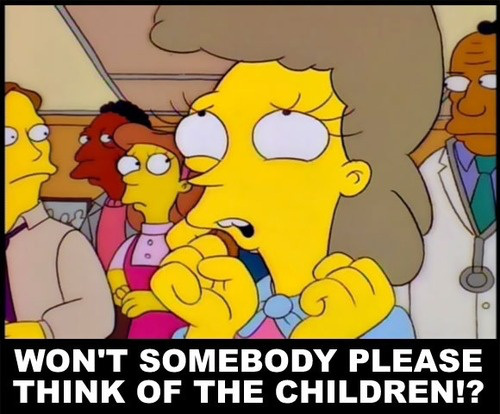
There are legitimate arguments for and against this policy. Even saying this is blasphemy for its supporters, whose brains, reasoning and sense of national interest have been completely swallowed by Ethics Alarms Rationalizations #55, “We’re Better Than This!” and #56, “Think of the Children!”

Jenifer Rubin, the conservative Washington Post blogger who has been driven both leftward and also near madness by her hatred for Donald Trump, authored a post titled “Ending DACA would be Trump’s most evil act.” Evil! Naturally, she attributes the decision to racism. On Facebook, the progressive echo chamber where most of my friends dwell doesn’t even require an explanation  of why eliminating DACA is proof of a malign soul. “Trump will end DACA Tuesday!” a distinguished Trump-hater writes, as if it were self-explanatory, like “Trump will broil and eat Nancy Pelosi with a nice Chianti.”

I guess I’m evil too. To begin with, Obama violated the Constitution with his unilateral edict that should have been a bill, passed the old-fashioned way, with it being voted on by Congress and signed into law, or not, by the President. The President should end every single one of Obama’s over-reaching, unconstitutional end-arounds of Due Process that exceeded his office’s powers, whether Trump agrees with them or not. The integrity of our system is the most important thing of all, and he is sworn to protect it.

That is the procedural and precedentiary justification to end DACA. There are ethical and legal reasons too. Never mind, apparently. What matters in this issue are feelings. The argument is so marinated in sentiment and emotional blackmail—if you don’t love “the dreamers,” then you are a monster—that a coherent and responsible debate is literally impossible. All of the emotion-based arguments employed to argue that the illegal immigrant children who piled up at the border during the Obama administration should be allowed to cross the border, or that the U.S. should accept, barely vetted, refugees from nations packed with terrorist activity because their children weren’t terrorists have been repurposed in this debate, plus others. I am especially unmoved by the Hurricane Harvey line of argument: because some “dreamers” have done yeoman rescue work  in the wake of the flooding, the fact that they are in the country illegally should be forgiven, and not only that, take that fact as validation of the desirability of ALL “dreamers.” Continue reading

Unethical Op-Ed Of The Month: “Don’t Weaken Title IX Campus Sex Assault Policies” (The New York Times)

Do you know what this monstrosity of an op-ed finds outrageous about Betsey DeVos’s efforts to undue the Obama administration’s “guilty unless proven innocent”  standard for campus rape allegations?  It involves too much due process, as in basic fairness before a citizen is grievously punished and harmed by the determination that he or she has committed a crime.. The authors, Jon Krakauer and Laura L. Dunn, put it this way:

Damn right it does. Before someone is punished for a vile crime like rape or sexual assault, the accuser’s credibility and motives must be established. Astonishingly, with all the horrific examples of men being falsely accused of rape, like here, here, and here, the campus activists, feminists, progressives and the social justice warriors continue to insist that any female accuser should be presumed to be a victim, meaning that the accused is de facto presumed to be guilty.

“Sex-crime trials, like all criminal proceedings, set an extremely high bar for conviction to diminish the chance that an innocent person will be unjustly incarcerated. In contrast, the harshest penalty a university can inflict in a Title IX hearing is expulsion, an outcome that does not demand such a stringent burden of proof. In these hearings, neither party is favored, and by leveling the procedural playing field, Title IX makes it more likely that students will report sexual violence.”

The problem with this supposed fairness of “neither party is favored” is that for one party, there are no negative consequences of an insufficiently-supported accusation being rejected. For the individual accused, the stakes are far greater, life altering and potentially dire. More:

“Whenever a student is accused of sexual assault, university administrators need to render their judgment with tremendous care, because erroneously determining that a student is responsible for sexual misconduct can cause lasting harm. But just as much care needs to be taken to make sure that students who commit sexual assault are not let off the hook.”

In other words, the ends justify the means. This is the same mindset expressed in 2015 by Democratic Congressman  Jared Polis, at a congressional hearing on campus sexual assault. 

He said, earning him an Unethical Quote and an Incompetent Elected Official designation on Ethics Alarms,

“If there’s 10 people that have been accused and under a reasonable likelihood standard maybe one or two did it, seems better to get rid of all 10 people. We’re not talking about depriving them of life or liberty, we’re talking about their transfer to another university.”

Krakauer and  Dunn similarly shrug off the consequences to a young man of being falsely tarred as a rapist and kicked out of school: it’s not like staying in the college you enrolled in is a right. Like Polis, they pretend that there are minimal adverse life consequences from being branded a rapist. Continue reading

Aaron Hernandez And The Weird Legal Doctrine Of Abatement Ab Initio

The predator priest, the corrupt CEO, and the murderous Patriot, all innocent because they’re dead….

Massachusetts judge Judge E. Susan Garsh ruled that the state’s law required her to vacate the 2015 murder conviction of former New England Patriots star Aaron Hernandez. Because Hernandez’s appeal was pending when he committed suicide in his cell, she said,  the common law doctrine known as abatement ab initio applied: a defendant’s death before an appeal erases his conviction. Prosecutors argued that Hernandez’s purpose in hanging himself on April 19 was to to void his conviction, but Judge Garsh responded that she was bound to follow state law anyway, especially since Hernandez’s motives were unknown. She had presided at the trial in which a jury found Hernandez  guilty beyond a reasonable doubt of the murder of semi-professional football player Odin Lloyd.

The fact that some legal and ethical puzzles have proven unsolvable despite troubling lawyers, judges, legislators and scholars for decades (and sometimes centuries) is one of the best proofs I know for The Ethics Incompleteness Principle, which holds that no rule or principle makes sense in all circumstances, and that human beings are incapable of articulating perfect laws and rules that will work as intended in every case. Abatement ab initio is a classic example.

Abatement is the dismissal or discontinuance of a legal proceeding “for a reason unrelated to the merits of the claim.” It is available in both a civil and  criminal context. Traditionally, the death of a criminal defendant following conviction  but before an appeal can be made mandates abatement. The effect of  the doctrine is to discontinue all proceedings  and to dismiss the appeal as moot, overturn the conviction, and dismiss the indictment. The deceased defendant reverts back to his status before being charged. In the eyes of the law, he is innocent…again. Continue reading