Incompetent Elected Official of the Month: Don Dwyer (R), Maryland House of Delegates

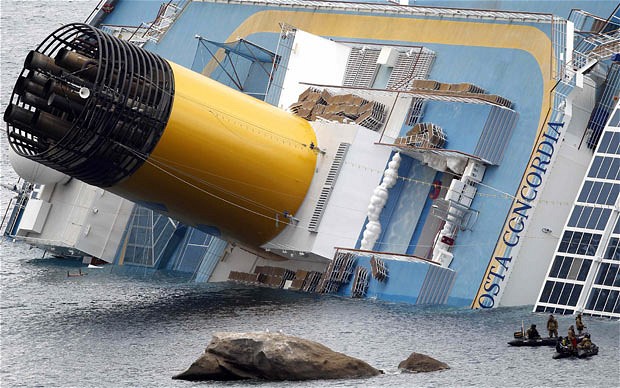
Hey, after he leaves politics, Don Dwyer has a future as a cruise captain...in HELL...

Hey, after he leaves politics, Don Dwyer has a future as a cruise captain…in HELL…

How is Maryland House of Delegates Member Don Dwyer unqualified to serve? Let us sing the ways:

1. Call him irresponsible… He piloted his 27 foot power boat, named “The Legislator,” while (allegedly, of course) roaring drunk, causing an accident and a wreck  that resulted in injuries to seven people, including a five-year-old-girl. His trial is in October.

2. Call him unreliable… He also was recently arrested for DUI, resulting in fifteen charges including driving under the influence of alcohol, reckless and negligent driving, displaying expired and suspended registration, and driving 70 mph in a 55-mph zone.

3. Throw in undependable, too…Apparently Dwyer just can’t stand the stresses that go along with his position. He explained his boating accident to the Maryland  Gazette by saying that the incident was caused by his escalation in drinking frequency after he separated from his wife, and as a result of feeling “betrayed’ when colleagues voted to sanction gay marriage.“I felt a tremendous amount of pressure in my family,” he said. “You take those personal issues (and) add betrayal on the professional side, and it really gets to be overwhelming.”

Mostly, call him unaccountable, which isn’t in the song lyrics, but fits this loser to a fare-thee-well.  He’s driven dangerous vehicles twice under the influence, risking lives, and his response is to blame the gay marriage vote rather than his own failure to acknowledge and treat a serious alcohol problem. Law makers cannot be law breakers, especially the laws against operating vehicles drunk, which only require the sense and responsibility it takes to avoid getting behind the wheel.

Too many state legislators are inept when sober; we certainly don’t need drunk ones too.

______________________________

Pointer: Rick Jones

Sources: Maryland Gazette, Huffington Post
Contrived Ignorance In The Utah Highway Patrol

"Good evening sir! Do you know why I pulled you over? It's because I need another DUI arrest to pad my figures."

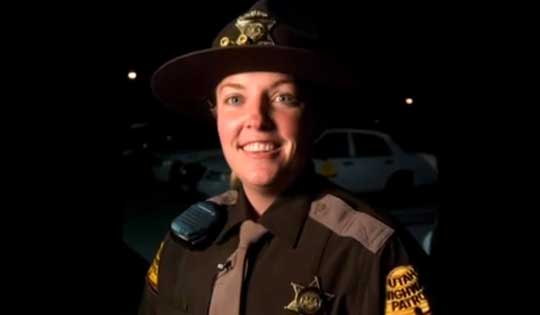
“Good evening sir! I an Trooper Lisa Steed. Do you know why I pulled you over? It’s because I need another DUI arrest to pad my figures. Get out of the car.”

This shocking story from Utah demonstrates an ethical culture truism: when superiors ask subordinates to deliver results without proper guidelines, warnings, and insistence on using only ethical means to achieve these results, misconduct is inevitable, the leadership is incompetent, and the organization’s culture is rotting.

Utah honored state trooper Lisa Steed as the first woman to be selected as Trooper of the Year for shattering all records  with an astounding number of DUI arrests. Her supervisors spoke about her “sixth sense” in being able to detect impaired drivers when most officers would not. There was a reason for this, it turned out. Steed arrested drivers for DUI whether they were in fact drunk or not. Now her record-setting arrests are being challenged as invalid, and she is out of a job.

She had many victims, innocent drivers who lost jobs, promotions, reputations and thousands of dollars, because she was determined to make her bosses think she was a star. For example, she arrested Michael Choate, a now-retired aircraft logistics specialist at Hill Air Force Base, because her “sixth sense” told her that his driving while in a Halloween costume suggested he was inebriated. She arrested and charged him even though three breathalyzer tests showed no alcohol in his system. Choate says he spent $3,800 and had to take four days off of work to get his DUI charged dismissed. Continue reading

Judge Norman’s Dilemma Becomes The ALCU’s Problem

Cruel and unusual punishment? Guess again…

You’re a judge. You have power, in your sentencing, to make various miscreants suffer all sorts of creative punishments, as long as they fall well short of the rack and wheel. For example, a judge in Cleveland recently sentenced a woman (who had driven her car up the side-walk to get around a stopped school bus carrying special-needs children) to carry a sign proclaiming herself an idiot. You are faced with a troubled young man who appears to have received almost no instruction, in his 17 years, in the particulars of right and wrong. You see no productive purpose in locking him up and throwing away the key, for what he needs is a transfusion of ethics. What do you do?

In the throes of this very dilemma, Oklahoma district judge Mike Norman was sentencing Tyler Alred  for DUI manslaughter. Alred was driving his Chevrolet pickup drunk in  2011 when he hit a tree, ending the life of his passenger and friend, 16-year old John Dum. The judge gave Tyler a deferred prison sentence provided that he attend church every Sunday for the next ten years, as well as graduate from high school and welding school. Both Alred’s attorney and the victim’s family agreed to the terms of the sentence. Continue reading

Comment of the Day: “A Last Word on the Kevin Coffay Sentence”

Brain chemistry?

Michael, who is the reigning Comment of the Day champion, comes up with another here regarding the Kevin Coffay sentence and the mitigating factor in juvenile crimes, supported by brain chemistry research, that adolescents are not as capable of rational decision-making as adults, and therefor should not be punished as severely for their reckless acts. This is his post regarding A Last Word on the Kevin Coffay Sentence.”

“Don’t go overboard with the studies that show adolescents are incapable of being responsible, thinking rationally, or evaluating risks. If you look at such studies, they are done in a vacuum and merely state that older people are BETTER at evaluating risks (duh). The main point is that our brains continue to develop until 25 or so. Much like Titanic research, however, this research is interpreted wildly and without considering evidence to the contrary. Continue reading

A Last Word on the Kevin Coffay Sentence

Keven Coffay, the teen who drove drunk, killed three of his friends as a result and fled the wreck as they lay trapped and dying, has prevailed in his effort to get the original 20 year prison sentence (for involuntary manslaughter) reduced. Now he may be released as early as next spring, on parole from his new, lenient, 8 year sentence. I won’t re-iterate my views on Coffay’s case, which are already here and here. I will make this additional observation.

In his column today, George Will discusses the science behind the growing consensus that life sentences without the chance of parole qualify as “cruel and unusual punishment” prohibited by the 8th Amendment. I don’t disagree with his conclusion, nor do I doubt, as the father of a teen-age son, that the brain chemistry of teens dictate special calculations and analysis when trying to decide on what is just punishment for crimes arising from the recklessness and poor judgment of adolescents as opposed to adults. Continue reading

The Kevin Coffay Tragedy Revisited: Not Vengeance…Survival

Kevin Coffay took the wheel with four of his teenaged friends as passengers. All four were drunk, and by the end of the evening only Coffay and another were alive, three young people having perished when Coffay’s intoxicated driving caused the car to go airborn into a bloody crash. He was convicted by a Montgomery County (Maryland) court of involuntary manslaughter in January and sentenced to 20 years, not in small part because he had fled the scene of the accident, running and hiding in the woods as his friends bled and died in the wreck.

Today he is in court arguing, through his lawyers, that his sentence is too long. I didn’t think it was too long when I first wrote about the tragedy in January, but after reading his arguments and those of his defenders, I have come to believe that the sentence may not be long enough. Continue reading

Ethics Hero: Police Officer Robin Parker

The ethical way to take your medicine.

Officer Robin Parker, a Maine state police officer, was pulled over for drunk driving while off-duty and arrested, as he should have been, but as many officers in similar circumstances are not, due to “professional courtesy.”  Parker was put on administrative leave pending an investigation. His arrest was beginning to cause discord at the station, as some of Parker’s colleagues but some of his fellow officers were ostracizing the officers who arrested him.

Parker sent a mass email to all the officers. It read…

Dear Fellow Troopers,

I’m not sure I’m able to articulate exactly how I feel,  but I will try to put into words my thoughts.

Most if not all of you know by now what happened with me last Sunday evening. I was pulled over on the turnpike for suspicion of driving under the influence. I was subsequently processed and charged with that offense by Troopers within Troop G.

 I want to first thank all of you for your tremendous support and prayers. I will continue to graciously accept them as I move forward in this process. One thing I want to make perfectly clear to everyone. My decisions and choices were mine and mine alone. I have made some mistakes and I’m prepared to answer for them. I appreciate the kind words expressing sadness that I will have to deal with this in the courts and within the department. But these are the consequences for MY ACTIONS. I’m not saying this is not painful, because it is. I’m not saying this is not going to be hard, because it will be. I’m not saying I’m not ashamed and embarrassed, because I am. But, what I am saying is I own this and I’m prepared for the consequences. Continue reading

Why “He’s Suffered Enough” Is Not Enough

Not enough.

“He’s suffered enough” is one of the more popular and effective rationalizations, usually put into use in defense of white collar criminals and the likes of Roman Polanski, wealthy or once-respectable criminals for whom remorse and humiliation are deemed to be as devastating as incarceration.  Yet it is still a rationalization—a deceptive representation of the truth—and shows a misunderstanding of what official punishment needs to accomplish.

A sad drama has played out in a Montgomery County Maryland court, where twenty-year old Kevin Coffay was sentenced to twenty years in prison for fleeing the scene of a May auto accident that he had caused by being drunk behind the wheel, as Spencer Datt, 18; John Hoover, 20; and Haeley McGuire, 18, remained in the wreck after Coffay fled.  All three died.

Coffay was stunned by the sentence, and news reports say that the case has torn the community apart, with the families of the victims seeking retribution, and supporters of Coffay pleading for compassion and mercy. Their argument, as it always is in such tragedies, is that “he’s suffered enough”. This misses the point of the trial, the sentence, and the societal ritual that such events demand. Continue reading

“Cat Ballou” Ethics

It is generally believed that Lee Marvin’s drunken horsemanship (as well as the comic appearance of his horse, which also appeared to be drunk) greatly assisted his winning the 1966 Academy Award for Best Actor. In case you are considering riding your own horse or mule while in a state similar to Marvin’s “Kid Shelleen,” this article may be of interest. While it is undoubtedly unethical to ride a horse while intoxicated (irresponsible, reckless, and dangerous to both the horse and anyone near it), it may not be illegal, because a horse is not a vehicle.