The spark for this post is the recent fiasco engineered by Modesto Junior College in California, which told a student that he could not pass out copies of the United States Constitution outside the student center on September 17, 2013, which happens to be Constitution Day. College police and administrators demanded that student Robert Van Tuinen stop passing out Constitution pamphlets and told him that he would only be allowed to pass them out in the college’s tiny free speech zone, and only after scheduling it several days or weeks ahead of time. Fortunately, as is almost always the case in such campus outrages, The Fire, The Foundation for Individual Rights in Education (and what does it tell us that this indispensable champion of individual rights is widely regarded as a “conservative” organization?) was at the ready, and ripped off a letter to the school administrators that served the dual purpose of warning it to back off and holding it up to national ridicule. Continue reading
ethics alarms
Sugardaddies, Pregnancy Tests and Nigeria, or “If U.S. Culture Is More Ethical Than The Rest Of The World, The Rest Of The World Is In Big Trouble”
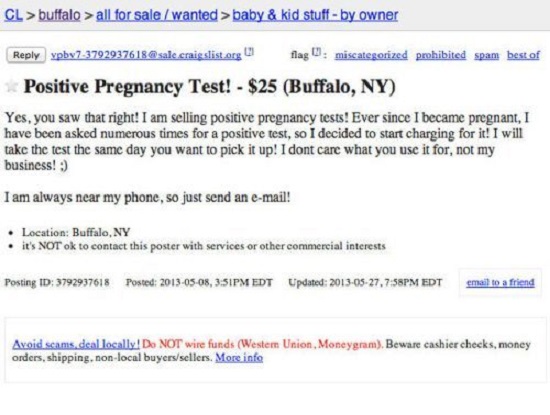
Our surprisingly ethical U.S. culture on display…
Aniruddh Khachaturi an is from Mumbai, India, and has been in the U.S. for the past two years, studying computer science at Carnegie Mellon. For some reason his observations about what surprises him about American culture are newsworthy, according to Investors Daily, as opposed to, say, anyone else. They are thought-provoking, however, especially this : he is impressed with the nation’s “strong ethics”:
“…everyone has a lot of integrity. If someone cannot submit their completed assignment in time, they will turn in the assignment incomplete rather than asking for answers at the last minute. People take pride in their hard work and usually do not cheat. This is different from students from India and China as well as back home in India, where everyone collaborates to the extent that it can be categorized as cheating.”
I happen to think he is right, and that this is probably the reaction of most foreigners who spend much time here. Compared to almost everywhere else on the planet, the population of the U.S. is more ethical, and the U.S. culture is more concerned with ethical values, as one should expect in the only nation expressly founded as the expression of ethical ideals.
Nonetheless, our culture has shown alarming signs of growing more tolerant and even accepting of unethical conduct, and that is worthy of more than merely academic concern. Continue reading
Advice Column Ethics: Amy Dickinson Sounds An Ethics Alarm

“DANGER, Other Woman…DANGER!!!”
Today, syndicated advice columnist Amy Dickinson (“Ask Amy”) answered a query with admirable directness, properly defining the proper use of ethics alarms for a woman who was puzzled about what to do when the answer should have been obvious. Unfortunately, Amy adopted the letter-writer’s incorrect terminology for an ethics alarm, based on the help-seeking “other woman” in an adulterous relationship writing that her relationship was beginning to feel “icky.”
As we have discussed here many times, “ick” and unethical conduct are not necessarily the same thing. Humans naturally assume that what is strange or instinctively repugnant is wrong, but that assumption always needs to be tested by sound and objective ethical analysis. The best current example: to heterosexuals, gay sex is “icky,” but that doesn’t make it unethical or wrong. When Amy uses the term “ick-o-meter,’ what she means is “ethics alarm.” Continue reading
The Bo Deplaning Background: A Picture Not Quite Worth 1000 Words
I reluctantly replaced the background photo of Justin Carter (who is still, by the way, awaiting trial for the crime of making a sarcastic comment on Facebook that post-Sandy Hook hysterics decided to treat as a terrorist threat) and put up the iconic photo of Bo, the Presidential dog, being solemnly escorted out of an Osprey to join the First Family in another spectacularly ill-timed vacation in Martha’s Vineyard, together with a photo of the National Debt clock. I hoped the background picture would save me the proverbial thousand words, because I think it speaks eloquently to several issues. But I have already received some squeals of protest, so I’m going to have to use up some of those words after all.
I generally have no problem with any President taking vacations, since the job is impossible and it travels with him, no matter how much he might wish otherwise. I have a problem with Presidents spending excessive amounts of the nation’s time in partisan fundraising, but that’s another issue. As one of the President’s supervisors, I have serious concerns about this President taking so many vacations, because, frankly, I don’t know what he does all day. He appears to have no foreign policy, other than making speeches, waffling, and dithering. He says he is making the economy his full time priority, but I see little indication of that. We know he doesn’t dirty his hands with engaging in politics and forging compromises with the opposition, and based on his statements and stunned surprise when incompetence or misconduct appears, he seems not to know what is going on in his own departments. We know he doesn’t trouble himself with oversight or management—even #1 fan Chris Matthews admits that.
Obama said on The Tonight Show (he has time to appear on The Tonight Show) that the U.S. has no domestic spying program. Today we learn that the NSA has habitually violated privacy restrictions on its spying, meaning that we don’t have a domestic spying program, just a spying program that repeatedly engages in domestic spying. Call me a stickler, but I think a few of those down days on vacation should have been spent instead actually learning what was the real situation before he told the nation things that weren’t true. Or was he lying? If you prefer that explanation, fine. That is another ethical issue. Continue reading
Unethical Quote Of The Year: Ariel Castro

Well, now, Ariel, with all due respect, I have to disagree with you here. You are, in fact, a monster.
Perhaps some gratitude is due to convicted Cleveland kidnapper, torturer, rapist Ariel Castro for yesterday’s long, rambling, thoroughly disturbing statement to the court before sentencing. Within the nearly 1900 words he inflicted on everyone present are a true treasure trove of rationalizations, ethical dodges and classic excuses for wrong-doing, many of which, in different contexts, we use ourselves or accept from others. Perhaps, in the future, when we hear or read of these very same rationalizations and deceit from politicians, celebrities, Wall Street manipulators, media flacks and the people who enable them, or when we detect the seeds of one of them germinating in our own heads, we will recognize them as the property of Ariel Castro, and reject them promptly.
Here is what Castro said yesterday, in its entirety. Read the whole thing…just picking out the highlights doesn’t do the statement justice. It is a masterpiece of evil. I’ll break in from time to time, in bold:
Taken Down As A Likely Hoax: “Speaking Of Dishonesty, Demonization, And Being Warped By Rigid Ideology, Here’s Sandra Fluke!”
I am taking down the post regarding the alleged insane statements of Sandra Fluke regarding the GOP’s culpability for Anthony Weiner’s sexting. I am persuaded that it is a web hoax. Though it was sent to me as true, with a reference to “Best of the Web,” a reliable source, I have traced the item back to a blogger who tagged his post “satire” and “humor.”
This is why I detest web hoaxes.
While the claims attributed to Ms. Fluke were absurd and extreme, they were not especially funny, or so removed from other positions she has advocated that the hyperbole here would be obvious, at least to me.
S0…
- Gratitude and kudos to Arthur in Maine, who refocused my attention on the post.
- Apologies and regrets to Ethics Alarms readers. I do check sources, but this time I didn’t check well enough.
- I apologize to my fellow GULC alum, Ms. Fluke, for believing her capable of such idiocy.
- I apologize to Emily’s List.
- I apologize to James Taranto, to whom I originally and erroneously credited for the pointer.
- I do not apologize to Rush Limbaugh or the GOP. My comments regarding them in relation to Sandra Fluke stand.
Blog Moderation Ethics: The Racists Come To Ethics Alarms
I went into this with my eyes open, so I am accountable.

The U.S.’s favorite racist, Woodrow Wilson.
When I poked the hornets nest of the nauseating racist website Chimpmania, I knew I risked having Ethics Alarms being descended upon by the ideological clones of Simon Legree and Woodrow Wilson. My routine response would be to nix such posts, as I similarly make sure other vile screeds never see the light of a laptop.
However, the Ethics Alarms post in question was about the importance of not censoring vile websites, because of the First Amendment, naturally, but also because people with unethical views are more dangerous when they hide in the shadows. It is important that we know about them and their thought processes; sometimes, with persuasion and patience, we can even bring them back to civilization. It is also important that we consider and understand how such individuals came to have their humanity so darkened and warped.
I am not the government: like Facebook, Ethics Alarms is not obligated by law or principle to allow every comment, no matter how offensive, to be seen and read. To the contrary, it is obligated to maintain an environment conducive to productive ethics discourse, enlightenment and debate. In this case, however, I recognized the apparent hypocrisy of extolling the benefits of allowing racists to roam free on the web while personally censoring the comments from the very same racists whose rights the original post was defending. Continue reading
ARRRRRGHHHHHHH!!!!!
I just spent two hours preparing a detailed post of some interest and import, and when I hit “publish,” it vanished. This has never happened before. Now I am furious, frustrated, and can’t even start to re-do the damn thing, because I’m giving a seminar about government lawyer ethics in a few hours, and I have to prepare.
All I can say is 1) I’m sorry and 2) ^%$#^)(&%!!@#%!!!
I’ll get it rewritten eventually.
“Rubbish” and Ethics
That’s me!
Cognitive scientist and philosopher Daniel Dennett has a brilliant and original mind. One of the seven tools he advocates (in his most recent book) for those of us who want to think more clearly and make better use of our time caused me to reflect on one of the most persistent criticism I receive about Ethics Alarms. one of America’s foremost thinkers. Here are the seven, with a sample of Dennett’s comments about them:
1. USE YOUR MISTAKES
“Try to acquire the weird practice of savoring your mistakes, delighting in uncovering the strange quirks that led you astray. Then, once you have sucked out all the goodness to be gained from having made them, you can cheerfully set them behind you and go on to the next big opportunity. But that is not enough: you should actively seek out opportunities just so you can then recover from them.”
2. RESPECT YOUR OPPONENT
“Just how charitable are you supposed to be when criticizing the views of an opponent? If there are obvious contradictions in the opponent’s case, then you should point them out, forcefully. If there are somewhat hidden contradictions, you should carefully expose them to view – and then dump on them. But the search for hidden contradictions often crosses the line into nitpicking, sea-lawyering and outright parody. The thrill of the chase and the conviction that your opponent has to be harboring a confusion somewhere encourages uncharitable interpretation, which gives you an easy target to attack….” Continue reading
“The Ethicist” Gets Lost: Bad Advice, Worse Defense, In The Case Of The Self-Plagiarizing Student

Oh, Chuck, Chuck, Chuck…
Chuck Klosterman,The New York Times’ third “Ethicist,” ruffled ethics feathers last week when he decreed that submitting the same paper to multiple college courses was ethical. (You can read his advice to a guilty-feeling student here.) Essentially, his argument in the column came down to three rationalizations, The Compliance Dodge (No rules were broken!), the Trivial Trap (It’s no big deal, and nobody was hurt ) and my least favorite of all, The Comparative Virtue Excuse ( “You’re not betraying the public’s trust,” Klosterman says—in other words, “At least you didn’t kill someone.”),with nods to several more. On the first, which is a close relative of Marion Barry’s Excuse, so you know what I think of it, Klosterman essentially argues that following formal rules constitutes sufficient ethics, which is the hallmark of the unethical. On the second, he himself cheats: he says no one was harmed, yet he ignores the fact that the student intentionally kept the fact that he used one paper for two assignments from the professors involved. Why was that? The student didn’t tell the professors because he knew they wouldn’t approve. Thus the student withheld information that was material, that would have resulted in negative consequences, and that the professors making the assignment had a right to know. That’s a failure of candor and a breach of the duty of honesty in communications. That’s unethical. Continue reading
 Ethics Alarms