McDonald’s And The Blind Man: Why Law Is A Lousy Substitute For Ethics

mcdonalds drive-thru

Thirty-five-year-old Scott Magee is blind, and he resents the fact that McDonald’s has a policy denying walk-up customers at the  drive-through window at his local Louisiana Mickey D’s, as well as everywhere else.  The policy, let us stipulate, is objectively reasonable. McDonald’s has a right to designate a window for drive-through customers and to choose not to offer a walk-up service like Dairy Queens. (Come to think of it, I don’t know that DQ has that any more. Does it?)  It also has a right not to subject itself and its drive-though customers to liability for inadvertently hitting stoned fools who stumble over to the window late at night seeking munchies.

Magee and his Jackie Chiles-emulating New Orleans lawyer, however, are suing the burger chain, arguing that its refusal to accommodate non-drivers who are blind is a violation of the Americans with Disabilities Act.

Now a class-action lawsuit, filed last week  in Chicago’s federal court, alleges that McDonald’s has no “concern whatsoever for the accessibility of the late-night drive-thrus to the disabled.”

Oh, thank-you, George H.W Bush!* The ADA has always been an overly broad and mischievous law that endorses and enables the tyranny of the minority. I have often wondered how often all those wheelchair lifts the law forced financially strapped public transportation departments to install in their buses have been used, and what the cost per use is. I am certain it would have been far cheaper for the cities to just pay for cabs to drive the handicapped commuters door to door, but that would have stigmatized them.

Bush caved to the lobbying for  cultural acceptance of the very debatable concept that citizens have a right to force others, including the government, to solve all of their individual problems, and the cost to the rest of society just doesn’t matter. That idea, a really bad one and a slippery slope to boot, has taken hold with a vengeance, the most prominent recent example being the theory that because less than 1% of the humanity faces a dilemma when choosing which bathroom to use, the rest of the public must forego the comforting privacy of gender-segregated bathrooms and dressing rooms. All girls should learn to be comfortable looking at male genitalia, that’s all, says the Charlotte Observer. How did we reach teh absurd point where that proposition can be seen as more reasonable, equitable and  fair than asking transgender Americans  to endure the occasional discomfort of using the “wrong” bathroom so his or her fellow citizens are comfortable? Why is it preferable to launch a divisive and nasty cultural and legal battle over the issue?

Unless Magee’s case gets thrown out of court, and don’t bet on it, all fast food restaurants will be forced to set up and staff walk-up windows, eliminate drive-up windows, or close down their drive-through service when inside service is shut down for the night. (If Scott can’t have that convenience, no one should.) Either over-head will rise for all fast food chains, causing job losses and higher prices, or everybody will lose the convenience of after-hours drive-up service because there is no safe, reasonable, affordable policy that will satisfy Mr. Scott Magee ‘s late night cravings for McNuggets.

Yes, it would have been nice, and ethical, if the owner of the McDonald’s in question played a little ethics chess and worked out a quiet, compassionate way to make Scott feel loved and catered to. It would have been worth it to agree to just deliver Scott whatever he wanted when the munchies struck, even giving him a special number to call. It would also have been ethical–responsible, considerate, fair, proportional—if Scott just planned ahead and got his Big Mac before the place closed it’s doors. A little mutual consideration and flexibility, some sacrifice and concern for others, a willingness to see things from the other side’s perspective, and this could have been avoided. Instead, jobs may be lost, a convenient service may be sacrificed, prices will rise, business will be lost, and all because one blind man feels that the whole world should adapt to his needs, and not the other way around.

Yes, thanks Papa Bush!

Thanks, McDonalds!

And a special thanks to Scott Magee.

I sure hope he enjoys his burger.

It’s going to cost enough.

*In a moment of momentary amnesia and stupidity, I wrongly blamed the ADA on President Carter. I apologize to Jimmy, though I’m certain he was a supporter.  It’s still an overly broad, ethically muddled, pandering law.

Tesla’s Seat Belt Recall, Moral Luck, and Ethics Chess

Jaws victim

Ethics Alarms Chief Ethics Scout Fred found this one. Tesla was alerted to one seat belt failure in its Model S, and  recalled them all. This involved a huge cost, of course, and that cost will be eventually passed on to consumers and investors. Fred asks,

“Abundance of caution” is the phrase they used, one I gather is familiar to lawyers. Could they have justified some other response that was less catastrophically expensive? Would they have had a fiduciary duty to do so? Or would that duty lie in maintaining the brand image of meticulous quality at almost any short-term cost, building a reputation that could command premium prices for decades to come?
The issue was simply this: how much did the company want to bet on moral luck? Tesla was aware of a possible design or manufacturing flaw that could kill passengers. It could have been a fluke, and it could have been widespread. If the cars were not recalled—and I don’t know enough about Teslas to presume that there would be any other way to check every single car or replace the seat belts without the expense of a recall, so I will assume for this discussion that there is not—and one or more passenger was killed, then Tesla management would have suddenly become Sheriff Brodie and Mayor Vaughn in “Jaws,” as articulated, with a slap, by the mother of a little boy who became shark bait while playing on his yellow raft. They knew there was a possible danger, and decided that chancing it was a better call than risking the summer tourist business. They balanced the risks, and did nothing.

Ethics Dunces: Boston Red Sox Players

owens pole

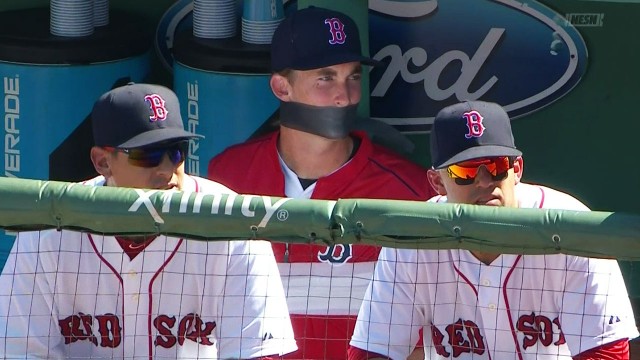
Yesterday, while watching the Boston Red Sox game on NESN as I always do EVEN WHEN THE TEAM STINKS, like this year, because no summer soldier I, team broadcasters Don Orsillo and Jerry Remy pointed out that Sox rookie Henry Owens was watching the game while being taped to a pole, with his mouth taped shut as well.

This is old-fashioned baseball rookie hazing, as Remy explained (also opining that he thought it was stupid when he played and is stupid now). The theory is that this makes rookies part of the team, builds cohesion and spirit, and yada yada yada, all the same phony rationalizations that jerks have used to excuse hazing cruelty and sadism in fraternities, the military, cults and sports teams for eons. The Owens stunt was relatively mild (and mercifully short), but the practice of hazing is still institutionalized bullying, uncivilized, and, as Remy said, stupid.

Sports team players are home town heroes, and role models too. How many kids will be humiliated, tortured, injured or even killed because the Boston Red Sox thought it was funny to immobilize a 6’6″ rookie pitcher by taping him to a pole on live TV, thus teaching him that no matter how  good he may be at pitching (and Owens is going to be really good), he’s at the bottom of the pecking order until he “earns” decent treatment and respect. “In my experience, the guys who really liked hazing the rookies were the players who couldn’t play,” noted Jerry, a Sox regular in the Eighties.  They were sadistic bullies, in other words, making up for their own inadequacies by abusing others.

You can say that Owens consented, and that’s like arguing that Monica consented when the President of the United States wanted her to emulate a Bourbon Street hooker. Owens could refuse, and be regarded as a bad team mate, leading to a year or more of cut shoelaces, shredded uniforms, insulting messages on his locker and worse “jokes.” Or he could quit baseball and sell Slurpees rather than make a gazillion dollars. He had to submit, and had to smile about it.

So he did.

http://www.youtube.com/watch?v=UjFBBQa9KyU

Even baseball players need to be better at ethics chess than this, and calculate the likely consequences of their conduct. Hazing is unethical, and glamorizing, modeling and trivializing it on TV is irresponsible.

And stupid.

On Preventing Web Mobs: The Prisoner’s Dilemma And “Tit For Tat” Reconsidered

prison

As I expected, it took all of ten minutes for my post about the web vigilante attack on Dr. Walter Palmer to bear fruit, as in tomatoes tossed at my metaphorical face. The reason, as I calculated in advance, was my decision to employ a Tit for Tat strategy in responding to what I believe is a deadly trend on the internet that requires a strong response to restrain it. A would-be commenter attempted to make my blog party to web mob efforts to do financial, personal and even physical harm to the hapless hunting dentist by publicizing various addresses and phone numbers. I published his e-mail address.

I’m not sorry.

The  issue raised by my conduct involves integrity. By giving out the e-mail address of a commenter (because the commenter unethically attempted to publicize personal contact information regarding Palmer and his family) when I state on the site that I will not do so, I both violated my own policies and engaged in conduct that this blog specifically declares unethical: Continue reading

Confused Ethics Observations On Caitlyn Jenner, Up and Down the Cognitive Dissonance Scale

Cognitive DissonanceThis whole episode is pure cognitive dissonance hell for me, with high scale values clashing with low scale conduct, and the result being as hard to analyze neatly and dispassionately as the aftermath of an elevator crash. But I’m a fool, so I’ll take a shot at it anyway.

1. Bruce, now Caitlyn, Jenner’s openness about his transsexual issues is brave and may yet help this misunderstood and routinely derided group achieve acceptance. PLUS.

2. She should have played ethics chess, however, and as a public figure who, she now says, always planned this transition, was irresponsible not to. Associating herself with the traveling freak, venality, bad taste and atrocious values caravan known as the Kardashians guaranteed that anything she did thereafter would be a legitimate object of suspicion. MINUS.

3. Turning her transition from Bruce to Caitlyn into a reality show was similarly counter-productive and harmful to her cause, assuming the cause really matters to her. I doubt that it does.  Reality shows equal schlock, emotionalism, manipulation, phoniness—and money. That won’t help the trans population. MINUS.

4. As the first bona fide celebrity to undergo gender reassignment (no, I don’t call Chastity Bono a real celebrity), Jenner could have handled this in a modest, measured manner that made trans people look reasonable, dignified, and rational. Unfortunately, Bruce Jenner was always a fame-addicted narcissist,  so her handling of the process is what you’d expect from one. Too bad. MINUS.

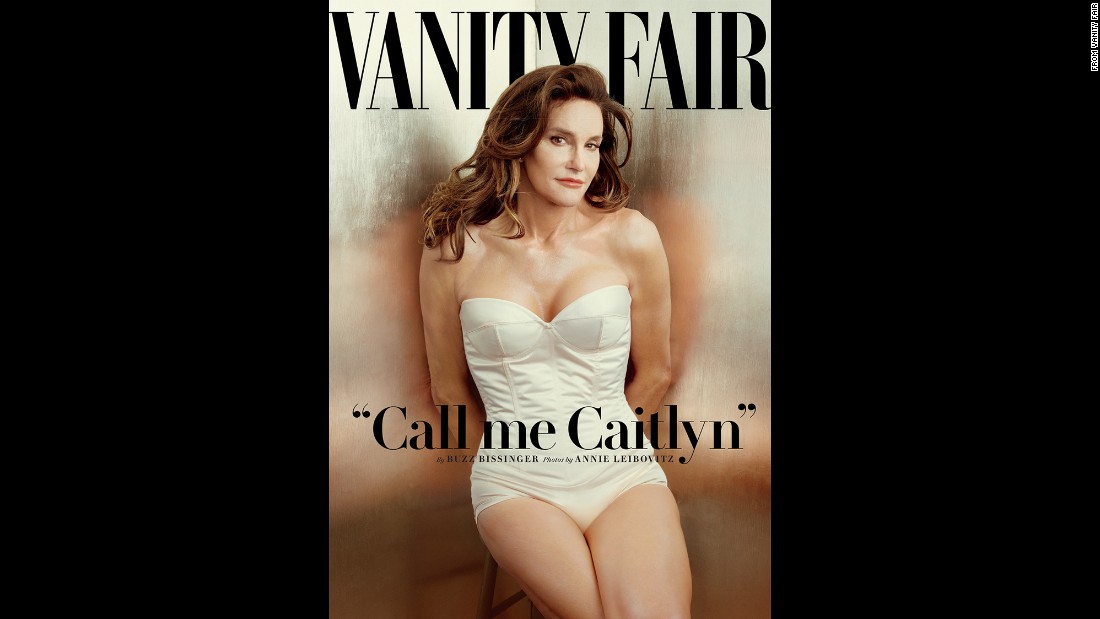
5. Thus we have the over-praised, over exposed, over-hyped, Vanity Fair cover, which is pure sensationalism, an exploitation of a serious issue for magazine sales, and a fraud. (Literally anyone can be dressed, shaved, and made up to look feminine.) Is Jenner interested in legitimizing and de-stigmatizing gender reassignment, or getting hubba-hubbas for a titillating man-to-bimbo transformation? Is Playboy next for Caitlyn? Don’t bet against it. MINUS for Vanity Fair; MINUS for Jenner

6. Is this really the way an ethical father kindly, sensitively and responsibly handles this kind of tectonic life change when he has six children and four step-children, including teenaged daughters? Admittedly, the daughters are crypto-Kardashians, so normal rules of delicacy might not apply. Still… MINUS for Jenner.

7. Republicans, conservatives and Neanderthals who are incapable of comprehending this serious topic should shut up about it.  There is grounds to criticize many aspects of this episode in American culture, but just making snarky comments like Neil Cavuto did on Fox is unproductive, unkind, divisive, and, frankly—I’ve been on Neil’s show, and I hate to say it—makes one look like an ass. If you don’t understand what’s going on, Neil, there’s no law that says you have to cover it. MINUS for Cavuto.

8. I had to shut off TV to get way from the breathless coverage of Jenner’s “coming out” photo. This isn’t respectful or responsible coverage, this is “Look! Bruce Jenner is HOT!!! She has BOOBS!” coverage, juvenile, degrading, and transparently salacious. It shouts “freak,” and that is exactly what Jenner should not want, nor should any LGBT advocate. Of course, the conduct of Vanity Fair and Jenner asked for it. MINUS for the news media.

9. To the extent that Jenner’s act promotes more public discussion and understanding of the issues facing trans individuals, this all may have a beneficial effect that may outweigh the negatives. Right now, there is too much static to tell. PLUS.

I hope.

The Worst Timing Of Unethical Conduct Ever? African-American Mom Asks White Police Officer To Abuse Her Son

Fake Arrest

The African-American community needs to get its objectives and messages straight…quickly. That is, it needs to do this if it really knows what its objectives and intended messages are. This story should make everyone, including them wonder.

In  Columbus, Georgia, Chiquita Hill’s  10-year-old son, Sean,  was disrespectful to his teacher and repeatedly defiant in class. Sean’s mother was beside herself, and as I just heard her explain on HLN, was worried about what the child might be like when he reached puberty. Thus she devised the brilliant idea (yes, many people—cretins, but still—are saying that on social media) of “scaring her son straight” by calling 911 and having a police officer pretend to arrest him and take him to jail. Let me repeat that: there are people on social media saying this was a good idea.Many of these people have children themselves. Think about it.

Hill said her son didn’t believe she had called the cops on him—for the crime of talking back to his teacher— until Columbus police officers showed up at the door and put him in handcuffs, put him in the patrol car and pretended to take him to jail.  “It happened so quick he didn’t know what to do,” she told the media. “I don’t know what they said to him but he came running down the hill, gave me a big hug said, ‘I’m sorry, I’m sorry!”

Then Chiquita posted the pictures of her son in handcuffs on Facebook, where it has gone viral and will last forever.

There is nothing ethical, civilized, justifiable, reasonable, rational or right about either the conduct of the mother, or the conduct of the police officers. In the context of speeches and protesters in Baltimore and elsewhere  proclaiming angrily that the police forces of  the United States are racist and determined to exterminate black males, the episode is also hypocritical on the part of both the police and the mother, while intentionally seeding the racial distrust both police and African Americans are supposed to be working together to defuse, not working together to create.

I assume that readers here have functioning ethics alarms so let’s do this as a game, shall we? Before you read further—no cheating now, this is an ethics blog–vote on how many ways this episode involved wrongful conduct. Then see how close you came by finishing the post.

Did you vote?

OK, here’s the tally: Continue reading

“Hands Up! Don’t Shoot!” Ethics: The Public Defenders And The Rap Video

defenders30n-1-web

Kumar Rao and Ryan Napoli, two  lawyers who worked for the New York City-funded public defenders group called the Bronx Defenders, ran headlong into an ethics mess when they appeared in a video posted on YouTube the December day after the grand jury voted not to bring criminal charges in Eric Garner’s suspicious “choke-hold” death. In the video titled “Hands Up” (of course), Rao and Napoli comfort a grieving mother at the Bronx Defenders offices as they work on a case involving police brutality. The video also includes the image of a white man in a police uniform with pistols pointed in his face and the back of his head by black men, as rappers chant that it’s “time to start killing these coppers.”

Nice.

The video came under heavy criticism from Mayor de Blasio and others. City-paid public defenders should not be lending their positions and the prestige of their office to calls for retribution and violence. Lawyer Rao defended his appearance, arguing that the video supported the mission of the Bronx Defenders to zealously defend minority clients, and that a rap video was an ideal vehicle to make their services known. Gallant try, but no cigar. That message about killing cops is not part of the organization’s mission presumably, nor is it a responsible message for those in the justice system to appear to endorse. Continue reading

When Ethics Becomes Impossible: Captain Johnson’s Ferguson “Solution”

Ron Johnson

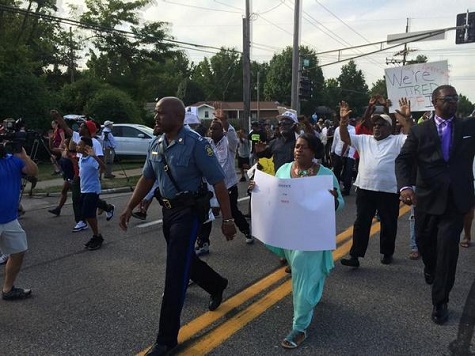
Yesterday,  Ferguson, Missouri’s newly appointed police commander, Capt. Ron Johnson of the Missouri State Highway Patrol, walked with those protesting the shooting of African American teenager Michael Brown.The police shooting in Ferguson this week and its aftermath became an instant Ethics Train Wreck, its carnage seeded by tragedy, local tensions, growing distrust of police nationwide, worsening race relations exacerbated by Democrats and the media resorting to race-baiting to stifle criticism of the Obama administration, as well as such episodes as Occupy confrontations with police in Oakland and the Trayvon Martin-George Zimmerman fiasco.

Johnson’s actions calmed what had been escalating violence, with community protests spilling over into looting, irresponsible and inflammatory statements being made by both police and protesters, and an excessive, military-style response by St.Louis police that treated sometimes over-enthusiastic demonstrating as if it was Rodney King-style rioting. What Johnson did worked, in other words, and that’s both the best and the worst that can be said about it. Ethically, it was the best available option. When a situation reaches the ethics chaos stage that Ferguson has, however, this is rough utilitarianism at best. Continue reading

“Would You Rather”: An Ethics-Horror-Health Care-Dinner Party In Hell Movie You May Have Missed

“Would You Rather” is an odd 2012 film that sets up a film-long set of unlikely ethical dilemmas for its characters to solve. Desperate to save her dying brother with expensive medical treatment she can’t afford, the heroine (played by Brittany Snow) finds herself at a dinner party with seven other desperate strangers, hosted by a wacko family of millionaires who will help one of them after the others have been “eliminated” during the course of the evening. As what is described as a game progresses, each contestant is put through escalating rounds of risk, pain and torture in which they must make various Sophie’s Choices, such as…

  • Would you rather administer a painful shock to yourself with high-voltage electricity, or the person next to you? What if that person has been weakened by a previous shock? What if she is in a wheelchair?

If We Could Trust The Government To Take Care Of Us, There Wouldn’t Be Idiotic Laws Like This One

"You have to take it this time, honey, because the law says you're a nuisance if you call the cops again..."

“You have to take it this time, honey, because the law says you’re a nuisance if you call the cops again…”

Did you know that many cities and towns across the country have what are called “nuisance ordinances,” “crime-free ordinances,” or “disorderly behavior ordinances,” that subject landlords and tenants to fines when the police respond to a proscribed number of “disorderly behavior” complaints within a designated period of time?  Such ordinances specifically include “domestic disturbances” as among the forms of disorderly conduct that be punished under the law.

What are the predictable consequences of such laws? Landlords evict tenants who cause them to be fined…including women who call the police because they are being beaten by their husbands or boyfriends. The laws, therefore, penalize the victims of domestic abuse, and create a powerful disincentive for them to report it, since they must, in effect, choose between a beating and homelessness. They also tend to affect single mothers and those who live in poor neighborhoods.

Wait…what? What idiots would pass such a cruel and stupid law? The answer, unfortunately, is lots of idiots, because elected officials, as a general rule, are wretched at ethics chess, among other skills. They don’t think about the unfair and irresponsible results of their well-meaning, bone-headed, poorly drafted and ill-conceived laws by considering their likely consequences two, three and four moves ahead, which is what ethics chess requires. A law can have unethical and unintended outcomes that render it far worse than whatever it is the measure was intended to address, but determining what those outcomes are takes more care, diligence, intelligence and patience than most of our elected officials can muster. Continue reading