From “The Ethics Incompleteness Principle” Files: Anomalies And The Boston Red Sox Uniform Number Retirement Standards

The Ethics Incompleteness Principle argues that no rule works in all circumstances, so you have to be alert to when making exceptions is appropriate. The concept is illustrated by how the Boston Red Sox retire uniform numbers.

I will explain…

Major League Baseball teams retire the uniform numbers of players who they want to honor in perpetuity. The number is displayed somewhere in the ballpark, and no player on that team can ever wear it again.

Doing this requires standards, however, or else the honor becomes diluted and the retired numbers include those that seem increasingly strange and arbitrary as time goes by. The New York Yankees have retired so many uniform numbers that no single digit will ever again grace the back of a Yankee star. Moreover, several of the individuals who sanctified those numbers include players who never were and never will be called “great,” like Bernie Williams, who led the league in exactly one category, once, in his entire career, and whose Similarity Score index contains all very good but not great outfielders, the most similar being Paul O’Neil, a former Yankee star whose uniform is not retired. Another retired Yankee uniform number is that of Roger Maris, who only played for the Yankees for six years, many of them unremarkable. Having one’s uniform retired in the Bronx along with those of Babe, Lou, Mickey and Joe appears to mean “Somebody in charge really liked him.”

Well, at least that’s a standard that is easy to maintain.

The Boston Red Sox, in contrast, were not going to have a retired uniform glut. The franchise established an iron set of criteria for the honor, with three prongs:

1. The player must be an inarguable Red Sox great who played at least 10 years with the team.

2. The player must be an elected member of the Baseball Hall of Fame in Cooperstown.

3. The player must retire as a member of the Red Sox.

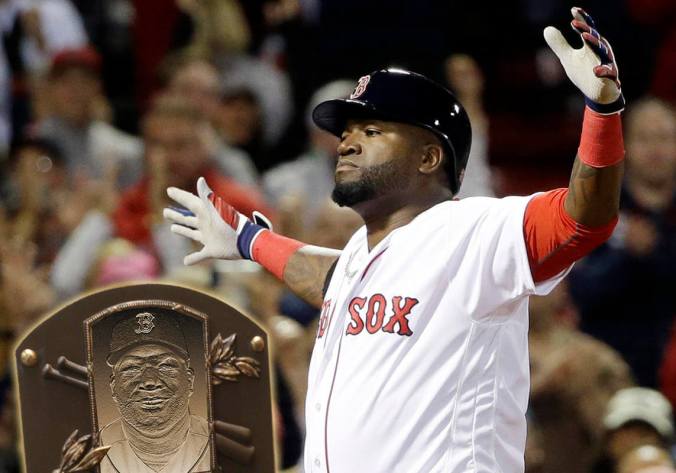
Today the Red Sox are retiring the number of David Ortiz, who retired himself at the end of last season. While he might well be voted into the Hall of Fame, he may not, for complex and controversial reasons. The Red Sox, who could reasonably argue that Ortiz has been the most popular and important player in the team’s history (though Ted Williams was the best) rightly concluded that to delegate to the  Hall of Fame voters the determination of whether Ortiz’s #34 would be retired with lesser Boston heroes made no sense. Thus his uniform number will momentarily obliterate that second prong, which had already been waived once. In that case, the beneficiary was Johnny Pesky, a classic anomaly and line-blurrer. Continue reading

Comment Of The Day: “The Most Unethical Sentencing Fallacy Of All: Lavinia Woodward Gets “The King’s Pass”

I am almost caught up on my backlog of Comments of the Day!

This one, by multiple COTDs author Humble Talent, is really two; I’m taking the liberty of combining his later explication with the original comment, as they follow as the night follows day. The topic is bias and double standards in the criminal justice system, and hold on to your hat.

Here is Humble Talent’s 2-for 1 Comment of the Day on the post, “The Most Unethical Sentencing Fallacy Of All: Lavinia Woodward Gets “The King’s Pass”:

You know, every now and again when I’m feeling adventurous, I go to a place I think will have a whole lot of people that don’t think like me and poke at their sacred cows. You meet all kinds of people, and recently, I was given probably one of the better answers to a gender/race issue from the other side yet.

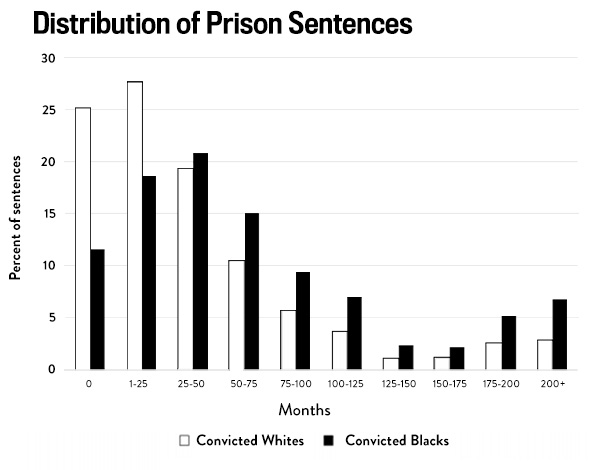
The original fact pattern is that racial activists will cite disparate impact as a problem at every stage of an interaction with the legal system. Black people are more likely to be pulled over, more likely to be arrested, more likely to be charged, more likely to be convicted, and more likely to receive harsher sentences… All for the same stimulus. All of this, by the way, is true. It doesn’t account for the five-fold disparity between the black and white prison population on a per capita basis, but it is a thumb on the scale.

The juxtaposition is that the disparity between men and women in the justice system is about six times that of the racial disparity I just described. Men are more likely to be pulled over, more likely to be arrested, more likely to be charged, more likely to be convicted, and more likely to receive harsher sentences… All for the same stimulus. Sonja Starr wrote extensively on this, and despite some of her methodology being questioned, there’s general consensus that she was on to something.

So the question is that if someone is deeply concerned about inequality, that they are genuinely interested in justice for everyone, why wouldn’t you be just as, if not more concerned with the gender disparity, than the racial one? Continue reading

The NBA’s Unethical, Unavoidable, “Bait And Switch”

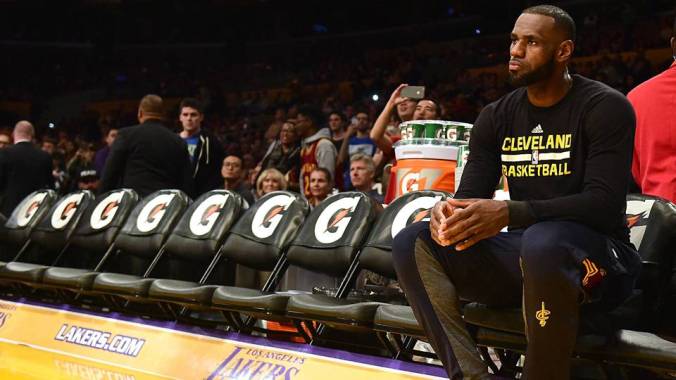
For a second consecutive Saturday, ABC’s  Saturday prime time NBA game was a pre-rigged dud. The LA Clippers blew out the supposedly star-studded Cavaliers, 108-78, as chants of “We want LeBron” echoed through the arena. The three super-stars that make Cleveland an NBA powerhouse,  LeBron James, Kyrie Irving and Kevin Love, were all kept out of the game, not because they were injured,  but because Cleveland coach Ty Lue had decided to rest his “Big 3” in the first of back-to-back games. Sure enough, all three played against the Lakers the next day.

It has become standard practice in the NBA for play-off bound teams to rest stars for “strategic purposes,” meaning that in a league where more than half the teams make the play-offs and the regular season is little more than an exhibition for most of them, it makes no sense to blow out the stars until a championship is on the line.  The NBA, in short, has no integrity. (Neither does the National Hockey League, for the same reason.) The previous Saturday, the San Antonio Spurs blew out the Warriors, 107-85,  as Golden State fielded a  JV team, with Stephen Curry, Draymond Green and Klay Thompson all on the bench. Yet NBA’s new nine-year, $24 billion media rights deal with ABC, Disney and Turner Broadcasting included Saturday Primetime along with  the TNT Thursday Night NBA game and ESPN’s Wednesday and Friday night broadcasts, to showcase the best of the NBA. (Most of the NBA teams never make it to the Saturday ABC game.)

Shouldn’t that kind of money guarantee that the teams put their best players out on the court? NBA fans also typically shell out three figures for tickets. Doesn’t the league pull what is in essence a bait and switch by allowing a game to be treated as a virtual forfeit? Continue reading

Supreme Court Ethics Quiz Of The Day: Jury Secrecy vs. Jury Bias

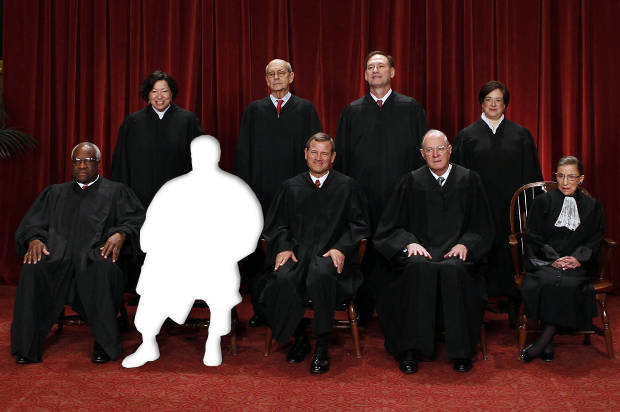
The Supreme Court ruled today that courts must reject the usual rule that jury deliberations are secret when evidence emerges they were marred by racial or ethnic bias. The 5-to-3 decision was triggered by statements made during jury deliberations in a 2010 sexual assault trial, when a juror said of the defendant, “I think he did it because he’s Mexican, and Mexican men take whatever they want.” The juror was a former law enforcement officer, and after the trial was over, two other jurors submitted sworn statements describing what he had said during deliberations.

 “He said that where he used to patrol, nine times out of 10 Mexican men were guilty of being aggressive toward women and young girls,” one juror recalled.

Those statements, the Court’s majority said,  warranted an investigation by the trial judge into deliberations that are ordinarily secret. Justices Ruth Bader Ginsburg, Stephen G. Breyer, Sonia Sotomayor and Elena Kagan joined Justice Kennedy in the majority opinion.

Continue reading

The Wrenching Problem Of David Ortiz, The Human Slippery Slope

papi_fame

Ethics conflicts force us to choose when multiple ethical principles and values point to diametrically opposed resolutions.  Often, a solution can be found where the unethical aspects of the resolution can be mitigated, but not this one. It is a tale of an ethics conflict without a satisfactory resolution.

I didn’t want to write this post. I considered waiting five years to write it, when the issue will be unavoidable and a decision mandatory. Today, however, is the day on which all of Boston, New England, and most of baseball will be honoring Red Sox designated hitter David Ortiz, who will be playing his finale regular season game after a 20 years career.  His 2016 season is quite possibly the best year any professional baseball player has had as his final one; it is definitely the best season any batter has had at the age of 40 or more. Ortiz is an icon and a hero in Boston, for good reason. Ortiz was instrumental in breaking his team’s infamous 86-year long “curse” that saw it come close to winning the World Series again and again, only to fail in various dramatic or humiliating ways. He was a leader and an offensive centerpiece of three World Champion teams in 2004, 2007, and 2013. Most notably, his record as a clutch hitter, both in the regular season and the post season is unmatched. You can bring yourself up to speed on Ortiz’s career and his importance to the Red Sox, which means his importance to the city and its culture, for nowhere in America takes baseball as seriously as Beantown, here.

That’s only half the story for Ortiz. Much of his impact on the team, the town and the game has come from his remarkable personality, a unique mixture of intensity, charm, intelligence, generosity, pride and charisma. After the 2013 terrorist bombing of the Boston Marathon, which shook the city as much as any event since the Boston Massacre, Ortiz made himself the symbol of Boston’s anger and defiance with an emotional speech at Fenway Park. Then he put an exclamation point on his defiance by leading the Red Sox, a last place team the year before, to another World Series title.

Performance-based arguments against electing Ortiz to baseball’s Hall of Fame are, at this point, untenable. Entering his final game, Ortiz had 541 home runs, (17th all-time), 1,768 RBI, (22nd), and 632 doubles, (10th).  He is only the third player in history to have more than 500 home runs and 600 doubles.  He ranks among the greatest post season hitters in baseball history with 17 home runs, 60 RBI and 21 doubles. His postseason average is .295 with an on base percentage of .409, a slugging percentage of .553 and a .962 OPS (the sum of the two.) Most great players did worse in the post season than during the regular season, for the obvious reason: the competition was better. Ortiz was better, which informs regarding his character and dedication.

The one lingering argument against admitting Ortiz to the ranks of Ruth, Williams, Aaron, Mays, Cobb, Hornsby, Griffey and the rest is that he has spent most of his career as a designated hitter, the American League’s 1973 invention, much reviled by National League fans and baseball traditionalists, designed to allow real batters relive fans from watching pitchers make fools of themselves at the plate. This makes him “half a player,” the argument goes. No designated hitter has ever been elected to the Hall, so that argument has prevailed so far. It was always a weak one—how did being lousy fielders like so many Hall of Fame sluggers make them greater players than one who never hurt his team at all with his glove? Now that a designated hitter has shown himself to be in the elite ranks of all the greatest batters, the argument sounds more like hysterical anti-DH bias than ever.

I should also note, before getting to the main point of this post, that I love Ortiz. I am a lifetime Red Sox fan, Boston born, bred and marinated, and Big Papi is special. He is one of the most interesting and admirable sports figures of my lifetime, and what he has meant to my city and my favorite sport is beyond quantifying. Few great athletes demonstrate persuasively that they are also great and admirable human beings. Ortiz is one of them.

Nonetheless, it is crucial that David Ortiz not be elected to the Hall of Fame when he becomes eligible five years from now, and that he never be admitted. On the matter of assessing the fitness for baseball honors of those who defiled the game by inflating their statistics, changing the outcome of games and harming players who abided by the rules, David Ortiz is a human slippery slope. Ortiz deserves to be in the Hall based on all admission criteria, including character and sportsmanship, but his admission will open the doors wide for players who are unfit, polluting the Hall of Fame and baseball’s values forever.

It’s not worth the trade off. This is the ethics conflict: one cannot be fair and just to “Big Papi” without doing widespread harm to the sport, and I would argue, the entire culture. Continue reading

Four Supreme Court Decisions: Abortion, Guns, Affirmative Action, Corruption…And Ethics. Part I: Fisher v. University of Texas

Abigail Fisher: Not dark enough to get "an equal shot"

Abigail Fisher: Not dark enough to get “an equal shot”

The under-populated U.S. Supreme Court recently made four decisions on issues with ethical principles involved. This is the first of four posts reviewing the ethics implications of the decisions.

I. Affirmative Action: Fisher v. University of Texas

The University of Texas’ admissions program guarantees admission to top students in every high school in the state. It is dubbed the  Top 10 Percent program, though the percentage cutoff is flexible. A second part of the admissions program admits other students from Texas and elsewhere using standards that take into account academic achievement and other factors, including race and ethnicity. Many colleges and universities base all of their admissions decisions on such grounds. The case before the Court challenged that part of the program, and presented an opportunity for the Supremes to finally declare affirmative action unconstitutional, as previous opinions hinted they might do some day.

This was not the day, however. Justice Kennedy, writing for the majority, said courts must give universities significant but not total autonomy in designing their admissions programs, writing:

“A university is in large part defined by those intangible ‘qualities which are incapable of objective measurement but which make for greatness.’ Considerable deference is owed to a university in defining those intangible characteristics, like student body diversity, that are central to its identity and educational mission.But still, it remains an enduring challenge to our nation’s education system to reconcile the pursuit of diversity with the constitutional promise of equal treatment and dignity.”

This defines either an ethical dilemma, which the Court’s majority is punting, or an ethical conflict…which the Court majority is punting. Is diversity an ethical objective, or a practical one, that is, a powerful non-ethical consideration? It is hard to argue that diversity in a student body isn’t desirable—to enhance the educational experiences of students, to avoid having a permanent, under-credentialed underclass, to “look like America.” However, fairness and common sense argue that admitting one candidate over another who is better qualified simply because of ethnicity or race is per se wrong. I don’t blame the Court at all for not making a clean call.

As usual, President Obama described the result in simplistic terms. “I’m pleased that the Supreme Court upheld the basic notion that diversity is an important value in our society,” he told reporters at the White House. “We are not a country that guarantees equal outcomes, but we do strive to provide an equal shot to everybody.”

Thank you, President Obvious. The crux of the case, however, was what should be done when using race as a standard for admission to attain that diversity denies an “equal shot” to someone who has the misfortune to be white, like Abigail Fisher, or Asian-American. Continue reading

Comment of the Day: “Ethics Questions And Answers Regarding The Flint, Michigan Water Crisis”

Indianapolis

Commenter Paul Compton addressed one issue in my post about the Flint water crisis, the question of whether avoidable disasters require some high-ranking individual with responsibility for the problem to resign or be fired as a vital symbolic statement that there will be official accountability when a system breaks down. I wrote, in reference to the calls for Michigan Governor Snyder to resign:

“Should Snyder resign? He wasn’t responsible for the fiasco, but he’s accountable: it’s his state, environmental protection agency, and water boards. He’s not the only one who should step up and fall on his sword, but sure: if you’ve read here for long, you know I support leaders and managers losing their jobs when massive screw-ups happen on their watch, especially when, as in this case, it is a joint effort.”

Here is Paul responding to that statement, in the Comment of the Day on the post, “Ethics Questions And Answers Regarding The Flint, Michigan Water Crisis”:

I agree completely; and disagree just as completely.

I have mentioned before that I am opposed to the Darth Vader school of man management. If someone has to fall on their sword every time they fail somewhere – even fail fairly spectacularly – not only will it be impossible for people to learn from their mistakes but we will soon run out of people who have any sort of competence at all.

An example:

Arthur Wellesley purchased a commission as Lieutenant-Colonel in the 33rd Regiment – he was already in the army and had seen some action by that time. At the battle of Seringapatam he advanced at night over un-reconnoitred ground and was soundly defeated resulting in some twenty five men killed. It has been suggested that if his brother had not been Governor-General of India he would have been court-martialed. We would never have had the Duke of Wellington, the only undefeated commander of his era.

Surely as people move up the chain of command their opportunities for catastrophic failure increase at each step. Added to that, the further up you go the more you are dependent on the performance of those below you. This, coupled with armchair critics and those with an agenda, can lead to a situation where the ‘boss’ cops it in the back for situations that are completely beyond their control.

An example:

Continue reading

Ethics Quiz: “Don’t Eat The Daisies” Ethics

I’m trying to take a breather from the Syrian refugees, President Obama, Presidential candidates and rampaging college students, and an ethics issue from a 1960 Doris Day comedy is as far away as I can get.

In “Don’t Eat the Daisies,” a movie loosely (very loosely) based on the humorous mommy anecdote best seller by Jean Kerr, wife of then New York Times  theater critic Walter Kerr, newly appointed prime drama critic Larry McKay (David Niven), his lovely wife Kate (Doris), their four rambunctious kids, their sheep dog and their wise-cracking house-keeper (Patsy Kelly)—yes, this was essentially the “Brady Bunch” without the girls—move to the country. Doris gets roped into the annual musical (for charity, natch) of the very amateur Hooten Holler Players. They ask the Larry for a play they could use, and he isn’t very helpful, so Doris calls up Alfred North, an old friend of the couple and a successful novelist played by Richard Haydn, best known as the sneaky Max in “The Sound of Music,” who has just had his first Broadway play skewered by McKay (Integrity! Integrity!). He is secretly seething and seeking revenge. The betrayed playwright siezes his chance: he sends Doris an obscure, terrible Foriegn Legion melodrama by an unknown author, and the Hooten Holler players turn it into a musical spoof.

Days before its ready to open, after all the tickets have been sold, Doris asks David to watch a rehearsal. He immediately recognizes the plot and some particularly awful lines: he wrote the  play under a pseudonym! “BWAHAHAHAH!” laughs Max, or rather Alfred. Larry’s  onetime friend, now relentless foe, has set the critic up for humiliation and professional doom, for other New York critics have been tipped off that the play getting its world premiere by the Hooten Holler Players is in fact the creation of the hypercritical critic himself. Once this abysmal mess is seen and taken apart by the critic’s rivals, his judgment will never be taken seriously again.

Niven demands that the production be cancelled, and forbids the Players to perform his work. Doris, who stars in the play, begs him to reconsider: the humble theater group will be ruined, and the charity will lose much needed support. The critic explodes: why does she care more about the amateur theater group than her husband’s career? She tells him that his theatrical power and fame has made him petty and mean. Their marriage seems ready to disintegrate.

Your retro-Hollywood Ethics Alarms Ethics Quiz of the Day is..

What’s going on here, and what do you do about it?

Continue reading

The Syrian Refugee Controversy: For The US Government, An Easy Ethics Call

Syrian refugees

That does not mean that it is an easy call for Barack Obama, whose perception of his duties and the stakeholders in his decisions is often confused.

The Question: Is it competent and responsible (ergo ethical) for the  the U.S. accept 10,000 Syrian refugees (or 65,000, as Hillary Clinton advocates) in the U.S., knowing that it is statistically certain that some of them will carry the threat of Islamic terrorism with them?

The Answer: No. Of course not. How can a rational person advocate such a foolish policy?

The answers to the last question are fascinating to speculate upon, and range from 1) “A rational person won’t,” to 2) “Willful blindness to reality” to 3) “Because of a profound misunderstanding of  the ethical priorities of government and leadership” to 4) “That’s a rational policy if the policy maker-wants  terror attacks.”

The proper analogy is admitting a refugee population with members suffering from a highly-communicable, infectious, incurable and fatal disease. No responsible government would risk bringing a plague into its population without being able to make certain—certain—that none of the refugees carried it. Thus there would be a quarantine period imposed on the refugees showing no symptoms, and those infected would not be allowed to enter the U.S. population at all. This is the same situation, except that the infectious, fatal, incurable contagion is radical Islam.

Dishonest and manipulative politicians like Hillary Clinton tacitly acknowledge the plague model when they say that refugees must be admitted to the U.S. but only after they are “thoroughly vetted.” They cannot be thoroughly vetted, however. Records from Syria are neither reliable nor available. Thus what such politicians are really saying is either “I don’t support taking Syrian refugees, but want you to think I do” or “I’m hopeless detached from reality.” The first is Hillary; the second is Barack Obama, who said yesterday,

“Slamming the door in their faces would be a betrayal of our values. Our nations can welcome refugees who are desperately seeking safety and ensure our own security. We can and must do both.”

We can’t do both. It can’t be done. His first sentence is pure demagoguery, and demonstrates, yet again, how shockingly ignorant the President is regarding the duties of his office. His essential duties are  to do what is in the best interests of the United States, its citizens, and its mission of promoting human rights in the world. When those objectives are in conflict, the President must put the welfare and security, long term and short term, of the citizens who elected him and the nation he leads above all else.

Why can’t Obama see that? I don’t know. I’ve given up trying to understand the man.

Objectively, the question of the Syrian refugees is an ethics conflict, when warring  ethical principles and systems contradictory results.On the side of accepting the refugees and the undeniable risks they carry, we have altruism, The Golden Rule, fairness, kindness, decency, tolerance, acceptance, compassion, and caring.

On the side of rejecting them, there is utilitarianism, responsibility, loyalty, process, competence, trustworthiness,  prudence, and due diligence.

For a leader, the choice is obvious, because for a leader, it can’t be a question answered objectively. The President of the United States is not permitted the luxury of altruism, or objectivity. He holds an office of trust, and is trusted to place  citizens above others. This decision involves more than values. It is a matter of leadership and government ethics.  However much Obama or anyone else believes that assisting the Syrian refugees, of any number, is objectively the “right thing to do,” the United States Government cannot regard it that way. It is bound by its own duties, standards and priorities to be partisan: this country comes first. The Syrian refugees present a real and existential peril that cannot be avoided, except by keeping them out.

Easy ethics call.

At least it should be.

Other points:

1. Nonetheless, it is Obama’s call. The 28 state governors who have announced that they will “not permit” Syrian refugees in their states are either ignorantly or for effect asserting a power they do not have. States cannot reject immigrants and refugees duly and lawfully admitted into the country by the Federal government. (According to the Obama Justice Department, they can’t reject illegal immigrants negligently admitted into the country by the Federal government’s incompetence and corruption, either.) These announcements of defiance are a bluff, but have undeniable political power. Continue reading

Ethics Alarms Presents With Sorrow: The Worst Ethics Conflict Of All

Dan Quinn's not a soldier any more because he disobeyed orders...and stopped a man from raping a kid in Afghanistan. War is hell.

Dan Quinn’s not a soldier any more because he disobeyed orders…and stopped a man from raping a kid in Afghanistan. War is hell.

An ethics conflict occurs when two unquestionable ethical values demand opposite results in the same situation.

An impossible ethics conflict is when the typical priorities of duty require the worst outcome.

This is an impossible ethics conflict.

Interviews and court records reveal that the American military command has ordered American soldiers and Marines not to intervene in Afghanistan when they observe Afghan military commanders and soldiers raping boys, even when the abuse occurs on military bases. The local practice is called bacha bazi, (“boy play”).  The  policy aims at avoiding conflict and maintaining good relations with the Afghan police and militia units that the United States has trained to fight the Taliban. It also embodies the theory that the U.S. should not  impose its cultural values on other nations. Pederasty is widely accepted in Afghanistan, and being surrounded by young teenagers, a.k.a. male rape victims, is mark of social status for powerful men.

Imagine how bad the Taliban must be if these are “the good guys.”

Asked via e-mail about this American military policy by the New York Times, the American command spokesman in Afghanistan, Col. Brian Tribus, replied, “Generally, allegations of child sexual abuse by Afghan military or police personnel would be a matter of domestic Afghan criminal law…there would be no express requirement that U.S. military personnel in Afghanistan report it,” with the exception of when rape is being used as a weapon of war.

Well, we certainly can’t have that. The response ducks the ethical issues entirely. Continue reading