The Michigan High School Ethics Bowl

More than 100 high school students from across lower Michigan will gather February 17-18 at the University of Michigan for the fifth annual Michigan High School Ethics Bowl. The winner  will represent Michigan in the National High School Ethics Bowl held at the University of North Carolina at Chapel Hill in April. The Ethics Bowl is organized by A2Ethics, the University of Michigan  Department of Philosophy Outreach Program and the high school faculty coaches in the High School Ethics Bowl League. During the two-day competition, judges  evaluate teams’ responses to case studies written by local community members.

See? There is hope!

Here are the case studies the students will analyze, fifteen of them. I may do posts on a few of them suggestions are welcome. One of them, #2, I have discussed in several legal ethics seminars:

The Michigan Rules of Professional Conduct forbid lawyers from revealing information received in confidence (information protected by the “lawyer-client privilege” of a client), and similarly from using that confidential information for the advantage of a third person, unless the client consents.

You are a lawyer whose practice is focused almost exclusively on criminal defense. You have been active in the criminal defense bar association for several years, and you represent criminal defendants at both the trial and appellate (appeals court) levels.

One of your clients, Gilbert, age forty, is in prison for murdering a woman named Alice. You represent Gilbert in the appeal of his conviction and life-without-parole sentence. During confidential meetings with Gilbert, he confesses to you that he also murdered Bob, and he acted alone when he did. Although you were not involved with the case of Bob’s murder, you are somewhat familiar with it and know that a man named Enrique was convicted of Bob’s murder and is consequently serving a sentence of life without parole. Enrique’s conviction and sentence were recently reaffirmed after a thorough, years-long appeals process. Unless new evidence comes to light, he will not be able to appeal again.

After you are unsuccessful in challenging Gilbert’s conviction and sentence for Alice’s murder, you speak with him about Bob’s murder. He repeats his confession, this time in more detail, but refuses to consent to your request to reveal the confession on Enrique’s behalf.

Continue reading

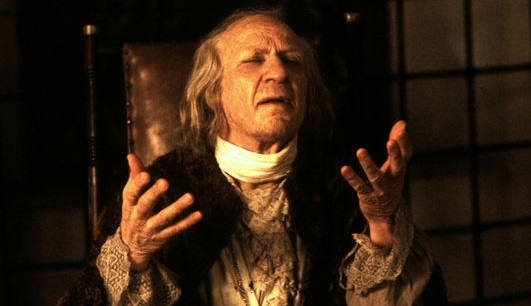
Ethics, Motives, Killing With Kindness, “Amadeus” And Related Matters

On a thread about the hysterical doom-sayers in response to the US’s exit from the Paris accords on climate change, one dedicated defender of progressive orthodoxy, lacking a genuine rebuttal for the proposition that the social media and pundit panic was nonsense (for there is none), defaulted to the argument that the withdrawal was unethical because the President’s stated motives for it were untrue. This raised two issues, one centuries old, and the other, an irritating one, of more recent vintage.

In order to sanctify many of the Obama administration’s policy botches, many people have adapted  aggressive versions of three prime rationalizations on the Ethics Alarms List: #13. The Saint’s Excuse: “It’s for a good cause”; #13A  The Road To Hell, or “I meant well” (“I didn’t mean any harm!”) and #14. Self-validating Virtue. To refresh your memory:

13. The Saint’s Excuse: “It’s for a good cause”

This rationalization has probably caused more death and human suffering than any other. The words “it’s for a good cause” have been used to justify all sorts of lies, scams and mayhem. It is the downfall of the zealot, the true believer, and the passionate advocate that almost any action that supports “the Cause,’ whether it be liberty, religion, charity, or curing a plague, is seen as being justified by the inherent rightness of the ultimate goal. Thus Catholic Bishops protected child-molesting priests to protect the Church, and the American Red Cross used deceptive promotions to swell its blood supplies after the September 11, 2001 attacks. The Saint’s Excuse  allows charities to strong-arm contributors, and advocacy groups to use lies and innuendo to savage ideological opponents. The Saint’s Excuse is that the ends justify the means, because the “saint” has decided that the ends are worth any price—especially when that price will have to be paid by someone else.

13A  The Road To Hell, or “I meant well” (“I didn’t mean any harm!”)

This sub-rationalization to the Saint’s Excuse is related to its parent but arguably worse. Rationalization 13 is one of the really deadly rationalizations, the closest on the list to “The ends justified the means”:

 The Saint’s Excuse is that the ends justify the means, because the “saint” has decided that the ends are worth any price—especially when that price will have to be paid by someone else. 

But while the wielder of the Saint’s Excuse typically at least has a beneficial or valuable result to claim as justification for unethical and inexcusable acts, the desperate employers of 13A only have their alleged good intentions, which may be the product of emotion, misunderstanding, ignorance or stupidity. How a bad actor intended his unethical conduct to turn out is no mitigation at all. The underlying logic is that the wrongdoer isn’t a bad person, so the wrongful act shouldn’t be held against him or her as harshly as if he was. The logic is flawed (it is the same logic as in The King’s Pass, #11, which holds that societal valuable people would be held to lower standards of conduct than everyone else) and dangerous, encouraging the reckless not to consider the substance of a course of action, but only its motivations.

The Saint’s Excuse attempts to justify unethical actions that accomplish worthy goals The Road to Hell attempts to justify unethical conduct even when it does undeniable harm, just because it was undertaken with admirable intent.

14. Self-validating Virtue

A  corollary of the Saint’s Excuse  is “Self-validating Virtue,” in which the act is judged by the perceived goodness the person doing it, rather than the other way around. This is applied by the doer, who reasons, “I am a good and ethical person. I have decided to do this; therefore this must be an ethical thing to do, since I would never do anything unethical.” Effective, seductive, and dangerous, this rationalization short-circuits ethical decision-making, and is among the reasons good people do bad things, and keep doing them, even when the critics point out their obvious unethical nature. Good people sometimes do bad things because they are good people, and because of complacency and self-esteem they begin with a conviction, often well supported by their experience, that they are incapable of doing something terribly wrong. But all of us are capable of that, if our ethics alarms freeze due to our environment, emotions, peer pressure, and corrupting leadership, among many possible causes. At the end of the movie “Falling Down,” the rampaging vigilante played by Michael Douglas, once a submissive, law-abiding citizen, suddenly realizes what he has done. “I’m the bad guy?” he asks incredulously. Indeed he is. Any of us, no matter how virtuous, are capable of becoming “the bad guy”…especially when we are convinced that we are not.

This has led to the seeming absurdity of recent arguments, some accepted in court, that the same conduct can be right or wrong, depending on whether the conduct is based on “good” motives, and who is the actor. Since, to take one random example, Barack Obama is obviously good and means well, even inept, poorly planned and irresponsible policies are ethical. Because President Trump is a villain, the same conduct emanating from his dastardly motives would make the same conduct unethical. I have dealt with this biased approach before and will again, but not today.

It is the second, older question that concerns me at the moment, and that is whether human motives should be used in the analysis of whether conduct is ethical or not. The conundrum come up repeatedly in one of my favorite ethics books,  “The Pig That Wants To Be Eaten.Continue reading

“Black Mirror” Ethics

black-mirror

I finally am getting around to examining “Black Mirror,” the British anthology series that explores, sometimes in a science fiction context, ethics issues involving technology. It is a critical hit, and has just had its  third season posted on Netflix.

Technology ethics is a dynamic and crucial topic. I sure hope the series is better than the  first episode, “National Anthem.”

If you are going to do a series about ethics, knowing something about ethics is mandatory. This episode is so absurd and its resolution so idiotic that it’s barely worth analyzing, No spoiler alert necessary, because I’m only going to reveal what would be in any preview synopsis. The Royal Family’s princess is kidnapped by terrorists—I think that’s a fair description—and they release a video on YouTube in which the terrified young woman announces that she will be executed unless the Prime Minister has live sex with a pig, on all TV networks.

The rest of the episode’s 60 minutes involves the PM’s “ethical dilemma” as social media weighs in and his staff and family apply various kinds of pressure. I wouldn’t waste an Ethics Quiz on this alleged “dilemma.” Continue reading

Abortion, “The Fly” and the Ethics Incompleteness Theorem

"AWWW! He looks just like his father!"

“AWWW! He looks just like his father!”

The most interesting aspect of ethics is at the margins, those situations where absolutists are challenged to hold to their principles because of unforseen variations that no general analysis could anticipate. The absolute ban on torture as unethical becomes shaky under the “hidden nuclear bomb” scenario.  Capital punishment opponents find that their compassion evaporates when asked whether Hitler or bin Laden deserved execution.

This is the Ethics Incompleteness problem, which I last wrote about at length in March of 2014:

“The human language is not sufficiently precise to define a rule that will achieve its desired effects, that is work, in every instance. There are always anomalies around the periphery of every normative system, no matter how sound or well articulated. If one responds to an anomaly by trying to amend the rule or system to accommodate it, the integrity of the rule or system is disturbed, and perhaps ruined. Yet if one stubbornly applies the rule or system without amendment to the anomaly anyway, one may reach an absurd conclusion or an unjust result. The Ethics Incompleteness Principle suggests that when a system or rule doesn’t seem to work well when applied to an unexpected or unusual situation, the wise response is to temporarily abandon the system or rule and return to basic principles to find the solution. No system or rule is going to work equally well with every possible scenario, which is why committing to a single system is folly, and why it is important to keep basic ethical values in mind in case a pre-determined formula for determining what is right breaks down.”

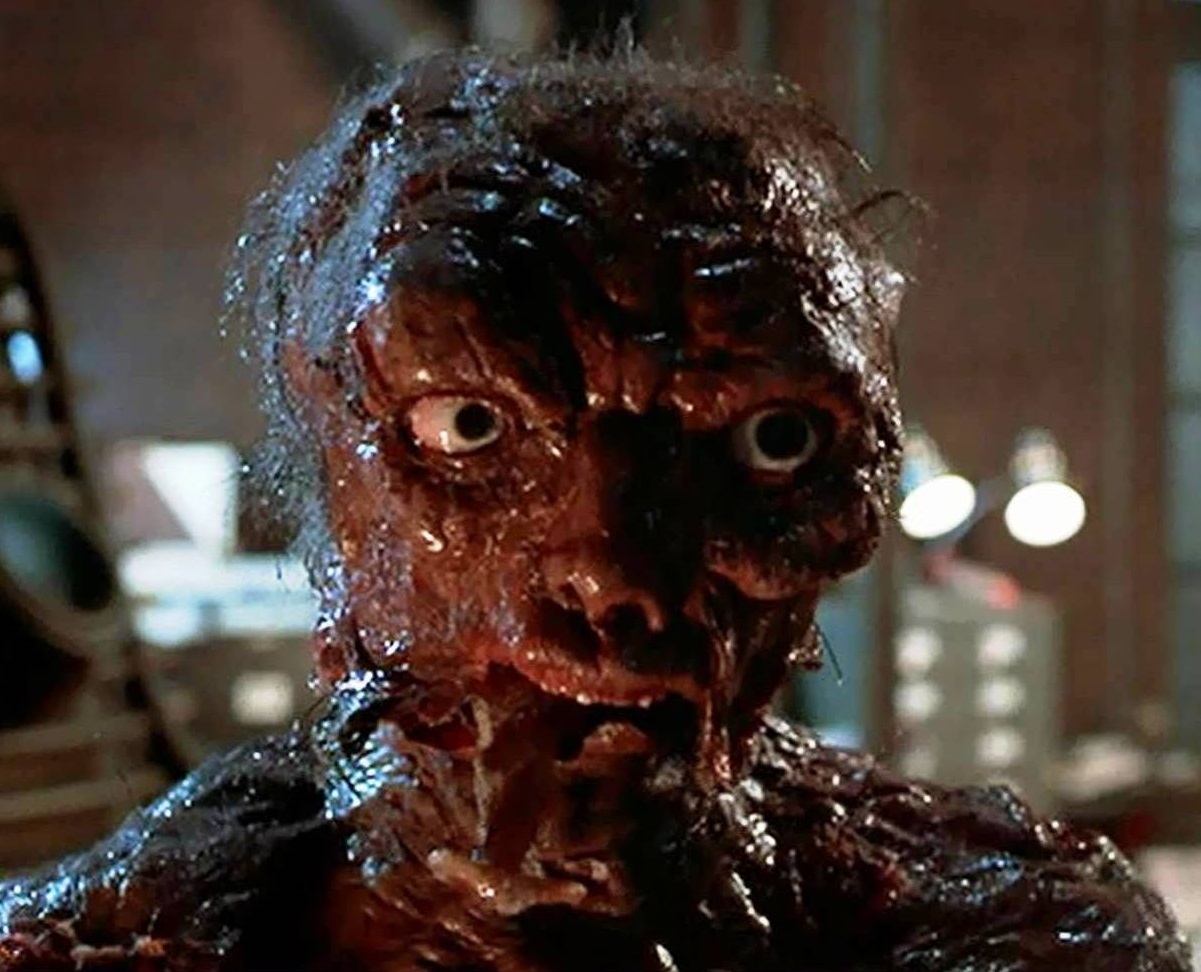
I was watching the Jeff Goldblum remake of “The Fly” (written and directed by David Cronenberg) last night, and rather than being properly horrified by Geena Davis’s nightmare of giving birth to a yard long fly larva, I found myself wondering how anti-abortion absolutists would handle her unusual dilemma. The film follows the tragedy of scientist Seth Brundle (Goldblum ) who has developed a means of teleportation. The process involves a computer breaking down a body, then transmitting the atoms electronically to a receiving “pod,” and reassembling them there. Unfortunately, when Seth tests the device on himself, an unnoticed fly gets into the sending pod, and the result is a version of Brundle that has fly DNA mixed in. (In the memorably campy Vincent Price original, what arrived in the receiving pod was a man with a giant fly head and a fly with a tiny human head.) Gradually Brundle mutates in form and mind into a monstrous hybrid, but before he knows what has happened to him, he impregnates girl friend Davis. Soon she realizes that something with insect DNA is gestating inside of her, though all tests show a healthy human embryo. Not surprisingly, she wants an abortion.

Would those who argue that abortion is murder maintain that she shouldn’t be able to have one, or that aborting the fetus is wrong? Let’s make the problem harder: let’s say she only learns that she has a fly-baby in the third trimester, when our laws wil not permit abortions unless the mother’s life is in peril. Some questions: Continue reading

Life Imitates Hoax: The Cruel Back Tattoo Revisited

THIS was a hoax, but...

THIS was a hoax, but…

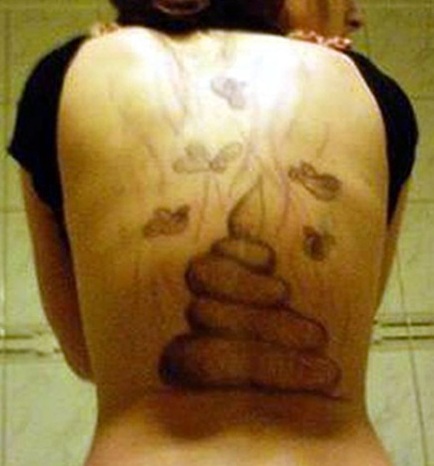
Since we are on the topic of web hoaxes—an Ethics Alarms hot button—I thought it appropriate to mention that one such hoax that effectively tricked me back in 2011—the story about the jilted lover who supposedly tattooed a huge steaming pile of poo on his ex’s back as revenge—apparently came to life for real in Australia.

Christopher William Lord, 23, has been sentenced to a year in prison for inspiring a tattoo artist to trick his “friend” by inking a large tattoo including a penis, testicles and an obscene phrase on the unsuspecting victim’s back, while assuring him that the design the unsuspecting young man had chosen was coming along beautifully. The tattoo artist is serving time for the incident, properly charged as an assault.

Yes, alcohol was involved. As a special nice touch, the man whose back was so defaced is disabled.

The only thing that approaches the obnoxiousness of web hoaxes is the superior sneering of those who, after the hoax, mock anyone so trusting as to believe such  “ridiculous” stories. This is hindsight bias at its most annoying, and this is part of the despicable objective of hoaxers. It is their own, warped IQ test, designed to allow them to feel superior to their victims, while amusing others so toxically cynical that they refuse to believe or trust anyone or anything, and deride the rest of us for promoting and encouraging trust the only way possible—by doing it. Web hoaxers and their enablers,in contrast, make life a little bit crummier, nastier and dangerous, because it amuses them.

“If you let them, they will crochet the world the color of goose shit.”

– Jacques Brel.

_____________________________________

Pointer: Fark

Source: Metro

OK, So the Vengeful Tattoo Artist Story Is A Web Hoax. It’s Still A Great Ethics Topic.

This comment was received on the post about the tattoo artist who tricked his cheating girlfriend into letting him draw a steaming pile of manure on her back:

"Never mind!" Wait, Emily---not so fast!

“You are all dumb. This is fake and I called it fake the first time I saw it. And guess what? The Smoking Gun did a little research and concluded that it is also fake. There appears to be no such person with the “victim’s” name in existence and nobody with the guy’s name. Further, the photo of the girl with the tattoo was first found as a submission on a blog about 18 months ago for “worst tattoo of the day”. And, further, they contacted the court in the jurisdiction where this allegedly happened and there has not been and is not any lawsuit filed with the names of either person nor about a tattoo like this. In other words, the story was made up on a website to generate hits and google ad generation (they’ve done this type of thing before).

Sort of makes all the arguments up above pointless.”

Since whoever this charming individual is didn’t include a name or a valid website, I deleted his comment, and since he had to be obnoxious while delivering this information, I’m not thanking him. But he was right, and his information was correct: the story is probably a hoax. The Smoking Gun did some digging, and exposes the deception here.

The commenter is also wrong, in several ways. Nobody is dumb. Web hoaxes are despicable and hard to catch, and especially hard for a site like Ethics Alarms to catch, a one-man, unfunded operation that is not a news source. I’m glad the commenter is puffed up with pride because he wasn’t fooled; the fact is, somebody somewhere refuses to believe every story, from moon landings to Elvis’s death. Sometimes they are right. I’m not impressed.

Mostly, however, he is wrong about the arguments generated by the story being pointless. Continue reading

Superhero Ethics!

For the most part, Ethics Alarms is dedicated to exploring actual ethical issues rather than fictional ones, but analyzing hypotheticals is still excellent practice for dealing with the real world problems that are sure lie ahead. One of the most original, thoughtful and entertaining new blogs to burst on the scene looks like it will be generating fascinating ethics hypos for a long time. It is called Law and the Multiverse, and it explores the legal dilemmas comic book superheros ( and supervillains, not that they would care) would face if they, you know, existed. Many of these dilemmas involve ethical questions as well, such as… Continue reading