Ethics Alarms Mail Bag: Rep. Jim Bridenstine and The Duty To Confront

A reader asks…

“John McCain and Paul Ryan have corrected constituents who spout conspiracy theories about the President.  Should this Republican have left this town hall comment unchallenged?”

The incident referenced is on view here:

That’s Oklahoma congressman Jim Bridenstine (R-OK) who listens as a woman says, “Obama is not president, as far as I’m concerned.  He should be executed as an enemy combatant…I can’t tell you, or I can’t say because we are in a public place, this guy is a criminal,” and then answers by saying that “everybody knows the lawlessness of this president,” without addressing her more outrageous assertions. “The only way I see out of this is to overwhelmingly change the Senate, so that we can then impeach the SOB,” another woman says. “You know, you look so sweet…” says Bridenstine, deflecting. Continue reading

Tom Yawkey, J. Edgar Hoover, Political Correctness and Gratitude

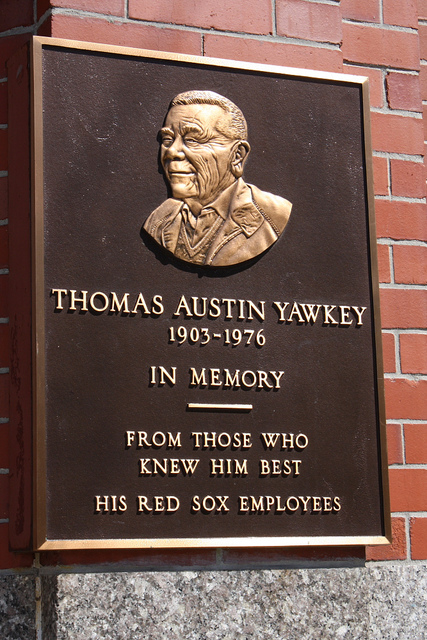
Yawkey TributeIt’s not often that I am called upon to rebut a web post that relies on one of my articles for its unethical conclusions, but that is the position that Ron Chimelis has placed me in with his recent essay, Why the Boston Red Sox should rename Yawkey Way.

To catch you up quickly: Tom Yawkey was a lumber tycoon and baseball enthusiast who owned the Boston Red Sox from 1933 to 1976, making him the longest-tenured team owner in the sport’s history. Yawkey was almost certainly a racist; if he was not a racist, his team’s policies certainly were for many years. The Red Sox were the last major league team to integrate, and blacks did not have a significant place on the team’s roster until the late 1960s, two decades after Jackie Robinson broke the color line. From the beginning, Yawkey ran the Red Sox as a public utility, paying little attention to the bottom line as he tried to build a winner out of the franchise that had been a perennial loser since selling Babe Ruth to the Yankees in 1919. After his death, Yawkey’s wife Jean continued the family tradition, running the Red Sox, except for a few years, until her own death in 1992.

When Tom Yawkey died, the City of Boston re-named Jersey Street, which runs past the entry to Fenway Park where the Red Sox play, Yawkey Way in his honor.

In the unerring clarity of hindsight bias, Chimelis argues that Tom Yawkey is undeserving of any recognition by the city that he devoted much of his life to representing, enhancing, serving, inspiring and entertaining because racism is the ultimate crime, and anyone possessing that vile state of mind should be consigned to shame forever. It is a common point of view, and an unfair one. Continue reading

Comment of the Day: “How People Rationalize Being Close-minded: A Case Study”

battle-marvel

The Ethics Alarms resident humanist, Bruce, has filed a passionate brief condemning the sometimes rough debate on Ethics Alarms, and, in some ways, the blog itself. This is the latest volley in an ongoing thread that has jumped around from multiple posts: my fault, because I keep raising the issue in various ways. I would normally append some reactions at the conclusion of such direct criticism, but it’s a busy day, so I’ll have to put them in the comments to Bruce’s post later, with this exception.

The Ethics Scoreboard, which was not a blog but a website, embodied Bruce’s suggestion of radically fewer posts, more carefully considered and proofread. I am proud of a lot of the work there, but the format was limiting. The goal of Ethics Alarms is to try to inject ethical considerations into the national analysis and discussion of daily events, including politics, that need them but hardly ever receive them, because, sadly, most commentators are either uninterested or incapable of it.  The reason I chose a blog format is that these issues are time-sensitive, and if I am to have even a wisp of a chance of elevating the discussion and encouraging valid analysis of right and wrong, I have to strike quickly, or I might as well be writing about the ethics of the Spanish American War.

Jeffrey Field, my favorite Occupier who often weighs in here, periodically sends me a note that says “Slow down!”  I appreciate that, and take it to heart. Nonetheless, when the news media was (lazily? maliciously?) misrepresenting the meaning of David Wildstein’s lawyers’ letter regarding Chris Christie’s involvement in the George Washington Bridge affair, and I could find nobody who was pointing out what miserably unethical journalism this was, I had to write about it immediately—and, frankly, Ethics Alarms readers were ahead of most of the public. A little later, the New York Times, for example, had to tune down its characterization of the document.

I know my analysis is not always air tight, but I’m not trying to end discussions, but begin them. I wish I could do ten posts a day.

Here’s Bruce, and his Comment of the Day on the post How People Rationalize Being Close-minded: A Case Study”: Continue reading

Déjà Vu: In D.C., It’s The Brooklyn EMTs All Over Again. How Can This Happen Even Once?

"Hey, I'm ready! Just go through the proper channels, and I'm On it! You can count on me!"

“Hey, I’m ready! Just go through the proper channels, and I’m On it! You can count on me!”

I guess it’s a sign of longevity that some ethics stories are recurring so exactly that I can handle them with previous posts. I never wanted to see this one repeat, however.

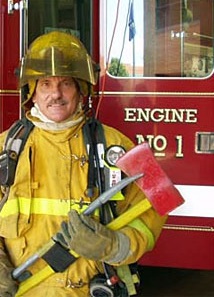
In 2004, two EMT’s let a pregnant woman die in front of them without offering aid, because they were on a break and wouldn’t abandon their coffee and bagels to save a mother and her unborn child. (They were suspended and yet kept their jobs.) Over the weekend, in Washington, D.C., a 77-year-old man, Medric Cecil Mills, collapsed across the street from a fire station. The man’s daughter ran across the street to seek help, and the firefighter she spoke to explained that he couldn’t respond until being dispatched and instructed her to call 911. The man died.

[A black humor note: when 911 was called and a rescue vehicle dispatched, it went to the wrong address.] Continue reading

What A Great Title!

bradley_manning

The Encyclopedia of Ethical Failure!

Published by the Defense Department, it doesn’t actually include all ethical failures (you can imagine what keeping that publication up to date would be like), but it is fascinating, illuminating and depressing reading nonetheless.

And, since it was published in 2012, it needs updating too. 2013 was not a good year.


Two and a Half More Rationalizations: “The Hillary Inoculation,” “The Unethical Tree in the Forest,” and a Sub-Category of “The King’s Pass”

42-hitchhikers-guide-to-the-galaxy-5139489-1024-768

“There are more rationalizations in heaven and earth, Horatio, than are dreamt of in your philosophy.”

It certainly seems so, Hamlet.

And stop calling me “Horatio”!

While writing about the McDonnells, I found myself citing some obvious and common rationalizations that I discovered (to me shame and embarrassment)  had never been added to the Ethics Alarms Rationalizations List, which two days ago stood at an even 40. I wrote them up and added then, placing “The Unethical Tree in the Forest” at #10, since it is so common, and designating the other, “I deserve this,” as a sub-category under “The King’s Pass,”at #11 (a). Then, in today’s comments to yesterday’s post about the perfect Naked Teacher (if only all those who clicked on that post were just slightly interested in ethics!), came a ridiculous argument that I immediately recognized as particularly infuriating rationalization I had heard before, too often, in the days when Democrats were churning out rationalizations like the chocolates on Lucy’s conveyor belt. I have dubbed it “The Hillary Inoculation.” These put the current count of rationalizations at forty-two, and a half. Here are the new additions.

Learn to recognize them, but don’t use them.

10. The Unethical Tree in the Forest, or “What they don’t know won’t hurt them.” Continue reading

Ford’s Hypothetical Ethical Dilemma

"Oh-oh...Lindsay's behind the wheel again..."

“Oh-oh…Lindsay’s behind the wheel again…”

Ford’s Global VP/Marketing and Sales, Jim Farley, was waxing on about data privacy as a participant in a panel discussion at an electronics trade show in Las Vegas. He was making a point regrading how much data Ford has on its customers, and its possible uses, and stunned audience members when he said, “We know everyone who breaks the law, we know when you’re doing it. We have GPS in your car, so we know what you’re doing. By the way, we don’t supply that data to anyone.” Ford knows when drivers of its automobiles break the law? That raises all kinds of concerns, and obviously Ford’s PR folks and lawyers didn’t care to deal with them. The next day, after a lot of publicity, Farley “clarified” his statements, saying, “I absolutely left the wrong impression about how Ford operates. We do not track our customers in their cars without their approval or their consent. The statement I made in my eyes was hypothetical and I want to clear this up.”

Well, you know how much I like hypotheticals. Besides, how will we be sure that Ford, if it can monitor our driving, won’t monitor our driving, or at least someone’s driving? Constitutional law specialist and blogger Eugene Volokh has an interesting post about the legal and liability implication’s of Ford’s peculiar spying ability. Introducing his analysis, he writes, Continue reading

I Don’t Care For This Ethics Lesson, Professor…


You keep using that word. I don't think it means what you think it does....

You keep using that word. I don’t think it means what you think it does….

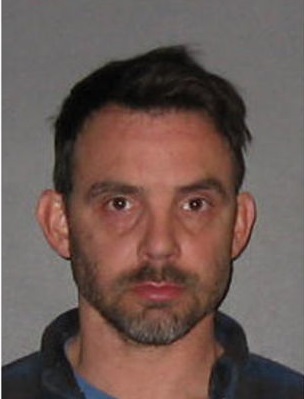
Police reports say that Robby Burleigh, 42, and his pregnant fiancée—she’s 20— got in an argument last week over a text message he didn’t like and the fact that he doesn’t want her to have their baby. According to the fiancée, Burleigh grabbed her, threw her to the floor, pinned her down and broke her phone so, she claims, she couldn’t call for help. Then, she says, he  dragged her across the floor to a safe where he keeps his gun, and said, chillingly, “You’re going to commit suicide today.”

Oh! I forgot the best part!

Burleigh teaches philosophy of religion, biomedical ethics, introduction to ethics and introduction to logic at Baton Rouge Community College, and his fiancée is a student of his. Clever ethics lesson, Professor! Continue reading

Here’s The Ethics Lesson From The Hall Of Fame Voting Results Tomorrow…

HOF

And that lesson is: sportswriters have no clue when it comes to ethical analysis, or any other kind of analysis, really.

Tomorrow the results of the Major League Baseball Hall of Fame voting will be announced, and those former stars receiving at least 75% of the vote will be officially enshrined as immortals. Every year before the steroid era, the voting was preceded by weird arguments that made no sense, like the one about whether a former player should be a “first time electee.” Some writers would concede that a given player was great enough for the Hall, but not vote for him because “he wasn’t good enough to get in on the first ballot.” This was, and is, ridiculous, and unfair. The question is, “Was this player great enough to deserve enshrinement, when the standards are unchanging?” It’s a yes or no question. “Maybe next year” is not a valid answer.

Thus I suppose that it should be no surprise that these same clods, faced with some really difficult ethical lines to draw in the wake of the so-called steroid era, show themselves to be not merely dunces, but ethics dunces as well. I just heard a sportswriter, Marty Noble, tell a baseball talk show that he won’t vote for any player about whom there is any question whatsoever regarding whether he cheated with steroids, including doubts based on rumors, whispering campaigns, looks, suspicions and drug tests. But he still voted for some players, he says. Well, that’s just wrong, by his own standards—he can’t be 100% sure about anyone. He also said that while he can vote for up to ten players, and agreed that there are more than ten players this year who have strong Hall credentials, he’s only voting for three. Why? Because, he says, the induction ceremony is too long.

Yes, he’s an idiot. Continue reading

Race-Baiting At “The Root”

The African-American news and commentary site The Root has plowed some new ground in the field of disgusting race-baiting.  An article by Charles D. Ellison argued that the same conservatives who fought to block Terri Shiavo’s husband from authorizing the withholding of her food so his vegetative wife could die should be supporting Jahi McMath’s parents’ efforts to keep their brain dead 13-year-old daughter on life support. That they are not, he suggests, is because Terri was white, and Jahi is black.

I wrote about Schiavo’s plight here, over at the Ethics Scoreboard, in 2005. I wrote recently about Jahi McMath, here. There is no inconsistency in my positions, but there is also none in the reactions of some conservatives to the two cases, because they are not comparable. Here’s  Billy Crystal explaining the divergence exquisitely in “The Princess Bride”:

In Billy’s words, Jahi is all dead. She is brain dead, which is to say, dead. Keeping her on life support is a waste of resources, and a tragic exercise in denial. Terri was mostly dead, and was never getting better. Most of her brain was gone, but her vital functions were still operating. Conservatives regarded the withholding of food from her as murder, just as they oppose the destruction of frozen embryos that will never be born.

They were wrong to try to interfere in Terri’s case, but that is irrelevant here. There is no racism involved at all. If Jahi were white, she would still be all dead, and even the most doctrinaire conservatives don’t believe that dead people should be kept on respirators.

The Root’s piece is dishonest, ill-informed, hateful and unfair.

_____________________________

Pointer: Althouse