Armstrong’s Unmasking: Better Late Than Never

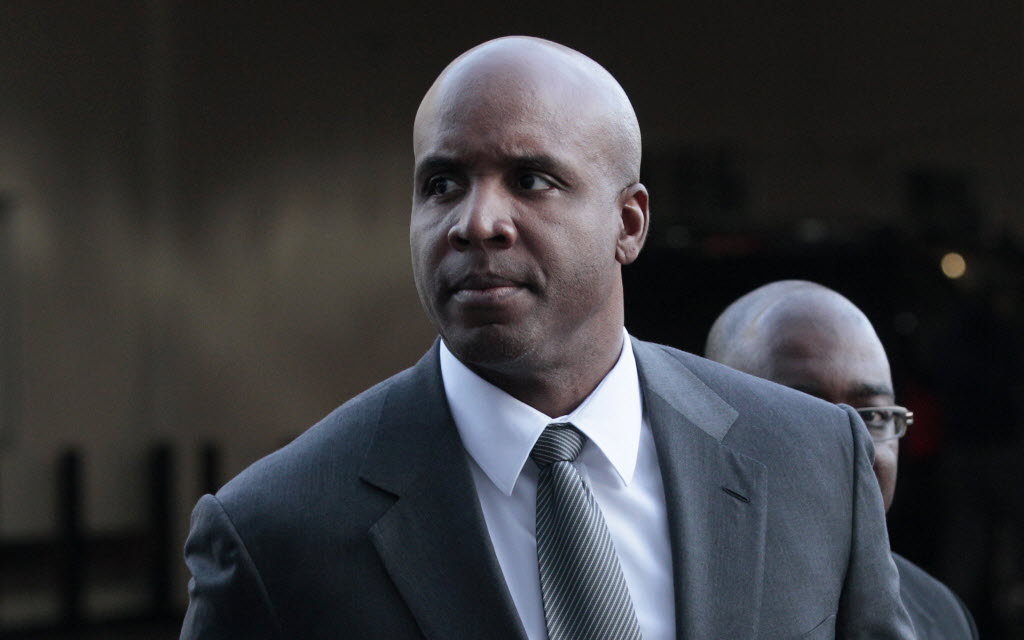
Don’t worry, Barry; Lance should be joining you soon.

Well, I guess I  have to hand it to Lance Armstrong, a bit like Ozzie Guillen when he praised Fidel Castro for surviving his dictatorship against all odds. The evidence, circumstantial and otherwise, that Armstrong is a  prohibited drug cheater ( like most successful cyclists) has been mounting for over a decade, and yet he has managed to hold on to much of his prestige and iconic status. Meanwhile, retired baseball slugger Barry Bonds has been reviled, condemned, prosecuted and vilified, by me among many others, for presumed illicit performing enhancing drug use in his sport that is backed by very similar kinds of evidence that  incriminate Armstrong. Yet while Bonds faces the humiliation of being rejected for election to baseball’s Hall of Fame next year when he becomes eligible, despite being the sport’s all-time career home run leader, Armstrong was preparing to race again to cheering throngs  in an upcoming iron man triathlon.

Then came the news, yesterday, that the U.S. Anti-Doping Agency has brought formal doping charges against him.  No one should underestimate Armstrong’s skill in wiggling off the hook, but this really should settle the issue of whether he is a hero or a manipulative charlatan. He is the latter. Whether he was a good but weak man trapped in a lie, or a sociopathic con man and cheat can be investigated by biographers and sportswriter, and psychologists. The harm that will be done when his false heroism is irrefutably exposed, however, will be the same no matter how Armstrong came about causing it.  His sport will be permanently tarnished beyond recovery. Scores of children and teens will be disillusioned, betrayed into a cynicism about role models and human nature that should only descend later in life. Worst of all,. his example will stand for some as proof that cheating pays. Armstrong, whatever happens to him, will be rich, like Barry Bonds, even if he is disgraced. He will, as my father liked to say, cry all the way to the bank. Continue reading

Now THAT’S An Unethical Excuse!

“My dog ate my brother.”

There is misconduct that suggests that an individual’s normal ethics alarms malfunctioned. There is misconduct that indicates that an individual has no ethics alarms. (An aside: I have just about concluded that model/vicious tweeter Melissa Stetten is in this category. She’s really proud of herself for humiliating a doofus actor who was trying to impress her, judging from her narcissistic website, and accepting accolades from fans who appear to be just as ethically warped as she is. This makes her a fick.) Finally there is misconduct so irresponsible and completely devoid of its impact on others that it is convincing proof that nothing exists between the individual’s ears at all—a conscience, common sense, gray matter.

This is a tale of that last variety of misconduct. Continue reading

Unethical Quote of the Month: Howard Kurtz

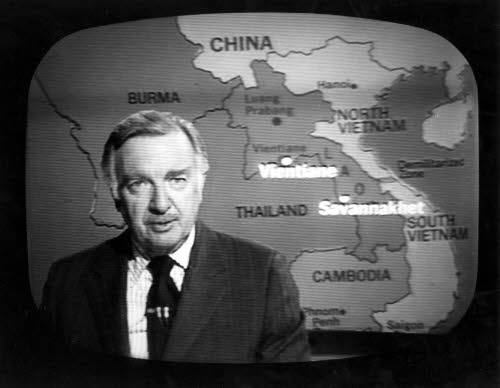
“Brinkley’s book will undoubtedly tarnish the Cronkite legacy. But my admiration for the man is only partly diminished. Perhaps it is too easy to judge him by today’s standards, any more than we should condemn Thomas Jefferson for owning slaves. Perhaps he simply reflected his times, when some journalists and politicians quietly collaborated, when conflicts of interest were routinely tolerated, when a powerful media establishment could sweep its embarrassments under the rug. Cronkite thrived as television came of age, always protecting what we would now call his brand. That’s just the way it was.”

—-CNN good journalism watchdog Howard Kurtz, closing his review of the new Douglas Brinkley biography of Walter Cronkite, which shows that the legendary paragon of broadcast journalism was biased, often dishonest, and frequently conflicted.

No, no, no, no.

And that’s the way it wasn’t…

The “things were different then” excuse won’t fly as a defense of Cronkite, and shame on Howard Kurtz, who is supposed to stand for ethical journalism, for trying to rationalize the obvious conclusion demanded by Brinkley’s biography. That conclusion is that there was no Golden Age of TV journalism, and that rampant liberal bias infected the nightly broadcasts then as now, but we were too trusting and unsophisticated to realize it. Kurtz spends an entire book review extracting information Brinkley uncovered that proves Walter Cronkite’s image as an objective, incorruptible truth-teller was a lie, and then attempts to make the case that we shouldn’t judge him harshly.

Why? Because he was one of Kurtz’s heroes? Perry Mason made me want to be a lawyer, and it wasn’t until I became one that I realized that the fictional defense attorney was the sleaziest criminal lawyer this side “The Practice.” Tarnished heroes are part of growing up, Howard. Don’t pretend that journalistic ethics were different then…journalism schools were teaching objectivity, transparency, fairness, honesty and avoidance of conflicts of interest when Walter was saying “And that’s the way it is!” in a high soprano. Yet Brinkley shows that he… Continue reading

The Unethical Rationalization List: 24 and Counting

Ethics Alarms frequently refers to rationalizations, which lie at the core of most unethical conduct. They are, as one ethicist put it, lies we tell ourselves to allow us to pretend that what we know is wrong, isn’t. Some rationalizations are used so frequently, by us and others, that we come to believe them.

The list of rationalizations has been available on the blog under the Rule Book heading from the beginning, but it is constantly updated, and even though posts frequently link to it, it is clear to me, especially from comments that resort to exactly the same examples of flawed ethical reasoning that populate the list, that a lot of visitors never see it. For those readers, and also those who may not have read the Unethical Rationalizations and Misconceptions page recently, I am posting the whole list of 24 rationalizations here. If you have a candidate for #25, please send it in. Continue reading

Clarifications, Retractions, Excuses and Lies: The Low Art of Pretending You Didn’t Mean What You Said

A figure in the public eye says something that appears sincere but that leads to negative conclusions about the speaker? Well. there are many options:

1. The speaker can stand by his or her words, and take the consequences.

2. The speaker can regret the words, express remorse, apologize, and ask forgiveness.

3. The speaker can accept the criticism and agree that he or she meant what he said, but state that, upon listening to the criticism, state that he or she no longer feels that way, and would not say the same thing today.

4. The speaker can try to say that the original statement wasn’t intended to mean what anyone hearing the words would naturally think they meant, making a plausible claim that the original statement was mis-worded.

5. The speaker can deny that he or she said the words, even, in some cases, though it was on tape.

6. The speaker can say that the words were taken “out of context,” as they sometimes are, as in Shirley Sherrod’s case, when subsequent comments at the same event changed the meaning of the quote, but were edited out.

7. The speaker can say he was joking, as Senator John Kerry tried to do after he suggested that if you don’t study hard and end up ignorant, you’ll be in the military fighting with all the other dummies, or as Professor Charles Ogletree has claimed regarding his statement that a video of President Obama hugging a radical law school professor when he was a student was hidden during the 2008 campaign.

8.The speaker can say that the statement is “no longer operative”, as Newt Gingrich did after a televised interview earlier this year. Continue reading

Ethics Dunces: Belvedere Vodka and Arnell

“Ethics Dunces” doesn’t really do these two organizations justice. Try “too dumb to live” and “too unethical to be trusted with sharp objects.”

Or vice-versa.

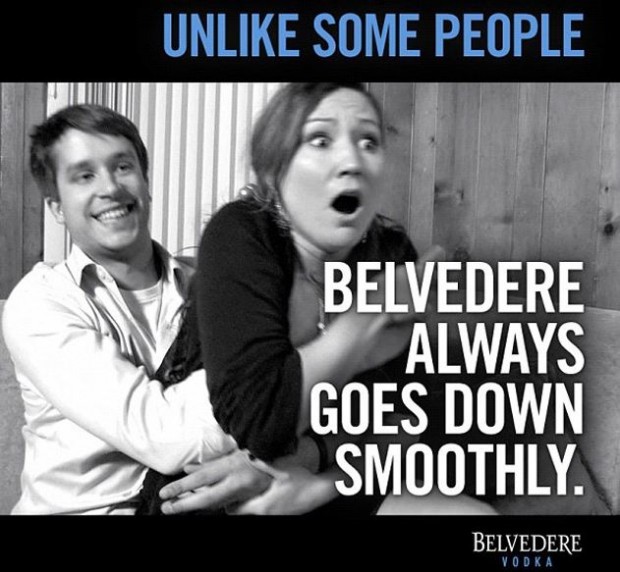
Marketing whizzes Arnell devised this hysterically funny vodka ad for Belvedere Vodka, showing a happily horny man sexually assaulting a terrified female victim. What fun! And such a witty tag line: “Unlike Some People, Belvedere Always Goes Down Smoothly.”

Goes down, get it?

It took about an hour after this juvenile, rape-friendly offal was posted on Twitter and Facebook for there to be such a negative reaction that even the bombed cretins at the vodka company were able to figure out something was wrong. So they pulled the ad, and apologized, kind of, tweeting,

“We apologize to any of our fans who were offended by our recent tweet. We continue to be an advocate of safe and responsible drinking.”

Uhhhhhhno. “We apologize to those who were offended”–a non-apology apology. Ethics strike two. “We continue to be an advocate of safe and responsible drinking”—what? These idiots still didn’t understand what they were supposed to be apologizing for!!!   Ethics Strike THREE! Continue reading

“Luck,” Causation, and the Complex Computation of Mixed Motivations

Was it good luck, or bad luck?

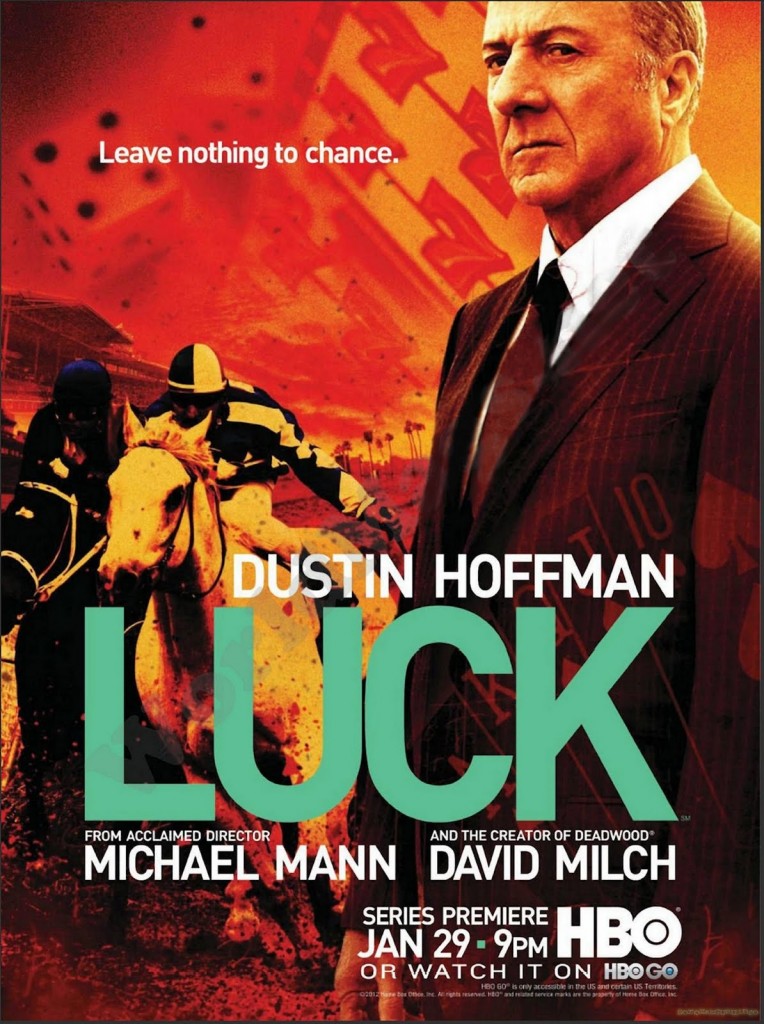
HBO has announced that it is cancelling “Luck,” its well-reviewed series about corruption in the sport of professional horse-racing. Why? Well, that’s an interesting question.

The immediate impetus for the decision was the death of a one of the horses used in the series. It was the third horse to die, so the announcement took the form of a sensitive and humane decision based on concerns for the animals. “While we maintained the highest safety standards possible, accidents unfortunately happen and it is impossible to guarantee they won’t in the future,” HBO’s statement said. “Accordingly, we have reached this difficult decision.”

I was initially impressed, but a couple of things about the move, which seemed uncharacteristically ethical by show business standards, bothered me. “Luck” was much-praised but low-rated, despite a cast headed by Dustin Hoffman and Nick Nolte and a production team headed by respected film director Michael Mann. Though it had been renewed for a second season, some felt that the renewal was dictated by a corporate decision not to embarrass its Hollywood royalty. Continue reading

The Susan G. Komen Foundation-Planned Parenthood Ethics Train Wreck

Unlike the 26 U.S. Senators who are unethically abusing their positions by presuming to demand that an independent non profit organization expend its funds according to their interests, I am not going to tell the board of the Susan G. Komen Foundation how to pursue its mission…because as with the Senators, it is none of my business. Ethics is my business, and the full-blown ethics train wreck surrounding the Foundation’s decision to end its substantial financial support of Planned Parenthood has been created by dishonesty, misrepresentation and a lack of fairness from all directions.

Here are some unpopular ethics truths in this fiasco. Continue reading

Comment of the Day: Ethics Blindness at Joe Pa’s Memorial Service

Paterno's inaction: bliviousness...or willful blindness?

In the ongoing debate among Joe Paterno sympathizers (and I don’t mean that pejoratively) and those who believe the late Penn State icon failed his ethical obligations miserably and deserved all the criticism he received, several interesting themes have arisen, including whether “obliviousness” is an excuse, whether critics are engaging in “wahlberging”–that is, claiming that they would have handled a difficult situation better when it costs them nothing to make the claim—and whether the Sandusky incident should be permitted to cloud Paterno’s legacy at Penn State, or should be over-shadowed by it. In this Comment of the Day, Proam covers these topics in response to a commenter who wrote, “Other posters who have tried to in any way justify Paterno’s actions/lack of action – GET REAL!”  Here is his comment, to the post, “Ethics Blindness at Joe Pa’s Memorial Service.” I’ll have some reactions at the end. Continue reading

Ethics Blindness at Joe Pa’s Memorial Service

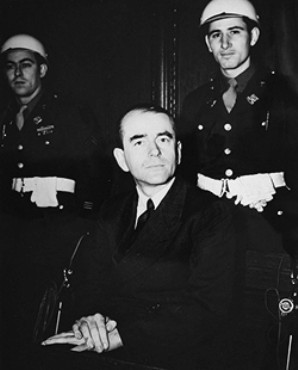
At least Albert Speer didn't have a clear conscience.

I did not expect the speakers at Joe Paterno’s emotional memorial service to avoid stepping on  some of the myriad ethical landmines that lay before them. It was a time to say good things about the late Penn State coach, and there is plenty to say. Still, two speakers did cross deep into unethical territory. Even at a memorial service, when the lessons of the Jerry Sandusky affair are so important for all to learn and accept, it was poor judgment and irresponsible for those honoring Paterno to try to minimize or deny his accountability in the tragedy.

Unethical Statement #1: Nike Co-Founder and Chairman Phil Knight. “Whatever the details of the investigation are, this much is clear to me: There was a villain in this tragedy. It lies in the investigation, not in Joe Paterno’s response to it.”

This got a standing ovation, a reaction every bit as offensive as the Penn State student riots after Paterno’s firing, indeed more so. Knight’s rationalization excuses every Enron executive who knew that the leadership was defrauding investors; every Bernie Madoff family member and enriched investor who knew something was wrong but waited for the SEC to act; every member of the Nixon White House who saw the rule of law being trampled but reasoned that since he wasn’t directly involved, there was no reason to speak up; every member of Congress who knew that Rep. Mark Foley was sexually harassing House pages and kept quiet; and every priest who knew that a colleague was sexually molesting boys and did nothing, because the Church leadership was doing nothing. Knight’s defense of Joe Paterno is a defense of all of these, and indeed a defense of evil. Continue reading