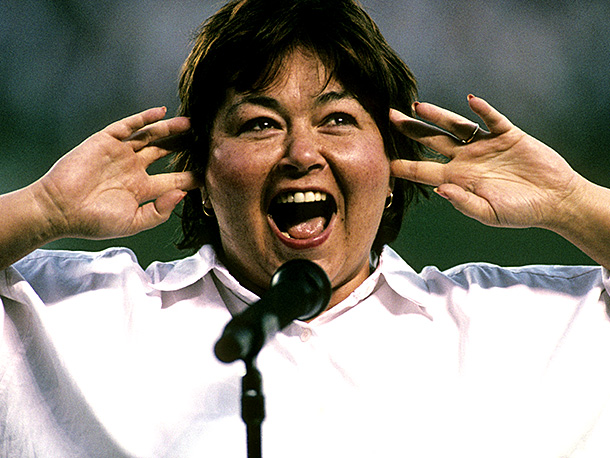
An earlier classy career high for Roseanne...mocking the National Anthem.
And you thought Spike Lee had established an unapproachable low point in celebrity, self-indulgent, arrogant irresponsibility by trying to tweet George Zimmerman’s address (all the better to get him killed), and inadvertently siccing the sickos on an elderly Florida couple who were minding their own business? How charmingly naive of you! For remember, no matter how ignorant and unethical a celebrity may be, there are always, always, bigger, more ethically clueless jerks and fools with an entry in Wikipedia and an itch to get back in the limelight.
A celebrity like…Roseanne Barr! She lapped Spike’s mean-spirited Twitter idiocy in his own chosen medium by… Continue reading




 Ethics Alarms