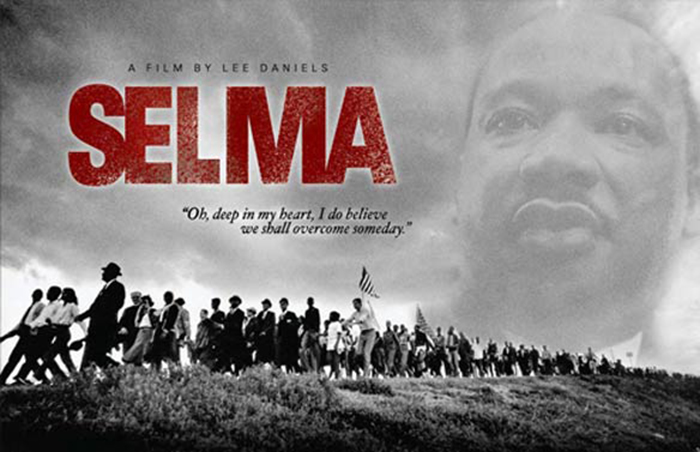
Ethics Quote Of The Month: Washington Post Film Critic Ann Hornaday on “Selma”

selma-movie

“How to reconcile facts and feelings, art and fealty to the truth? When filmmakers recall with pride about the deep reporting and research they’ve done for their projects, then they deserve to be held accountable for their projects. For fact-based films, accuracy becomes a formal element, along with acting, design and cinematography. It’s up to each viewer to identify the threshold where artistic license compromises the integrity of the entire endeavor. Cinema has more responsibility in this regard precisely because of its heightened realism, its ability to burrow into our collective consciousness and memory, where the myth has a tendency to overpower settled fact. But viewers have responsibilities, too. If accuracy has become a formal element of historical dramas, then the ensuing fact-checks have become just as integral a part of how we view them. That means it’s incumbent on audiences to engage in a mode of spectatorship that, rather than decide who’s right, can listen to and respect expert critiques, and still open themselves up to a piece of filmed entertainment that speaks to less literal, more universal truths.”

—–Ann Hornaday, Washington Post film critic, on the controversy regarding the counter-factual treatment of President Lydon Johnson in the new film, “Selma.”

The question of whether film makers have an ethical obligation to fairly represent history, and particularly individual historical figures, in their movies has been a topic visited frequently at Ethics Alarms, and I’m not going to re-hash conclusions that have been thoroughly discussed before, such as

…here, regarding the casting of “The Impossible” with a gleamingly light-skinned central family and the changing of the real life heroine from Spanish to British

…here,  discussing complaints that a fictional event was not portrayed accurately in “Noah”

…here, exploring the many falsehoods, some quite despicable, in James Cameron’s “Titanic”

…here, regarding unfair criticism of “Argo”

and here, discussing “Lincoln” screenwriter, playwright Tony Kushner’s inexcusable choice to represent a real life former Congressman voting against the Thirteenth Amendment abolishing slavery when in fact he voted for it.

The conclusion of that last one sums up the lessons of the rest, I think. Kushner’s defense against criticism of the collateral damage his invented facts wreaked was to argue that they were legitimate tactics in the pursuit of drama and “greater truths.” He then compared smearing the reputation of a Congressman, to the detriment of his descendants, to misrepresenting the kinds of socks Lincoln wore. (Kushner can be a brilliant writer, but his ideological utilitarianism is repellant.) I wrote:
Continue reading

Prosecutor Ethics, “What The Hell Were You Thinking?” Dept: Dog-Whistling “Dixie” To The Jury

"Wait...WHAT did you just say??"

“Wait…WHAT did you just say??”

Canyon County Deputy Prosecutor Erica Kallin wanted to make the point that the defense attorney for the African American defendant, James D. Kirk, was trying to lead the jury to ignore the evidence that pointed to his guilt in his trial for lewd conduct with a 17-year-old girl and sexual battery of a 13-year-old girl—making them, in effect,”look away” from the truth. How could she make that argument in a vivid way? Clarence Darrow used to use poems in his famous closing arguments; was there a memorable poem that used the phrase, “look away”?

“Eureka!” Erica thought. She found it! So she said to jury deliberating on the case:

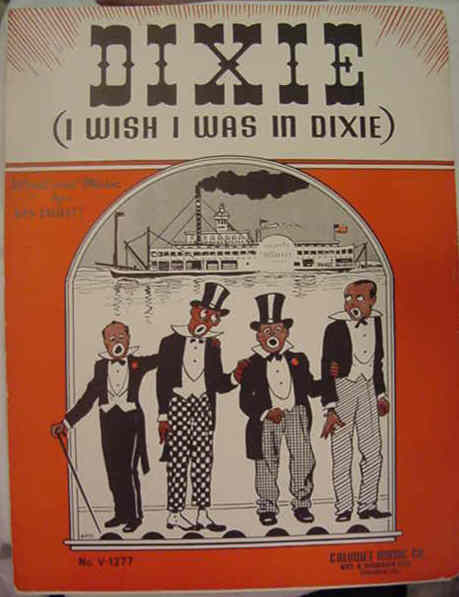
“‘Oh I wish I was in the land of cotton. Good times not forgotten. Look away. Look away. Look away,’ And isn’t that really what you’ve kind of been asked to do? Look away from the two eyewitnesses. Look away from the two victims. Look away from the nurse and her medical opinion. Look away. Look away.”

The jury convicted Kirk, on both counts; the evidence against him was indeed strong. He was sentenced to 20 years in prison. Continue reading

The Wall Street Journal Steals From A Blogging Lawyer…Luckily For Them, A Nice One

A lawyer asks: Will Google Cars put me out of business? The Wall Street Journal  asks: Why shouldn't we make money off your answer?

A lawyer asks: Will Google Cars put me out of business? The Wall Street Journal asks: Why shouldn’t we make money off your answer?

I always do a double-take when I see that someone has “re-blogged” a piece from Ethics Alarms. Unless there is something in my WordPress agreement that allows other bloggers to lift my work and publish it as their content without my permission—oh, who knows, there probably is—this is a copyright violation, but worse than that, it’s wrong. Apparently they think that if they give attribution, that makes everything fine. Why would they think that? I’m writing for my blog, not anyone else’s. If a blogger wants to reprint all, most or some of my commentary in order to critique it, that’s fine ( WindyPundit is doing this right now). But lifting all or most of my work to fill space on your website, without my permission? Not fair, and not ethical.

This just happened to personal injury lawyer and estimable blogger Eric Turkewitz, but the culprit wasn’t a blogger, it was the Wall Street Journal. It took his post about Google Cars and just slapped it into the print and online editions of the paper. “Lawyer Eric Turkewitz writes that self-driving cars will hurt the business of many personal-injury attorneys,” said the sub-head under “Notable and Quotable.” Hmmm. Usually a writer gets paid to write features for a newspaper. I guess just lifting copy without permission is “Fair Use.”

No, First Amendment expert Marc Randazza points out in his typically irreverent way, it isn’t:

In this case, the Wall Street Journal used 44% of Turkewitz’ post, with no additional commentary, criticism, or discussion.  The WSJ could have called Turkewitz a moron for his views, and quoted the whole thing (theoretically).  Or, the WSJ could have given approval, more discussion, or turned the article into piece of art, with spray painted Che Guevaras and stencils of Paris Hilton, as a commentary on Turkewitz, tomato soup, and golf, or whatever.  But, they didn’t do any of that.  

So lets look at the §107 [Fair Use]factors

(1) the purpose and character of the use, including whether such use is of a commercial nature or is for nonprofit educational purposes;
(2) the nature of the copyrighted work;
(3) the amount and substantiality of the portion used in relation to the copyrighted work as a whole; and
(4) the effect of the use upon the potential market for or value of the copyrighted work.

The purpose and character of the use is certainly commercial and for profit. The WSJ sold its newspaper with Turkewitz’ work in it, and even put it behind its paywall online. Same exact use, except WSJ took what Turkewitz distributes for free, gathered it, and sold it.

The nature of the copyrighted work was Turkewitz’ original opinions and thoughts.

The amount and substantiality of the portion used? 44%. Pretty substantial. Remember, this is not dispositive, but if you used almost half of an original work, you better have a good reason.

The effect of the use on the potential market for the value of the copyrighted work? That’s sorta iffy. It isn’t as if Turkewitz sells his work. But, that is not a requirement. Turkewitz’ blog currency is readership. If you do some quick online searches for some of the content, sometimes the WSJ version comes up above Turkewtiz’ version. Not cool. Ultimately, the WSJ blew it here because they didn’t add anything to the original — they just lifted it and reposted it….

So the verdict? The Wall Street Journal is definitely guilty of copyright infringement for lifting a bloggers’ work without any justification.

It’s worse than that, however. Continue reading

Ethics Quiz: Is “Hidden City” Flying Unethical?

Hidden City

Last month, United and Orbitz filed a lawsuit against a website called Skiplagged, which among other things helps consumers plan trips with cheaper airfare using a tactic called “Hidden City.” Hidden City travel is when a traveler wants to go to a city that costs more to fly to directly than another city that uses the real destination as a connection. Thus, if you want to go to Charlotte, you book a cheaper flight that involves a change of planes in Charlotte, and just take your carry-on luggage and skip the last leg of the trip. Anyone can search and book Hidden City flights, but it is a chore.  Skiplagged makes it relatively easy.

Airlines punish frequent flyer passengers who use the method. They argue that gaming the system this way makes it difficult to track passengers and unfairly takes advantage of the hub-and-spoke system, where airlines fly to hub cities and add connecting flights from there. The lawsuit is trying to shut down Skiplagged,  alleging “unfair competition” that promotes “strictly prohibited” travel. The suit seeks $75,000 in damages, and 22-year-old site creator Aktarer Zaman is fighting it, seeking funds, so far successfully, on GoFundMe, where he originally sought  $20,000 to afford his legal bills and is closing in on twice that amount. My guess? If this gets to a jury, Zaman will win. The Streisand Effect is also in play: the airlines risk making everyone aware of this cost-saving maneuver, while getting bad publicity as well.

Zaman argues that the Hidden City ploy is legal. You know my answer to that ( Rationalization #4. Marion Barry’s Misdirection, or “If it isn’t illegal, it’s ethical”)and it’s also the first  Ethics Alarms Ethics Quiz of 2015:

Is the Hidden City tactic ethical?

Bloomberg refers to Hidden City flying as a “scam” and “cheating.” Is that a fair description? The ticket purchaser has paid for the whole flight, so why is it cheating to get off half-way through it?

I think it’s a close call, but I have to side with the airlines.  The closest analogy that I can come up with is card-counting in blackjack: it’s not cheating, and it’s not illegal, but the casinos have a right to prohibit it in their own interests. The rationalization (Rationalization # 18. Hamm’s Excuse: “It wasn’t my fault.”) is that the existence of a loophole is the airline’s problem to fix, and if they can’t fix it, taking advantage of it is fair. But it isn’t fair, any more than it is fair for travelers to avoid baggage fees by taking large bags through security to the gate, and then passing them off, at no cost, on the way into the plane. It’s dishonest, and the Hidden City trick is also dishonest. You pay the airline to take you to a specific destination. How they get you there is irrelevant: a ticket to Minneapolis is a ticket to Minneapolis, and if you use it to get to Chicago instead because the airline charges more to go there, you engaged in bad faith negotiation.  The ploy is also unethical because if it becomes widespread, airlines will have to raise fares, and all air travelers will suffer.

One of Zaman’s arguments also positions him on my bad side: he points out that his site merely shows the airfares, and that the passengers book the tickets. Right. That was the same argument made by radical pro-life websites that posted the names and addresses of abortion practitioners so fanatics could track them down and kill them. Pro-anoerexia websites don’t starve young women, they just encourage them to starve themselves. If Hidden City flying is cheating, he’s facilitating it.

Reluctantly, I have to agree that it’s unethical.

______________________________

Ethics Alarms attempts to give proper attribution and credit to all sources of facts, analysis and other assistance that go into its blog posts, and seek written permission when appropriate. If you are aware of one I missed, or believe your own work or property was used in any way without proper attribution, credit or permission, please contact me, Jack Marshall, at jamproethics@verizon.net.

Ethics Dunces Of The Air: The Crew Of Delta Flight 468

"Fly Delta: we'll accommodate your biases!"

“Fly Delta: we’ll accommodate your biases!”

This one amazes me. There is no conceivable justification for it.

A group of ultra-Orthodox Jewish men refused to take their seats on Delta Airlines Flight 468 from New York’s JFK Airport bound to Israel, because their faith forbade them from sitting next to female passengers. The flight was delayed by 30 minutes while the crew negotiated with the men and the offending passengers—you know…women. Eventually, desperate to get the flight off the ground, some passengers agreed to trade seats.

In Ultra-orthodox Judaism, physical contact between men and unrelated women is forbidden.

So what? Continue reading

The NYPD Turns Its Back On De Blasio: What’s Going On Here?

NYPD backs

The rift between New York Mayor de Blasio and his city’s police department  is more than an internal spat. It has the potential to divide and harm the city and citizens, not to mention crashing the Mayor’s already self-jeopardized political career early in his term. Both sides if this dispute committed hostile acts that the other considers grievously disrespectful. Neither combatant appears ready to apologize.

De Blasio crossed what many of his department’s officers consider an uncrossable line when he suggested, in the immediate wake of the grand jury’s decision not to indict in the Eric Garner case, that his own bi-racial son was at risk of harm should he be apprehended by the NYPD. As I have written before, this was not, as the spinners would have it, just a case of a mayor being candid about genuine problem in community relations. This was a tacit endorsement of the “hands up” protests and their contention that Garner, Mike Brown and others were the victims of police racism, that police are killing, likely to kill, want to kill, black kids. It doesn’t matter that de Blasio may not have intended that implication: under the circumstances and in the context of events, this is what police officers interpreted his remarks to mean. He was siding against them. He was suggesting that the grand jury was wrong not to indict. He was suggesting not that some NYPD officers were racially biased, but that black children like his son “may not be [Translation: “are not“] safe from the very people they want to have faith in as their protectors.”

The police have responded with multiple demonstrations of anger and contempt for their boss. Most recently, there were boos and jeers when De Blasio spoke at a police graduation ceremony this week. Over a hundred officers symbolically turned their backs when the mayor spoke at the funeral of Officer Rafael Ramos, who was assassinated by a man who suggested that he was seeking vengeance for the deaths of Garner and Brown. That had followed the theme of an airplane-towed banner over the city that read,“Our backs have turned to you,”which in turn was inspired by the spontaneous gesture by officers present when de Blasio visited the hospital where the bodies of Officer Ramos and his partner lay.

The New York Times, which has been guilty of bolstering the “hands up” lie by carelessly linking the deaths of Brown and Garner as well as Trayvon Martin, none of which can be fairly blamed on racism based on available evidence, has come down squarely against the police, writing in an editorial: Continue reading

Oddly, Though Ethics Alarms Had Already Named Comcast “Corporate Asshole Of The Year,” The Company Felt It Had Something Left To Prove…

ernestine

I really don’t understand this at all. In October, when the viral story of how Comcast managed to get a customer fired from his job for insisting that the communications giant address his legitimate complaints, I wrote:

I have never heard of even one customer of any company losing his job as a consequence of that company’s refusal to address legitimate complaints. That is why Comcast gets its Corporate Asshole of the Year award early. Nobody’s going to top this.

Yet amazingly, Comcast has managed to have yet another tale of atrocious service and customer abuse get widespread publicity. This video, by YouTube exhibitor Sweetlethargy, tells the whole  jaw-dropping story:

In any normal consumer setting, a customer able to prove that he was  induced by a company representative to purchase a service under false pretenses would immediately receive an apology, and the service promised for the price offered. In this case, however, as you can see in the excruciating video, Comcast’s reaction is, “Sorry, we won’t honor what you were told.” Translation: Screw you. Sue us. Good luck with that.

The is reminiscent of the running gag that was once famous on “Rowan and Martin’s Laugh-In,” the chaotic Sixties comedy show, in which comic Lily Tomlin would play a cruel, smug, nasal-voiced and snorting Bell telephone operator named Ernestine (above). Her specialty was telling infuriated customers who were receiving rotten telephone service that their complaints were futile. “We don’t care. We don’t have to care. We’re the telephone company!” she’d say.

Apparently this is Comcast’s attitude. Horror stories about Comcast service are all over the internet and social media, and heads aren’t rolling, the Board isn’t screaming, press releases aren’t issuing, and documented customer abuse keeps turning up. The company has nurtured a culture of carelessness, callousness and arrogance, and apparently believes that its services are too essential to suffer significant consequences.

What have you heard about Bell lately?

__________________

Pointer: Fark

“Doonesbury’s” Unethical Late Hit On The University of Virginia

Doonesbury

The Rolling Stone-“Jackie”-University of Virginia ethics train wreck has claimed another victim, and an unlikely one: “Doonesbury’s” characters, who have been led astray by cartoonist Gary Trudeau and the newspapers that carry his popular strip.

In the episode that ran yesterday, the campus bimbo-turned-feminist “Boopsie” ranted about sexual assault cover-ups of by institutions, and singled out the University of Virginia as a culprit, forbidding her college age daughter from attending school there. [ Notice of correction: I am informed by a reader that “Sam” is Boopie’s daughter, not her son as I wrote originally. Thus she is forbidding her daughter from attending a school where she thinks she is likely to be raped, rather than forbidding her son from going to a school where major magazines will unjustly accuse his fraternity of being a cult of rapists. I apologize for the error.] The premise was based on the anonymous allegations of a fraternity campus assault that were turned into a sensational expose by a feminist reporter with an agenda, and guilelessly published in Rolling Stone without confirmation, fact-checking, or a minimal level of ethical journalistic practices. “Jackie’s” rape accusations have been shown to be substantially or completely fabricated, and story has been thoroughly discredited for more than three weeks.

Why are Trudeau and his fictional creations still calling UVA a hotbed of sexual assault? There are several reasons: Continue reading

The Ethics Conflict Of Chevy Chase’s Newlands Fountain and How To Resolve It

Chevy Chase Circle

Chevy Chase Circle is the official border separating the District of Columbia and Chevy Chase, Maryland. The inscription on the fountain at the center of Chevy Chase Circle honors Francis Griffith Newlands, saying, “His statesmanship held true regard for the interests of all men.” He was a three-term senator from Nevada,  serving from 1903 until his death in 1917, but more important to this controversy, founded the Chevy Chase Land Co., which created neighborhoods on the Washington and Maryland sides of the circle. Yes, the founder of Chevy Chase is honored with a fountain in Chevy Chase Circle. What could possibly be wrong with that?

The problem is that Senator Newlands was a racist, and a proactive one. He was a white supremacist who described blacks as “a race of children” too intellectually handicapped for democracy. In 1912, he attempted to have  the 15th Amendment, which granted voting rights to African American men, repealed. Not surprisingly, his vision of Chevy Chase did not include black residents, or Jewish ones for that matter.

The Advisory Neighborhood Commission that represents the D.C. section of Chevy Chase wants to remove Newlands’ name from the fountain, and has introduced a resolution calling on the D.C. Historic Preservation Office to rename the landmark “Chevy Chase Fountain.” The reason is his advocacy of anti-black policies.

This is a classic ethics conflict, a problem in which valid ethics principles oppose each other. There are so many conflicting ethical principles and objectives at work here: Continue reading

The President Engages In Gender Discrimination At His Press Conference. Isn’t That Marvelous?

How feminist!

How feminist!

I missed this initially, because unlike an unfortunate number of people in the country, especially those in the government, I don’t tally up every event according to the gender, race and ethnicity of the participants.

However, it seems that in his year-ending news conference on December 19, President Obama only called on female reporters. The left-biased press rejoiced and applauded: Vanity Fair, for example, headlined its story “Obama’s All-Women Press Conference Deals Glancing Blow to Patriarchy.”

I am obviously so estranged from what passes for logic, fairness and ethics among Obama cheer-leaders that I can’t begin to comprehend their thinking. How could such a stunt possibly be anything but wrong?

1. Is the President making up for what he believed was his bias in calling on reporters in the past? If so, this like an umpire making up for mistakenly calling a ball a strike in one game making up for it by calling a strike a ball in another. Two wrongs don’t make a right, and two instances of gender bias don’t cancel each other out. Continue reading