Ethics Quiz: Virginia’s Forced Vasectomy

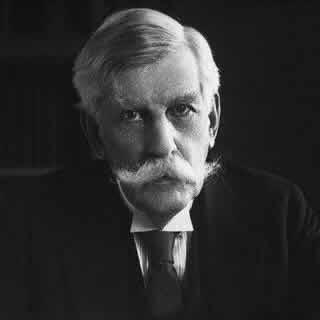
"Well, they can't all be "shouting fire in a crowded theater," Oliver. So you had an off day....it happens.

“Well, they can’t all be “shouting fire in a crowded theater,” Oliver. So you had an off day….it happens.

One of the skeletons in the Old Dominion State’s closet is the 1924 “Virginia Eugenical Sterilization Act,” a  law allowing the sterilization of citizens adjudged to be in a long line of mentally deficient idiots. The law was upheld in the infamous  1927 Supreme Court opinion in Buck v. Bell, in which the great Justice Oliver Wendell Holmes, to his undying shame, wrote,

“It is better for all the world if, instead of waiting to execute degenerate offspring for crime or to let them starve for their imbecility, society can prevent those who are manifestly unfit from continuing their kind…Three generations of imbeciles are enough.”

So approved, Virginia’s eugenics law lasted into the 1970s, allowing the state to sterilize more than 7,000 people in mental institutions. The law was repealed in 1979, and victims are seeking reparations. Now the ghost of that law is hovering over the resolution of a current case.

The only thing Virginian Jessie Lee Herald has done on his 27 years more than get in trouble with the law is have children: so far he has had seven (with six mothers) and his current wife says she wants more. He recently fled the scene of a car crash with his injured 3-year-old son. Herald pleaded guilty to felony child endangerment, felony hit-and-run, and misdemeanor driving on a suspended license. Investigators who went to his home found his child to have been neglected, with, among other things, shards of glass in his diapers.

A Shenandoah County prosecutor, Illona White, proposed a plea deal that would reduce Herald’s prison sentence to just four years: he would have to agree to a vasectomy. He took the deal, which also requires him to pay for the operation.

Your Ethics Alarms Ethics Quiz of the Day:

 Is it ethical for a state to make a convicted felon choose between prison time and sterilization?

Continue reading

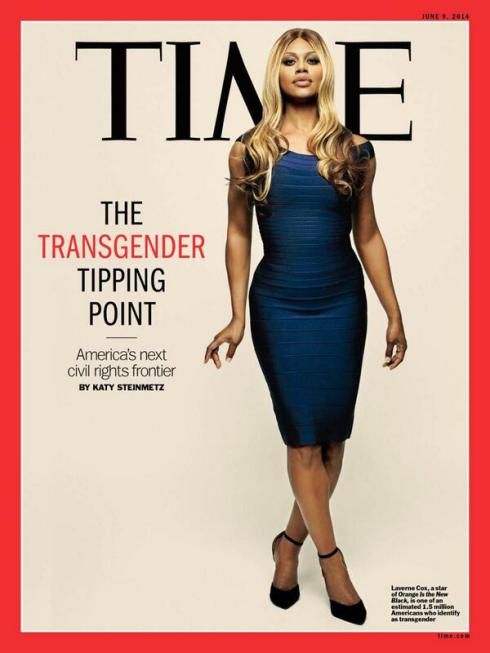
Ethics Quiz (Inadvertent Offense Division): The Transsexual Vote

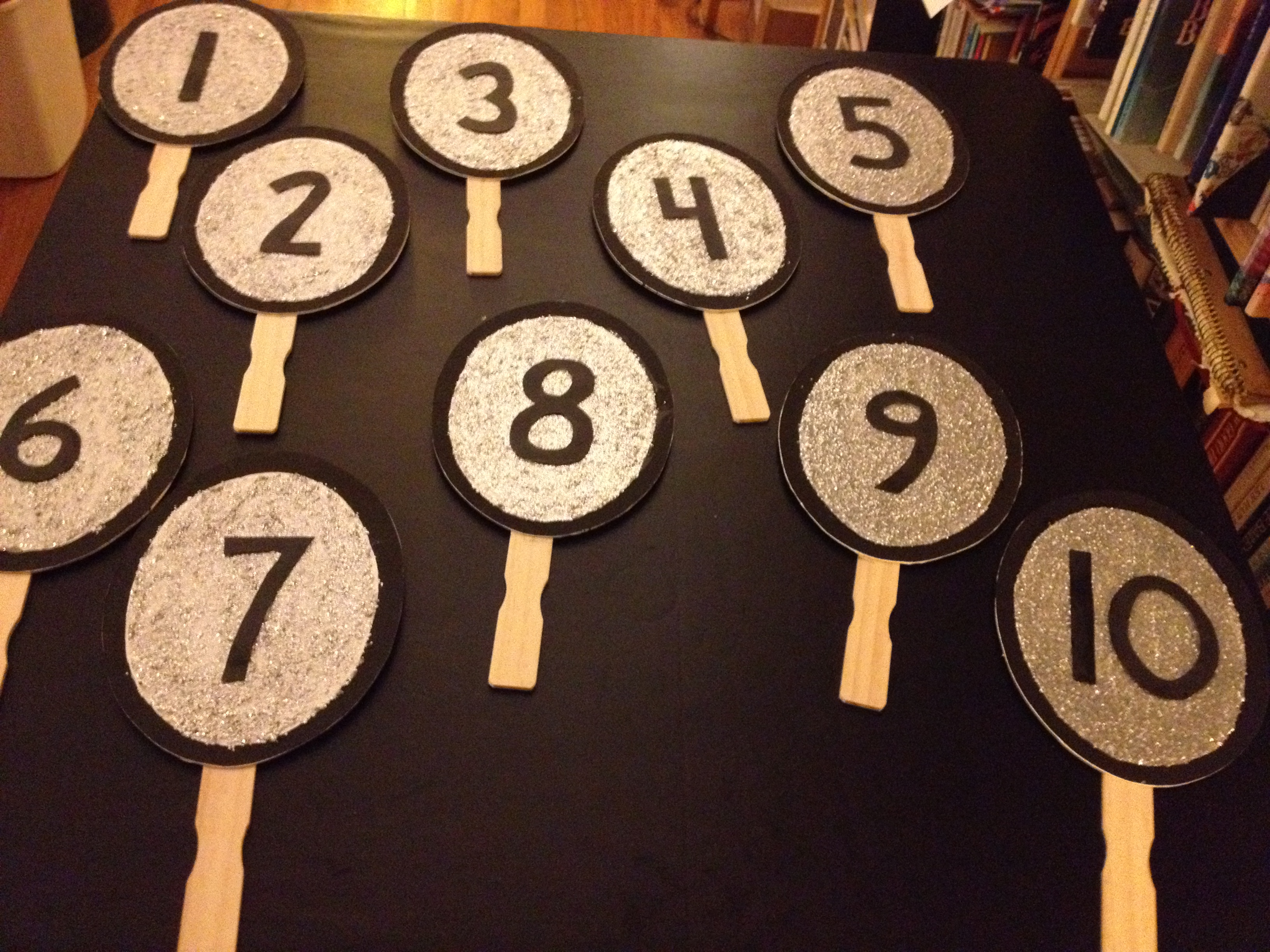
dancing-with-the-stars-paddlesIn a one of my ethics seminars last week before a large audience, my usual practice of polling participants using hand-held numbered ballots, was unwieldy. The client group did not color code them, and there were over 400 present, as opposed to the Dancing With The Stars panel, which is three. I got around the problem by segmenting the crowd and picking different groups to represent the whole. Sometimes just men voted; sometimes women, sometimes one of the four sections of the hall. In other cases, I asked groups that were involved in the case being discussed: family law attorneys. Government attorneys. Mothers.

One of the cases involved a transsexual individual, and I suggested that the transsexuals in the audience vote. Nobody volunteered. The group laughed.

Today I received a very nice note from one of participants, praising my session but criticizing my judgment in that incident:

“You asked the transsexuals to vote, and said you were sure there were some attending [I don’t recall doing this, and I suspect she is thinking of my comment about another potential group] , which produced laughter. Were I a transsexual, I would have felt ostracized and deeply offended. These are people with congenital/hormonal conditions that clash with our social constructs of gender identity. But most importantly, they are people. You are, of course, statistically right to guess that in a group of lawyers of that size, probably there were not many, probably not any, That does not make it OK to perpetuate their ostracism. This is not about political correctness, it is about acknowledging shared humanity.”

Your Ethics Alarm Ethics Quiz of the Day:

Is this a fair complaint?

Continue reading

Political Correctness Delusions #2: The U.S. Military Naming Its Helicopters After Native American Tribes Is A Slur

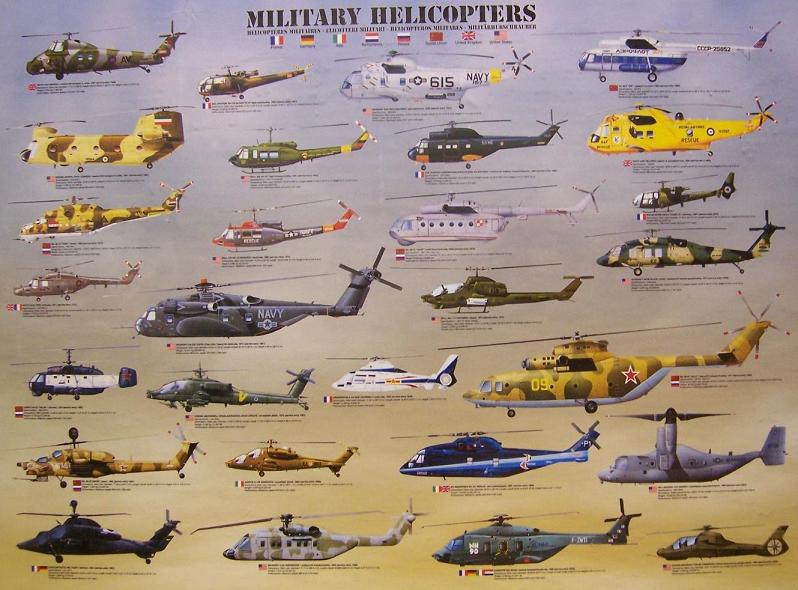
Military Helicopters 0088

The scourge of political correctness causes many kinds of damage, but the most ominous is that it intentionally greases a steep slippery slope. The effort to constrain private and public expression according to an endlessly versatile definition of “offensiveness”  is a desirable weapon for political activists, grievance bullies, censorious and debate-challenged advocates, weenies, and busybodies. Once one specious argument for strangling another small sliver of free speech succeeds, usually after capitulation in the face of relentless vilification and hounding aided and abetted by the press, this ugly and anti-American faction of the progressive movement just moves on to another target. The process  will never end, although it will get more oppressive, restrictive and absurd. That is, it will never end until a backlash and an outbreak of rationality stops it in its tracks.

The Patent Office’s politically motivated (and doomed) attack on the Washington Redskins was an example of political correctness at its worst, and sure enough, here comes another deluded censor with a related and even sillier grievance. Simon Waxman wrote a jaw-dropping op-ed for the Washington Post arguing that the military’s use of Native American names and works on its helicopters and weaponry is a “slur.” Why, you ask? Because the white man cheated and defeated the Indians using superior fire power, that’s why. Yeah, sure, we pretend to honor their bravery now, but that’s just to salve our guilty consciences.  He blathers…

The message carried by the word Apache emblazoned on one of history’s great fighting machines is that the Americans overcame an opponent so powerful and true that we are proud to adopt its name. They tested our mettle, and we proved stronger, so don’t mess with us. In whatever measure it is tribute to the dead, it is in greater measure a boost to our national sense of superiority. And this message of superiority is shared not just with U.S. citizens but with those of the 14 nations whose governments buy the Apache helicopters we sell. It is shared, too, with those who hear the whir of an Apache overhead or find its guns trained on them. Noam Chomsky has clarified the moral stakes in provocative, instructive terms: “We might react differently if the Luftwaffe were to call its fighter planes ‘Jew’ and ‘Gypsy.’ ”

Continue reading

Warped Values and Perverse Incentives: Banning Employers From Asking Whether A Job Applicant Served Time

Sorry Hedley---it's unfair to ask a potential employees if they were rustlers, cut throats, murderers, bounty hunters, desperados, mugs, pugs, thugs, nitwits, halfwits, dimwits, vipers, snipers, con men, Indian agents, Mexican bandits, muggers, buggerers, bushwhackers, hornswogglers, horse thieves, bull dykes, train robbers, bank robbers, ass-kickers, shit-kickers...and don't you dare ask if they are Methodists!

Sorry Hedley—it’s unfair to ask a potential employees if they were rustlers, cut throats, murderers, bounty hunters, desperados, mugs, pugs, thugs, nitwits, halfwits, dimwits, vipers, snipers, con men, Indian agents, Mexican bandits, muggers, buggerers, bushwhackers, hornswogglers, horse thieves, bull dykes, train robbers, bank robbers, ass-kickers, shit-kickers…and don’t you dare ask if they are Methodists!

I was unaware that this was a trend: states and cities making it illegal for employers to ask job applicant’s whether they had been convicted of a crime and served jail time.

It is an unethical, foolish and illogical trend, an example of misplaced compassion being used to justify placing risks on law-abiding citizens for the benefit of those who are less trustworthy.

A news article regarding the problems faced by former prisoners re-entering society quotes Zach Hoover, executive director of LA Voice, a multiracial, faith-based organization working to get such a measure passed in Los Angeles:

“Sometimes people think of someone who’s been in prison and they think only of what they did instead of what they’re doing today. They’ve done their time. They served their sentence, and they’re looking for a job.It’s like double jeopardy. You’ve done your time, and now you get a life sentence of joblessness.”

What utter claptrap: Continue reading

Ethics Quiz, “Naked Teacher Principle” Division: The Alleged Naked Naval War College Professor

schnitzengrubenA helpful reader submits this Ethics Quiz question based on the following news item:

The AP reported that U.S. Naval War College professor John Schindler was placed on leave after a photo of a penis with the professor ‘s name over it was posted on Twitter.  It was unclear who sent it and who posted it.

After a blogger sent a complaint to the War College’s administration, the college’s president, Rear Adm. Walter E. “Ted” Carter Jr., ordered an investigation. A college spokeswoman said that investigators would look into whether the photo was not really of Schindler.

Now THAT should be an interesting investigation.

Schindler, a professor of national security affairs and a former National Security Agency intelligence analyst, has deleted his Twitter account. He has said his criticism of NSA leaker Edward Snowden and others has caused him to be the object of harassment on various social media.

Your Ethics Alarms Ethics Quiz of the Day  has two parts:

1. Is it fair for the War College to place Schindler on leave before it has even been established that he sent the photo or that the body part in question belonged to him?

and

2. If he didn’t send the photo himself but it is established that the body part in question does belong to him, should the Naked Teacher Principle* apply?

Continue reading

The Campus Sexual Assault Witch Hunt Ethics Train Wreck, Complicated By The Fact That The Witches Are Real

"Wait...are you raping me, or am I raping you?"

“Wait…are you raping me, or am I raping you?”

There is no question that there are sexual predators on college campuses, or that some colleges let them get away with raps on the knuckles for sexual assault or worse. There is also little question, though various parties and activists deny it, that what constitutes genuine sexual assault and even rape has been so thoroughly politicized and muddled by irresponsible rhetoric, dubious statistics and cynical political maneuvering that addressing the problem of actual campus sexual assault is becoming impossible without harming, indeed destroying, the innocent in some cases.

At Stanford, women are rallying for a more stringent process and harsher punishment after student Leah Francis protested in an e-mail to the campus that she had been “forcibly raped” by a fellow student and he was permitted to graduate. Of course, Stanford didn’t find the she had been raped: her assailant was found guilty of sexual assault. The loose use of “rape” to describe sexual assault for political purposes is one of the reasons universities seem incapable of finding a satisfactory balance in handling such cases. At the risk of getting ahead of the post, I would say this: if it is alleged to be rape, then turn the matter over to the police and the justice system. Schools are not allowed to use internal procedures to investigate and punish murder; it makes no sense to permit them to do so with the serious crime of rape. The fact that the standards of proof and the requirements of due process are less stringent in a campus procedure is what simultaneously leads to inadequate sanctions for the guilty and railroading of the innocent. The solution to this problem has always been available: treat allegations of campus rape like any other kind of rape.

Unfortunately, colleges are often in thrall to the political agendas of feminists and their allies, so “rape” can mean many things, as can “sexual assault.” In the casual, morality-free sexual atmosphere now not merely tolerated but nurtured on college campuses, lines of consent are blurred, and missteps are inevitable. At the same time, the permissive sexual environment is a playground for predators, exploiters and manipulators. How are the genuinely culpable sexual assailants to be distinguished from the clumsy, the confused, the misled, or the drunk and overly aroused? Continue reading

Ethics Quiz: The Overly-Trusting Law School

The almost lawyer, learning about the justice system...

The almost lawyer, learning about the justice system…

Mauricio Celis, 42,was expelled from Northwestern Law School, just before he was due to graduate, for not telling the school when he applied that he was a former felon in Texas,  convicted there for falsely holding himself out as a lawyer and also for  impersonating a police officer. Northwestern confirmed that it never asked him to disclose any criminal history, but argued that Celis should have known that his criminal record was material.

The school didn’t check on his background; it didn’t even google him. If it had, it would have learned that Celis was infamous in Texas, and called “The Great Pretender.” A prosecutor called him “the biggest con man in the history of Nueces County.”  He certainly was audacious, opening law offices in multiple cities, raking in fees, using his success as a fake lawyer to raise money for Democrats. Compared to his scam, Northwestern was timid. It just took his money, $76,000, and then expelled him without giving him a diploma.

Your strange Ethics Alarms Ethics Quiz:

Was it ethical for Northwestern to expel Celis?

Continue reading

Of The Great Noodle Ordeal, Sweeney Todd, Stressors, and The Importance Of Ethics In Stopping Mass Killings

I have a theory about mass killings, and it is neither original nor exclusive: in fact, it has been proposed in various forms for at least a  century But I think it is worth considering.

I think that the smart, creative, intense, ambitious, restless and entrepreneurial people in this country keep designing an environment, and forcing it on us whether we like or need it or not,  that is increasingly, and ultimately unbearably, hostile to those who are not smart, creative, intense, ambitious, restless and entrepreneurial. I think that as life becomes increasingly stressful and confusing for average people—remember, about half of the public is below average intelligence, and even average intelligence is nothing to jump up and down over—they are more likely to reach what the serial killer profilers on “Criminal Minds” call “stressors”—the final straw, the moment when they see red, and deadly fury takes over. On the TV show, of course, the stressor is the death of a child, or a firing, or the onset of an illness, or financial setbacks. But I can see it simply being the realization that life is hopeless…that it is always going to be a miserable, frustrating struggle, and that powerful, rich, meddling people are at work always finding ways to make sure it gets harder and harder, and ultimately futile, for normal human beings to get through the day.

I entertain delusions that I am smarter than the average bear, and I can barely stand it myself. Yesterday, stuck at La Guardia, I wanted to get some food in the a terminal’s food court. The place I chose had just added computerized self-ordering on iPads. I’m not intimidated by iPads; I use one. The woman in front of me, however, stared at the device—there were no readily available employees to guide her through it—as if it were a space alien. She pushed some buttons, sighed, and gave up. Continue reading

The TSA Flunks Integrity, Equity, Common Sense, Fairness…But I Guess This Isn’t News. Is It?

"You have the US Air credit card? Proceed to your flight, sir!"

“You have the US Air credit card? Proceed to your flight, sir!”

Apparently I am less likely to be a terrorist because I have a credit card.

Ever since I laid out $400 for the new American Airlines-US Air merger credit card and special flyer’s program (it included two round trip tickets to any domestic destination), I have been able to use the “pre-screened” line for my US Air flights. That means my shoes don’t have to be x-rayed, my computer can stay in my brief case, I don’t have to take off my belt (a key benefit, as my pants have fallen down during screenings on three occasions) and I don’t have to take off my jacket.

I also can now skip long lines, as the poor peasants in the adjoining lines glare at me as one of the hated Privileged of the Air. Oh—and since I have an artificial hip that sets off the old-fashioned gates (that’s all you get at the Pre-Screened area), a TSA agent will escort me to that spinny thing that takes nude magnetic imaging photos so I don’t have to get a sexual molesting, of which I have complained about bitterly in the past.  He pushes through all the other passengers waiting in line, –the fools! Bwahahahahah!— and takes me right through. “Pre-screened!” he says, and that’s all there is  to it.*

But I wasn’t “pre-screened,” was I? I just paid a fee to get a credit card. Boy, wait until terrorists catch on to the credit card loophole. KaBOOM!

How can the TSA claim that all of their annoying, humiliating, obtrusive procedures are necessary to protect our safety, when so many of those procedures will be waived for flyers who have the resources to plunk down the money for a premium credit card? It can’t.

Please tell me that the only reason these procedures are still required isn’t so the airlines have something to barter in exchange for money.

Please.

* Once, I didn’t even have to do that. I used the gate, and the alarm went off. I said: “This is a metal hip–you’ll have to wand me and pat me down.” “Nah, never mind,” the TSA agent said. “You can go.”


Ethics Quiz: The Reporter’s Non-Compliant Shoulders

Appropriate courtroom fashion?

Appropriate courtroom fashion?

At the 2nd District Court in Ogden, Utah, female reporter Morgan Briesmaster was barred by court security from entering the courtroom to cover a story because her sleeveless blouse (left) violated the official dress code.

She eventually gained access by wearing a parka. Up until then, she told other journalists, she waited in the lobby  “where she watched other courtgoers stroll through security with jeans and low-cut shirts.” Her boss ridiculed the situation, comparing it to high school yearbook dress codes, and noted that “any time a reporter is stopped from covering the news, it’s a concern.” There actually is a rule against wearing “tank tops” in that court, but I wouldn’t call what Briesmaster wore a tank top.
 

Your Ethics Alarms Ethics Quiz, which you may think is too easy, is this:

Was the court security unfair and unreasonable to bar reporter Briesmaster based on her shoulder-baring clothing?

Continue reading