Ethics Observations On The Latrez Cummings Sentence

"I understand, son. We've all been at that awkward, "just want to beat the old white guy to death" age...."

“I understand, son. We’ve all been at that awkward, “just want to beat the old white guy to death” age….”

Detroit Third Judicial Circuit Judge James Callahan sentenced 19-year-old gang member Latrez Cummings to six months in jail for his participation in the mob beating of Steve Utash, a 54-year-old white man who jumped out of his car to assist a 10-year-old African-American boy after his pick-up truck hit the child. Cummings and at least 20 others on the scene attacked Utash and beat him severely, leaving him with permanent brain damage.

Judge Callahan told Cummings that the lack of a father was what led him to his current plight. “That’s all you have needed in your life, a father, someone to discipline you, someone to beat the hell out of you when you made a mistake,” Callahan lectured Cummings. “Without the guidance of a father, being 19 years of age, I can understand how some of these problems existed in the past.” The judge added that Cummings has suffered without “somebody to beat the hell out of you when you made a mistake.”  With the further rationalization, “We’ve all been 19 years of age, ” Callahan handed down the six month sentence, to be followed by probation.

The prosecutor, to her credit, went nuts. Said Assistant Wayne County Prosecutor Lisa Lindsey: Continue reading

Moonwalk Ethics: One Small Word

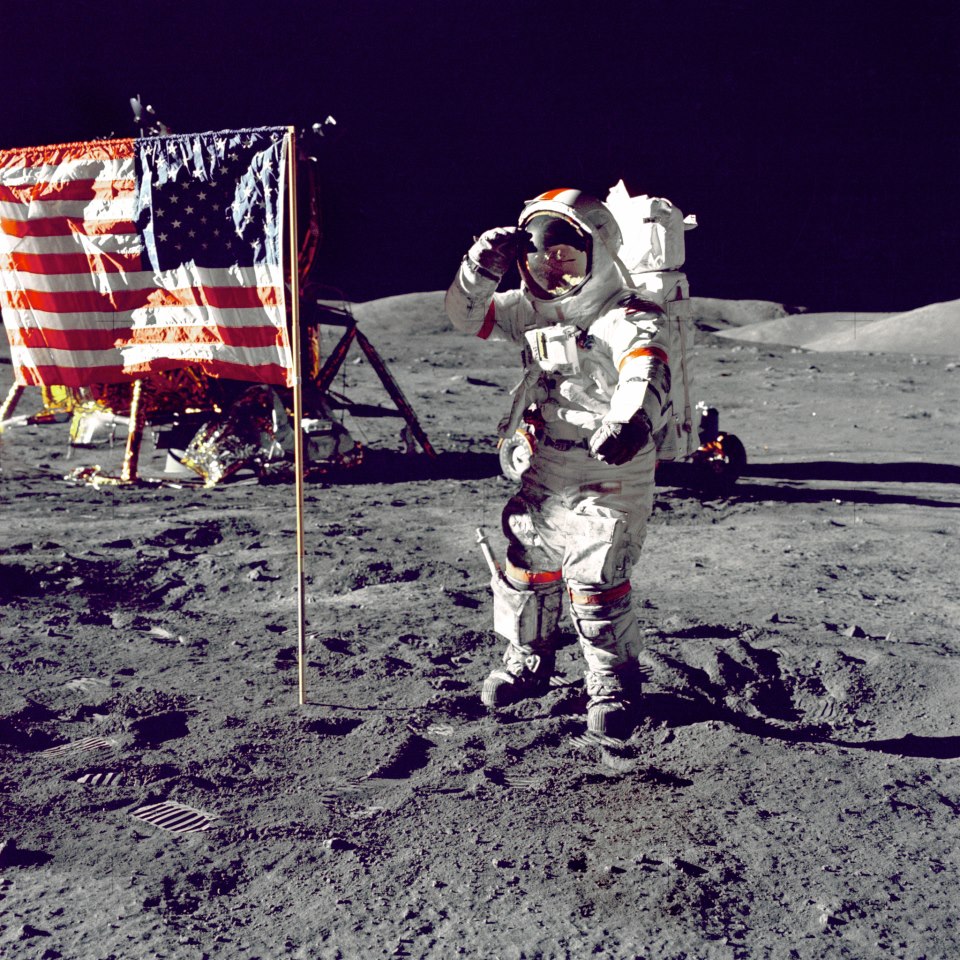
Neil-Armstrong-on-the-Moon-in-1969July 20 will be the 45th anniversary of Neil Armstrong’s first step on the moon, a day of achievement, hope and pride for Americans that seems very long ago and far away in the bleak cynicism of 2014. As I was pondering how to note the landmark in an ethics context, I remembered a section of a post on the Ethics Scoreboard that dealt with the controversy surrounding Armstrong’s famous quote upon placing his foot on the moon’s surface. Here it is, my earliest foray into what has become a frequent theme on Ethics Alarms, “print the legend”  ethics:

“When the legend becomes truth, print the legend.”

This cynical endorsement of our culture’s preference for soothing fantasy over harsh historical truth was the intentionally disturbing message of John Ford’s film, “The Man Who Shot Liberty Valence.” But rejecting Ford’s grizzled old newspaper editor’s warped ethic does not justify the equally objectionable modern practice of using spurious logic to substitute one dubious historical account for another. Even more ethically suspect is the common practice of replacing an accepted, well-supported version of an historical event with a “new improved” version that exists less because of its accuracy than because of its advocates’ biases….

An Australian computer programmer says he has discovered that Neil Armstrong’s first words after he stepped onto the moon in 1969, “One small step for man, one giant leap for mankind” were misquoted by NASA, misheard by millions of listeners around the world, and printed incorrectly in the history books. For decades, wags have criticized Armstrong for botching his iconic moment, since “man” and “mankind” mean the same thing, so the literal meaning of his famous words would be “One small step for man, one giant leap for man.” Armstrong has sometimes grudgingly acknowledged his gaffe and at other times maintained that he thought he included the elusive “a.” He hasn’t fought the consensus verdict very vigorously, as represented by NASA’a transcript:

109:24:48 Armstrong: That’s one small step for (a) man; one giant leap for mankind. (Long Pause)… Continue reading

John Travolta, Carrie Fisher, and The Ethics of Outing

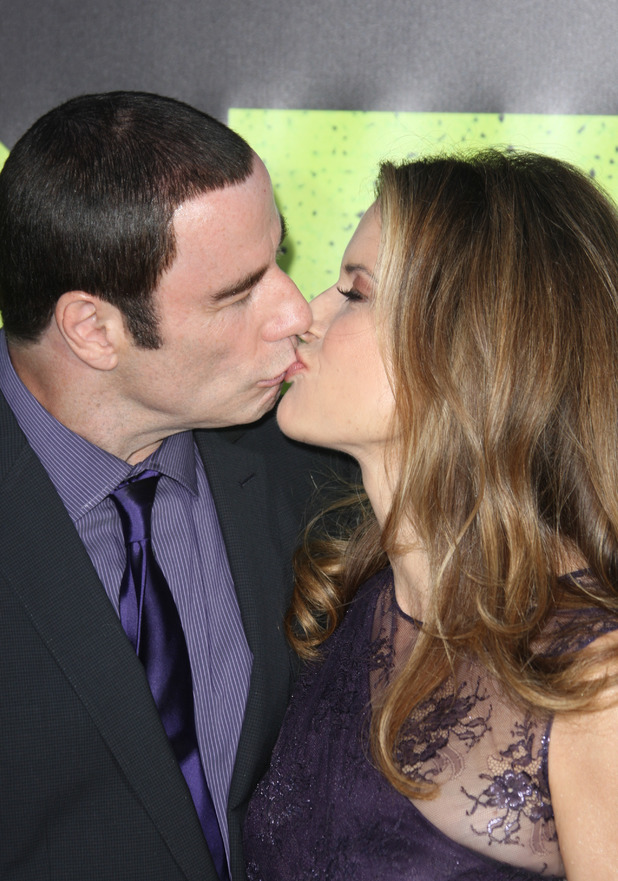
Mr. and Mrs. John Travolta

Mr. and Mrs. John Travolta

Should it matter if John Travolta is gay? It shouldn’t, no. To say it shouldn’t, however, is not to prove that it doesn’t. In his industry, for all its liberal and progressive grandstanding, the perceived sexuality of leading men does matter, because it is believed that it affects the bottom line. Most important of all, John Travolta doesn’t want the public to know/believe/think that he’s gay.

That alone ends the story, in ethics terms. Revealing this aspect of a private life that the actor has chosen to keep private is entirely his decision to make, and nobody should force him to make it, or make it for him. Therefore, what did actress Carrie Fisher, Hollywood kid, writer, “Star Wars” icon, and former bride of a gay man, think she was doing when she told the Advocate, in response to a question about Travolta’s legal maneuvers against a website that published a story about his alleged gay lifestyle…

“Wow! I mean, my feeling about John has always been that we know and we don’t care. Look, I’m sorry that he’s uncomfortable with it, and that’s all I can say.”

Continue reading

Ethics Trainwreck At The Border

border-warehousing-children-bbtx

Eight ethics observations on the army of child illegals clogging the Mexican border:

1. I predicted this would happen four years ago, and anyone who was paying attention should have been able to as well. Both the actions of President Obama, in essentially enacting the unethical “Dream Act” by fiat, and the rhetoric surrounding the “Dream Act” itself, constituted a national invitation to parents to send their children to the border. A nation cannot provide incentives to break the law, celebrate those who break it, and then credibly tell us that they are dismayed when a flood of law-breakers appear.

2. Even more influential in attracting desperate children to the border has been the loud, reckless and irresponsible messages coming from all quarters that the U.S. doesn’t regard law-breaking as anything but admirable and forgivable when children are involved. California, to the applause of lawyers and most of my colleagues in the legal ethics establishment, has allowed an illegal immigrant, brought here as a child, to practice law. Jeb Bush, proving himself to be muddle-headed, a rank sentimentalist, or a coward, pronounced illegal immigration with children as “an act of love.” Come on—the United States of America isn’t going to make love illegal, is it? Didn’t we just go through this with gay marriage? Democrats and illegal immigration advocates use the term “comprehensive immigration reform” as a code for “open borders,” and the code has been cracked in South America. Continue reading

Unethical Political Ad Of The Month: The Freedom From Religion Foundation

FFRF

If it accomplished nothing else, the Supreme Court’s Hobby Lobby decision is doing a dandy job of flushing out the bigots. First it was the feminists blaming the decision on the all-male majority…because, as we all know, only women can balance ethical and legal conflicts fairly and intelligently, and they are incapable of bias. This line of attack is gender bigotry, acceptable because, well, just because. Then Harry Reid, leader of the Senate majority, condemned the five justices whose analysis prevailed as white males, adding racial bias to the mix. Also stupidity, of course, since last I looked, Justice Thomas was still black. Then again, to hear Harry and his friends tell it, being a conservative and not folding up like a deck chair any time women or a minority group complains means that you must be white, meaning that you must be bigoted against women. That’s just what whites are like. And males. Says white male Harry Reid.

It’s a strange, strange world we live in, no doubt about that.

Now comes the Freedom From Religion Foundation with an ad published in the New York Times blaming the decision on the fact that the five justices in the majority were male and Roman Catholic. Anti-Catholic bigotry! I confess, I didn’t know what religion the justices were, because I don’t care. Do you? John Kerry is a Roman Catholic; so is Joe Biden. It never occurred to me to attribute their various decisions and policy determinations to their religion, or to presume that anyone’s religion is fair game for criticism. Ah, but this is blood politics as defined by today’s culture. The right people can use bigotry against deserving targets….you know. Conservatives. Continue reading

I Foment Defiance On My Airplane Trip In The Name Of Ethics

airplane-baggage-overhead-I know I’ve written about this at least once, but it continues to gripe my cookies.

I had settled into my seat on the US Air flight from Boston to Washington when I watched the young woman who was soon sitting in the center seat next to me be curtly informed by a flight attendant that her medium-size bag needed to go under her seat, so passengers with rollerboards and other large pieces of luggage could store them  in the bins. She sat down, stuffing the bag under the seat in front of her, and looked uncomfortable.

“I refuse to do that, you know,” I said. “I pay to check my large bag so that I can have leg room and not have to stow my briefcase in front of me. Why can’t I use the overhead bins for the one small bag I have, because other passengers won’t pay the fee–like I have— to  check their large bags?”

“Well, the attendant told me I couldn’t put my bag up there,” she said.

“Yeah, and as long as you do what they say, they’ll never change a stupid and unfair policy. Get up, put your bag overhead, and if you are challenged, say, “Look, I paid 50 bucks to check my rollerboard, and for that sum I get to take up my foot space so someone who wouldn’t pay can put a rollerboard in the overhead bins? That’s absurd and wrong, and I’m not doing it.

That’s exactly what she did. And she even made the speech I scripted, and a few people applauded! Then a late-comer with a huge rollerboard was told that she had to check her bag, because there was no room.

Heh, heh, heh…

The Lone Ethicist strikes again.

The Gay Marriage Acceptance Reverse-Foxhole Conversion Problem

Atheists in trenchesThe New York Times sported a front page story extolling the actions and familial love of Rev. Frank Schaefer, a United Methodist minister, whose son Tim, now 30, had been raised  in his father’s conservative church in West Germany, Pennsylvania, where sermons, policy and the congregation embodied the belief that homosexuality was a sin, and gay marriage a monstrosity.  Then, after he had contemplated suicide, Tim told his father he was gay, and later that he wanted to wed his same-sex partner. The loving father accepted his son and presided over the wedding, causing him to become a target of criticism in his church, and the defendant in a church trial. To the Times reporter, Michael Paulson, he is an unequivocal hero.

He did the right thing, no question, just as Dick Cheney and Republican Senator Rob Portman did the right thing by changing their position on gay marriage when their children showed them the human side of the issue. I also agree that it takes courage to admit you are wrong, and that being able to change one’s ethical analysis is an essential ability for all of us. Indeed, in this post, I designated as an Ethics Hero an outspoken gay marriage opponent for changing his position after he became friends with gay men and women, leading him to realize, as he put it, that Continue reading

A Proposed Guide To Spoiler Ethics

"It SINKS??? You spoiled the ending!!!"

“It SINKS??? You spoiled the ending!!!”

I was just admonished on Facebook by a friend (a real friend, not just the Facebook variety), for referencing the end of the last episode of Season One of “Orange is the New Black.”  He hadn’t finished viewing the season yet, and this was a breach of spoiler ethics. Or was it?

Ever since I encountered for real someone who was angry with me for “spoiling” the end of “Thirteen Days,” ( “Yes, World War III started and everybody died”), I have been dubious about spoiler etiquette. The advent of DVDs and Netflix has made this all the more annoying. If I’m in a group of five, and one individual hasn’t kept up with “House of Cards,” are the rest of us obligated to censor our discussion? As a devotee and fanatic devourer of popular culture, I admit that my first instinct is to say, “Keep up, get literate, or pay the price.” If I actually live by that rule, however, I will be a walking, talking, writing, spoiler machine.

Chuck Klosterman, “The Ethicist” in the world of the New York Times, recently pronounced himself an anti-spoiler absolutist:

“I’m an anti-spoiler fascist. I don’t believe that any conversation, review or sardonic tweet about a given TV show is more valuable than protecting an individual’s opportunity to experience the episode itself (and to watch it within the context for which it was designed). I’ve never heard a pro-spoiler argument that wasn’t fundamentally absurd.”

Even Klosterman, however, excepted sporting events (the question posed involved mentioning World Cup scores to a friend who was annoyed that the game had been “spoiled” for him) from his fascism, writing, reasonably:

“I must concede that live, unrehearsed events are not subject to “spoiler” embargoes A live event is a form of breaking news. It’s not just entertainment; it’s the first imprint of living history. …Because this guy is your buddy, you might want to avoid discussing the games’ outcomes out of common courtesy — but not out of any moral obligation. It’s his own responsibility to keep himself in the dark about current events.”

For once I agree with Chuck. But what are reasonable ethics rules for dealing with the other kind of spoiler, involving literature and entertainment?

Luckily, this is not new territory, though it is evolving territory. The underlying ethical principles include fairness, trust, consideration, compassion, and empathy, which means that the Golden Rule is also involved.

Back in 2010, an erudite blogger calling himself The Reading Ape proposed a draft “Guide to Responsible Spoiling.” That blog is defunct; the promised successor is not around, and so far, I haven’t been able to discover who the Ape is. Whoever he is (Oh Aaaaape! Come back, Ape!) , he did a very good job, though some tweeks might  improve his work, especially in light of the emergence of Netflix.  (I have edited it slightly, not substantively…I hope he doesn’t mind, or if he does, that he’s not a big ape.) His approach is to frame the problem as an ethical conflict, in which two competing ethics principles must be balanced. I think that’s right.

Here is his “draft”—what do you think?

“A Brief Guide to Responsible Spoiling”

by The Reading Ape (2010)

The objective is to balance two ethical principles:

I. The Right to Surprise: The inherent right of any viewer or reader to experience the pleasure of not knowing what’s
going to happen next.

II. The Right to Debate: The inherent right of any viewer or reader to engage in public discourse about the content of
a given work of narrative art.

Part 1: When Spoiling is Fair Game

In the following circumstances, one can discuss crucial plot details and reveal endings with a clear conscience. Continue reading

Emmy’s Transgender Nomination: Important, Inspiring, and a Breach of Integrity

laverne-cox-timeThe Emmys made cultural history yesterday, nominating Netflix’s “Orange Is the New Black” actress Laverne Cox, who plays Sophia Burset in the prison drama, in the category of outstanding guest actress in a comedy series. It is the first time an openly transgendered actress has been nominated for an Emmy.

She joined several of her colleagues  on the show who were also recognized in various acting categories: stars Taylor Schilling, Kate Mulgrew, Uzo Aduba and Natasha Lyonne.

The problem is that Cox received the nomination for political and social reasons unrelated to her performing skills. This will be denied, of course, and since all awards are subjective, no one will be able to prove this is the case. It is, however. In the large, uniformly superb ensemble cast, Cox’s role is relatively minor, and I have a difficult time believing that anyone would objectively identify her as a standout in the show based on her acting. (In the current season, which I have seen in its entirety, her character is almost invisible). This isn’t intended to diminish Cox in any way, for in the role she plays, I cannot imagine it being played better. Nevertheless, there are many un-nominated actresses in that show—as well as other shows— whose characters are more vivid, who have to show more range, and who are more deserving of a nomination once the process is stripped of irrelevant political baggage. Among them: Taryn Manning, whose transformation into the complex religious fanatic Tiffany “Pennsatucky” Doggett is frightening; Yael Stone, as the heartbreaking stalker Lorna Morello; Samara Wiley, as te alcoholic moralist Poussey Washington, and several others.

Everyone is thrilled for Cox, with Cox, reasonably, leading the way. “I’m on cloud nine. I’m through the roof,” said the actress, whose path to an award was  paved when she was featured on the cover of Time magazine.“What a wonderful, wonderful day for “Orange” and for black trans-women,” she said.

Undoubtedly. It’s not such a great day for the acting profession generally, the Emmys, or the principle that awards based on merit should be decided based on merit, and not social and political agendas. I would say, “But that’s Hollywood,” except that it isn’t just Hollywood. Continue reading

Ethics Tools: “A Theory of Jerks”

Actually, no. The OTHER kind...

Actually, no. The OTHER kind…

In Aeon Magazine last month, philosophy professor Eric Schwitzgebel provided a serious essay on the nature of “jerkitude.” It is also an excellent essay, and useful. “Jerk” is a designation that I have occasion to use frequently on Ethics Alarms, and for the most part, Schwitzgebel convinced me that I have been using it properly. Some excerpts… Continue reading