A Brief Ethics and Culture Lesson For First Amendment Pedants

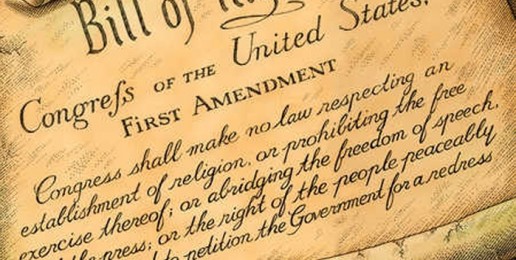
First-Amendment-on-scroll1

Thousands or pundits and web commenters, perhaps hundreds of thousands, in their concerted effort to justify the speech and thought police, (at least as long as the Enforcers are not likely to disapprove of their thoughts and speech), are mocking those who cite the First Amendment as authority for the proposition that the treatment of Donald Sterling, and others, are harmful, sinister, and un-American. The pedants are technically correct, of course. When someone who is fired for posting something offensive on Facebook screams, “My First Amendment right of free speech has been violated!”, that typically speaks of a poor civic education. The Bill of Rights only constrains government action, not private transactions. No rights, which are enumerated and protected from government incursions by the Constitution, have been lost or affected when only private action is involved.

That does not mean, however, that when private action opposes an individual’s Constitutional rights, it is necessarily acceptable, fair, harmless, reasonable or right. Indeed, the government and law serves a crucial function by delineating and encouraging cultural and ethical values. The principles articulated in the Declaration of Independence, the Constitution and the Bill of Rights do not merely constrain government. They form the basis of the ethical values that make the United States a unique culture, and point the way to what Americans, as Americans, regard as right and wrong.

Thus, while searching though a friend’s private e-mail account isn’t a violation of one’s right to privacy under the 10th Amendment, violating a fellow citizen’s privacy is wrong, and the Bill of Rights stands as authority that it is something important to each individual that should be respected. The Constitution and the 13th, 14th, and 15th Amendments won’t and can’t stop Americans like Sterling from being bigots in their private dealings, but they send a clear message that bigotry is not approved by the United States and was not by those who have charted our ethical course. Privately interfering with someone’s right to worship as they please is wrong, and the fact that the government is prevented from doing it tells us so. The First Amendment’s existence also tells us that preserving free speech—open, fearless, speech—is essential to core American values, because it also supports free thought, that which tyrants and dictators fear. Yes, we all have the right to make free speech, thought and discourse costly, difficult and painful, but we should not. We have the right to punish severely the non-conformist, the iconoclast, the rebel, or the citizen who may be a little late, or slow, or reluctant, to accept the conventional wisdom of the moment. We have the right to do it, but it is wrong. It is un-American. The Constitution tells us so.

Addendum: After I wrote the post, I encountered this.


The Washington Post, Faking it.

This one’s for you, Bob Hoskins.

You deserved better.

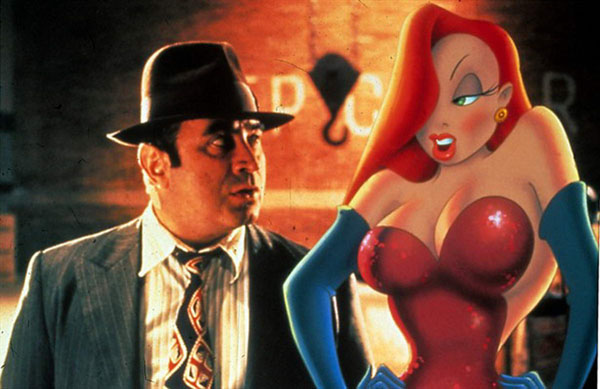
Who-framed-roger-rabbit-Jessica-RabbitIf you come here frequently, you know that I deeply resent lazy, inadequate or inaccurate obituaries of famous and accomplished figures. Obituaries are the beginnings of their legacies, and set the foundations for how, and even if, they will be remembered. Not fairly representing these lives is lousy and lazy journalism, and worse, it is disrespectful to the deceased and contemptuous of history.

Bob Hoskins, the superb and versatile British actor, died this week. He was one of my personal favorites—a better, cockney version of Joe Pesci—but even if he meant nothing to me, the Washington Post’s sloppy and factually wrong obituary today would have been inexcusable. I liked Hoskins’ various tough guys and mobsters, but the film role that blew me away was his amazing portrayal of the human detective trying to unravel a cartoon mystery in the 1988 Disney classic, “Who Framed Roger Rabbit?” Hoskins, in addition to wielding a perfect American accent (he was really a Cockney), was intense, funny, moving and entracing while interacting with characters that were drawn into the scenes long after he performed them. He made the complex conceit of the movie work, and I would rank it among the most impressive acting turns of all time.

Here is how obituary writer Adam Bernstein described Hoskins’ most famous role in the print version of the Post today:

“(He) won over American audiences as a detective who falls in love with a voluptuous cartoon character in “Who Framed Roger Rabbit?”‘

and

“Mr. Hoskins was a boozing detective who falls for Jessica Rabbit, a cartoon human of pneumatic proportions who can’t help but bewitch men. “I’m not bad,” insists Jessica (voiced by Kathleen Turner). “I’m just drawn that way.””

Continue reading

A Sterling Ethics Train Wreck Update, Ethics Heroes Opposing The Mob, and The Comment of the Day

thoughtpoliceEthics Alarms commenter Chris Marschner again scores a Comment of the Day regarding the subtext of my recent post about Peoria Mayor Jim Ardis, whose stunning abuse of government power to punish a citizen’s free speech was ignored while destroying NBA team owner Donald Sterling, because he privately articulated offensive views to a vengeful girlfriend, became a media obsession and a national rallying point.

Before I get to Chris’s excellent comment, however, I should bring us up to date on the Donald Sterling Ethics Train Wreck, which has proceeded as I feared it would: Continue reading

Ethics Dunce: Republican Governors Association…And An Integrity Test For Chris Christie

This ugly beast keeps raising its head out of the muck, and it is the duty of every citizen, Republican or Democrat, who believes in justice and due process under law to beat it back with heavy clubs.

The Republican Governors Association is defending one of its own, South Carolina Gov. Nikki Haley, with a series of ads attacking state Sen. Vincent Sheheen, an attorney who is her Democratic opposition in the gubernatorial race. The message of the ad, as summarized by  a voice-over, is that “Sheheen defended violent criminals who abused women and went to work setting them free.”

False. Continue reading

Ethics Alarms On NPR: The Sterling Ethics Train Wreck

V.-Stiviano-Donald-Sterling

You are welcome to read the transcript and/or  listen to my interview on NPR yesterday with Michel Martin, both of which can be found here.

It’s too bad, really. They seem like such a nice couple…

Ethics Quote Of The Week: Kareem Abdul-Jabbar.

“Shouldn’t we be equally angered by the fact that his private, intimate conversation was taped and then leaked to the media? Didn’t we just call to task the NSA for intruding into American citizen’s privacy in such an un-American way? Although the impact is similar to Mitt Romney’s comments that were secretly taped, the difference is that Romney was giving a public speech. The making and release of this tape is so sleazy that just listening to it makes me feel like an accomplice to the crime. We didn’t steal the cake but we’re all gorging ourselves on it. So, if we’re all going to be outraged…Let’s be outraged that private conversations between people in an intimate relationship are recorded and publicly played. Let’s be outraged that whoever did the betraying will probably get a book deal, a sitcom, trade recipes with Hoda and Kathie Lee, and soon appear on “Celebrity Apprentice” and “Dancing with the Stars.”‘

—Basketball legend Kareem Abdul-Jabbar, in an essay pointing out some of  hypocrisies and excesses in the reactions to the Donald Sterling saga.

"Gotcha! He's screwed now...but he's a racist scumbag, so it's perfectly OK."

“Gotcha! He’s screwed now…but he’s a racist scumbag, so it’s perfectly OK.”

Good for Kareem. I was just about to make this point myself, and preparing to be pilloried for making excuses for a racist. Kareem is a lot bigger than I am, and I’m happy to stand behind him.

I watched two African-American lawyers on CNN today erupt in over-the-top outrage that has become the norm in the “finger-wagging Olympics” that Abdul-Jabbar decries in the rest of his article. One of the lawyers called Sterling’s remarks defamatory—“defamatory?” Sterling didn’t say a word that was negative about blacks; he just said he didn’t want his girl friend taking photos with them. His comments constitute smoking gun proof of racial bias, sure, but they aren’t “defamatory.” The other lawyer called them “the most vile, disgusting...” on and on and on, comments that he had ever heard.  Really? I doubt that. You know, once you award the prize to Sterling’s racist comments, you have no more superlatives left  for really horrible racist remarks. The two sportswriters, Christine Brennan and Bill Rhoden, who preceded my commentary on NPR today, did the same thing. It was a contest over who could express the most outrage.

It is a small surprise, then, in this hyper-charged atmosphere, that the conduct of V. Stiviano is getting an ethics pass, as if betrayal doesn’t matter as long as the betrayed party is despicable, and what she did was justified because she exposed a racist to the world. It’s not justified. The ends don’t justify the means, when the means are betrayal and mean-spirited vengeance, and when the methods used threaten to become a social norm, turning American homes and bedrooms into Stalinesque trap where no secret is safe. We’ve seen this practice before and I’ve condemned it before: the Harvard Law student turned into a campus pariah by a jealous rival circulating a private e-mail to the people most likely to be offended by it; Alec Baldwin’s daughter releasing private communications with her intemperate father to harm his reputation; Mel Gibson’s girlfriend doing the same; e-mail jokes being intercepted and sent to political enemies as a tool of personal destruction; clumsy suitors having their fumbles turned into national ridicule by the objects of their affection. Continue reading

Beautiful, Desired, Happy and Exploited: The Life of an NFL Cheerleader

cheerleaders

National Football League cheerleaders volunteer. They receive a puny per-game honorarium, but nothing for their many hours of rehearsal, or the use of their images for promotion. Can this be squared with basic principles of fairness?

It cannot, but people will try. The cheerleaders  have such glamorous jobs! They are adored, and treated like royalty, or at least Kardashians! They get to date football players, and you know how hot and rich they are, at least until they become senile in their fifties! Most of all, the competition for the cheerleader squads is fierce!  They don’t want to be paid! The job is its own reward!

Weak. Athletes are paid mega-millions of dollars to play the same games they played for years as recreation. Actors receive union-dictated salaries for engaging in the same activities they fought like dogs to do for free in high school, college and community theater. The standard mantra is that joy and fulfillment in life arrives  when you are fortunate enough to be paid for doing what you love, not to be allowed to do what you love so someone else will make a lot of money, while you get dates. The NFL is a money machine, generating billions and paying its management, employees and contractors very well, but they “allow” young women to significantly enhance the NFL brand and  product for little or nothing. The word for this is exploitation. The NFL does it because it can, and the women put up with it because, well, they enjoy it. Continue reading

Eric Holder Scores A Jumbo

Charging Elephant

Elephant? What Elephant?

I was going to let this pass—I pass up a Holder or Obama ethics topic approximately twice a day, just for, you know, diversity—but it is such a blatant Jumbo, and such an insulting one, that it has to be noted. When it occurred last week, I called up my two Hill contacts who have worked with Holder, and asked how they could square this with their “Trust me, he’s a good guy and a decent lawyer who is just over his head” assessments. Now that assessment is “He’s a good guy who is just over his head, the nasty politics is getting to him, and he’s not thinking straight any more.”

Speaking to Al Sharpton’s National Action Network,  on April 10, Attorney General Holder went off script to say this, in the context of his remarks about civil rights progress during the Obama administration:

“The last five years have been defined by significant strides and by lasting reforms even in the face, even in the face of unprecedented, unwarranted, ugly and divisive adversity. If you don’t believe that, you look at the way — forget about me, forget about me. You look at the way the attorney general of the United States was treated yesterday by a House committee — has nothing to do with me, forget that. What attorney general has ever had to deal with that kind of treatment? What president has ever had to deal with that kind of treatment?”

The comments were widely and correctly interpreted as an accusation of racial bias, which is exactly what they were: Continue reading

Comment of the Day: “Ethics Quote of the Week: Justice Sonia Sotamayor”

Here is Chris Marchener’s Comment of the Day on the post, “Ethics Quote of the Week: Justice Sonia Sotamayor”: and the ongoing debate it has sparked here:

I am not a lawyer. do not play one on TV, nor did I spend the night in a Holiday Inn Express last night. BUT, my understanding of the decision was that the SCOTUS would not overrule the will of the electorate, who, after reasoned debate on the issue, voted to amend its state constitution to state unequivocally that no person shall be granted a preference based on some genetic characteristic, belief, religion, etc. Isn’t that what we are striving toward? They did not strike down nor address the merits of affirmative action.

I get Jack’s point that Justice Sotamayor’s dissent was not based on Constitutional law and was reflecting her own biases regarding race and gender.

Outside of this decision, there is no doubt that some people in this country have a cultural aversion to people of other races, nationalities, genders, lifestyles, Such aversions apply equally to all genders, races, nationalities etc. on a global scale. In the US. such personal aversions must not be a criterion for employment decisions, educational, or other economic opportunities.

To Mr. Green’s assertion, “You mean racists are the ones who talk about racism? How is that not like blaming the victim? This is a pernicious, evil lie – that the victims of racism are in fact the cause of racism because they have this nasty habit of pointing out the unpleasant fact of racism’s existence” : The evil lie is that racism and gender discrimination remains an institution perpetrated by white males such that all benefits inure to them within the economy of the US. Therefore, such institutional racism must continue to be addressed through the very means that created unequal opportunities in the first place. I have stated in earlier posts that any group that demands perpetual preferential treatment by virtue of race, ethnicity, gender or some other factor is guilty of the same institutional bias that we seek to overcome.

In Justice Sotamayor’s words  “Race also matters because of persistent racial inequality in society…” What does this mean? Does it mean that every race be identical in population size? Does it mean that income distribution within the racial sub-segment reflect the income distribution in the majority demographic? Or, does it mean that everyone has an equal chance based on persistence, education and intellect?

This is same Justice that said, “I would hope that a wise Latina woman with the richness of her experiences would more often than not reach a better conclusion than a white male who hasn’t lived that life,”

Blatant racism if we switched the nouns, And why just white men?

Later she said, “Whether born from experience or inherent physiological or cultural differences,” she said, for jurists who are women and non white, “our gender and national origins may and will make a difference in our judging.” To this I do not disagree. However, the difference does not mean that better decisions will be made just different decisions. If we accept the premise that physiological or cultural differences are acceptable biases in judicial rulings then no culture, race, or national origin is inherently racist. She cannot say that white European physiology or culture is inferior for is she does then the logical conclusion is that all others are cultures and genders are superior to the white European culture which is a racist statement.

She continues, “And race matters for reasons that really are only skin deep, that cannot be discussed any other way, and that cannot be wished away. Race matters to a young man’s view of society when he spends his teenage years watching others tense up as he passes, no matter the neighborhood where he grew up.”

To that I say, Why can’t they be discussed in any other way? I cannot wish away what others think, I can only think for myself. Why do you feel the need to tell me how I think and feel? Why does the young man sense the tension of others when he walks by? Are the passerby’s truly in a state of tension or has such hypersensitivity been planted within him through the rhetoric of those “leaders” who amass great wealth and power rationalizing every perceived slight as evidence of racism. We need to tell children that they can be anything they want provided they work hard in school and apply themselves. If we continually tell them the majority is against them and they have no chance without government protections then they will simply fail to strive for greatness, reinforcing within them the sense that majority society is against them. This is exactly what the self-described champions of racially equality seem to want. If it is not then I challenge them to try alternative tactics to get my support.

However, because there has been past injustice and we feel that we must compensate those affected by such injustice, we must ask who should pay the price for past injustice and for how long. Is evidence of economic disparity the only means to determine evidence of racism; I think not. It takes individual effort and if that effort is not forthcoming then failure to achieve is not evidence of racism. For those that advocate for affirmative action, should only the sons of whites who had the misfortune of being born into lower and middle-income American families bear the burden of reparations? I don’t think that the sons of well-connected whites suffer from being denied employment in favor of a greater, equally, or lesser qualified women or minority candidate as a result of ensuring affirmative action plan goals. Nor do I think that the daughters of many well to do citizens have ever faced any form of discrimination in their lives.

Continue reading

Ethics Quote of the Week: Justice Sonia Sotamayor

Sonia_Sotomayor

“Race matters. Race matters in part because of the long history of racial minorities’ being denied access to the political process…Race also matters because of persistent racial inequality in society…And race matters for reasons that really are only skin deep, that cannot be discussed any other way, and that cannot be wished away. Race matters to a young man’s view of society when he spends his teenage years watching others tense up as he passes, no matter the neighborhood where he grew up. Race matters to a young woman’s sense of self when she states her hometown, and then is pressed, “No, where are you really from?”, regardless of how many generations her family has been in the country. Race matters to a young person addressed by a stranger in a foreign language, which he does not understand because only English was spoken at home. Race matters because of the slights, the snickers, the silent judgments that reinforce that most crippling of thoughts: “I do not belong here.” In my colleagues’ view, examining the racial impact of legislation only perpetuates racial discrimination. This refusal to accept the stark reality that race matters is regrettable.”

—-Supreme Court Justice Sonia Sotamayor, dissenting in the case of Schuette v. Coalition to Defend Affirmative, Integration and Immigration and Fight for Equality by Any Means Necessary, in which a 6-2 majority ruled that Michigan voters could ban race-based preferences at universities without violating the Constitution.

This screed was remarkably unprofessional for a Supreme Court Justice, an emotional recitation of unsupported assertions, perceptions and complaints with no constitutional relevance. Sotamayor, you may recall, was nominated by the President in the midst of a public debate regarding the importance of “empathy” on the bench, code for “we need more women.” But the Constitution is supposed to be interpreted by principles of law and legal reasoning, not from “the heart.” Well, we clearly got the empathetic Justice he wanted, for better or worse. Continue reading