Michael Sam Flunks Trailblazer Ethics, And Many Will Suffer Because Of It

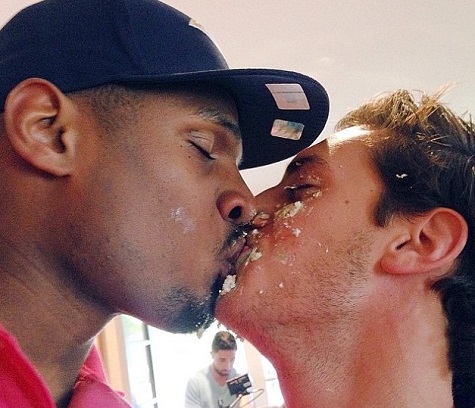
Sam kiss

The most charitable explanation for Michael Sam’s disastrous performance in the wake of the NFL draft is that he’s a young man who got terrible advice. A less charitable theory is that he’s an idiot. The worst theory of all is that Michael Sam is less interested in being the first openly gay pro-football player who blazes a clear path for those who follow him, and more concerned about becoming a gay icon, or worse, a martyr. Whatever the reason, Sam accepted the massive responsibility of being a cultural trailblazer, and fumbled the ball.

Sam wasn’t the best player in the NFL draft, but everyone knew, including Sam, that he would be the most closely watched. He had “come out” as gay soon after the college football season, and in light of his prominence and recognition as a stand-out athlete, his honesty and openness about his sexual orientation was hailed as a cultural turning point, an advance for gay Americans, and a test for the macho NFL. Would he be drafted? If he wasn’t (or was?), would it be because he was gay? ESPN’s cameras were in the Missouri defensive end’s home Saturday as the drafts neared its final stages with Sam name still uncalled. When St. Louis Rams coach Jeff Fisher called Sam at his agent’s house in San Diego to tell the former University of Missouri defensive lineman that they had selected him in the seventh and last round of the draft, it was instant drama.

There was more drama, in fact, than ESPN and viewers probably expected. Sam burst into tears while receiving the call, and then received an emotional, mouth-t0-mouth kiss from his boyfriend, Vito Cammisano.

Not that there’s anything wrong with that.

Actually, there is; several, in fact. To begin with, Sam had violated the Second Niggardly Principle, which states,

“When an individual or group can accomplish its legitimate objectives without engaging in speech or conduct that will offend individuals whose basis for the supposed offense is emotional, mistaken or ignorant, but is not malicious and is based on well-established impulses of human nature, it is unethical to intentionally engage in such speech or conduct.”

A clearer example of the SNP would be hard to find. No doubt about it, most heterosexual Americans, which means most of the public, are not used to seeing adult men kissing each other on the lips. There is no question that Sam knows this: of course he does. Even now, popular culture uses the image for shock value; it was only the 90’s when an impulsive lip-lock from Kramer on Jerry drove the studio audience to screams of laughter. No, there’s nothing “wrong” with two men kissing each other, but an awful lot of people were raised to think it is unnatural, and it is wrong to intentionally or negligently offend or upset them gratuitously. It is the flip side of tolerance: consideration and etiquette. Causing discomfort just because you can, or because your targets “deserve” or “need” to feel uncomfortable is just trouble-making for the hell of it. “Deal with it!” is confrontational and aimed at creating rancor, not comity. Continue reading

A Baseball Integrity Conundrum: The Non-Hit That Is Always Called A Hit But Shouldn’t Be

In baseball, when a batter gets lucky and his pop-up or fly falls between fielders who could have easily caught it but who got mixed up, allowing the ball to drop in safely, it is scored as a hit, not an error, as long as neither fielder touched it on the way down. Sometimes this makes sense; usually it doesn’t. Then again, it also is ruled a hit if an immobile, fat outfielder can’t run down a fly ball that the average Little League could catch with ease, whereas if a faster outfielder runs over, catches the ball but drops it, it would be an error. Such are the scoring vagaries of baseball.

This particular rule of scoring drives some aficionados of the game nuts. Why should the pitcher be charged with a hit if his fielders were at fault? Why should a hitter get credit for a hit when what he did would have been an out if the fielders didn’t mess up, or the wind wasn’t blowing, or the sun didn’t get in their eyes? They are right, but a hit is what the game defines as a hit, and by practice and tradition, this has always been called one, so it is.

Except that on Friday night in Arlington, Texas, it wasn’t. Yu Darvish, the Abbott and Costello-named Texas Rangers ace, was pitching a masterpiece against the Boston Red Sox. In fact, with two outs in the 7th inning he was working on not just a no-hitter but a perfect game (no batter reaches base), either of which qualifies as a major, landmark achievement. Then Red Sox designated hitter David Ortiz (who would later single to break up the no-hitter with two outs in the ninth inning) hit a high pop-up to shallow right field, an easy out….except that it fell, untouched, between the Rangers second baseman and the right fielder, Nelson Cruz, who could have and should have caught it. It was a terrible way for a pitcher to lose a perfect game and a no-hitter, and a collective sigh of disappointment came from the Texas crowd, only to turn to cheers when the scorer (local sportswriters are given the job of deciding hits and errors in Major League Baseball) ruled the ball an error on Cruz. The perfect game was gone—anything, even an error, mars that—but the no-hitter was alive!
Continue reading

The “Bernie” Sentence’s Message: The Lives Of Mean People Aren’t Worth As Much As Those Of Nice People

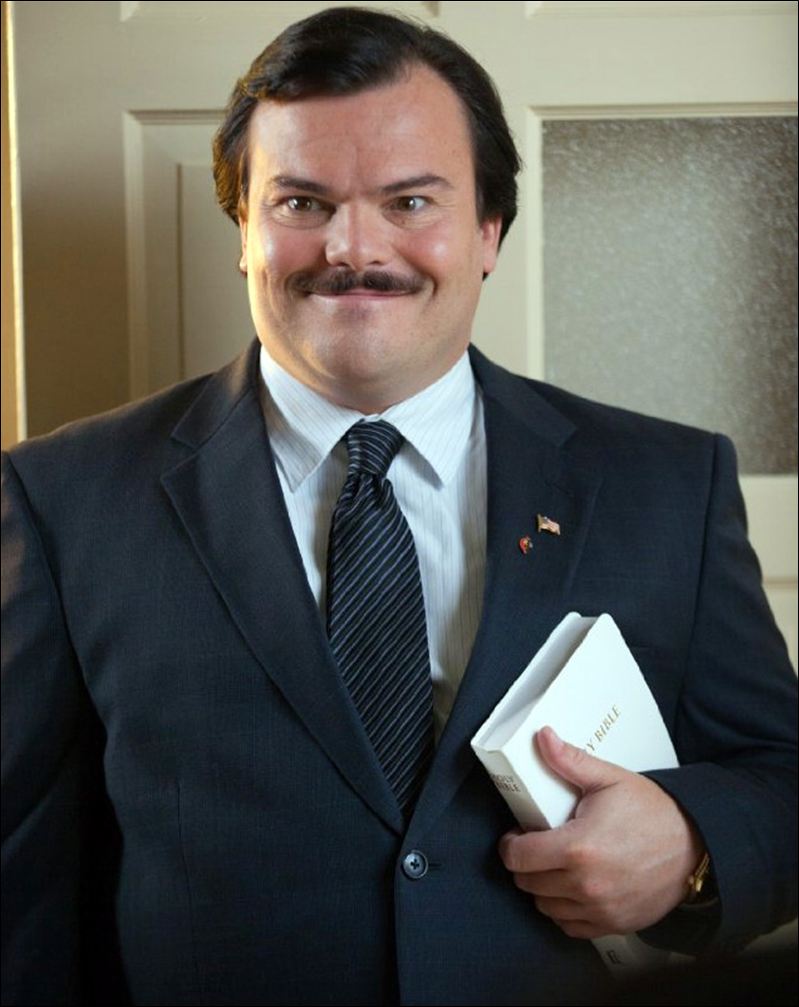
Jack Black as Bernie, the nicest murderer you'd ever want to know.

Jack Black as Bernie, the nicest murderer you’d ever want to know.

“Bernie” is a quirky 2011 movie telling a strange and true story. Jack Black plays Bernie Tiede, an oddly cheery mortician who became a small town community favorite for his kind deeds and upbeat manner. Bernie even befriends the town pariah, a mean, rich old woman named Marjorie Nugent (played by Shirley Maclaine) whom he managed to reform–slightly–until she finally became even too much for him to bear, and in 1996 he shot her dead.

He was loved, she was hated, and the community (Carthage, Texas) rallied behind the murderer even though he hid his friend’s body in a freezer for nine months and spent about 2 million dollars of her money.  The pro-Bernie bias was so strong  prosecutors had to seek a change of venue, since no local jury would convict him. They got it, and a jury that knew neither charming Bernie nor his nasty victim found him guilty (because he was) and sent him to jail for life in 1997.

After the film was released, however, attorney Jodi Cole took up Tiede’s appeal. She discovered that he had a collection of books aimed at survivors of sexual abuse, and got Bernie to admit, for the first time, that he was abused as a child. Cole hired a psychiatrist who testified that Tiede’s abuse probably influenced the murder and his willingness to endure an abusive relationship with Nugent, until he finally snapped. This changed the mind of Panola County District Attorney Danny Buck Davidson, who told a judge Tuesday that he supported reducing the sentence to time served. State District Judge Diane DeVasto agreed. Bernie is now a free man, living in the apartment over the garage of the man who directed the film about him.
Continue reading

Ethics Quiz: Replacing The Sideline Babe

Before and After

Before and After

In a nakedly cynical effort to appeal to male TV audience members, most of the major league baseball teams employ “sideline babes” in their local broadcasts—young, lovely, shapely women who impart little nuggets of “behind the scenes” information about the local team during lulls in the action, of which baseball has many. It often seems like these women can’t tell a ball from a bat, but who cares? Hubba hubba!

The Boston Red Sox however, have had a string of bad luck with their lovelies. The last two became romantically involved with Red Sox players, in one case a potential scandal (the player was married), and in the most recent, as sideline babe Jenny Dell began dating Sox third baseman Will Middlebrooks, a conflict of interest in the view of NESN, the Red Sox network. Who would have guessed that having fold-out ready young women roaming  dugouts filled with rich young male athletes would lead to this?

This season, the Sox sidelines have a different look. The game broadcast cutaways now lead to a large, handsome, undeniably male member of the broadcast squad, Gary Striewski. (That’s Gary on the right in the photo above, Jenny on the left.)  Coincidence? I think not. I think NESN got tired of the off-field whoopee, and decided to go in a different direction that minimized the risk. Assuming this is true (and recognizing that it may not be), your Ethics Alarms Ethics Quiz is this:

Does choosing to have a male sideline reporter to avoid romantic conflicts with the players constitute unfair and unethical gender discrimination?


HGTV And Corporate Cowardice: Hold Companies Accountable For Stifling Speech, Opinion, And Thought

"Remodeling Homes, and Wrecking Democracy"

“HGTV: Remodeling Homes, and Wrecking Democracy”

Once again,  a company that is in effect punishing an American for his or her views on a complex social or political issue is being excused as simply “watching out for the bottom line.” This time, it is cable network HGTV, which cancelled a planned cable show about home repair because one of the prospective stars expressed an opinion adverse to gay activists. Last week, it was the NBA; before that, the agent of activist vengeance was Mozilla, and before that, A&E, until it decided that it was more profitable to do one “right thing” (not punish the duck call eccentrics for being open about who the network and its viewers always knew they were) rather than what it had decided earlier was the “right thing” (“STONE THE BIGOTS!!!”). None of these profit-making organizations are the least bit interested in what is right or wrong, of course, and probably don’t give the ethical implications of their acts a moment’s thought. All they are worried about is money, and what they will grandstand as their “principled decision” will always, amazingly, coincide with whose bullying tactics are more likely to succeed. Continue reading

On Lawyers, Jerks, and Ethics Blog Comment Malpractice

Marilyn Ringstaff, an excellent and much-admired lawyer who has a some friends who need to learn how to write ethical blog comments...

Marilyn Ringstaff, an excellent and much-admired lawyer who has friends who need to learn how to write ethical blog comments…

In 2011, I posted this story and commenary:

Marilyn Ringstaff, a 2006 graduate of John Marshall Law School, had to pay a $250 fine as a result of a minor traffic accident when she was a first year law student. She represented herself in court, challenging Abe Lincoln’s rule that “If you represent yourself you will have a fool for a client and a jack-ass for a lawyer,” and then proved Abe correct—on both counts— when she argued on appeal that her own representation was ineffective.

Ringstaff paid the fine and sent along an obnoxious note with two smiley faces, reading, “Keep the change—put into a police/judicial education fund. I can certainly say this has been an educational experience. I am now a second-year law student and can honestly relate to what a crooked and inequitable system of ‘justice’ we have.”

Georgia’s Board to Determine Fitness of Bar Applicants took offense, and recommended that she should not be allowed to take the bar exam. It cited the note and her defense tactics, along with comments Ringstaff made during an informal board interview that “every police officer lies.”

The Georgia Supreme Court rejected the board’s conclusions, and Ringstaff’s path to a legal career is unencumbered. I agree with the opinion. Her snottiness and arrogance are hardly out of character for many in the legal profession, and at least there is a chance that she will mature, improve, and learn from this close call. More likely of course, is that a profession with more than its share of jerks just embraced another one. Continue reading

Ethics Hero, Mother’s Day Division: NBA MVP Kevin Durant

kevin-durant-nba-kevin-durant-mvp-press-conference2

Just in time to temporarily relieve the National Basketball Association from public exposure of its expediency, hypocrisy and criminalization of thought, and also just in time for Mother’s Day, Oklahoma Thunder forward Kevin Durant delivered an ethics slam-dunk of an acceptance speech when he was honored with the league’s Most Valuable Player Award.

‘Tis not always thus. Another NBA great, Michael Jordan, revealed the bleakness of his character in his nauseating speech upon being admitted to pro basketball’s Hall of Fame, settling old grudges and celebrating himself. Durant, in glorious contrast, was graceful, humble, sincere, gracious, and filled with gratitude, particularly toward his mother, who was in the audience. It takes a sense of fairness, respect and perspective, as well as confidence,  to use the spotlight at an event that honors you to shift attention to others, and that is what Durant did. His speech itself is proof that his mother raised him well, and his words drove the message home:

“One my best memories I have is when we moved into our first apartment. No bed, no furniture, we all just sat in the living room and just hugged each other. We thought we made it. … You wake me up in the middle of the night in the summertime, making me run up a hill, making me do push-ups. Screaming at me from the sidelines of my games at eight or nine years old … When you didn’t eat, you made sure we ate. You went to sleep hungry. You sacrificed for us. You’re the real MVP.”

Here is his entire speech, displaying an ethical character that can’t be faked.

Now THIS Is Ethical Sentencing, And Terry Lynn Brown Is A Wise And Fair Judge

The Andersons: First the system doesn't work, then it does.

The Andersons: First the system doesn’t work, then, miraculously, it does.

This bizarre tale will be adapted into a movie, or Hollywood has lost its mind.

Missourian Mike Anderson was only 23 in 2000 when he was sentenced to 13 years in prison for committing a hold-up at gun-point. He was out on bail, waiting to be ordered to report to prison, and the order never came. He called his lawyer, who said, “Wait for it. Be prepared.”  Anderson even inquired within the system regarding what he was supposed to do, but he got no definitive answer. The order never came, because the official paperwork said he was already in jail.

So Anderson kept waiting, and remained prepared to be arrested and taken to jail at any minute. He didn’t leave the jurisdiction (Mississippi County—and why Missouri has a county with that name is a mystery in itself: no wonder its systems are messed up), and he took no steps to disguise his identity. Anderson started a successful business in construction, married and had children. He coached youth football and volunteered at his church in Webster Groves, Missouri. Then, right about when he would have been released from prison if officials had done their jobs competently, the paperwork error was discovered, and Mike was finally put in jail to serve his original sentence. Continue reading

Chinese Food Ethics, Mexican Food Ethics

Chinese Food

In a dilemma reminiscent of my ice cream sundae problem last year, I faced the question of how to ethically respond to yet another food service botch. We ordered a modest dinner from the local Chinese carry-out establishment, and after we got the order home, discovered that it was missing an appetizer. It was raining hard, and when I called the restaurant, they agreed, after putting me through the third degree, that they had screwed up. They said they would deliver it. I was prepared to drive over and pick it up, but at least this allowed us to begin eating the rest of the dinner before it got cold. It took about a half an hour, but my precious pan-fried pork dumplings finally arrived, along with profuse apologizes from the deliverer.

The ethics issue: Should I tip him or not? Continue reading

Are Haunted House Ethics The Same As Murder House Ethics?

Haunted-Homes2

I spent the wee hours last night watching “Insidious 2” (not as scary as “1,” and too confusing to watch while composing ethics blog posts), and, to fend off nightmares, the Wayans’ “A Haunted House” (sillier, grosser and not as funny as their two “Scary Movie” efforts). Naturally, this set me wondering about the ethics of selling a haunted house to an unaware buyer.

I thought I had covered this problem before here and here, where the topic was whether a property owner had an ethical obligation to divulge that the house in question had been the site of gruesome murders or suicides. The law in most states declares caveat emptor, but that’s only the law. The ethics verdict, in my view (but not everyone’s) is this, which my last comment on the topic, in 2013: Continue reading