Ethics, Justice and Punishment: The Don Collins-Robert Middleton Case

Collins

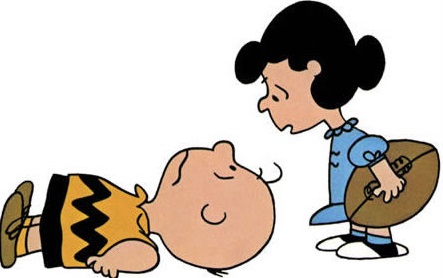
Several readers sent me this case, which is as odd as it is horrible. In 1998, Don Willburn Collins allegedly attacked, possibly raped, and set on fire an 8 year-old boy named Robby Middleton when Collins was 13, and Middleton was only 8. Collins spent several months in juvenile detention but was released when prosecutors decided they did not have enough evidence to convict him. Middleton survived, permanently scarred and maimed, his health ruined. In 2011 he died of skin cancer, which doctors attributed to his burns. Shortly before he perished, he gave a video deposition accusing Collins of the crime.

Now a judge has ruled that Collins can be prosecuted for Middleton’s murder, since he died as a direct consequence of the attack 13 years earlier. Moreover, the judge said, he can be charged as an adult, though he was a juvenile when the attack took place.

The case raises many legal issues, and I am neither prepared nor interested in exploring those. I suspect that the task facing prosecutors is insuperable, given the time that has passed, issues of proof and law, and the gut feeling many jurors will harbor that such a conviction would be unfair.

I will render this ethics verdict, however: If Collins was the attacker, I believe it would be fair, just and ethical for him to be punished for it now as an adult, for that is what he is. Continue reading

Ethics Quote of the Week: The Detroit News

“While it may be politically expedient, rewriting a law passed by Congress simply to avoid ballot box consequences is an outrageous abuse of executive power…No law should be reshaped for the sole purpose of benefiting a single political party.”

—-The Detroit News, condemning the cynical and nakedly political decision by the Obama administration to postpone the consequences of the Affordable Care Act until after the 2014 mid-terms, to protect vulnerable Democrats from voter anger.
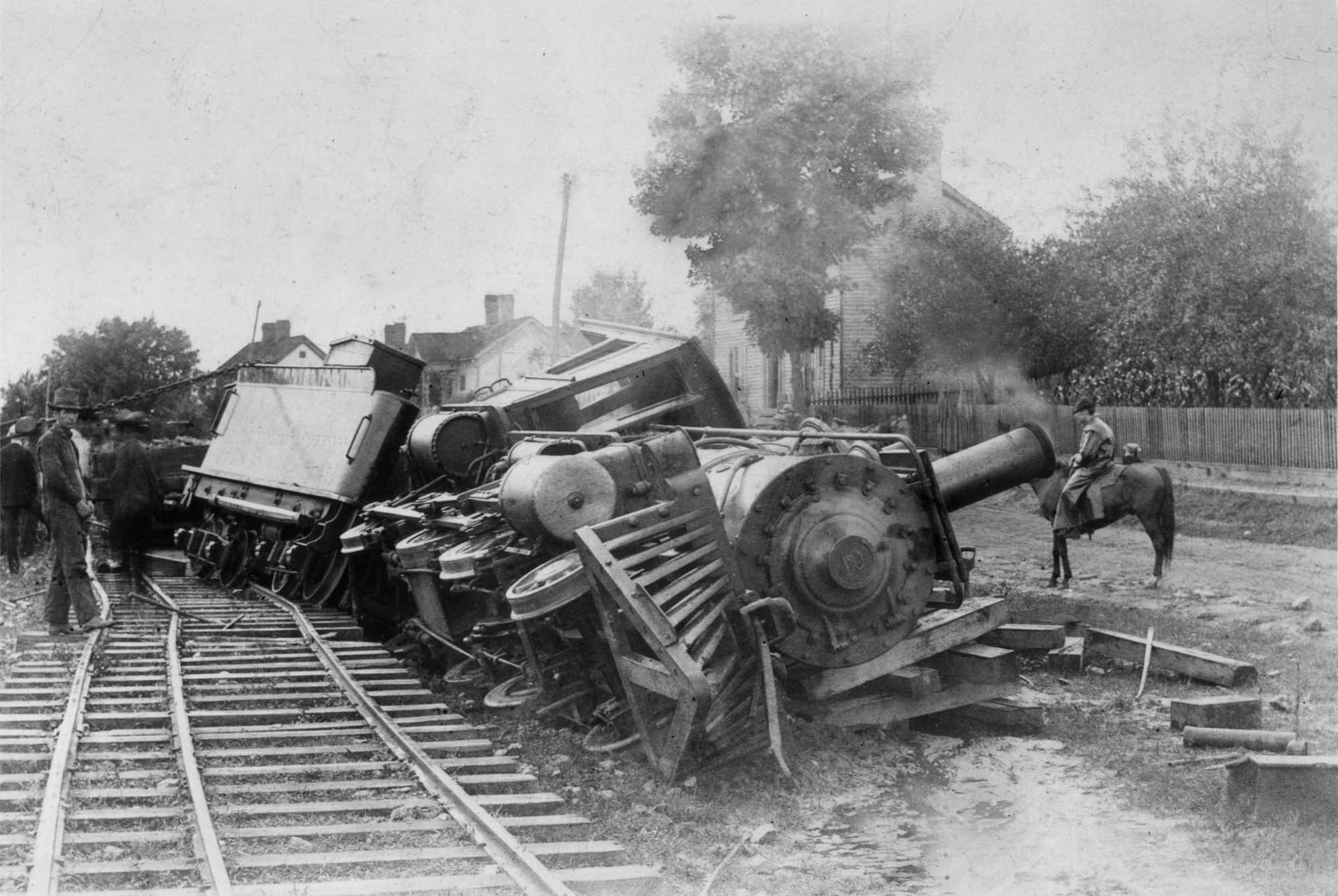
train-wreckSo many of Ethics Alarms’ reflexive Obama administration apologists have fled lately that I wonder if anyone will have the fortitude to take to the parapets and defend the latest turn of the Obamacare Ethics Train Wreck. Highlights from the clear-eyed Detroit News editorial: Continue reading

Case Study: Rationalization #2

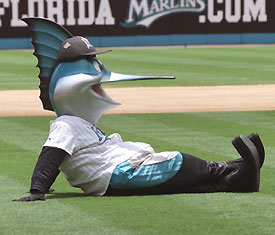
Also, the team's mascot is this thing...

Also, the team’s mascot is this thing…

Note to all you baseball haters and National Pastime illiterates: This case study arises out of baseball, but it’s not a baseball ethics post. I’m in Boston, it’s Spring Training—give me a break.

A clear-cut rules violation by the Boston Red Sox has been nearly universally dismissed by fans and media alike by one of the most egregious uses of #2 on the Ethics Alarms Rationalization list. In case you don’t have your rationalizations memorized yet—and you should, because when you hear them in your head, you are about to do something unethical—this is the one, and it’s second on the list only to “Everybody does it” for good reason. It’s one of the most popular and destructive rationalizations of all:

2. The “They’re Just as Bad” Excuse,

or “They had it coming”

The mongrel offspring of The Golden Rationalization and the Bible-based dodges a bit farther down the list, the “They’re Just as Bad” Excuse is both a rationalization and a distraction. As a rationalization, it posits the absurd argument that because there is other wrongdoing by others that is similar, as bad or worse than the unethical conduct under examination, the wrongdoer’s conduct shouldn’t be criticized or noticed. As a distraction, the excuse is a pathetic attempt to focus a critic’s attention elsewhere, by shouting, “Never mind me! Why aren’t you going after those guys?”

Its other familiar, equally absurd but even more corrupting manifestation is the “They had it coming” variation. This argues that wrongdoing toward a party isn’t wrong because the aggrieved party doesn’t deserve ethical treatment because of its own misconduct. But the misconduct of a victim never justifies unethical conduct directed against that victim. Continue reading

Incompetent Elected Officials Of The Month: Chicago City Council

Rugby, my pure Jack Russell Terrier (though "pure" is an oxymoron with Jacks)

Rugby, my pure Jack Russell Terrier (though “pure” is an oxymoron with Jacks)

Laws affect our lives too much to be concocted by dolts. If elected officials are going to restrict our freedom, they have an obligation to do so only with good cause, careful consideration, precision, and after making certain that unintended consequences will be minimal.

On the other hand, elected official could just say “What the hell, let’s see how this turns out,” and be like the Chicago City Council, which passed an ordinance banning the sale of pure breed dogs.

This is as nice an example of good intentions gone stupid as we are ever likely to see. The intent is to cut off the supply of dogs from s0-called puppy mills, which are rightly regarded as too often cruel and irresponsible. However, in pursuit of that elusive goal, the city council didn’t bother to craft a law that addressed the problem effectively, or that even made sense.

Continue reading

Lawyer Daniel Muessig’s Clever, Effective, Legally Ethical And Thoroughly Despicable Ad

Just as I’ve been desperately trying to explain that lawyers do not represent bad people because they like them or want to loose them upon the world,  here comes innovative Pittsburgh lawyer Daniel Muessig, whose clever TV ad proclaims that this is exactly what he wants to do. Here it is:

Is this an ethical ad? According to the Pennsylvania Rules of Professional Conduct, it is within the conduct permitted by the state’s legal ethics rules. The ad isn’t misleading. It doesn’t make promises the lawyer cannot keep. It doesn’t represent dramatic recreations as fact, or use broad metaphors and exaggerations. (Lawyer ads are held to a standard of literalness that presumes the public has never see any other kinds of advertising in their entire lives.) Once upon a time the various state bar advertising regulations included prohibitions on “undignified” communications, or those that undermined public trust in the profession, but those days are long past: the standards were necessarily vague, and breached free speech principles.

So we have this: a lawyer who appeals to his future criminal clients by saying that he thinks like a criminal, believes laws are arbitrary, that other lawyers will “blow them off” and that he visits jails frequently because that’s where his friends are. He attacks his own colleagues and profession, denigrates the rule of law he is sworn to uphold, and seeks the trust of criminals not because of his duty as a professional, but because he’s just like them. Muessig is willing to undermine the law-abiding public’s belief in the justice system and the reputation of his profession and his colleagues in order to acquire clients. I’m sure his strategy will work, too. Continue reading

Gotcha, NPR! Liberal Bigotry About Bigotry Exposed

"Wah, my conSTITuants in the great Southan state of Mawntana just don't wanna see any coloreds get away with shootin' owa  law enforcement officahs, that's all!"

“Wah, my conSTITuants in the great Southan state of Mawntana just don’t wanna see any coloreds get away with shootin’ owa law enforcement officahs, that’s all!”

One progressive lie I hear and read repeatedly from Democrats and their news media lackeys is that the Supreme Court “gutted” the Votingl Rights Act of 1965 by decreeing that it was unconstitutional for the Justice Department to use decades old data to presume racial bias in legislative measures and policies adopted by Southern states. This was holding in the case of Shelby v. Holder. The Court justly ruled that Congress had to develop current, accurate criteria. Progressives and the Obama Administration screamed and are still screaming, because pretending it was still Jim Crow, Bull Connor and Mississippi burning in the South gave the federal government a way to over-ride legitimate and non-racist laws (like voter ID requirements), based on bias: if it’s a southern state, it must be racist.

Yesterday, National Public Radio inadvertently demonstrated how this bias operates. I have already written about what is wrong with conservative opposition to Debo Adegbile, President Obama’s choice to head the Justice Department’s Civil Rights division. Essentially, he is being condemned for trying to protect an individual’s civil rights. But the police unions are determined to punish him because that particular individual was a cop killer, and our law enforcement officials don’t think such people have rights. They are wrong, Adegbile was right.

This is not truly a racial issue, but because Adegbile is black, because he worked for the NAACP, because the cop killer is black, because Obama is black and because Democrats have spent the Obama years making everything about race to serve their cynical political needs,  the controversy has been reported as a racial justice issue. It is really a stupidity issue, as I pointed out in my earlier post. It is stupid, ignorant and destructive to treat criminal lawyers as if they support the crimes of their clients.

The police lobby was strong enough, sadly, to defeat Adegbile’s nomination in the Senate, as sufficient Democrats from conservative states decided to cater to ignorance as enthusiastically as their Republican colleagues. Here are the Democratic Senators who voted “nay”:

Chris Coons (Del.)
Bob Casey (Pa.)
Mark Pryor (Ark.)
Heidi Heitkamp (N.D.)
Joe Manchin (W.V.)
Joe Donnelly (Ind.) 
John Walsh (Mont.)

Plus Harry Reid (Nev.), who switched his vote for tactical purposes.

Here is how NPR described them on NPR’s Morning Edition :

“A handful of southern Democrats joined Republicans yesterday to defeat president Obama’s choice to head the Justice Department’s civil rights division.” Continue reading

Gift Horse Ethics: The Babe, The Splendid Splinter, and The Ethics Of Self-Promoting Virtue

sick child and-babe-jpgBaseball slugger Babe Ruth was famous for visiting hospitals and orphanages to give kids a thrill. Babe always had reporters in too to record his noblesse oblige , of course. He was an orphan himself, and nobody should doubt the Bambino’s genuine dedication and generosity when it came to kids. He just wasn’t going to let his good deeds go unnoticed.

Other baseball greats, notably Ted Williams, made most of his visits without fanfare or publicity, and he didn’t tip off the press. “The Splendid Splinter” wasn’t visiting kids in cancer wards because he wanted his fans to know what a good guy he was. He did it because he wanted to make sick children feel better.

Was the Babe less ethical than Williams? Did his self=promotion take the ethical sheen off of his good deeds? This is the issue raised by the activities  of the  “Magician Prankster” who calls himself “Magic of Rahat” on YouTube and Twitter. He recently posted a video called “Homeless Lottery Winner” showing him playing  a prank on a homeless man, who ends up with $1,000. He is understandably grateful:

Slade Sohmer however, on HyperVocal, is hearing ethics alarms: Continue reading

Government Ethics: Luxury On The Taxpayer’s Dime

And the best part is, those poor suckers in coach are paying for all of this! Bwahahahaha!!!

“And the best part is, those poor suckers in coach are paying for all of this! Bwahahahaha!!!”

The Washington Examiner acquired records of federal agency travel through the Freedom of Information Act, and made an interesting discovery:

“The federal government spent millions of dollars on thousands of upgraded flights for employees in 2012 and 2013, paying many times more for business and first-class seats than the same flights would have cost in coach or the government-contracted rate. Premium travel reports from 14 federal agencies documenting the flights show these agencies alone spent an estimated $8.7 million on 1,903 upgraded flights in those two years. That was about $6.4 million more than the same coach and government-rate flights would have cost. The agencies spent $5.7 million in 2012, almost double the $3 million they paid for premium travel in 2013. The cost of coach and government-rate flights is approximate because several agencies either reported estimates for some coach fare or didn’t report them at all.”

There is just no excuse for this. None. I can conceive of some rare situations when first class travel would be called for, but not many. The accommodations in coach for most international air travel is perfectly endurable, and the huge difference in price isn’t justified unless you have serious back problems or some other malady. The basic ethical question every public servant should ask himself or herself is this: would I fly First Class if I had to pay for it? Almost always, the answer will be “no,’ and even if the answer is yes, the standard for buying luxury seating on the public’s tab should be more stringent.  It’s not their money. That’s really the answer to the threshold “What’s going on here?”  ethics query in this instance. What’s going on is that the public’s trust is being abused by officials casually using scarce taxpayer resources for their own comfort and convenience. Continue reading

Being Fair To College Student Ideological Idiocy

Luckily for him, the bank president who wrote this foolishness in 1969 didn't sign his name to it...

Luckily for him, the bank president who wrote this foolishness in 1969 didn’t sign his name to it…Ah, my old college days!

My attention has been drawn recently to two essays by college students, both presumably sent to me on the theory (or hope) that reading them would kill me. The first, published in the Drexel Triangle (the student paper), argues that stage directors should be prevented from casting actors who look the way the playwright envisioned them. The second, published in the Harvard Crimson, makes an even more disturbing assertion: its author asserts that Harvard should stop guaranteeing professors and students the right to advocate controversial views or pursue research that challenges liberal views and assumptions.

I don’t want to devote the bulk of this post to rebutting these two essays, which are, I think self-rebutting. In the theatrical essay, student actress Alyssa Stover argues that a stage director shouldn’t have the right to decide that, say, casting an Asian dwarf as black boxer Jack Johnson in “The Great White Hope” would lead to a less effective production (that is my example, not hers—she objects to a director of “Cabaret” refusing to cast African-Americans as a matter of historical accuracy):

“These arguments are fundamentally flawed. What the audience wants is almost impossible to measure because the “audience” is composed of anyone who can get a ticket. A director or producer’s right to deny someone a role due to their appearance is debatable because this is a judgment based on one person’s preferences and may not actually create something that is stage worthy. The current status quo allows people to be barred from the stage due to physical “flaws,” as determined by the direction. These judgments are not harmless, and when the issue of race is involved, the problem only gets bigger.” Continue reading

Legal Ethics Quiz: The Bean Bag Tossing Defense Lawyer

" I swear, you can do this in court. I saw it on "Ally McBeal"...

” I swear, you can do this in court. I saw it on “Ally McBeal”…

Holy crap! Here is a courtroom stunt you don’t see everyday…or ever.

The dramatic bribery trial of Rhode Island defense lawyer Donna Uhlmann and co-defendant Jamaal Dublin took a hard left turn into “Boston Legal” territory and beyond with the, well, creative closing argument of Dublin’s lawyer, Christopher T. Millea. It was so creative, he was nearly held in contempt of court.

“You see, all of this has to do with the throwing of feces,” said Millea, cleverly reminding the jury of the bizarre conduct of a key state witness who once threw his own excrement at a prison guard.  “The state wants to throw as much against the wall to see what sticks, just like Michael Drepaul throwing his feces …”

With that introduction, Millea took two bean bags out of a box he had placed in front of the jury, and threw them at the courtroom door. Then he retrieved the turd stand-ins and placed them in another box near the door, and placed that box next to the one in front of the jury, which, it was later discovered, read “Reasonable doubt,” though only the jury could see the words. The first box was labelled, “State’s case.” Continue reading