The Academy’s “In Memoriam” Snubs: Much Better This Year—Thanks, Oscar

The great Jonathan Winters in the not-so-great "It's a Mad, Mad, Mad, Mad World"

The great Jonathan Winters in the not-so-great “It’s a Mad, Mad, Mad, Mad World”

In past years I have taken the Academy of Motion Picture Arts and Sciences to task for the ethical breach of ingratitude and disrespect, as the honor roll of the year’s deceased film notables have omitted important figures who deserved their final bows. Omissions are inevitable, I suppose, but some of the past examples were unforgivable—last year alone, for example, the Academy snubbed Ann Rutherford, Andy Griffith, R.G. Armstrong, Russell Means, Harry Carey, Jr., and Susan Tyrell. 2012 was worse.

2013, however, shows that the Academy is being more careful, and Oscar deserves credit for cleaning up its act. I have ethical and historical objections to bestowing the prestigious final slot on actor Phillip Seymour Hoffman, dead prematurely of self-inflicted drug abuse, when a genuine, bona fide Hollywood legend, Shirley Temple, was on the list. I understand the thinking: Hoffman had friends and colleagues in the room, and Temple is of another generation; his premature death was a tragedy, and she lived a long and productive life. Still, the priorities and relative values such a choice exemplifies is disturbing. Great actor that he was, Hoffman was a criminal, an addict, and left his children fatherless. Shirley was the greatest child star who ever will be, a ray of sunshine in the dark days of the Depression, a one-of-a kind talent and icon, and later a lifetime public servant who raised a family. She represented the best of Hollywood and the profession; Hoffman represents its dark side. Naturally, he’s the one who received the greatest recognition. I will suppress my dark suspicions that Shirley was docked because she was a Republican. A  Facebook friend actually wrote that Shirley deserved to be penalized because some of her movies were racist. My response to this slur was not friendly. Continue reading

Ethics Blindness: The Pro-Abortion Ethical Disconnect

To anyone who is capable of compassion and objectivity, the abortion controversy represents a classic ethics conflict: two ethically defensible positions based upon undeniable ethical principles that are in opposition. Both factions have their absolutist wings which would deny the other side’s interests, holding that either the life of the unborn ( abortion opponents) or a woman’s autonomy (abortion advocates)  is such a societal priority  that nothing should be permitted to compromise its primacy in any way. Yet the best solution to most ethics conflicts, if possible, is balancing, resulting in acceptance of a  reasonable middle position that acknowledges the validity of both interests.

Recent comments from prominent pro-abortion advocates are ethically troubling, because they suggest a complete denial that any valid interests on the other side exist at all. This signals a retreat from reason and fairness into zealotry and fanaticism, and it makes balancing not merely more difficult, but unimaginable.
In an interview on the cable station Fusion, Planned Parenthood president Cecile Richards had this revealing exchange (video above): Continue reading

Seth Rogen’s Celebrity Hissy Fit And Congress’s Celebrity Cynicism

"How dare the Senators not take me seriously?"

“How dare the Senators not take me seriously?”

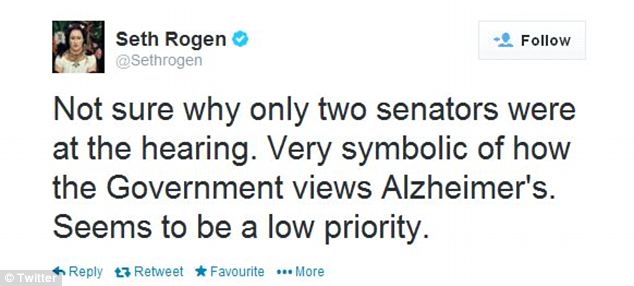
Actor Seth Rogen, who specializes in playing likable, though often stoned, shlubs in Hollywood comedies (except when he was cast as the Green Hornet, which everyone would rather pretend never happened), came to Capitol Hill to testify about the need for more research into the causes and prevention of Alzheimer’s Disease. His testimony was to the point and heart-felt—his late mother began showing symptoms of the illness in her fifties—and read from prepared text in a flat and formal tone rather than actorly flair. Rogen, however, was apparently seething was anger: after he was introduced, only two Senators on the committee stuck around for the show. Later he tweeted peevishly:

Rogen Tweet

Get the hook: Continue reading

Twelve Post-Veto Ethics Observations On The Arizona “Religious Freedom” Bill

veto2

1. As we now know, Governor Brewer vetoed AZ SB1062, the so-called “religious freedom” bill that was widely (and accurately) interpreted as support for discrimination against gays. In the previous post, I suggested that her delay in doing so sent a message that was as hostile to gays as the law itself: if she felt the law was ethically wrong, then she should have and would have announced that she would not sign the bill long ago. Instead, she waited to see how much economic damage the law would do to the state, and then vetoed it, not because this was the right ting to do, but because it was the pragmatic thing to do. (As the satiric Borowitz Report put it, “The state of Arizona found itself in the middle of a conundrum today as it awoke to the awkward realization that gay people have money and buy stuff.”) USA Today noted that, to the contrary,”Some political insiders believe Brewer has allowed furor over the legislation to build to thwart social conservatives’ attempts to push a similar bill later.” I doubt it, but if so, Brewer allowed her state and her fellow Republicans to be represented nationally as homophobic for as long as possible to spare herself the inconvenience of vetoing a second bill.

2. Despite the extravagant debate over the bill, almost no commentators actually published the bill’s text in the commentary. The reason appears to be that since the bill is really an amendment of an existing law, it takes a modicum of intelligence to figure out what’s going on. Here it is (the original law is in black; the new text is in blue; what has been removed in the amended version is struck through): Continue reading

Loathsome Jerk Bites Dumb Gold-digger

Fly, meet Spider...

Fly, meet Spider…

I was going to make this an Ethics Quiz, but in part because I find Howard Stern so repugnant that I am incapable of not assigning blame to him, and mostly I am certain that the fact someone consents to do something self-destructive and stupid does not excuse the party who intentionally tempts her with an invitation, I am making this call myself.

Radio’s premiere shock jock, knowing full well that spurned Mel Gibson mistress Oksana Grigorieva would forfeit the remaining $375,000 of her settlement with the actor if she talked publicly about their relationship, invited her on his show. Then, using gentle questioning and seductive tones, Stern got the woman to say just enough violate the settlement terms, which were subsequently declared void by a judge. From TMZ: Continue reading

Ethics Quiz: “12 Years A Slave” Plays The Racial Guilt Card On Oscar Voters

12_years_ad_2.jpeg

“It’s time.”

This is the  tag line in the post-Oscar nomination ads being prominently run in New York and California for  “12 Years A Slave,” a strong Academy Award contender (nine nominations, including best film).

Although there is room for disagreement, and the ad has the virtue of all clever advertising that it conveys different messages to different markets—Haven’t seen the film yet? “It’s time!”  Desperate to see the best movie you saw in 2013 finally get its due? “It’s time!”  When will the question of whether the most honored film of the last 12 months will win the biggest honor of them all be answered? “It’s time!”…or almost time, as the Oscar ceremonies are coming up on March 2—the consensus is that “It’s time” is mainly aimed at Oscar voters, and the message it conveys is, as Slate puts it, “it’s time for a movie about slavery, and with a significantly black cast and crew, to be recognized by the Academy of Motion Picture Arts and Sciences.” Film critic Phil Hammond puts it slightly differently:

“The ad not only can be interpreted as shining a light on a very dark period in American history, it also shines a light on the Academy’s fairly dismal record of awarding its top honor to any movie about the black experience. In fact there has been only one Best Picture winner in the 85 years the Academy of Motion Picture Arts and Sciences has been handing out Oscars that even remotely qualifies in this regard. In 1968, In The Heat Of The Night, a murder mystery set against the racial divide in a small Southern town, won Best Picture and four other Oscars just a few days after the assassination of Martin Luther King (the ceremony was even postponed two days out of respect). The votes were in before the King assassination, but it seemed then that “It’s Time” would have been an appropriate way to describe that victory. However, outside of lead actor Sidney Poitier — who also co-starred in another racially themed Best Pic nominee that year, Guess Who’s Coming To Dinner —  this movie  featured a largely white cast, white producer, screenwriter and director (Norman Jewison).”

If so many in the industry are interpreting the ad this way, it is fair to assume that this was at least one of the ad’s objectives, and on the assumption that it was an objective, your Ethics Alarms Ethics Quiz today is this:

“Is appealing to Oscar voters on this basis fair and ethical?”

I can see strong arguments for each position. Continue reading

Ethics Dunce (Advice Columnist Division): “Dear Prudence”

Hmmm...refreshing! And strangely tangy!

Hmmm…refreshing! And strangely tangy!

Here is my guess: nearly 100% of all people with two ethics alarms to rub together would be able to answer this question correctly, responsibly, and within about 1o seconds of thought. The question, in essence:

‘I worked as a nanny for a couple I didn’t like, so to make myself feel better, I secretly poisoned them. Now I work elsewhere, and I hear that they are both ill and doctors are stumped. I feel kinda bad about it. What should I do?’

The obvious answer: “For God’s sake, you idiot, tell them what you did, so the doctors can treat them! Why are you wasting time talking to me? They could die, and you would be responsible!”

But this answer isn’t the one given by Emily Yoffe, Slate’s serially incompetent and unethical advice columnist. She responded, in a live online chat that uncovered this vile supplicant, who confessed to routinely dipping her employers’ toothbrushes in the toilet and periodically spiking their bedside water with the same fecal solution, by writing this:

“Part of me would love to tell you to rush to confess. However, I will extend you a courtesy that you didn’t give your “inconsiderate” and “rude” employers. That is, while I think this couple should know the source of their illness, confessing could leave you open to potential prosecution. You may deserve it, but you need to consider the stakes here.”

That part of Emily, apparently, is the sensible, compassionate, ethical part, and it was over-ruled by the unethical, irresponsible, dumb part. The lawyer, if he or she is more ethical than Emily, a good bet, will tell the Potty Poisoner that she should confess immediately in case an E Coli infestation is what is making the couple ill, particularly because they might die, greatly increasing her risk of serious criminal penalties as well as, you know, ending their lives and leaving their children parentless.  The lawyer will also explain all the possible scenarios resulting from what Emily seems to dread, honesty and accountability. Even lawyers, who are required to place their clients’ best interests first, are not supposed to advise them to cover up their crimes and allow their victims to perish. Advice columnists are definitely not supposed to do this, and are duty bound to give wise and responsible advice that is in the best interests of all concerned, not just their correspondents, who are likely to be, in general, less than bright, ethically-clueless, and in need of nannies themselves.

“Dear Ethics Alarms: I’m an advice columnist and I told someone who said that she had been poisoning her employers with fecal matter that she didn’t need to ‘fess up, even though they became deathly ill. Now she has written me a follow-up, thanking me for my advice since the couple died, leaving several young children orphaned, and she would have been in big trouble if she had come clean. Now I feel guilty. Should I?”

Yes.

______________________
Pointer: Fark

Source: Slate

A Good Reason To Question Chris Christie’s Ethics

Thank you for that completely voluntary and generous contribution to the new ethics center at  my alma mater! You can leave your cell now."

Thank you for that completely voluntary and generous contribution to the new ethics center at my alma mater! You can leave your cell now.”

In a long report published in the Washington Post a week ago, New Jersey Governor Chris Christie’s conduct as a federal prosecutor was examined, under the headline, “Chris Christie’s long record of pushing boundaries, sparking controversy.” This is euphemistic, to say the least. What the report describes is clear-cut, undeniably unethical practices by Christie. They were arguably legal and technically permitted at the time (though no longer), but never mind: they were unethical, and would quickly set off the ethics alarms of any ethical lawyer or politician. For Christie, they did not.

I’ll focus only on the main practice in question. The Post’s Carol Morello and Carol D. Leonnig write,

“As the top federal prosecutor in New Jersey, Chris Christie struck an unusual deal with Bristol- Myers Squibb. In exchange for not charging the drugmaking giant with securities fraud, Christie’s office would require it to fund a professorship at Seton Hall University’s law school — Christie’s alma mater.The $5 million gift, one component of a larger agreement between the company and prosecutors, was hailed by the school, in South Orange, N.J., as a cornerstone of its new center on business ethics.”

Now there’s irony for you: a center on business ethics funded with an unethical gift from security fraudsters. For the passage above just as easily, and more accurately, might have read: Continue reading

Ethics Quiz: Smashing The “Million Dollar Vase”

Miami performance artist Maximo Caminero walked into the Pérez Art Museum in Miami, entered a special exhibit of sixteen ancient Chinese vases painted over in bright colors by celebrated Chinese dissident artist Ai Weiwei, picked up one of them, and immediately after a security guard instructed him not to touch the exhibit, allowed the vase to fall from his hands, shattering into bits. Some strange and interesting details of the incident:

  • He did not say “Oopsie!”
  • In fact, he admitted that smashing the pottery was intentional, and was his protest against in support of local artists like himself whose work is not exhibited at the museum while the art of international artists like Weiwei is.
  • The painted vase the 51-year-old artist destroyed is said to be valued at a million dollars. Each of vases used in the exhibit  are about 2,000 years old, dating back to China’s Han Dynasty. The artist often uses ancient  artifacts in his work, and has drawn criticism that his art consists of  defacing the original work or another artist.
  • Caminero says he thought the vases were cheap pottery purchased at Home Depot, and never suspected that they were so old or valuable. (And yet he still didn’t say “Oopsie!” Or “Doh!”
  • The museum HAS exhibited local artists.
  • He broke the vase directly in front of a series of larger-than-life photos of  Weiwei dropping and destroying another Han Dynasty vase.
  • He says that he interpreted the photos as a fellow artist’s provocative statement, encouraging him to break the vase.
  • Caminero was charged with criminal mischief, which is not a trivial charge. At very least, he would be required to pay for the destroyed item.
  • The news reports say that the museum is assisting police in the investigation. What investigation? The entire episode on video.

No, you can’t make this stuff up.

And our Ethics Alarms Ethics Quiz is this:

Should the justice system treat Caminero’s act  more leniently than any other act of deliberate vandalism resulting in the destruction of a million dollars worth of property?

To me, the answer is a resounding “no”:

  • The fact that the vandalism is a protest? It doesn’t matter why he destroyed the vase. It wouldn’t mitigate the crime even if he had something legitimate to protest, which he did not.
  • The fact that he didn’t mean to break a a million dollar vase, just a cheap one? Too bad. You break it, you’ve bought it.
  • The fact that the photo display behind him showed the artist doing exactly the same thing? Completely irrelevant. The artist was breaking his own vase.
  • The fact that the art that Caminero was destroying was itself created by a destructive act? Oh, there are a number of bad rationalizations he can use in his defense, and I wouldn’t be surprised if he uses them all. The protest was performance art, and punishing it severely infringes on free artistic expression! Punishing him is the ultimate hypocrisy, as he was calling attention to Weiwei’s own vandalism! He started it! Tit for Tat! It’s for a good cause! All ethically invalid.

Someone this stupid, irresponsible, self-centered and reckless is a danger to the community. His next protest may harm more than a vase.

I hope they throw the book at him.

________________________________________

Pointer: CNN

Sources: Miami Herald, C News

Ethics Hero: Boston Red Sox Pitcher Ryan Dempster

ivory-billed woodpecker

With a guaranteed contract that would pay him $13.25 million this year, all Boston Red Sox starting pitcher Ryan Dempster had to do was fail to make the team or be relegated to the disabled list to collect it all. Dempster felt, however, that his physical condition would not allow him to contribute to the team’s efforts to defend its 2013 World Championship, and that under the circumstances, decided that it would be better for all concerned if he didn’t play in 2014 and spent the year with his family. Thus, while not retiring, Ryan Dempster announced that he would forfeit the money owed to him.

Dempster made $13.25 million last year, and had made millions for many years before that; he certainly doesn’t “need” the money. Nevertheless, for a professional athlete to handle himself this way is about as rare as an ivory-billed woodpecker sighting.  “I could have had a choice of trying to spend the entire season trying to work through those and trying to be able to pitch,” he said in his statement, delivered at the Red Sox Spring Training camp where the team is about to begin training. “But I just felt like it’s something that’s preventing me from doing the job I want to do, and I’m not going to go out there and put my team at a disadvantage or me at a disadvantage by not being able to compete the way I’m able to compete.”

Ryan Dempster, professional athlete, just placed team, family, integrity, and fairness above $13.25 million dollars.

Ethics Hero.