The Klan’s Birthday Cake, Individual Boycotts And The Ethics Of Refusing to Give Service To Jerks

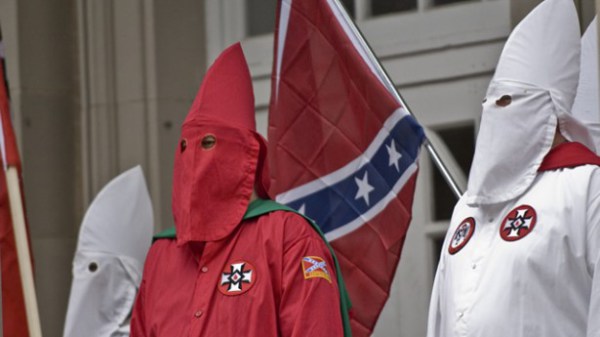
"Happy Birthday to You! Happy Birthday to You! Happy Birthday, Dear Racists..."

“Happy Birthday to You! Happy Birthday to You! Happy Birthday, Dear Racists…”

[UPDATE: Apparently, the “news story” that prompted this post is a fake. In that case, I want to thank the hoaxers for  inadvertently sparking a useful discussion—nothing in my post is dependent on the factual nature of the story. I wasn’t the only one fooled, and I originally noted the links on reliable sites. On the other hand, to hell with people who plant fake stories that are not obviously tongue in cheek or satirical: it’s a despicable practice, and abuse of the web, and right down there with public vandalism and creating computer viruses as unforgivable public conduct. I apologize to readers here for misidentifying a false story as true, but I’m not the unethical jerk involved. If anyone knows who that is, please forward their names. I have some choice words for them.]

As I wrote the first time I stuck my ethics big toe into this kind of controversy, I am conflicted over the current trend of forcing certain kinds of service providers to serve customers they just don’t feel like serving. I have consistently come down on the side of the rejected customer, even when the service, as in the case of bakeries and photography salons, edges perilously close to art. I think I am there still, but my resolve is weakening. I think. Let’s look at this again, in the context of the kind of recent case that always eventually occurs when one sits on the slippery slopes.

A three judge panel of a Georgia appellate court recently ruled in favor of Marshall Saxby, the Grand Wizard of a local KKK chapter, after he sued a local bakery for refusing to bake a cake for the KKK chapter’s  annual birthday party. Elaine Bailey, who owns Bailey Bakeries, said she rejected the Klan its activities violated her religious beliefs, and Saxby claimed that Bailey’s refusal of service discriminated against his religious beliefs.

The difficulty with making an ethical call on this case and others like it (and sort of like it, arguably like it or a little bit like it) is that the crucial question in ethics analysis, “What’s going on here?” cannot be answered with certainty or clarity. There are ethical arguments and ethical principles, on both sides, making the issue an ethical conflict (rather than an ethical dilemma). In an ethical conflict, we must prioritize among important ethical principles that are opposing each other.

Let’s answer “What’s going on here?” in some of the various ways this case allows, as if only one of these ethical principles were in play: Continue reading

The Emmys Play Favorites And Undermine Their Mission

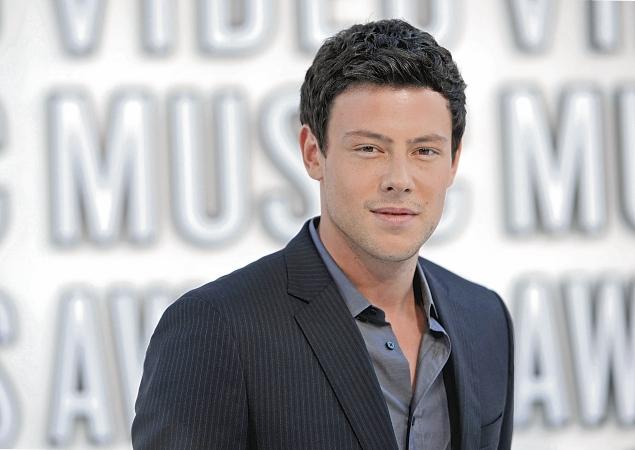
Quick, now...and no cheating: Who is this recently deceased TV legend?

Quick, now…and no cheating: Who is this recently deceased TV legend?

Three separate organizations present the Emmy Awards: the Academy of Television Arts & Sciences (ATAS), the National Academy of Television Arts & Sciences (NATAS), and the International Academy of Television Arts & Sciences. Each is dedicated to the television industry, and the award the organizations collaborate to  hand out for excellence are intended to serve multiple objectives. Prime among them is to honor and promote the professionals who bring—in theory, at least, quality entertainment into the homes of Americans. The show itself that broadcasts the awards only exists because of their larger mission, which is to say that the Emmy show exists to support the Emmys, not the other way around. The program’s producers, not for the first time, managed to forget their priorities this year, and are getting well-deserved scorn for it both in and outside the entertainment community.

The offense occurred during Sunday’s live telecast, when the show reached its annual “In Memoriam” segment. The Oscars have botched this crucial part of its own show in recent years by failing to recognize the deaths of important Hollywood figures who deserved their final bow and a last ovation. Emmy found a new and different way to insult its own. The Oscars’ omissions were negligent; the Emmys insult was, incredibly, intentional. It’s just that either nobody realized it was insulting, or, more likely, they knew but had other objectives. Continue reading

The Answer To Popehat’s Web Shaming Ethics Quiz

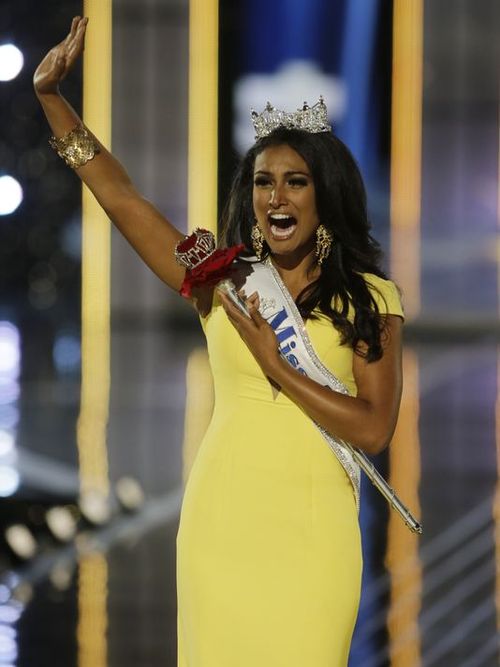
Hmmm..is it unfair to point out that tweeters who called the 2013 Miss America a terrorist and "not American enough" because of the color of her skin are bigoted morons? Let me think...

Hmmm..is it unfair to point out that tweeters who called the 2013 Miss America a terrorist and “not American enough” because of the color of her skin are bigoted morons? Let me think…

Popehat virtuoso Ken White has posed what we would call on Ethics Alarms an ethics quiz on the topic of web shaming. Is it ethical to post the embarrassing tweets of non-celebrities and public figures for the purpose widespread and national ridicule? Ken lays out the Pros and Cons thusly (these are direct quotes):

Pro:

1. It’s entertaining. Human frailty is the oldest and most consistent funny subject. People who are constantly incensed at brown people and can’t tell Arabs from Muslims from Indians are foolish and foolishness is amusing.

2. It’s whistling past the graveyard. Bigotry exists; ridiculing bigots is a mild act of defiance.

3. It’s supportive. Bigots exist; ridiculing and calling them out tells people subject to bigotry that we support them.

4. It’s a pressure release. The ability to ridicule bigots publicly reduces pressure to make the government regulate speech.

5. It’s socially transformative. Ridiculing bigots causes people to rethink being bigots.

6. It’s Darwinian. Twitter and Facebook, aided by Google, help those of us who hire employees distinguish between morons and people of normal intelligence.

Con: Continue reading

Update: “Ethics Quiz: Photojournalism And The President’s Meaningful, Meaningless Bowed Head”


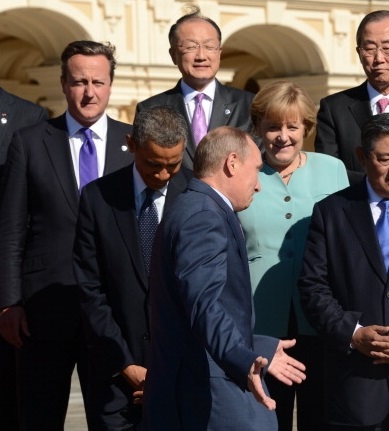
Putin and obama2

Last weekend’s Ethics Quiz involving the photojournalism ethics of publishing a photo appearing to show President Obama in a submissive or shamed posture as Vladmir Putin passed was handicapped by the mysterious unavailability of the photo in question, which the Washington Post published at least twice but has not made available on-line, even to accompany letters criticizing it. Well, the Post published the photo, in its print edition, yet again today and still I cannot track it down on the Post website. One reason appears to be that it comes from a Russian news agency.

I have found the version above, however, taken by the same photographer a split second after the one in question. In this one, Putin has just passed the President; in the photo the Post used, he was just about to pass him. The expression and postures of everyone in the two photos are the same.

You may want to reconsider the post “Ethics Quiz: Photojournalism And The President’s Meaningful, Meaningless Bowed Head”with it, rather than what I used last week, in mind.

(And why didn’t anyone tell me that the “a” and the “l” in “photojournalism” were transposed in the headline?)


Ethics Hero: Minneapolis Dairy Queen Manager Joey Prusak

"Good job, Joey!You made Dairy Queen proud and brought honor to the store, Here's 40 dollars."

“Good job, Joey!You made Dairy Queen proud and brought honor to the store, Here’s 40 dollars.”

It’s a simple story, trivial in a way, but with an important ethics lesson.

Joey Prusak, the 19-year-old store manager at a suburban Minneapolis Dairy Queen, watched as a female customer with a heart of ice saw a vision-impaired man drop a $20 bill, picked it up, and instead of returning the money to the unaware customer, slipped it into her own purse. When the certifiably awful woman got up to the counter to order, Prusak told her what he had seen and demanded that she return the bill as a condition of service. The woman, as one might expect from someone who would take money under such circumstances, refused, so Prusek reimbursed the visually impaired customer with $20 of his own.

A customer who saw the incident e-mailed Dairy Queen in praise, and now Prusak has become something of a folk hero.

The important ethics lesson is “Fix the problem.” If you are in a position to right a wrong or prevent one, it has become your obligation to do it. Don’t adopt  any of many rationalizations available to persuade you to do nothing— “It’s not my job,” “Mind your own business,” “Who am I to judge?”, “It’s not my fault”, “What if I’m wrong?”—or, in a case like this one, manufacture excuses for the vile miscreant who took the money—–“Maybe she’s desperate,” “Finders keepers”-–and just act. Fix the problem. Continue reading

Comment of The Day…And An Ethics Quiz, Too! : “Ethics Quiz: The United Airlines Give-Away”

"Oh, this piece of junk? Yeah, who knows who its supposed to be---some guy named Veal or Beale or something painted it, I think. It's been in the attic. Make me an offer!"

“Oh, this piece of junk? Yeah, who knows who it’s supposed to be—some guy named Veal or Beale or something painted it, I think. It’s been in the attic. Make me an offer!”

The Ethics Quiz regarding whether or not it was unethical to take full advantage of United Airlines’  accidental fire sale on tickets spawned several good hypotheticals, including this one, from Tyrone T., an occasional Ethics Alarms commenter who, I happen to know, thinks about these matters as his occupation. I know the answer to this one (I’ve seen it before), so I’ll hold off until you’ve thought about it a while.

Here is Tyrone T.’s Comment of the Day on the post “Ethics Quiz: The United Airlines Give-Away”:

“So, if you are hired by your client to find the cheapest fare, can you act ethically and refuse to take advantage of the error? Consider the following:

“Alexander Mundy is a lawyer and an acknowledged expert in American painting. He has several clients who regularly retain him to negotiate the purchase of museum quality art. Recently, a client hired Mundy to negotiate the purchase of a portrait of George Washington as a young man.

“The client explained, ‘I saw it on a house tour five years ago and tried to buy it then, but the woman who owned it said it was a family heirloom and wasn’t interested in selling. I heard that she died recently and her husband is having an Estate Sale. You have authority to purchase the painting for up to $500,000.’

“Mundy goes to visit the old widower and asks whether he would be willing to sell ‘that picture of the young man there.’ Continue reading

Cher’s Ethics Tweets

Lan 159

Earlier this week, Cher used her interview with USA to take some well-aimed pot-shots at Miley Cyrus’s universally loathed “twerking” antics on the MTV Awards show. She said of Cyrus

“”I’m not old fashioned. She could have come out naked, and if she’d just rocked the house, I would have said, ‘You go, girl.’ She could have come out naked, and if she’d just rocked the house, I would have said, ‘You go, girl.’ It just wasn’t done well. She can’t dance, her body looked like hell, the song wasn’t great, one cheek was hanging out. And, chick, don’t stick out your tongue if it’s coated. If you’re going to go that far, then think about it before you do it.

These are wise words from a veteran and proven performing star to a young one on the way up, or heading for a crash. Essentially, Cher is stating the principles of professionalism: whatever you do, do it right, do it well, and respect your constituency. Cher has the bona fides to offer such an opinion since she has stretched the lines of sexual propriety on stage more than once, but it was always used as an additional enhancement on the way to her “rocking the house.”

The legendary pop diva was apparently surprised that her comments became a one-day sensation on the gossip websites and cable entertainment shows, and  had second thoughts about them, which she communicated in a couple of tweets to the Twitterverse. In Cher-ese, they are all about ethics:

Chers Tweets

Translation: Continue reading

Disaster Ethics: The D.C. Naval Yard Shooting

Twelve dead? This is great---we can make another push for gun control!!!"

“Twelve dead? This is great—we can make another push for gun control!!!”

About 10 minutes from where I live, unidentified gunmen have killed 12 people (one of the gunmen is also dead) in an unexplained rampage. The facts are still being sorted out, and at least one shooter is still at large as I write this, but already two predictable examples of unethical disaster and crisis response have been on display:

1.  Reflex anti-gun tragedy exploitation

Apparently from now until the Second Amendment is but a distant memory, some Democratic politicians and anti-gun zealots will use every gun-related tragedy as a springboard to lobby for more regulations, and the facts be damned. At this point, we have not been told why the attack took place, who the shooters were, whether it was a terrorist act or not, whether the killers were Americans, whether or not the weapons were obtained illegally and what kind of guns they were. Never mind: interviewed on the radio, D.C. Delegate Eleanor Holmes Norton, Congress’s non-voting member, immediately pointed out that with all the guns that are available in this country, it should be no surprise to anyone that tragedies like this occur. I’m sure she would have liked to have been able to claim that global warming also played a part, except that it is a cool day in Washington. Continue reading

Note To Conservatives: If You Keep Making Ridiculous Complaints, Don’t Complain When People Can’t Tell When You’re Joking

Hey! Get that foot off of your own desk! Who do you think you are, President of the...oh. Right."

Hey! Get that foot off of your own desk! Who do you think you are, President of the…oh. Right.”

RECONSIDERED:  I have been persuaded by the comment thread that followed this post that my initial position regarding Andy Levy’s objections to Stephen Colbert’s use of his critique from “Red-Eye” was mistaken: Colbert was indeed unfair to Levy, and it was unfair as well for me to hold Levy accountable for some of his conservative colleagues’ serious versions of the argument he properly labelled as absurd. Read the comments of James Flood and Ampersand below for the rebuttal that carried the day. As always, I am grateful for the passionate and well-argued perception of Ethics Alarms readers.

If you need more proof of how toxic and infantile the partisan wars are these days, you need search no farther than the manufactured controversy over President Obama’s disrespectful treatment of his own desk. When I first started seeing posts on major websites complaining about the photo of the President putting his foot on his desk in the Oval Office, I decided the controversy was too idiotic to waste time with. But, as is their tendency and their talent, conservatives escalated this one with exquisite gall, and now I have to take note.

This month, and not for the first time, conservatives had the vapors over President Obama being overly casual in his own office and “disrespecting” a desk that was sent to President Garfield by Queen Victoria. (It sure didn’t do him any good) There is only one description of this preposterous complaint that does it justice, and that would be “utter bullshit.” Continue reading

Ethics Quiz: Photojournalism And The President’s Meaningful, Meaningless Bowed Head

Putin and Obama

I am looking at a black and white AP photograph re-published from the Washington Post’s front page on September 7. It is similar to the one above, taken seconds before it, and from straight on rather than an angle. That photo, like the one above, shows Vladamir Putin, joining the other attendees at last week’s Group of 20 summit for their formal group photo, but in the one I am looking at Putin is striding across the group to the end of the line, eyes forward, as the rest look on. President Obama alone is standing head bowed as Putin passed, while the other leaders look forward. Unlike the photo above, Obama’s bowed head appears to be in reaction to Putin, but not an effort to listen to something the Russian leader is saying or has said, which is how I would interpret the photo above. The photo above seems relaxed and collegial; the one I am looking at depicts tension. [UPDATE 9/21: A much closer version of the photo is question can be seen here.]

That photograph prompted these criticisms from two Post readers over the weekend.

Mary-Anne Enoch wrote in part…

“I was upset by the photo chosen for the Sept. 7 front page, showing the assembly of the Group of 20 leaders for their traditional “family photograph.”
In that photo, Russian President Vladimir Putin is confidently striding across a stage while others are smiling and probably paying no attention to him. Except for President Obama: In sharp contrast to the rest, he appears to be subservient, shrunken and diminished. His stance reminded me of Forest Whitaker’s portrayal of a long-serving White House butler in a recent movie….it is outrageous that The Post should have selected [ the photo] to accompany an article on the very important and delicate negotiations involving the United States, Russia and Syria.”

Reader Charlotte Stokes had a similar reaction:

“Surely, the wire-service photographer took dozens of pictures, including at least one when the Group of 20 leaders formally posed. So why did The Post choose this one to grace the front page? The photo presented our president in a less-than-honorable light. Given the challenges he faces internationally, why cast doubt on his abilities by sending subliminal messages of this kind?”

[I recognize that it would be better if you could see the actual photo rather than read my description of it accompanied by one that is similar but not quite the same. Interestingly, the Post appears to have purged the picture I am writing about from its website: it does not even use it to accompany the letters about the photo, which it normally would, and which good practice would demand. The photo above, which was widely used by other sources, is the closest I could find, other than the print version that was in my Post on Saturday. If someone can find the actual photo and send me the link, I’d be very grateful.]

Here is your Ethics Alarms Ethics Quiz to kick off what promises to be an ethically alarming week, on the always tricky topic of photojournalism:

Was it unethical for the Post have prominently run a photograph that presented President Obama in an unfavorable, arguably subservient or weak posture? Continue reading